CT Enterography — Dictation, Appropriateness, and Dose for Residents
1. The Setup: A Classic Crohn’s Workup Hits Your List
It’s 2 PM on a Tuesday. The GI clinic just added a CT Enterography for a 28-year-old with a new diagnosis of Crohn’s disease. Your attending wants a detailed map: active inflammation, chronic changes, and any hint of a fistula or stricture. This isn’t just a “wall thickening in the terminal ileum” read. They expect you to comment on mural enhancement patterns, the comb sign, fat wrapping, and prestenotic dilation. You need to be systematic and thorough.
When I was a fellow, these were the reads that could make or break the afternoon. The findings are often subtle, and the clinical implications are significant. Getting the structure right from the start is key. We’re building this guide—and our tools—to give you that structure on day one. (And if you need other high-yield references, we’ve compiled a bunch in the residents and fellows resource hub.)
2. What a CT Enterography (Small Bowel) Covers and What Attendings Look For
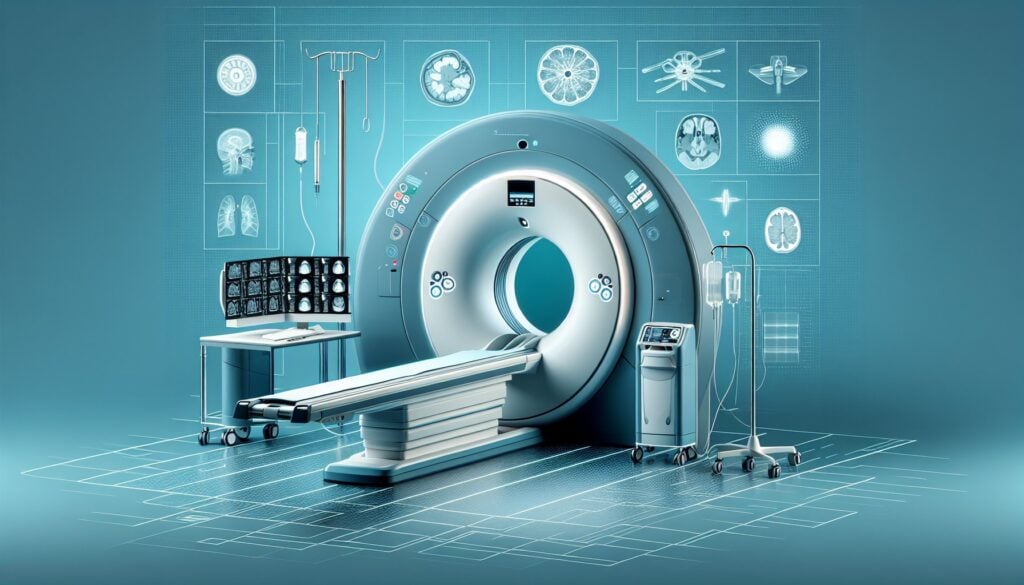
A CT Enterography (CTE) is the workhorse for evaluating the small bowel, especially for inflammatory bowel disease. It’s a specialized CT that uses a large volume of neutral oral contrast (like Volumen) to distend the small bowel loops, combined with IV contrast timed to an enteric phase (around 45-50 seconds). This combination highlights the enhancement of the bowel wall itself, which is exactly what we need to see.
This study is designed to answer specific, high-stakes clinical questions:
- Crohn’s Disease: This is the number one indication. We’re assessing disease activity (mural hyperenhancement, comb sign), mapping the location and extent of involvement (terminal ileum, skip lesions), and looking for complications like strictures, fistulas, or abscesses.
- Small Bowel Neoplasms: It can help identify and characterize masses like GISTs, lymphomas, neuroendocrine tumors, or adenocarcinoma.
- Obscure GI Bleeding: When upper and lower endoscopy are negative, CTE can sometimes find a bleeding source in the small bowel.
- Small Bowel Obstruction (SBO): It’s excellent for finding a transition point and identifying the underlying cause, especially in cases of intermittent or low-grade obstruction.
Your attending expects a report that doesn’t just list findings but synthesizes them into a clinically useful assessment of disease burden and severity.
3. Radiology Report Template for CT Enterography (Small Bowel)
This is a solid, comprehensive template you can load into your dictation system. It prompts you for the key findings that matter for management.
Technique
CT of the abdomen and pelvis was performed after the administration of [1.5] L of neutral oral contrast. Nonionic intravenous contrast was administered, and images were acquired in the enteric phase. Axial, coronal, and sagittal reformatted images were reviewed. [An antiperistaltic agent was/was not administered prior to the scan.]
Findings
LUNGS: The lung bases are clear.
HEPATOBILIARY: The liver, gallbladder, and biliary tree are unremarkable.
SPLEEN: Unremarkable.
PANCREAS: Unremarkable.
ADRENAL GLANDS: Unremarkable.
KIDNEYS AND URETERS: The kidneys enhance symmetrically. No hydronephrosis.
VASCULATURE: The aorta and major visceral vessels are patent.
LYMPH NODES: No pathologic mesenteric, retroperitoneal, or pelvic lymphadenopathy.
BOWEL: The stomach and duodenum are unremarkable. The small bowel is evaluated for mural thickness, enhancement, and luminal diameter.
- Terminal Ileum: [Describe wall thickness (normal <3 mm), enhancement pattern (e.g., mucosal, transmural), presence of stricture with any prestenotic dilation, fat wrapping, or engorged vasa recta (comb sign).]
- Other Small Bowel Segments: [Describe any skip lesions or other areas of involvement.]
- Complications: [Comment on the presence or absence of fistulous tracts (e.g., enteroenteric, enterocutaneous) or abscess collections.]
The colon is unremarkable. The appendix is normal in appearance.
PELVIC ORGANS: The urinary bladder and reproductive organs are unremarkable.
BONES AND SOFT TISSUES: No acute osseous abnormality. The anterior abdominal wall is intact.
Impression
1. Findings consistent with active inflammatory Crohn’s disease involving the [e.g., terminal ileum and a skip lesion in the proximal jejunum], characterized by mural thickening and hyperenhancement.
2. [Specify complications, e.g., “Short-segment stricture in the terminal ileum with mild prestenotic dilation.” or “No evidence of fistula or abscess.”]
3. No other acute intra-abdominal process.
4. Free Template Sources for Your On-Call Toolkit
Building your own template library is a rite of passage. But you don’t have to start from scratch. Beyond the templates we provide, two great free repositories exist that are worth bookmarking for any rotation.
- RadReport.org: This is the RSNA’s library. It’s comprehensive, peer-reviewed, and covers nearly every study you’ll encounter. It’s the gold standard for structured templates.
- Radiology Templates (AU): Maintained by Australian radiologists, this site has a fantastic collection of practical, easy-to-use templates with a clean interface.
Both are excellent, non-commercial resources created by and for radiologists.
5. The Next-Level Move: Free-Form Dictation to Structured Report
Templates are great, but they can feel rigid. Sometimes you just want to dictate the positive findings as you see them, especially on a complex case. This is where AI-assisted reporting comes in. Instead of clicking through a structured template, you can dictate naturally: “There’s 10 cm of mural thickening and mucosal hyperenhancement in the terminal ileum with adjacent fat stranding and a prominent comb sign. I also see a short-segment stricture with about 3 cm of prestenotic dilation…”
The AI then parses your free-form dictation and organizes it into a perfectly structured report based on ACR and society guidelines. GigHz Precision AI is designed to do exactly this, turning your natural observations into the clean, attending-ready report they expect to see. It helps streamline the process, ensuring you hit all the key points without the friction of a rigid macro.
6. When Should You Order a CT Enterography (Small Bowel)? ACR Appropriateness Criteria
The American College of Radiology (ACR) provides evidence-based guidelines on imaging, and for Crohn’s disease, the guidance is clear. Per the ACR Appropriateness Criteria for Crohn Disease (id 175, Gastrointestinal panel), both CT Enterography and MR Enterography are considered “Usually Appropriate” for the initial evaluation and follow-up of known or suspected Crohn’s.
The key decision point is often radiation exposure. For younger patients, pregnant patients, or those requiring frequent surveillance imaging to monitor treatment response, MR Enterography is the preferred alternative. MRE provides excellent soft tissue contrast and details on bowel wall inflammation without using ionizing radiation. However, CTE is often faster, more widely available, and better tolerated by claustrophobic patients.
Other alternatives exist for specific scenarios. Capsule endoscopy offers unparalleled views of the mucosa but provides no information about the bowel wall or extra-enteric complications. Double-balloon enteroscopy is an invasive procedure used for diagnosis and therapeutic intervention when other methods are inconclusive.
7. How Much Radiation Does a CT Enterography (Small Bowel) Deliver?
Patients, especially younger ones with a chronic disease like Crohn’s, are rightfully concerned about cumulative radiation dose. A typical CT Enterography delivers an effective dose of 7-12 mSv. This places it in a tier comparable to several months to a few years of natural background radiation, which we all receive just by living on Earth.
While this is a moderate dose, it’s a critical reason why MR Enterography is favored for serial follow-up in pediatric and young adult populations. Radiologists and technologists always adhere to the ALARA (As Low As Reasonably Achievable) principle, using dose-reduction techniques like automated exposure control and iterative reconstruction to minimize radiation while maintaining diagnostic image quality. The decision to use CTE is always based on a risk/benefit analysis where the diagnostic information gained is expected to significantly outweigh the small, long-term risk from radiation.
8. CT Enterography (Small Bowel) Imaging Protocol — Phases, Contrast, and Reconstructions
The magic of CTE is in the protocol. It’s a finely tuned process designed to maximize bowel distension and mural enhancement. The critical components are the large volume of neutral oral contrast (typically 1.5-2.0 L of Volumen consumed over an hour) and the precise timing of the IV contrast bolus to capture the enteric phase, when the small bowel wall shows peak enhancement.
Here is a typical protocol breakdown:
| Phase | Timing | IV Contrast | Key Parameters | Coverage |
|---|---|---|---|---|
| Topogram | N/A | None | kVp: 120 | Diaphragm to symphysis |
| Enteric Phase | 45-50 sec post-injection | 100-130 mL @ 3-4 mL/s | kVp: 100-120, 3 mm reconstructions (Axial, Coronal, Sagittal) | Diaphragm to symphysis |
Common protocol pitfalls:
- Inadequate Oral Contrast: The most common issue. If the patient can’t tolerate at least 1.5 L, the small bowel may be inadequately distended, making it impossible to confidently assess wall thickness.
- Bowel Motion: Peristalsis can create significant motion artifact. Administering an antiperistaltic agent like IV glucagon immediately before the scan can dramatically improve image quality.
- Incorrect Phase Timing: Scanning too early or too late will miss the peak enteric phase, reducing the conspicuity of mucosal hyperenhancement. Some institutions add a later portal venous phase, which is better for evaluating solid organs and potential abscesses, but this comes at the cost of additional radiation.
9. The 3-Months-Free Offer for Radiology Residents and Fellows
3+ months free for radiology residents and fellows
Look like a rockstar on your reports — dictate positive findings in free form, and the AI generates a structured report using ACR + SIR templates with the appropriate Clinical Decision Support (CDS) firing automatically. All we ask in return is your feedback so we can keep improving the product for trainees.
The signup is simple. No credit card, no long forms. To get started, we just need three things:
- Your PGY year (e.g., PGY-2, PGY-4)
- Your training type (radiology residency or specific fellowship)
- Your training program / hospital name
Ready to give it a try? Just send us those details when you apply for the residents free-access program.
10. Frequently Asked Questions
Is it HIPAA-compliant?
Yes. The platform is designed for de-identified workflows by default. It processes the clinical content of your dictation without requiring or storing patient health information (PHI).
Do I need my hospital’s IT department to set it up?
No. It’s a secure, browser-based tool. There’s no software to install. It works on any hospital workstation, your personal laptop, or even the call-room iPad.
Does it work with PowerScribe or other dictation systems?
Yes. It works alongside your existing PACS and dictation software. You can dictate in your normal application, and the AI assistant runs in a separate browser window to help you structure the final report, which you then finalize in your EMR or RIS.
Can I use my own custom templates?
Absolutely. While it comes pre-loaded with ACR and other society-endorsed templates, you can easily add, edit, and save your own templates or those specific to your institution or attending preferences.
What happens after my residency or fellowship ends?
We have straightforward continuation plans for practicing radiologists. Your customized templates and settings will be saved, and you can transition to a standard license to continue using the service in your practice.
Free GigHz Tools That Pair With This Article
Three free tools that complement the material above:
- Imaging Appropriateness Selector — Type an indication or clinical scenario in plain language and get the imaging studies the ACR rates for it, with adult and pediatric radiation levels. Built directly from 297 ACR topics, 1,336 clinical variants, and 15,823 procedure ratings.
- GigHz Imaging Protocol Library — A searchable library of 131 imaging protocols with the physics specs surfaced and the matching ACR Appropriateness Criteria alongside. Plain-English narratives readable in 60 seconds, organized by modality.
- GigHz Radiation Dose Calculator — Pick the imaging studies a patient has had and see total dose in millisieverts (mSv) with comparisons to natural background radiation, transatlantic flights, and chest X-rays. Useful for shared decision-making.
Reviewed by Pouyan Golshani, MD, Interventional Radiologist — August 4, 2026