CT Facial Bones — Dictation, Appropriateness, and Dose for Residents
1. The Trauma Bay Call: Decoding Complex Facial Fractures Under Pressure
Stat from the trauma bay. Polytrauma patient from an MVA, significant facial impact. The plastics and Oral and Maxillofacial Surgery (OMFS) teams are scrubbed and waiting for your read to plan their approach. They need to know if this is a simple nasal fracture or a complex Le Fort III that changes everything. The difference isn’t just academic; it’s the line between a straightforward reduction and a multi-hour craniofacial reconstruction.
When I was a fellow, the sheer number of named facial fracture patterns felt overwhelming. Le Fort, ZMC, NOE… it’s an alphabet soup you have to navigate while the clock is ticking. Your attending expects you to not only identify every fracture line but to synthesize them into a coherent, surgically relevant summary. This guide provides a structured template and a systematic approach to nail the CT Maxillofacial read every time. For more guides and tools, check out the residents and fellows resource hub.
2. What a CT of the Maxillofacial and Facial Bones Covers and What Attendings Look For
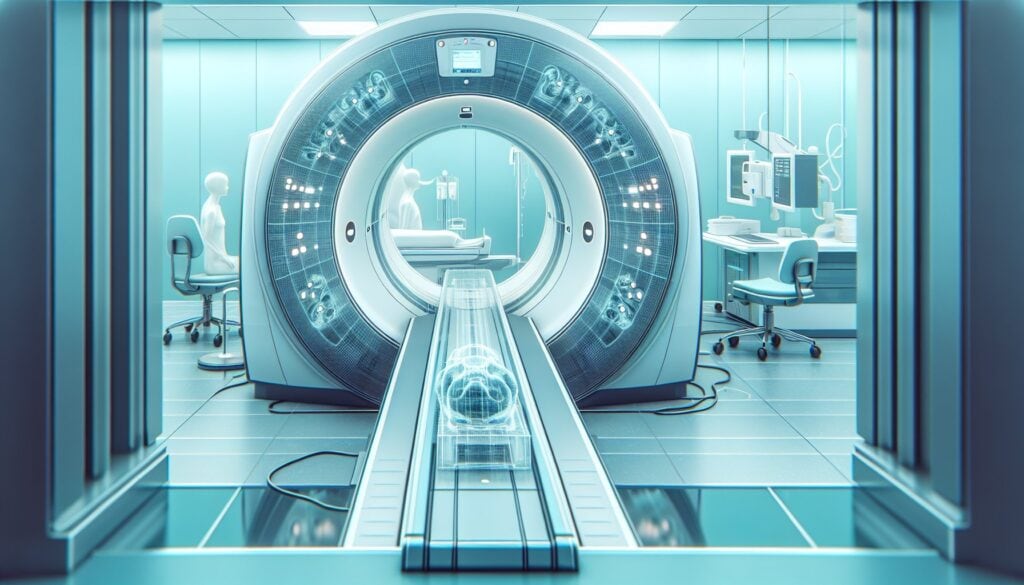
A non-contrast, high-resolution CT of the facial bones is the workhorse for evaluating facial trauma. The goal is to provide a precise roadmap for the surgical teams. Your report needs to clearly define the extent of injury, degree of displacement, and involvement of critical structures.
Attendings and surgeons are looking for answers to these key questions:
- Fracture Classification: Is there a classic fracture pattern present? (e.g., Le Fort I/II/III, Zygomaticomaxillary Complex (ZMC), Naso-Orbito-Ethmoid (NOE)).
- Orbital Integrity: Are the orbital walls intact? Is there evidence of an orbital blowout fracture with muscle or fat herniation?
- Mandibular Integrity: Is the mandibular ring intact? Remember, a single mandibular fracture is rare; always hunt for the second one.
- Surgical Planning: How displaced are the fragments? The 3D reformats are crucial here and should be explicitly mentioned.
- Associated Injuries: Is there involvement of the parotid duct, evidence of intracranial injury, or a fracture of the visualized cervical spine?
This study is the first choice for facial trauma, pre-operative planning for reconstruction, and post-operative hardware assessment. It is not the first choice for characterizing a soft-tissue mass (use MRI) or for evaluating routine sinusitis (a dedicated CT Sinus protocol is used).
3. Radiology Report Template for CT Maxillofacial and Facial Bones
This template provides a systematic framework. Dictate your positive findings, and then structure them cleanly in the impression. This ensures you don’t miss anything and that the surgeons get exactly the information they need.
Technique
Non-contrast high-resolution CT of the facial bones was performed with axial, coronal, sagittal, and 3D volumetric reformatted images.
Findings
Orbits: The orbital walls are evaluated. The orbital floors are assessed for blowout fractures and herniation of orbital contents. The optic canals are assessed. The globes are symmetric and of normal density.
Zygomaticomaxillary Complex (ZMC): The zygomatic arches, zygomaticofrontal sutures, orbital floors, and lateral maxillary walls are evaluated for the classic “tripod” fracture pattern.
Naso-Orbito-Ethmoid (NOE) Complex: The nasal bones, frontal processes of the maxilla, and ethmoid sinuses are evaluated. The integrity of the medial canthal tendon insertion region is assessed.
Maxilla and Palate: The maxilla is evaluated for transverse (Le Fort I), pyramidal (Le Fort II), or craniofacial dysjunction (Le Fort III) fracture patterns.
Mandible: The mandibular symphysis, parasymphyseal regions, body, angles, rami, and condyles are evaluated. The temporomandibular joints are assessed.
Other Facial Bones: The nasal septum, frontal bones, sphenoid bones, and temporal bones are evaluated.
Soft Tissues: No acute facial hematoma or soft tissue emphysema. The parotid glands and ducts are assessed. The masticator spaces are clear.
Sinuses and Mastoid Air Cells: The paranasal sinuses and mastoid air cells are clear. Opacification, if present, is noted (e.g., fluid levels from hemorrhage).
Visualized Intracranial Structures: No evidence of acute intracranial hemorrhage or mass effect based on limited evaluation.
Visualized Cervical Spine: No acute fracture or malalignment of the visualized portions of the cervical spine.
Impression
1. [Most significant finding, e.g., Acutely displaced left Le Fort II fracture as described above.]
2. [Second most significant finding, e.g., Comminuted fracture of the right zygomatic arch with mild depression.]
3. [Other relevant findings, e.g., Nondisplaced fracture of the mandibular symphysis.]
4. [Ancillary findings, e.g., Hemorrhage within the left maxillary sinus.]
4. Free Template Sources for Your Personal Library
Before we dive into AI-powered tools, it’s worth knowing that two great free repositories exist for community-sourced templates. They can be a fantastic starting point for building out your personal macro library in your dictation system.
- RadReport.org: Curated by the RSNA, this is a comprehensive library of peer-reviewed templates covering nearly every modality and subspecialty. (https://radreport.org/)
- Radiology Templates (AU): An excellent, straightforward resource maintained by Australian radiologists with clean, practical templates. (https://www.radiologytemplates.com.au/home-page/)
The main challenge with static templates is the manual effort required to edit them for each specific case, especially when dealing with complex positive findings.
5. The Next-Level Move: AI-Powered Report Generation
The real bottleneck on a busy call isn’t finding a template; it’s populating it accurately and efficiently under pressure. This is where AI-assisted reporting tools can make a significant difference. Instead of meticulously editing a static macro, you can dictate your positive findings in free form—”comminuted fracture of the right zygomatic arch, lateral orbital wall, and orbital floor with inferior rectus herniation”—and let the software handle the rest.
GigHz Precision AI is designed for this workflow. It parses your free-form dictation of positive findings and automatically generates a complete, structured report using pre-loaded, best-practice templates from organizations like the ACR. It helps ensure your terminology is consistent and your impression directly reflects the key findings your surgical colleagues need, without the manual copy-and-paste. This approach streamlines the reporting process, allowing you to focus on the diagnostic task at hand.
6. When Should You Order a CT of the Maxillofacial and Facial Bones? ACR Appropriateness Criteria
The American College of Radiology (ACR) provides evidence-based guidelines to help clinicians choose the right test for the right reason. For facial trauma, the guidance is quite clear.
According to the ACR Appropriateness Criteria for Imaging of Facial Trauma Following Primary Survey, CT of the facial bones is the first-line modality for nearly all suspected significant injuries. The following scenarios are all rated as “Usually Appropriate”:
- For a patient with tenderness, contusion, or edema over the frontal bone, a CT is the recommended initial imaging to evaluate for a frontal bone injury.
- For a patient with pain on upper jaw manipulation, zygomatic deformity, malocclusion, or infraorbital nerve paresthesia, a CT is the initial imaging of choice to assess for a suspected midface injury (like a Le Fort or ZMC fracture).
- For a patient with trismus, malocclusion, or gingival hemorrhage, a CT is the preferred initial study to evaluate for a suspected mandibular injury.
Even for a suspected isolated nasal injury with visible deformity, where clinical judgment often suffices, a CT may be appropriate if more complex injuries are suspected. These criteria underscore CT’s central role in definitively diagnosing and guiding the management of facial trauma.
7. How Much Radiation Does a CT of the Maxillofacial and Facial Bones Deliver?
Patients and referring providers are increasingly aware of radiation dose, and it’s our job to be able to answer their questions. A non-contrast CT of the facial bones delivers an estimated effective dose of 1-3 mSv.
To put that in perspective, this is a relatively low-dose study. The average person in the U.S. receives about 3 mSv per year from natural background radiation. Therefore, this exam is roughly equivalent to a year of living on Earth. Modern CT scanners use automated dose modulation techniques to minimize radiation while maintaining diagnostic image quality.
| Imaging Study | Typical Effective Dose |
|---|---|
| CT Maxillofacial / Facial Bones | 1-3 mSv |
| Annual Background Radiation | ~3 mSv |
| Chest X-ray (2 views) | ~0.1 mSv |
| CT Abdomen/Pelvis | ~10 mSv |
While the dose is low, we always adhere to the ALARA (As Low As Reasonably Achievable) principle, especially in younger patients or those requiring repeat imaging.
8. CT Maxillofacial and Facial Bones Imaging Protocol — Phases, Contrast, and Reconstructions
The utility of a facial bone CT is entirely dependent on a high-quality technical acquisition. The protocol is designed to generate high-resolution images that can be manipulated in multiple planes to fully characterize complex, three-dimensional fractures. For trauma, contrast is not typically required.
The key is thin-slice acquisition with comprehensive reformats. The coronal reformats are pivotal for evaluating the orbital floors and Le Fort patterns, while the 3D volume-rendered (VRT) images are invaluable for surgical planning, as they clearly demonstrate the spatial relationships and displacement of fracture fragments.
| Parameter | Specification |
|---|---|
| Acquisition | Helical scan from frontal sinus through mandibular symphysis |
| Contrast | None for routine trauma evaluation |
| kVp | 100-120 |
| Slice Thickness | 0.6-1 mm |
| Axial Reconstructions | 1-2 mm (Bone algorithm), 3 mm (Soft tissue algorithm) |
| Coronal Reconstructions | 1-2 mm (Bone algorithm) – CRITICAL |
| Sagittal Reconstructions | 2 mm (Bone algorithm) |
| 3D VRT | Workstation rendering – INVALUABLE for surgical planning |
A common pitfall is inadequate coronal reformats. If the patient cannot be positioned for a direct coronal acquisition due to cervical spine precautions, high-quality reformatted images from the thin-slice axial dataset are essential. Always ensure these are available before finalizing your read.
9. The 3-Months-Free Offer for Radiology Residents and Fellows
3+ months free for radiology residents and fellows
Look like a rockstar on your reports — dictate positive findings in free form, and the AI generates a structured report using ACR + SIR templates with the appropriate Clinical Decision Support (CDS) firing automatically. All we ask is feedback so we can keep improving the product for trainees.
Signup is simple. No credit card, no long forms. To apply, just provide these three items:
- Your PGY year (e.g., PGY-2, PGY-4)
- Your training type (radiology residency or specific fellowship)
- Your training program / hospital name
Ready to give it a try? Visit the link below and reply to the application with the three items above, and we’ll get you set up.
Apply for the residents free-access program
10. Frequently Asked Questions
Is GigHz Precision AI HIPAA-compliant?
Yes. The platform is designed for de-identified workflows by default. No patient-identifying information is required to use the tool, ensuring compliance with institutional and federal privacy standards.
Do I need my hospital’s IT department to set this up?
No. GigHz Precision AI is a secure, browser-based tool. There is no software to install. It works on any modern computer, including the workstations in the reading room or your personal laptop or iPad at home.
How does this work with PowerScribe or other dictation systems?
It works alongside your existing system. You can dictate your findings, use the tool to generate the structured report, and then simply copy and paste the final, clean text into your PACS or RIS for sign-off. It complements your current workflow rather than replacing it.
Can I use this on my phone or iPad?
Yes. Because it’s a web-based application, you can access it from any device with an internet connection, making it easy to review templates or draft reports whether you’re in the reading room or on the go.
Can I customize the templates?
Yes. While the platform comes pre-loaded with best-practice templates from the ACR and other societies, you have the ability to customize them to match the specific stylistic preferences of your attendings or institution.
What happens after my residency or fellowship ends?
After the free access period for trainees concludes, you will have the option to transition to a standard paid plan for practicing radiologists. There is no obligation to subscribe.
Free GigHz Tools That Pair With This Article
Three free tools that complement the material above:
- Imaging Appropriateness Selector — Type an indication or clinical scenario in plain language and get the imaging studies the ACR rates for it, with adult and pediatric radiation levels. Built directly from 297 ACR topics, 1,336 clinical variants, and 15,823 procedure ratings.
- GigHz Imaging Protocol Library — A searchable library of 131 imaging protocols with the physics specs surfaced and the matching ACR Appropriateness Criteria alongside. Plain-English narratives readable in 60 seconds, organized by modality.
- GigHz Radiation Dose Calculator — Pick the imaging studies a patient has had and see total dose in millisieverts (mSv) with comparisons to natural background radiation, transatlantic flights, and chest X-rays. Useful for shared decision-making.
Reviewed by Pouyan Golshani, MD, Interventional Radiologist — August 4, 2026