
The Hidden Risks of AI‑Generated Physician Summaries
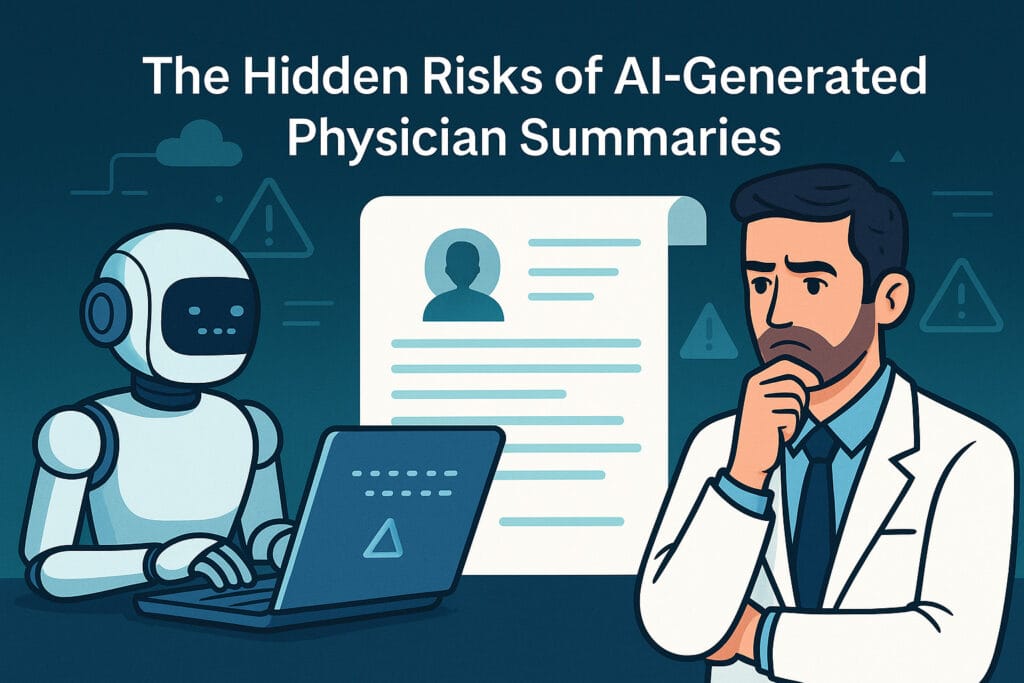
Large language models (LLMs) can summarise articles, answer questions and even draft emails. Some platforms use them to auto‑generate physician bios, gleaning data from licensure boards, publications and social media. While convenient, these AI‑generated profiles can misrepresent your credentials, misquote your experience or perpetuate outdated information. Physicians must understand how these summaries are constructed and where the pitfalls lie.
How AI Creates Summaries
Most AI summarization tools are trained on vast amounts of text from the internet. When prompted to “summarize Dr. Jane Smith,” they search for data points such as medical school attended, residency training, board certifications, publications and awards. They may piece together information from multiple sources—some authoritative, some dubious—and generate a coherent paragraph.
However, LLMs do not fact‑check; they predict probable sequences of words based on patterns. If the training data contains errors (e.g., a news article misidentifying a physician’s specialty), the AI may include those mistakes. Worse, if data is sparse, the model may “hallucinate” plausible but fictitious details to fill gaps.
Risks and Consequences
Inaccurate Credentials: AI summaries might state you completed a fellowship at an institution you never attended or practice in a different specialty. Patients may schedule inappropriate appointments, and insurers may flag discrepancies.
Outdated Information: Models trained on data before your most recent job change may associate you with a prior employer. Old addresses or phone numbers can misdirect referrals.
Legal Liability: If an AI summary claims you specialize in an area outside your scope of practice and a patient suffers harm, questions of misrepresentation could arise.
Bias and Equity: Training data may overrepresent physicians from certain regions or backgrounds, causing the model to prioritize them in search results. Underrepresented physicians may be invisible or mischaracterized.
Protecting Yourself
Create Your Own Authoritative Content: Publish a detailed biography on your own website and implement schema markup so machines can parse it accurately.
Monitor AI Platforms: Search for yourself periodically in AI‑driven tools (e.g., voice assistants). Report inaccuracies where possible.
Opt Out or Correct Data Sources: If a site misrepresents you, contact them to request a correction or removal. Some directories honour “do not scrape” requests.
Educate Patients: Provide clear directions to trusted sources for information about you, such as your practice’s website or Guide.MD profile.
Advocate for Transparency: Encourage platforms using AI summaries to disclose their data sources and allow professionals to verify or update their profiles.
AI can streamline information gathering, but it’s only as good as the data it ingests. Physicians have a responsibility to ensure their professional representations are accurate. By staying vigilant and providing clear, structured information, you can mitigate the risks of AI‑generated summaries and maintain control over your narrative.
Frequently Asked Questions
What are the risks of AI-generated physician summaries?
AI-generated physician summaries carry several risks, including the potential for inaccurate credentials, outdated information, and legal liability. These summaries may misrepresent a physician's qualifications, such as incorrectly stating fellowship completion or associating them with a previous employer. Additionally, AI models do not fact-check and can produce fictitious details if data is sparse. This misrepresentation can lead to inappropriate patient appointments and discrepancies flagged by insurers. Furthermore, bias in training data may result in underrepresented physicians being mischaracterized or overlooked. Physicians should actively monitor their online presence and correct inaccuracies to mitigate these risks.
How can physicians protect themselves from inaccurate AI summaries?
Physicians can protect themselves from inaccurate AI summaries by taking several proactive steps. First, create an authoritative biography on your own website and implement schema markup to enhance accuracy in AI parsing. Regularly monitor AI platforms by searching for your name to identify and report inaccuracies. If misrepresentations occur, contact the source to request corrections or opt-out of data scraping. Educate patients on where to find reliable information about you, such as your practice’s website. Lastly, advocate for transparency from platforms using AI, urging them to disclose data sources and allow professionals to verify their profiles. Staying vigilant is essential to maintaining accurate professional representation.
Why do AI-generated summaries sometimes contain outdated information?
AI-generated summaries can contain outdated information because they are trained on extensive datasets that may include erroneous or obsolete data. These models do not fact-check; instead, they predict word sequences based on patterns in the training data. If the data reflects a physician's previous employment or credentials, the AI may inaccurately associate them with that outdated information. Additionally, if data is sparse, the model may fabricate details to fill gaps, leading to further inaccuracies. Physicians must actively monitor these summaries to ensure their professional representations remain current and accurate.
Can patients rely on AI-generated physician profiles for accurate information?
AI-generated physician profiles can misrepresent credentials and perpetuate outdated information. These summaries are created by large language models that compile data from various sources, some of which may be inaccurate or dubious. For instance, an AI might incorrectly state that a physician completed a fellowship they did not attend. Additionally, if the training data is sparse, the AI can "hallucinate" fictitious details. This can lead to patients scheduling inappropriate appointments or facing misinformation regarding a physician’s specialty. Therefore, while AI can streamline information gathering, its accuracy is contingent on the quality of the data it processes.
Where can physicians report inaccuracies in AI-generated summaries?
Physicians can report inaccuracies in AI-generated summaries by monitoring AI platforms periodically and searching for their profiles. If discrepancies are found, they should contact the respective platform or directory to request corrections or removal. Some directories may honor "do not scrape" requests. Additionally, physicians can advocate for transparency by encouraging these platforms to disclose their data sources and allow professionals to verify or update their profiles. Maintaining an authoritative online presence, such as a detailed biography on a personal website, can also help mitigate the risks associated with AI-generated inaccuracies.
Reviewed by Pouyan Golshani, MD, Interventional Radiologist — November 15, 2025