Thyroid Uptake and Scan (I-123) — Dictation, Appropriateness, and Dose for Residents
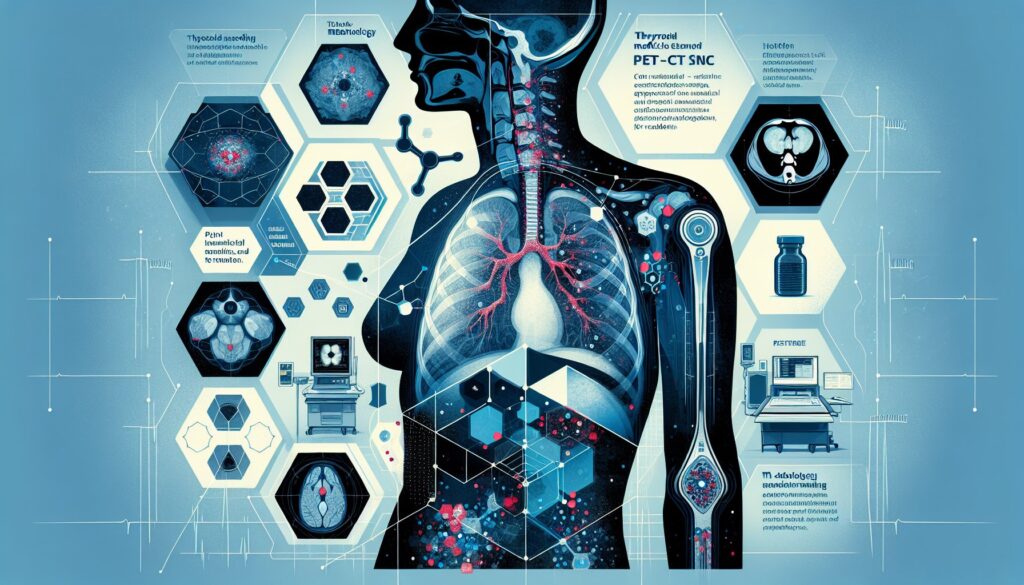
Outpatient nuclear medicine read. The patient has a TSH of <0.01 and the endocrinologist wants to know why. Is it Graves’ disease? A hot nodule? Or thyroiditis? Your attending expects a clean, quantitative report that nails the diagnosis and guides therapy. Getting the 4- and 24-hour uptake percentages right is one thing; translating that into a confident, clinically useful impression is another. When you’re juggling a busy list, having a solid framework is key.
As a resident or fellow, you’re constantly building your mental library of these frameworks. We’ve built a collection of free tools to help with that — you can check out the residents and fellows resource hub for calculators, references, and more templates like this one.
What a Thyroid Uptake and Scan (I-123) Covers and What Attendings Look For
A thyroid uptake and scan is the workhorse for evaluating the etiology of hyperthyroidism. It directly measures how much iodine the thyroid gland is actively taking up from the blood (the “uptake”) and shows where that uptake is occurring (the “scan”). This functional information is critical for distinguishing between different causes of thyrotoxicosis, which have vastly different treatments.
Your attending is looking for a report that clearly answers the referring clinician’s question. This means you need to address:
- Quantitative Uptake: The precise 4-hour and 24-hour radioiodine uptake percentages.
- Gland Morphology and Distribution: A description of the gland’s size, shape, and the pattern of tracer distribution. Is it diffuse and symmetric (Graves’), focal in a single nodule (toxic adenoma), multifocal (toxic multinodular goiter), or globally decreased (thyroiditis)?
- Nodularity: Identification of any “hot” (hyperfunctioning), “warm,” or “cold” (hypofunctioning) nodules.
- A Clear Conclusion: The impression must synthesize the uptake value and scan pattern into a definitive diagnosis that guides the next step, whether it’s anti-thyroid medication, radioactive iodine (RAI) therapy, or further workup of a cold nodule.
Radiology Report Template for Thyroid Uptake and Scan (I-123)
This template provides a reliable starting point for your dictations. You can adapt it for your institution’s specific macros in PowerScribe or other voice recognition software.
Technique
Radiopharmaceutical: [100-300] microcuries of Iodine-123 sodium iodide administered orally.
Uptake Measurement: Radioactive iodine uptake was measured over the thyroid gland at 4 hours and 24 hours post-administration using a standard thyroid uptake probe.
Imaging: Planar images of the thyroid gland were obtained at 24 hours in the anterior, left anterior oblique, and right anterior oblique projections using a gamma camera equipped with a [pinhole/low-energy] collimator.
Findings
4-Hour Uptake: [__]% (Normal range: [e.g., 5-20%])
24-Hour Uptake: [__]% (Normal range: [e.g., 5-30%])
Scan Findings:
The thyroid gland is [normal in size, enlarged, small].
The distribution of radiotracer is [diffuse and homogeneous, heterogeneous].
There is [symmetric/asymmetric] uptake throughout both lobes.
[There is a focal area of intense radiotracer uptake in the [location] lobe corresponding to a palpable nodule, with suppression of the remaining thyroid parenchyma.]
[There are multiple focal areas of increased and decreased radiotracer uptake scattered throughout the gland.]
[There is a photopenic (“cold”) defect in the [location] lobe measuring approximately [__] cm.]
No significant retrosternal or ectopic thyroid tissue is identified.
Impression
Example 1 (Graves’ Disease):
Markedly elevated radioactive iodine uptake with diffuse, homogeneous distribution of radiotracer throughout an enlarged thyroid gland. Findings are characteristic of Graves’ disease.
Example 2 (Toxic Adenoma):
Elevated radioactive iodine uptake. The scan demonstrates a focal area of intense radiotracer uptake (hot nodule) in the [location] lobe, with suppression of the remainder of the gland. Findings are consistent with a toxic adenoma (Plummer’s disease).
Example 3 (Thyroiditis):
Markedly decreased radioactive iodine uptake. This finding, in the clinical context of thyrotoxicosis, is consistent with a destructive thyroiditis (e.g., subacute, postpartum, or drug-induced).
Example 4 (Cold Nodule):
Normal 24-hour radioactive iodine uptake. There is a photopenic (“cold”) nodule in the [location] lobe. Correlation with thyroid ultrasound and consideration for fine-needle aspiration is recommended to evaluate for malignancy.
Free Template Sources
Building a personal template library is a career-long project. If you’re looking for more examples or templates for other modalities, two great free repositories exist. The Radiological Society of North America (RSNA) maintains RadReport.org, which is a comprehensive library of peer-reviewed templates. A similar excellent resource maintained by Australian radiologists is available at RadiologyTemplates.com.au.
The Next-Level Move
A static template is a great start, but the real friction on call comes from manually slotting your findings into the right places and ensuring your impression perfectly matches the data. This is where AI-assisted reporting can streamline your workflow. Instead of clicking through a structured report, you can dictate your positive findings in free form—for instance, “24-hour uptake is 65%, scan shows diffuse symmetric uptake in an enlarged gland.”
Tools like GigHz Precision AI are designed to parse that free-form dictation and automatically generate a complete, structured draft using pre-loaded ACR and society-backed templates. It helps ensure your quantitative data, descriptive findings, and final impression are all consistent, which is exactly what your attending wants to see on the final read.
When Should You Order a Thyroid Uptake and Scan? ACR Appropriateness Criteria
The American College of Radiology (ACR) provides evidence-based guidelines on when to order specific imaging studies. For thyroid disease, the uptake and scan is a cornerstone for functional assessment.
For a patient presenting with thyrotoxicosis (hyperthyroidism), a thyroid uptake and scan is rated “Usually Appropriate” by the ACR. It is the primary imaging modality to differentiate the causes, such as Graves’ disease, toxic nodular goiter, or thyroiditis, which is essential for guiding treatment.
In cases of a palpable thyroid nodule in a euthyroid patient or a suspected goiter, ultrasound is the primary initial imaging modality to assess morphology. However, a thyroid scan may be appropriate later to determine if a nodule found on ultrasound is hyperfunctioning (“hot”), which would make it very unlikely to be malignant.
Conversely, for working up primary hypothyroidism, a thyroid uptake and scan is “Usually Not Appropriate.” The diagnosis is typically made with lab tests (high TSH, low free T4), and imaging is not required.
The study also plays a key role in the management of differentiated thyroid cancer, including for preoperative evaluation and post-treatment surveillance for recurrence, where it is often rated “Usually Appropriate.”
How Much Radiation Does a Thyroid Uptake and Scan (I-123) Deliver?
A thyroid uptake and scan using Iodine-123 delivers an estimated effective dose of 0.5-2 mSv. To put this in perspective, the ACR categorizes this level of exposure as very low. It is less than the average annual background radiation a person receives from natural sources in the United States (about 3 mSv).
The radiopharmaceutical, I-123, is chosen specifically for its favorable imaging characteristics and relatively short half-life, which minimizes the patient’s radiation exposure compared to other isotopes like I-131 (which is reserved for therapy). Pregnancy is an absolute contraindication due to radioiodine crossing the placenta and irradiating the fetal thyroid.
Thyroid Uptake and Scan (I-123) Protocol — Patient Prep, Timing, and Imaging
The protocol for a thyroid uptake and scan is a multi-day process that requires careful patient preparation to ensure an accurate result. The key is to avoid anything that introduces non-radioactive iodine into the patient’s system, as this will competitively inhibit the uptake of the I-123 tracer and lead to a falsely low measurement.
The typical protocol involves oral administration of the I-123 capsule, followed by measurements and imaging at specific time points.
| Phase | Timing | Details |
|---|---|---|
| Patient Preparation | 4-6 weeks prior | Discontinue iodinated contrast media (e.g., from CT scans). Avoid amiodarone. |
| Radiopharmaceutical | Day 0 | Patient swallows I-123 sodium iodide capsule (100-300 µCi). |
| Uptake Measurement 1 | 4 hours post-administration | Uptake probe measures radioactivity over the thyroid. |
| Uptake Measurement 2 | 24 hours post-administration | Second uptake measurement is performed. |
| Planar Imaging | 24 hours post-administration | Anterior, RAO, and LAO views are acquired. Optional pinhole imaging for nodules. |
Common protocol pitfalls: The most common error is failing to ensure the patient has discontinued interfering substances. A recent CT with IV contrast is a classic reason for a non-diagnostic, low-uptake scan. Always confirm the patient’s recent imaging and medication history, particularly levothyroxine and amiodarone, before proceeding.
3+ months free for radiology residents and fellows
Look like a rockstar on your reports — dictate positive findings in free form, and the AI generates a structured report using ACR + SIR templates with the appropriate clinical decision support firing automatically. We’re offering an extended free trial for all radiology trainees to help you master your reporting workflow.
All we ask is feedback so we can keep improving the product for trainees. The signup is simple, with no credit card or long forms required. To get started, just provide these three items:
- Your PGY year (e.g., PGY-2, PGY-4)
- Your training type (radiology residency or specific fellowship)
- Your training program / hospital name
You can apply for the residents free-access program here and we’ll get you set up.
Free GigHz Tools That Pair With This Article
Three free tools that complement the material above:
- Imaging Appropriateness Selector — Type an indication or clinical scenario in plain language and get the imaging studies the ACR rates for it, with adult and pediatric radiation levels. Built directly from 297 ACR topics, 1,336 clinical variants, and 15,823 procedure ratings.
- GigHz Imaging Protocol Library — A searchable library of 131 imaging protocols with the physics specs surfaced and the matching ACR Appropriateness Criteria alongside. Plain-English narratives readable in 60 seconds, organized by modality.
- GigHz Radiation Dose Calculator — Pick the imaging studies a patient has had and see total dose in millisieverts (mSv) with comparisons to natural background radiation, transatlantic flights, and chest X-rays. Useful for shared decision-making.
Frequently Asked Questions
Is it HIPAA-compliant?
Yes. The platform is designed for de-identified workflows by default. No patient-identifying information is required or stored, ensuring compliance with HIPAA privacy standards.
Do I need my hospital’s IT department to set it up?
No. GigHz Precision AI is browser-based and requires no local software installation. It works on any hospital workstation, personal laptop, or even the call-room iPad without needing IT involvement.
Does this replace PowerScribe or other dictation software?
No, it works alongside them. You can dictate into the GigHz web app, and it will generate a structured report that you can easily copy and paste into your PACS or EMR’s reporting field. It complements your existing dictation system, rather than replacing it.
Can I use this on my phone or iPad?
Yes, the platform is fully responsive and works on mobile devices. This is particularly useful for reviewing templates or drafting preliminary reports when you’re away from a workstation.
Can I customize the templates?
Yes. While the system comes pre-loaded with ACR and society-standard templates, you can create, modify, and save your own custom templates to match your personal preferences or your institution’s specific formatting requirements.
What happens after I finish residency or fellowship?
The extended free access is specifically for trainees. After you graduate, you can transition to a standard subscription plan. Many attendings continue to use the tool in their practice to maintain reporting efficiency and quality.
Last reviewed by Pouyan Golshani, MD — 2026-08-04.
Reviewed by Pouyan Golshani, MD, Interventional Radiologist — August 4, 2026