What Is the Best Initial Imaging for Oropharyngeal Dysphagia With a Known Cause?

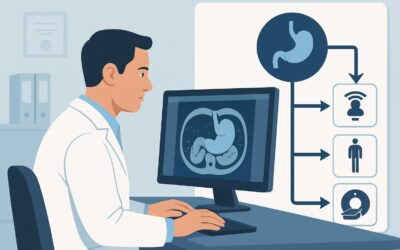
A 78-year-old man with a history of a left middle cerebral artery stroke six months ago is now in a skilled nursing facility. His care team notes frequent coughing and throat clearing specifically when he drinks water, but less so with softer foods. The primary clinical suspicion is a neurogenic oropharyngeal dysphagia directly related to his prior stroke, leading to aspiration of thin liquids. The team needs to confirm this functional deficit, assess its severity, and guide the speech-language pathologist in developing a safe swallowing plan. This article details the American College of Radiology (ACR) recommended imaging workflow for this specific scenario: oropharyngeal dysphagia with an attributable cause. For this presentation, the ACR rates a ‘Fluoroscopy barium swallow modified’ as Usually Appropriate.
Who Fits This Clinical Scenario?
This guidance applies to patients presenting with oropharyngeal dysphagia—difficulty initiating a swallow, often localized to the throat—where a clear underlying cause is already established from the clinical history. The purpose of imaging is not to find a new diagnosis, but to characterize the functional impairment resulting from the known condition. This allows for targeted therapy and dietary modifications.
Inclusion criteria for this workflow:
- Symptoms of oropharyngeal dysphagia (e.g., coughing/choking with swallowing, sensation of food sticking in the throat, nasal regurgitation, drooling).
- A known, pre-existing condition that plausibly explains the dysphagia. Common examples include cerebrovascular accident (stroke), Parkinson’s disease, amyotrophic lateral sclerosis (ALS), myasthenia gravis, prior head and neck surgery, or chemoradiation for head and neck cancer.
Exclusion criteria (patients who fit a different workflow):
- Unexplained Oropharyngeal Dysphagia: If the patient has no known neurologic, muscular, or structural cause for their symptoms, they fit the unexplained oropharyngeal dysphagia scenario, which may have a different workup to identify an underlying etiology.
- Retrosternal or Esophageal Dysphagia: If the patient’s primary complaint is food getting stuck in the chest or lower down after the swallow is initiated, this points toward an esophageal cause and requires a different imaging approach.
- Postoperative Dysphagia: Patients with dysphagia that develops immediately or months after neck, thoracic, or foregut surgery have their own specific ACR guidelines.
What Diagnoses Are You Working Up in This Scenario?
In this scenario, the primary diagnosis (e.g., stroke) is already known. The imaging workup is focused on defining the specific type and severity of the resulting functional swallowing deficit. The differential is not about the underlying disease but about the specific pathophysiologic failures during the swallow, which the imaging study is designed to visualize.
Aspiration and Laryngeal Penetration
This is often the most critical finding to identify. Aspiration is the entry of food, liquid, or saliva into the airway below the level of the true vocal folds. Laryngeal penetration is entry into the laryngeal vestibule but not below the vocal folds. The imaging study aims to determine if aspiration is occurring, with which food/liquid consistencies, and whether the patient has a protective cough response (overt vs. silent aspiration).
Pharyngeal Residue
This refers to incomplete clearance of the bolus from the pharynx after the swallow, with material remaining in the valleculae (at the base of the tongue) or the pyriform sinuses. Significant residue poses a high risk for post-swallow aspiration and can be a sign of poor pharyngeal constriction or tongue base retraction.
Cricopharyngeal Dysfunction
The cricopharyngeus muscle forms the upper esophageal sphincter (UES). In many neurologic disorders, this muscle may fail to relax appropriately, causing obstruction to the bolus flow from the pharynx into the esophagus. This can lead to significant residue, patient discomfort, and risk of aspiration.
Impaired Bolus Formation and Transport
For patients with neuromuscular weakness, the initial oral preparatory phase may be compromised. The imaging study can assess the ability to contain the bolus in the mouth, form it cohesively, and efficiently propel it backward, identifying issues like premature spillage of the bolus into the pharynx before the swallow is initiated.
Why Is a Modified Barium Swallow the Recommended Study for This Presentation?
For oropharyngeal dysphagia with an attributable cause, the ACR designates ‘Fluoroscopy barium swallow modified’ as Usually Appropriate. This study, also known as a Videofluoroscopic Swallow Study (VFSS), is the gold standard for assessing the dynamic function of the oral and pharyngeal phases of swallowing.
The key strength of the modified barium swallow is its ability to provide a real-time, comprehensive view of swallow biomechanics. Performed collaboratively with a speech-language pathologist (SLP), the examination involves having the patient swallow various consistencies of barium-impregnated material (from thin liquids to solids). The fluoroscopic video captures bolus control, timing of swallow initiation, laryngeal elevation, pharyngeal clearance, and UES opening. Crucially, it allows the SLP to test compensatory strategies—such as a chin tuck or head turn—during the study to see if they improve swallowing safety and efficiency. This functional, therapeutic aspect is unique to this examination and directly informs the management plan.
Why are other studies rated lower for this specific scenario?
- A Fluoroscopy biphasic esophagram is rated May be appropriate. While it uses fluoroscopy, its primary focus is on evaluating esophageal structure and motility. It is not designed to provide the detailed, phase-by-phase analysis of the oropharyngeal mechanism or to test different bolus consistencies and compensatory maneuvers, which are central to managing this patient population.
- A CT of the neck and chest with IV contrast is rated Usually not appropriate. CT provides excellent static anatomical detail and is valuable for identifying structural lesions like tumors or abscesses. However, it cannot visualize the dynamic process of swallowing. For a patient with a known neurologic cause, the clinical question is functional, not anatomical, making CT the wrong tool for the job. Furthermore, it carries a substantially higher radiation dose (ACR RRL ☢☢☢☢, 10-30 mSv) compared to the modified barium swallow (ACR RRL ☢☢☢, 1-10 mSv) without answering the relevant clinical question.
What’s Next After a Modified Barium Swallow? Downstream Workflow
The results of the modified barium swallow study (MBSS) directly guide the subsequent management, which is typically led by a speech-language pathologist and the primary clinical team.
If the study is positive (abnormal):
A positive study will identify specific deficits, such as aspiration on thin liquids or significant pharyngeal residue. The report, often co-authored by the radiologist and SLP, will include direct recommendations. The most common next step is the implementation of a dysphagia management plan. This may include:
- Dietary Modification: Prescribing a specific texture-modified diet, such as thickened liquids (nectar, honey, or pudding consistency) or pureed/minced-and-moist solids.
- Compensatory Strategies: Recommending postures (e.g., chin tuck) or maneuvers (e.g., effortful swallow) that were proven effective during the study.
- Swallowing Therapy: Initiating a formal rehabilitation program with an SLP to strengthen muscles and improve coordination.
In cases of severe, uncompensated aspiration, the study may lead to a recommendation for non-oral feeding (e.g., a nasogastric or gastrostomy tube) to ensure safe nutrition and hydration.
If the study is negative (normal):
A normal MBSS in a symptomatic patient can be challenging. It may indicate that the dysphagia is intermittent, sensory-based (e.g., globus sensation), or not related to a motor deficit. The next step is to reconsider the clinical picture. The patient may benefit from a referral to Otolaryngology for a direct endoscopic evaluation (FEES – Fiberoptic Endoscopic Evaluation of Swallowing) or to Gastroenterology if an esophageal component is suspected despite the oropharyngeal symptoms.
Pitfalls to Avoid (and When to Get Help)
Navigating the workup for oropharyngeal dysphagia requires avoiding several common pitfalls to ensure patient safety and diagnostic accuracy.
- Ordering a standard esophagram instead of a modified study: A standard barium swallow focuses on the esophagus and uses large volumes of thin barium, which can be dangerous for a patient at high risk of aspiration. Always specify “modified barium swallow” or “videofluoroscopic swallow study” for this indication.
- Failing to provide adequate clinical history: The radiologist and SLP can tailor the exam most effectively if they know the patient’s underlying diagnosis, baseline diet, and the specific clinical concern (e.g., “aspiration of thin liquids post-CVA”).
- Misinterpreting a negative study: A normal MBSS does not always mean there is no swallowing problem. It is a snapshot in time. If symptoms persist, consider alternative evaluations like FEES, which can assess sensation and be performed over a longer duration.
If a patient shows signs of significant respiratory distress, new-onset fever, or changes in oxygenation after the study, escalate immediately to evaluate for aspiration pneumonia, which is a primary risk the study aims to prevent.
Related ACR Topics and Tools
For a comprehensive overview of imaging for all types of dysphagia, refer to our parent guide. For tools to help select the right study and understand its technical aspects, see the resources below.
- For breadth across all scenarios in Dysphagia, see our parent guide: Dysphagia: ACR Appropriateness Decoded.
- To explore other clinical presentations, use the Imaging Appropriateness Selector.
- To understand the technical details of various fluoroscopic and CT procedures, visit the Imaging Protocol Library.
- To discuss radiation exposure with patients, consult the Radiation Dose Calculator.
Frequently Asked Questions
What is the difference between a modified barium swallow and a standard esophagram?
A modified barium swallow (MBS), or videofluoroscopic swallow study (VFSS), is a dynamic assessment of the oral and pharyngeal phases of swallowing, performed with a speech-language pathologist. It uses small amounts of various food/liquid consistencies to evaluate swallowing function and safety. A standard esophagram (or barium swallow) primarily evaluates the structure and motility of the esophagus, using larger volumes of thin barium, and is not designed to assess for aspiration risk.
Why isn’t CT or MRI recommended for this specific scenario?
In oropharyngeal dysphagia with a known cause (like a stroke), the clinical question is about function, not anatomy. CT and MRI provide excellent, detailed static images of anatomy but cannot visualize the dynamic, coordinated process of swallowing. A modified barium swallow provides a real-time video of the swallow, which is necessary to identify functional deficits like aspiration or pharyngeal residue.
Can a patient on a thickened-liquid diet undergo a modified barium swallow?
Yes. The study is tailored to the patient. The speech-language pathologist will typically start with the consistency the patient is currently on and then test other consistencies, including thin liquids, in a controlled manner to assess if the current diet is appropriate or if changes are needed. This is a key reason the study is so valuable for management.
What if the patient cannot cooperate or sit upright for the study?
Significant cognitive impairment or inability to maintain a seated posture can make a modified barium swallow difficult or impossible. In these cases, a bedside evaluation by a speech-language pathologist is the first step. If imaging is still required, a Fiberoptic Endoscopic Evaluation of Swallowing (FEES), performed by an SLP or otolaryngologist, may be a suitable alternative as it can be done at the bedside without radiation.
Does the modified barium swallow definitively rule out aspiration?
Not entirely. The study is a brief snapshot in time under controlled conditions. A patient might not aspirate during the few swallows of the test but could aspirate later due to fatigue or other factors. However, the study is highly sensitive for identifying the underlying biomechanical deficits that put a patient at risk for aspiration, making it the best available tool to guide safe swallowing recommendations.
Reviewed by Pouyan Golshani, MD, Interventional Radiologist — May 26, 2026