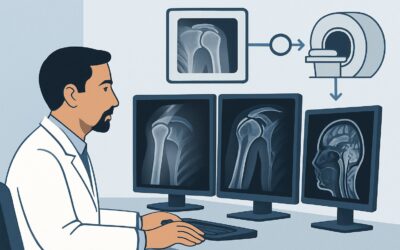
When to Order Imaging for Chronic Shoulder Pain: ACR Appropriateness Decoded

A patient presents with shoulder pain that has lingered for months, limiting their daily activities. The physical exam is suggestive of several possibilities, from rotator cuff tendinopathy to labral pathology. You need to decide on the right initial imaging study to guide management, balancing diagnostic yield with cost and radiation exposure. The American College of Radiology (ACR) Appropriateness Criteria provide an evidence-based framework for this exact decision. This article decodes the ACR guidelines for chronic shoulder pain to help you order the most appropriate study for your patient.
What Does ACR Chronic Shoulder Pain Cover?
The ACR Appropriateness Criteria for Chronic Shoulder Pain address the imaging workup for patients with shoulder pain lasting more than six weeks. The guidelines are structured around common clinical scenarios, including suspected rotator cuff disorders, labral pathology, instability, adhesive capsulitis, osteoarthritis, and biceps tendon abnormalities. These recommendations apply to patients without a history of acute trauma, suspected malignancy, or infection, which are covered under separate ACR topics. The criteria assume that a thorough history and physical examination have been performed. This guidance is designed to help clinicians select the best imaging modality after initial clinical assessment, starting with the most common first-line studies and progressing to more advanced imaging when necessary.
What Imaging Should I Order for Chronic Shoulder Pain? Recommendations by Clinical Scenario
The optimal imaging pathway for chronic shoulder pain depends entirely on the suspected underlying pathology after clinical evaluation. The ACR provides specific guidance for various presentations.
For the undifferentiated patient presenting with chronic shoulder pain, initial imaging begins with Radiography shoulder, which is rated Usually appropriate. This low-dose study is excellent for evaluating bony abnormalities, calcifications, and joint alignment. Advanced modalities like MRI, CT, and even ultrasound are generally not indicated as a first step and are rated Usually not appropriate without initial radiographs.
If you suspect rotator cuff disorders or subacromial subdeltoid bursitis and initial radiographs are normal or inconclusive, the next step involves advanced soft tissue imaging. US shoulder, MR arthrography shoulder, and MRI shoulder without IV contrast are all rated Usually appropriate. Ultrasound offers a dynamic, non-radiation alternative, while MRI provides comprehensive anatomic detail. The choice often depends on institutional expertise and patient factors. A similar pathway is recommended for patients with a history of prior rotator cuff repair, where CT arthrography shoulder also becomes Usually appropriate, particularly for evaluating hardware and bony structures.
When there is a high clinical suspicion for labral pathology or shoulder instability after normal or inconclusive radiographs, the ACR rates both MR arthrography shoulder and MRI shoulder without IV contrast as Usually appropriate. MR arthrography is often preferred for its ability to distend the joint capsule and highlight subtle labral tears. In this context, ultrasound is considered Usually not appropriate due to its limited ability to visualize the labrum.
For suspected adhesive capsulitis with non-diagnostic radiographs, MRI shoulder without IV contrast is Usually appropriate to assess for characteristic findings like axillary recess thickening and capsular enhancement. An Image-guided anesthetic +/- corticosteroid injection is also Usually appropriate, serving both diagnostic and therapeutic purposes. Similarly, if radiographs demonstrate calcific tendinopathy or calcific bursitis, an image-guided injection is Usually appropriate for therapeutic management.
In cases of suspected biceps tendon abnormality, four modalities are rated Usually appropriate: US shoulder, Image-guided anesthetic +/- corticosteroid injection, MR arthrography shoulder, and MRI shoulder without IV contrast. Ultrasound is particularly effective for dynamic evaluation of the long head of the biceps tendon in the bicipital groove.
Finally, if initial radiographs have already demonstrated osteoarthritis, the next step is often pre-procedural planning. MRI shoulder without IV contrast is Usually appropriate to evaluate the integrity of the rotator cuff and glenoid bone stock before potential arthroplasty. CT shoulder without IV contrast may also be appropriate for detailed bony assessment.
ACR Imaging Recommendations Table
| Clinical Scenario | Top Procedure | ACR Rating | Adult RRL | Pediatric RRL |
|---|---|---|---|---|
| Chronic shoulder pain. Initial imaging. | Radiography shoulder | Usually appropriate | ☢ <0.1 mSv | |
| Chronic shoulder pain. Suspect rotator cuff disorders or subacromial subdeltoid bursitis (no prior surgery). Initial radiographs normal or inconclusive. Next imaging study. | US shoulder | Usually appropriate | O 0 mSv | O 0 mSv [ped] |
| Chronic shoulder pain. Radiographs demonstrate calcific tendinopathy or calcific bursitis. Next imaging study. | Image-guided anesthetic +/- corticosteroid injection shoulder or surrounding structures | Usually appropriate | Varies | Varies |
| Chronic shoulder pain. Suspect labral pathology or shoulder instability. Initial radiographs normal or inconclusive. Next imaging study. | MR arthrography shoulder | Usually appropriate | O 0 mSv | O 0 mSv [ped] |
| Chronic shoulder pain. Suspect adhesive capsulitis. Initial radiographs normal or inconclusive. Next imaging study. | MRI shoulder without IV contrast | Usually appropriate | O 0 mSv | O 0 mSv [ped] |
| Chronic shoulder pain. Suspect biceps tendon abnormality. Initial radiographs normal or inconclusive. Next imaging study. | US shoulder | Usually appropriate | O 0 mSv | O 0 mSv [ped] |
| Chronic shoulder pain. Initial radiographs demonstrate osteoarthritis. Next imaging study. | MRI shoulder without IV contrast | Usually appropriate | O 0 mSv | O 0 mSv [ped] |
| Chronic shoulder pain. History of prior rotator cuff repair. Suspect rotator cuff disorders or subacromial subdeltoid bursitis. Initial radiographs normal or inconclusive. Next imaging study. | US shoulder | Usually appropriate | O 0 mSv | O 0 mSv [ped] |
Adult vs. Pediatric Chronic Shoulder Pain Imaging: Radiation Dose Tradeoffs
While chronic shoulder pain is less common in children than adults, imaging decisions in pediatric patients must prioritize radiation safety according to the As Low As Reasonably Achievable (ALARA) principle. For most shoulder pathologies, the preferred advanced imaging modalities are MRI and ultrasound, both of which are radiation-free. The ACR guidelines reflect this by assigning a relative radiation level (RRL) of ‘O’ (zero) to these studies for both adult and pediatric populations.
When ionizing radiation is necessary, as with CT or nuclear medicine scans, the potential risks of cumulative radiation exposure are more significant in younger patients. The ACR provides specific pediatric RRLs where applicable, which may differ from adult values. For example, the FDG-PET/CT scan, while usually not appropriate for this indication, has a pediatric RRL of ☢ ☢ ☢ ☢ (3-10 mSv), a different range than the adult RRL of ☢ ☢ ☢ ☢ (10-30 mSv). This highlights the importance of using dose-reduction techniques and considering non-ionizing alternatives whenever possible in the pediatric population.
Imaging Protocol Details for Chronic Shoulder Pain
Once you’ve decided on the right study, the specific imaging protocol is critical for diagnostic accuracy. A well-designed protocol ensures all relevant anatomy is captured with optimal resolution and contrast. Our protocol guides provide detailed, scannable information on technique, patient positioning, and key imaging sequences for the studies recommended above.
Tools to Help You Order the Right Study
Navigating imaging guidelines and radiation safety can be complex. GigHz provides a suite of tools designed to support clinical decision-making at the point of care. These resources help ensure that every imaging order is appropriate, safe, and based on the latest evidence.
The Imaging Appropriateness Selector provides direct access to the full ACR guidelines, covering hundreds of clinical variants beyond chronic shoulder pain. It allows you to quickly find evidence-based recommendations for a wide range of patient presentations.
Our Imaging Protocol Library offers detailed, institution-agnostic protocols for MRI, CT, and other modalities. These guides are designed for residents and ordering providers to understand the key components of a high-quality imaging study.
The Radiation Dose Calculator is a valuable tool for estimating and tracking cumulative radiation exposure from medical imaging. It helps facilitate informed conversations with patients about the risks and benefits of studies that use ionizing radiation.
Why is radiography the first step for most chronic shoulder pain?
Radiography is recommended as the initial imaging study because it is widely available, cost-effective, and uses a very low dose of radiation. It is highly effective for assessing for fractures, dislocations, glenohumeral osteoarthritis, and calcific deposits, which are common causes of shoulder pain. It provides a crucial baseline assessment of bony anatomy before considering more advanced, expensive, and higher-radiation studies like CT or MRI.
When is an MR arthrogram better than a standard non-contrast MRI?
An MR arthrogram is often superior to a standard MRI for evaluating suspected labral tears, shoulder instability, or subtle rotator cuff tears. The procedure involves injecting dilute gadolinium-based contrast directly into the glenohumeral joint, which distends the joint capsule. This separation of intra-articular structures provides exquisite detail of the labrum, articular cartilage, and the undersurface of the rotator cuff, making it the test of choice for these specific indications.
Is ultrasound a good alternative to MRI for rotator cuff tears?
Yes, for suspected rotator cuff pathology, the ACR rates ultrasound as “Usually appropriate,” equivalent to MRI. Ultrasound is an excellent non-radiation modality that allows for dynamic assessment of tendons and can detect bursitis and effusions. Its accuracy is highly dependent on the skill and experience of the sonographer. In experienced hands, it can be as sensitive and specific as MRI for full-thickness rotator cuff tears. MRI may be preferred for a more global assessment of the shoulder, including intra-articular structures and muscle atrophy.
Why are CT scans “Usually not appropriate” for most initial workups?
CT scans are generally rated “Usually not appropriate” for the initial evaluation of chronic shoulder pain because they deliver a significant dose of ionizing radiation and provide inferior soft tissue contrast compared to MRI or ultrasound. Most causes of chronic shoulder pain, such as tendinopathy, bursitis, and labral tears, are soft tissue pathologies. CT is more valuable for assessing complex fractures, evaluating bone loss in the setting of instability (e.g., a bony Bankart lesion), or for pre-operative planning for shoulder arthroplasty where detailed bony anatomy is required.
What does “May be appropriate (Disagreement)” mean for US in suspected adhesive capsulitis?
This rating indicates that the expert panel did not reach a consensus on the value of ultrasound for this specific indication. While some evidence suggests ultrasound can identify findings like axillary recess thickening or restricted motion during dynamic imaging, its role is not as clearly established as MRI. Therefore, while some experts may find it useful, it is not considered a primary, universally accepted modality for diagnosing adhesive capsulitis, and MRI remains the more definitive advanced imaging test.
Frequently Asked Questions
Why is radiography the first step for most chronic shoulder pain?
Radiography is recommended as the initial imaging study because it is widely available, cost-effective, and uses a very low dose of radiation. It is highly effective for assessing for fractures, dislocations, glenohumeral osteoarthritis, and calcific deposits, which are common causes of shoulder pain. It provides a crucial baseline assessment of bony anatomy before considering more advanced, expensive, and higher-radiation studies like CT or MRI.
When is an MR arthrogram better than a standard non-contrast MRI?
An MR arthrogram is often superior to a standard MRI for evaluating suspected labral tears, shoulder instability, or subtle rotator cuff tears. The procedure involves injecting dilute gadolinium-based contrast directly into the glenohumeral joint, which distends the joint capsule. This separation of intra-articular structures provides exquisite detail of the labrum, articular cartilage, and the undersurface of the rotator cuff, making it the test of choice for these specific indications.
Is ultrasound a good alternative to MRI for rotator cuff tears?
Yes, for suspected rotator cuff pathology, the ACR rates ultrasound as “Usually appropriate,” equivalent to MRI. Ultrasound is an excellent non-radiation modality that allows for dynamic assessment of tendons and can detect bursitis and effusions. Its accuracy is highly dependent on the skill and experience of the sonographer. In experienced hands, it can be as sensitive and specific as MRI for full-thickness rotator cuff tears. MRI may be preferred for a more global assessment of the shoulder, including intra-articular structures and muscle atrophy.
Why are CT scans “Usually not appropriate” for most initial workups?
CT scans are generally rated “Usually not appropriate” for the initial evaluation of chronic shoulder pain because they deliver a significant dose of ionizing radiation and provide inferior soft tissue contrast compared to MRI or ultrasound. Most causes of chronic shoulder pain, such as tendinopathy, bursitis, and labral tears, are soft tissue pathologies. CT is more valuable for assessing complex fractures, evaluating bone loss in the setting of instability (e.g., a bony Bankart lesion), or for pre-operative planning for shoulder arthroplasty where detailed bony anatomy is required.
What does “May be appropriate (Disagreement)” mean for US in suspected adhesive capsulitis?
This rating indicates that the expert panel did not reach a consensus on the value of ultrasound for this specific indication. While some evidence suggests ultrasound can identify findings like axillary recess thickening or restricted motion during dynamic imaging, its role is not as clearly established as MRI. Therefore, while some experts may find it useful, it is not considered a primary, universally accepted modality for diagnosing adhesive capsulitis, and MRI remains the more definitive advanced imaging test.
Reviewed by Pouyan Golshani, MD, Interventional Radiologist — June 27, 2026