When to Order Imaging for Dementia: ACR Appropriateness Decoded

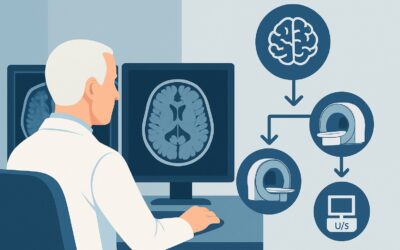
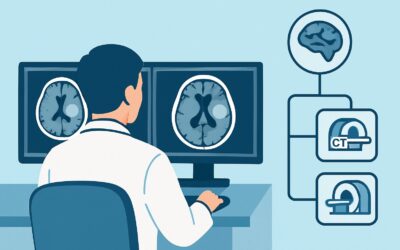
An 82-year-old patient presents with family, who report a six-month history of progressive memory loss and confusion. The differential diagnosis is broad, spanning Alzheimer disease, vascular dementia, and other neurodegenerative conditions. You need to rule out structural causes and gather data to guide further workup, but which initial imaging study is most appropriate? An MRI offers superior soft-tissue detail, but a CT is faster and more accessible. When is advanced imaging like PET indicated? This guide decodes the American College of Radiology (ACR) Appropriateness Criteria for dementia, providing clear, evidence-based recommendations to help you choose the right test for the right clinical scenario.
What Does the ACR Appropriateness Criteria for Dementia Cover?
The ACR guidelines for dementia focus on the initial imaging evaluation for adult patients presenting with cognitive impairment. The criteria are organized by specific clinical presentations and suspected etiologies. This includes scenarios such as mild cognitive impairment (MCI), suspected Alzheimer disease (both typical and atypical presentations), frontotemporal dementia (FTD), dementia with Lewy bodies (DLB), vascular dementia, and normal pressure hydrocephalus (NPH). The guidelines also address the distinct workup for rapidly progressive dementia and provide recommendations for imaging before and during treatment with newer anti-amyloid therapies. These criteria are designed to evaluate chronic or subacute cognitive decline; they do not apply to patients with acute delirium, cognitive changes in the setting of acute trauma, or initial evaluation of suspected stroke, which have their own dedicated guidelines.
What Imaging Should I Order for Dementia? Recommendations by Clinical Scenario
The optimal imaging strategy for dementia depends heavily on the clinical context. The ACR provides specific guidance for various presentations to maximize diagnostic yield while minimizing unnecessary radiation or cost.
For an initial workup of mild cognitive impairment not meeting criteria for dementia, an MRI head without IV contrast is usually appropriate to assess for atrophy patterns or occult vascular disease. A non-contrast CT head is also usually appropriate, serving as a reasonable alternative if MRI is unavailable or contraindicated. Functional imaging, including Amyloid PET/CT and FDG-PET/CT, are also rated as usually appropriate in this context to evaluate for underlying pathology that could predict progression to dementia.
When Alzheimer disease (AD) is suspected, the recommendations vary slightly by presentation. For a typical clinical presentation with memory deficits, MRI head without IV contrast is the primary structural imaging modality. Amyloid PET/CT and FDG-PET/CT are also usually appropriate to detect amyloid plaques and patterns of hypometabolism characteristic of AD. For an atypical clinical presentation of suspected AD, the same studies are usually appropriate, with the addition of Tau PET/CT, which can help identify the specific pathology in less straightforward cases.
With the advent of new therapies, imaging plays a crucial role in management. For a patient with known AD considering therapy with anti-amyloid monoclonal antibodies, both a baseline MRI head without IV contrast (to screen for contraindications like extensive microhemorrhage) and an Amyloid PET/CT brain (to confirm the presence of amyloid plaques) are usually appropriate. For posttreatment imaging in patients undergoing this therapy, a follow-up MRI head without IV contrast is usually appropriate to monitor for treatment-related side effects like amyloid-related imaging abnormalities (ARIA).
For other suspected dementia types, structural imaging remains the first step. In cases of suspected frontotemporal dementia (cognitive impairment with behavioral abnormalities or aphasia) or suspected dementia with Lewy bodies (cognitive impairment with hallucinations or parkinsonism), an MRI head without IV contrast or a CT head without IV contrast are both usually appropriate. In these scenarios, functional imaging can be a key differentiator; FDG-PET/CT is usually appropriate for both, while SPECT/CT brain striatal imaging is specifically useful and usually appropriate for suspected dementia with Lewy bodies.
When vascular dementia is suspected due to a recent stroke or stepwise decline, MRI head without IV contrast is the most appropriate initial study to characterize the burden of ischemic disease. For suspected normal pressure hydrocephalus (gait disturbance, incontinence), both MRI head without IV contrast and CT head without IV contrast are usually appropriate to assess for the characteristic ventricular enlargement. Finally, for the urgent workup of rapidly progressive dementia, an MRI head without and with IV contrast is usually appropriate to evaluate for a wide range of causes, including inflammatory, infectious, or neoplastic processes.
ACR Imaging Recommendations for Dementia: A Scannable Table
| Clinical Scenario | Top Procedure | ACR Rating | Adult RRL | Pediatric RRL |
|---|---|---|---|---|
| Adult. Mild cognitive impairment not meeting criteria for dementia. Initial imaging. | MRI head without IV contrast | Usually appropriate | O 0 mSv | O 0 mSv [ped] |
| Adult. Cognitive impairment with memory deficits. Suspect Alzheimer disease with typical clinical presentation. Initial imaging. | MRI head without IV contrast | Usually appropriate | O 0 mSv | O 0 mSv [ped] |
| Adult. Cognitive impairment with memory deficits. Suspect Alzheimer disease with atypical clinical presentation. Initial imaging. | MRI head without IV contrast | Usually appropriate | O 0 mSv | O 0 mSv [ped] |
| Adult. Known Alzheimer disease considering therapy with anti-amyloid monoclonal antibodies. Pretreatment imaging. | MRI head without IV contrast | Usually appropriate | O 0 mSv | O 0 mSv [ped] |
| Adult. Known Alzheimer disease undergoing therapy with anti-amyloid monoclonal antibodies. Posttreatment imaging. | MRI head without IV contrast | Usually appropriate | O 0 mSv | O 0 mSv [ped] |
| Adult. Cognitive impairment with behavioral abnormalities or progressive aphasia. Suspect frontotemporal dementia. Initial imaging. | MRI head without IV contrast | Usually appropriate | O 0 mSv | O 0 mSv [ped] |
| Adult. Cognitive impairment with visual hallucinations or parkinsonian symptoms. Suspect dementia with Lewy bodies. Initial imaging. | MRI head without IV contrast | Usually appropriate | O 0 mSv | O 0 mSv [ped] |
| Adult. Cognitive impairment with recent stroke or stepwise decline. Suspect vascular dementia. Initial imaging. | MRI head without IV contrast | Usually appropriate | O 0 mSv | O 0 mSv [ped] |
| Adult. Cognitive impairment with gait disturbance or urinary incontinence. Suspect normal pressure hydrocephalus. Initial imaging. | MRI head without IV contrast | Usually appropriate | O 0 mSv | O 0 mSv [ped] |
| Adult. Rapidly progressive dementia. Initial imaging. | MRI head without and with IV contrast | Usually appropriate | O 0 mSv | O 0 mSv [ped] |
Adult vs. Pediatric Dementia Imaging: Key Radiation Dose Considerations
Dementia is overwhelmingly a condition affecting older adults, and the ACR variants for this topic are exclusively for adult patients. However, the Relative Radiation Level (RRL) data provided by the ACR often includes pediatric estimates for common procedures like head CT. This highlights a core principle of medical imaging: As Low As Reasonably Achievable (ALARA). While a single head CT carries a low radiation dose (typically 1-10 mSv for an adult), the cumulative dose over a patient’s lifetime is a critical consideration, especially in younger populations. For any imaging involving ionizing radiation, the potential diagnostic benefit must outweigh the long-term risks. In the context of dementia evaluation, non-radiation modalities like MRI are consistently preferred for structural assessment when available and not contraindicated. When CT or PET/CT is necessary, protocols should be optimized to use the lowest possible radiation dose that still achieves diagnostic image quality.
Detailed Imaging Protocol Guides for Evaluating Dementia
Once you’ve decided on the right study, the specific imaging protocol is essential for acquiring high-quality, diagnostic images. Our protocol guides provide detailed, practical information on technique, contrast parameters, and key interpretation principles for the studies recommended in the ACR criteria.
Decision-Support Tools for Ordering the Right Dementia Imaging Study
Choosing the correct imaging study from a long list of possibilities can be challenging. GigHz offers several tools designed to support evidence-based clinical decision-making at the point of care.
The Imaging Appropriateness Selector provides a fast, searchable interface to the complete ACR guidelines. If you are evaluating a clinical scenario not covered here, this tool can help you find the relevant recommendations quickly.
For detailed procedural information, the Imaging Protocol Library offers in-depth guides on how to perform specific exams. These resources are valuable for trainees and clinicians seeking to understand the technical aspects of imaging studies.
To help in discussions with patients about the risks and benefits of imaging, the Radiation Dose Calculator is a useful tool for estimating cumulative radiation exposure and contextualizing the dose from recommended procedures.
Why is non-contrast MRI often preferred over CT for a dementia workup?
MRI without contrast is generally preferred because it provides superior soft-tissue resolution without using ionizing radiation. This allows for a more detailed assessment of brain structures, including the identification of specific patterns of atrophy (e.g., medial temporal lobe atrophy in Alzheimer disease), the burden of small vessel ischemic disease, and the detection of microhemorrhages, which are important in diagnosing vascular dementia and for screening prior to anti-amyloid therapies.
When is PET imaging (Amyloid, FDG, or Tau) indicated?
Positron Emission Tomography (PET) is a form of functional imaging used to clarify a diagnosis when clinical presentation is atypical or when structural imaging is inconclusive. Amyloid PET is used to confirm the presence of amyloid plaques, a core pathology of Alzheimer disease, and is particularly useful for confirming eligibility for anti-amyloid drugs. FDG-PET assesses patterns of glucose metabolism in the brain, which can help differentiate between dementia subtypes (e.g., Alzheimer’s vs. frontotemporal dementia). Tau PET is an emerging tool used to visualize tau pathology, another hallmark of Alzheimer’s, and is typically reserved for complex or atypical cases.
What is the role of imaging in monitoring patients on anti-amyloid therapies?
Imaging is critical for both selecting and monitoring patients on anti-amyloid monoclonal antibodies. Before starting therapy, a baseline brain MRI is required to screen for conditions that could increase the risk of side effects, such as extensive microhemorrhages. During treatment, periodic surveillance with non-contrast brain MRI is mandatory to monitor for Amyloid-Related Imaging Abnormalities (ARIA), which can manifest as edema (ARIA-E) or microhemorrhages/siderosis (ARIA-H). Early detection of ARIA is essential for safe management of these therapies.
Is intravenous contrast ever needed for a dementia workup?
For most routine dementia evaluations, intravenous contrast is not necessary. However, it is rated as “usually appropriate” in the specific setting of rapidly progressive dementia. In this scenario, the differential is broad and includes causes like prion disease, autoimmune encephalitis, central nervous system vasculitis, or malignancy, where abnormal contrast enhancement can be a key diagnostic finding. For other, more slowly progressive dementia presentations, contrast is usually not appropriate unless a specific finding on the non-contrast study (like a suspected mass) requires further characterization.
What are the key imaging findings in suspected Normal Pressure Hydrocephalus (NPH)?
In a patient with the classic triad of gait disturbance, cognitive impairment, and urinary incontinence, imaging is used to look for signs of Normal Pressure Hydrocephalus (NPH). The key finding on CT or MRI is ventriculomegaly (enlarged ventricles) that is out of proportion to the degree of sulcal widening, particularly at the high cerebral convexities. This is often described as a high “Evans’ index” (ratio of the frontal horn width to the maximal biparietal diameter). Other supportive findings on MRI can include an increased aqueductal flow void and upward bowing of the corpus callosum.
Frequently Asked Questions
Why is non-contrast MRI often preferred over CT for a dementia workup?
MRI without contrast is generally preferred because it provides superior soft-tissue resolution without using ionizing radiation. This allows for a more detailed assessment of brain structures, including the identification of specific patterns of atrophy (e.g., medial temporal lobe atrophy in Alzheimer disease), the burden of small vessel ischemic disease, and the detection of microhemorrhages, which are important in diagnosing vascular dementia and for screening prior to anti-amyloid therapies.
When is PET imaging (Amyloid, FDG, or Tau) indicated?
Positron Emission Tomography (PET) is a form of functional imaging used to clarify a diagnosis when clinical presentation is atypical or when structural imaging is inconclusive. Amyloid PET is used to confirm the presence of amyloid plaques, a core pathology of Alzheimer disease, and is particularly useful for confirming eligibility for anti-amyloid drugs. FDG-PET assesses patterns of glucose metabolism in the brain, which can help differentiate between dementia subtypes (e.g., Alzheimer’s vs. frontotemporal dementia). Tau PET is an emerging tool used to visualize tau pathology, another hallmark of Alzheimer’s, and is typically reserved for complex or atypical cases.
What is the role of imaging in monitoring patients on anti-amyloid therapies?
Imaging is critical for both selecting and monitoring patients on anti-amyloid monoclonal antibodies. Before starting therapy, a baseline brain MRI is required to screen for conditions that could increase the risk of side effects, such as extensive microhemorrhages. During treatment, periodic surveillance with non-contrast brain MRI is mandatory to monitor for Amyloid-Related Imaging Abnormalities (ARIA), which can manifest as edema (ARIA-E) or microhemorrhages/siderosis (ARIA-H). Early detection of ARIA is essential for safe management of these therapies.
Is intravenous contrast ever needed for a dementia workup?
For most routine dementia evaluations, intravenous contrast is not necessary. However, it is rated as “usually appropriate” in the specific setting of rapidly progressive dementia. In this scenario, the differential is broad and includes causes like prion disease, autoimmune encephalitis, central nervous system vasculitis, or malignancy, where abnormal contrast enhancement can be a key diagnostic finding. For other, more slowly progressive dementia presentations, contrast is usually not appropriate unless a specific finding on the non-contrast study (like a suspected mass) requires further characterization.
What are the key imaging findings in suspected Normal Pressure Hydrocephalus (NPH)?
In a patient with the classic triad of gait disturbance, cognitive impairment, and urinary incontinence, imaging is used to look for signs of Normal Pressure Hydrocephalus (NPH). The key finding on CT or MRI is ventriculomegaly (enlarged ventricles) that is out of proportion to the degree of sulcal widening, particularly at the high cerebral convexities. This is often described as a high “Evans’ index” (ratio of the frontal horn width to the maximal biparietal diameter). Other supportive findings on MRI can include an increased aqueductal flow void and upward bowing of the corpus callosum.
Reviewed by Pouyan Golshani, MD, Interventional Radiologist — June 27, 2026