When to Order Imaging for Imaging of Mediastinal Masses: ACR Appropriateness Decoded

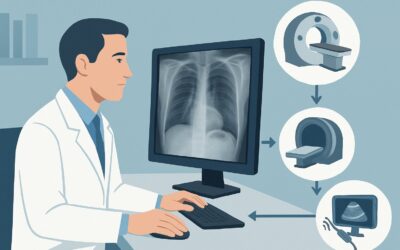
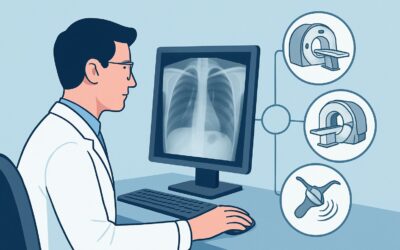
A 55-year-old patient presents with a persistent cough and vague chest discomfort. The initial chest radiograph reveals a widened mediastinum, raising suspicion for a mass. Now, you need to decide the next best step for characterization. Should you order a computed tomography (CT) scan with or without contrast? Or is magnetic resonance imaging (MRI) the better initial choice? Navigating the imaging workup for a potential mediastinal mass requires a clear, evidence-based approach to ensure a timely and accurate diagnosis while minimizing unnecessary radiation or invasive procedures. This guide decodes the American College of Radiology (ACR) Appropriateness Criteria to help you select the right study for the right patient at the right time.
What Does ACR Imaging of Mediastinal Masses Cover?
The ACR Appropriateness Criteria for Imaging of Mediastinal Masses provide guidance for evaluating patients with a suspected or incidentally discovered mass in the mediastinum. The mediastinum is anatomically divided into anterior, middle, and posterior compartments, each with a distinct differential diagnosis. These guidelines apply to the initial detection and subsequent characterization of such masses in both adult and pediatric populations. The recommendations are structured around common clinical scenarios, such as an indeterminate finding on a chest radiograph or an unresolved question after an initial CT or MRI.
These criteria are specifically focused on the diagnostic workup. They do not cover the routine surveillance of known, stable benign masses or the staging of a confirmed malignancy, which are addressed in separate, disease-specific ACR guidelines. The primary goal is to provide a logical, stepwise imaging pathway to characterize the mass, determine its extent, and guide subsequent management, which may include biopsy, surveillance, or surgical intervention.
What Imaging Should I Order for Imaging of Mediastinal Masses? Recommendations by Clinical Scenario
The optimal imaging strategy for a mediastinal mass depends on the clinical context and findings from prior studies. The ACR provides clear, scenario-based recommendations to guide this process.
For the initial imaging of a clinically suspected mediastinal mass, a chest radiograph is Usually Appropriate as a first-line examination. If cross-sectional imaging is needed for initial characterization, both CT chest with IV contrast and MRI of the chest (with or without contrast) are also rated as Usually Appropriate. CT provides excellent spatial resolution and is widely available, making it a common choice. MRI offers superior soft-tissue contrast, which can be particularly useful for differentiating cystic from solid components or assessing for neurovascular involvement without using ionizing radiation.
If a mediastinal mass is found to be indeterminate on radiography, the next step is typically cross-sectional imaging. Both CT chest (with or without contrast) and MRI chest (with or without contrast) are considered Usually Appropriate. The choice between them often depends on the suspected diagnosis, patient factors (like renal function or contrast allergies), and the specific clinical question. For example, MRI is often preferred for suspected neurogenic tumors in the posterior mediastinum or for evaluating cystic masses.
When a mediastinal mass remains indeterminate after a CT scan, further characterization is needed. In this scenario, MRI of the chest (with or without contrast) is Usually Appropriate to leverage its superior soft-tissue resolution. For assessing metabolic activity, particularly if lymphoma or other malignancy is suspected, FDG-PET/CT is rated as May be appropriate. An image-guided transthoracic needle biopsy also May be appropriate if a tissue diagnosis is required to guide treatment and the mass is safely accessible.
Following an indeterminate finding on an FDG-PET/CT, obtaining a tissue diagnosis becomes a higher priority. An image-guided transthoracic needle biopsy is Usually Appropriate. If further non-invasive characterization is desired, MRI of the chest (with or without contrast) is also Usually Appropriate to provide additional anatomic and tissue-specific information that PET/CT may not offer.
Finally, if a mass remains indeterminate after an MRI, an image-guided transthoracic needle biopsy is Usually Appropriate to establish a definitive diagnosis. In some cases, surveillance with a follow-up MRI may also be appropriate, particularly for lesions with benign features. FDG-PET/CT May be appropriate at this stage to assess for metabolic activity if this has not been performed previously and malignancy remains a concern.
ACR Imaging Recommendations Table
| Clinical Scenario | Top Procedure | ACR Rating | Adult RRL | Pediatric RRL |
|---|---|---|---|---|
| Clinically suspected mediastinal mass. Initial imaging. | Radiography chest | Usually appropriate | ☢ <0.1 mSv | ☢ <0.03 mSv [ped] |
| Indeterminate mediastinal mass on radiography. Next imaging study. | MRI chest without and with IV contrast | Usually appropriate | O 0 mSv | O 0 mSv [ped] |
| Indeterminate mediastinal mass on CT. Next imaging study. | MRI chest without and with IV contrast | Usually appropriate | O 0 mSv | O 0 mSv [ped] |
| Indeterminate mediastinal mass on FDG-PET/CT. Next imaging study. | Image-guided transthoracic needle biopsy | Usually appropriate | Varies | Varies |
| Indeterminate mediastinal mass on MRI. Next imaging study or surveillance. | Image-guided transthoracic needle biopsy | Usually appropriate | Varies | Varies |
Adult vs. Pediatric Imaging of Mediastinal Masses Imaging: Radiation Dose Tradeoffs
Evaluating mediastinal masses in children requires special consideration of radiation exposure due to their increased sensitivity to ionizing radiation and longer life expectancy, which elevates the lifetime risk of radiation-induced malignancy. The principle of As Low As Reasonably Achievable (ALARA) is paramount. The ACR guidelines reflect this by assigning higher relative radiation level (RRL) symbols for pediatric CT and PET/CT scans compared to their adult counterparts (e.g., ☢ ☢ ☢ ☢ for pediatric CT chest vs. ☢ ☢ ☢ for adults).
Consequently, non-ionizing modalities are often favored in pediatric patients when clinically appropriate. MRI is an excellent problem-solving tool for mediastinal masses in children, offering superb soft-tissue contrast without any radiation dose. It is particularly valuable for evaluating posterior mediastinal neurogenic tumors and complex cystic lesions. While CT may still be necessary for assessing calcifications, osseous involvement, or in urgent situations, protocols should be optimized to use the lowest possible dose. Communication with a pediatric radiologist is crucial to tailor the imaging plan to the individual child, balancing diagnostic needs with long-term safety.
Imaging Protocol Details for Imaging of Mediastinal Masses
Once you’ve decided on the right study, the specific imaging protocol is critical for obtaining diagnostic-quality images. Our protocol guides provide detailed, scannable information on technique, contrast administration, and key interpretation principles for the studies recommended in these ACR criteria. Explore the relevant guides below:
- CT Chest/Abdomen/Pelvis with IV Contrast
- CT Chest Without Contrast
- Breast Biopsy (Ultrasound-Guided)
Tools to Help You Order the Right Study
Selecting the most appropriate imaging study can be complex. GigHz offers a suite of tools designed to support clinical decision-making and streamline the ordering process, ensuring adherence to evidence-based standards like the ACR Appropriateness Criteria.
For clinical scenarios beyond mediastinal masses, the Imaging Appropriateness Selector provides a fast, searchable interface to access the full library of ACR guidelines. This tool helps you quickly find evidence-based recommendations for hundreds of clinical variants, ensuring you order the right test every time.
To ensure your order is executed correctly, the Imaging Protocol Library offers detailed, institution-agnostic protocols for a wide range of CT, MRI, and other imaging studies. It serves as an essential reference for trainees and practicing physicians to understand the technical details behind the images they order.
When discussing imaging options with patients, especially those involving radiation, the Radiation Dose Calculator is an invaluable resource. It helps estimate and track cumulative radiation exposure from medical imaging, facilitating informed conversations about the risks and benefits of different diagnostic pathways.
Why is CT with contrast often preferred over non-contrast for an initial evaluation of a mediastinal mass?
Intravenous contrast enhances vascular structures and improves the characterization of soft-tissue masses. It helps delineate the mass from adjacent vessels, assess its vascularity, and identify areas of necrosis. This information is crucial for narrowing the differential diagnosis. For example, a highly vascular mass might suggest a different etiology than a non-enhancing, cystic-appearing lesion.
When should I choose MRI over CT for a mediastinal mass?
MRI is often preferred when superior soft-tissue contrast is needed. It is particularly useful for evaluating posterior mediastinal masses (to assess for neural foraminal extension), characterizing cystic lesions, or differentiating tumor from surrounding muscle or fibrosis. It is also the modality of choice in young patients and pregnant women to avoid ionizing radiation.
What is the role of FDG-PET/CT in the workup of a mediastinal mass?
According to the ACR, FDG-PET/CT is generally not a first-line imaging tool for the initial workup. It is rated as “May be appropriate” for problem-solving after an indeterminate CT. Its primary role is to assess the metabolic activity of a lesion, which can help differentiate benign from malignant processes and is essential for staging known malignancies like lymphoma or lung cancer. However, it is not always specific, as inflammatory conditions can also be FDG-avid.
Is a biopsy always necessary for an indeterminate mediastinal mass?
Not always. If imaging features are highly suggestive of a benign entity (e.g., a simple pericardial cyst or a typical thymic cyst), surveillance may be recommended instead of an immediate biopsy. However, for solid, enhancing, or growing masses where malignancy is a concern, a tissue diagnosis via image-guided biopsy or surgical excision is typically required to guide treatment.
Why is ultrasound rated as “Usually not appropriate” for most mediastinal mass evaluations?
The mediastinum is located deep within the chest, surrounded by the sternum, spine, and air-filled lungs. These structures block the transmission of ultrasound waves, making it impossible to visualize most mediastinal compartments adequately from a standard transthoracic approach. While ultrasound can be used in specific situations (e.g., guiding a biopsy of an anterior mass abutting the chest wall or via endoscopic/endobronchial routes), it is not a primary tool for initial diagnosis or characterization.
Frequently Asked Questions
Why is CT with contrast often preferred over non-contrast for an initial evaluation of a mediastinal mass?
Intravenous contrast enhances vascular structures and improves the characterization of soft-tissue masses. It helps delineate the mass from adjacent vessels, assess its vascularity, and identify areas of necrosis. This information is crucial for narrowing the differential diagnosis. For example, a highly vascular mass might suggest a different etiology than a non-enhancing, cystic-appearing lesion.
When should I choose MRI over CT for a mediastinal mass?
MRI is often preferred when superior soft-tissue contrast is needed. It is particularly useful for evaluating posterior mediastinal masses (to assess for neural foraminal extension), characterizing cystic lesions, or differentiating tumor from surrounding muscle or fibrosis. It is also the modality of choice in young patients and pregnant women to avoid ionizing radiation.
What is the role of FDG-PET/CT in the workup of a mediastinal mass?
According to the ACR, FDG-PET/CT is generally not a first-line imaging tool for the initial workup. It is rated as “May be appropriate” for problem-solving after an indeterminate CT. Its primary role is to assess the metabolic activity of a lesion, which can help differentiate benign from malignant processes and is essential for staging known malignancies like lymphoma or lung cancer. However, it is not always specific, as inflammatory conditions can also be FDG-avid.
Is a biopsy always necessary for an indeterminate mediastinal mass?
Not always. If imaging features are highly suggestive of a benign entity (e.g., a simple pericardial cyst or a typical thymic cyst), surveillance may be recommended instead of an immediate biopsy. However, for solid, enhancing, or growing masses where malignancy is a concern, a tissue diagnosis via image-guided biopsy or surgical excision is typically required to guide treatment.
Why is ultrasound rated as “Usually not appropriate” for most mediastinal mass evaluations?
The mediastinum is located deep within the chest, surrounded by the sternum, spine, and air-filled lungs. These structures block the transmission of ultrasound waves, making it impossible to visualize most mediastinal compartments adequately from a standard transthoracic approach. While ultrasound can be used in specific situations (e.g., guiding a biopsy of an anterior mass abutting the chest wall or via endoscopic/endobronchial routes), it is not a primary tool for initial diagnosis or characterization.
Reviewed by Pouyan Golshani, MD, Interventional Radiologist — June 27, 2026