When to Order Imaging for Inflammatory Ear Disease: ACR Appropriateness Decoded
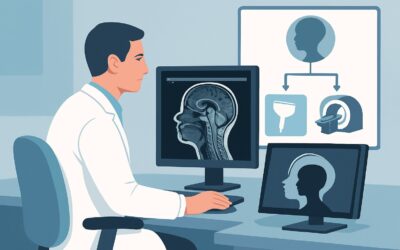
It’s late in your shift, and you’re evaluating a patient with severe ear pain, fever, and facial nerve weakness. The clinical picture suggests a complicated infection, but the next step is unclear. Do you order a Computed Tomography (CT) scan to assess for mastoiditis and bony erosion, or is Magnetic Resonance Imaging (MRI) better for evaluating soft tissue and potential intracranial spread? Choosing the right initial imaging study is critical for timely diagnosis and management, but it also involves balancing diagnostic yield with radiation exposure and cost. This guide decodes the American College of Radiology (ACR) Appropriateness Criteria for inflammatory ear disease, providing clear, evidence-based recommendations to help you make the right call for your patient.
What Does ACR Inflammatory Ear Disease Cover?
The ACR Appropriateness Criteria for Inflammatory Ear Disease provide guidance for imaging in adult patients presenting with symptoms suggestive of infection or inflammation of the external, middle, or inner ear. The guidelines are structured around common clinical scenarios, helping clinicians select the most suitable initial imaging modality.
This topic specifically addresses:
- Otitis Externa: Both uncomplicated cases (e.g., swimmer’s ear) and complicated presentations, such as necrotizing (malignant) otitis externa, which involves the spread of infection to the skull base.
- Otitis Media: Acute, uncomplicated middle ear infections, as well as complicated cases where there is suspicion of extension beyond the middle ear cleft (e.g., mastoiditis, labyrinthitis, petrous apicitis, or intracranial complications like abscess or venous sinus thrombosis).
- Chronic Otitis Media: Long-standing middle ear inflammation, often evaluated for the presence of cholesteatoma.
- Postoperative Surveillance: Imaging for the detection of recurrent or residual cholesteatoma after surgical resection.
These criteria do not cover primary evaluation of hearing loss, vertigo, or tinnitus in the absence of inflammatory signs, nor do they address congenital anomalies or primary neoplastic processes of the temporal bone, which are covered under separate ACR guidelines.
What Imaging Should I Order for Inflammatory Ear Disease? Recommendations by Clinical Scenario
Choosing the right imaging study depends entirely on the clinical context. The ACR provides specific guidance for distinct patient presentations, emphasizing that for simple, localized infections, imaging is often unnecessary.
For an adult with uncomplicated otitis externa, the ACR finds that imaging is Usually Not Appropriate. The diagnosis is typically clinical, and imaging studies, including CT and MRI, offer no additional value and result in unnecessary radiation exposure and cost.
However, the recommendation changes for adults with complicated otitis externa, such as suspected necrotizing (malignant) otitis externa, particularly in diabetic or immunocompromised patients. In this scenario, both MRI of the head and internal auditory canal without and with IV contrast and CT of the temporal bone with IV contrast are rated as Usually Appropriate. MRI excels at demonstrating soft-tissue inflammation, dural enhancement, and early intracranial complications. CT is superior for evaluating bony erosion of the skull base, a hallmark of necrotizing otitis externa.
Similarly, for an adult with uncomplicated acute otitis media, the ACR states that all imaging modalities are Usually Not Appropriate. The diagnosis and management are based on clinical findings. Imaging is reserved for cases where complications are suspected.
When evaluating an adult with complicated otitis media, imaging becomes essential. MRI of the head and internal auditory canal without and with IV contrast and CT of the temporal bone with IV contrast are both considered Usually Appropriate. CT is excellent for assessing the ossicles, mastoid air cells, and bony labyrinth. MRI is preferred for detecting intracranial complications like meningitis, abscess formation, or dural venous sinus thrombosis. For suspected venous thrombosis, CTV (CT Venography) head with IV contrast is also Usually Appropriate, while MRV (MR Venography) may also be appropriate.
In cases of adult chronic otitis media, where the primary concern is often the detection or exclusion of a cholesteatoma, both CT of the temporal bone without IV contrast and MRI of the head and internal auditory canal without and with IV contrast are Usually Appropriate. Non-contrast CT is the workhorse for evaluating ossicular chain erosion and the extent of middle ear and mastoid disease. Advanced MRI sequences, such as non-echoplanar diffusion-weighted imaging (DWI), are highly specific for identifying cholesteatoma. For more on this specific study, see our guide: CT Brain Without Contrast.
Finally, for surveillance imaging in an adult with a postoperative cholesteatoma, the same two studies remain Usually Appropriate: CT of the temporal bone without IV contrast to assess the surgical bed and any new bony erosion, and MRI of the head and internal auditory canal without and with IV contrast (specifically with DWI) to detect residual or recurrent cholesteatoma, which can be difficult to distinguish from scar tissue on CT alone. Our protocol guide can provide further detail on technique: CT Brain Without Contrast.
ACR Imaging Recommendations Table
| Clinical Scenario | Top Procedure | ACR Rating | Adult RRL | Pediatric RRL |
|---|---|---|---|---|
| Adult. Otitis externa, uncomplicated. Initial imaging. | Imaging usually not appropriate | Usually Not Appropriate | N/A | N/A |
| Adult. Otitis externa, complicated. Initial imaging. | MRI head and internal auditory canal without and with IV contrast | Usually Appropriate | O 0 mSv | O 0 mSv [ped] |
| Adult. Acute otitis media, uncomplicated. Initial imaging. | Imaging usually not appropriate | Usually Not Appropriate | N/A | N/A |
| Adult. Complicated otitis media. Initial imaging. | MRI head and internal auditory canal without and with IV contrast | Usually Appropriate | O 0 mSv | O 0 mSv [ped] |
| Adult. Chronic otitis media. Initial imaging. | MRI head and internal auditory canal without and with IV contrast | Usually Appropriate | O 0 mSv | O 0 mSv [ped] |
| Adult. Postoperative cholesteatoma. Surveillance Imaging. | MRI head and internal auditory canal without and with IV contrast | Usually Appropriate | O 0 mSv | O 0 mSv [ped] |
Adult vs. Pediatric Inflammatory Ear Disease Imaging: Radiation Dose Tradeoffs
While the ACR variants for this topic are specified for adults, the principles often extend to pediatric patients, but with a heightened emphasis on radiation safety. The principle of As Low As Reasonably Achievable (ALARA) is paramount in children due to their increased radiosensitivity and longer life expectancy, which allows more time for potential stochastic effects of radiation to manifest. The provided Relative Radiation Level (RRL) data includes pediatric estimates for several procedures, reflecting this concern.
For example, a CT of the head carries an adult RRL of ☢ ☢ ☢ (1-10 mSv), while the pediatric equivalent is often lower at ☢ ☢ ☢ (0.3-3 mSv), reflecting dose-reduction techniques common in pediatric protocols. However, even with these adjustments, the cumulative dose from repeated CT scans is a significant consideration. This is why MRI, which uses no ionizing radiation (RRL of O 0 mSv), is often a preferred modality for evaluating soft-tissue complications in both children and adults when it can provide the necessary diagnostic information. The decision between CT and MRI in a pediatric patient with complicated ear disease must carefully weigh the superior bony detail of CT against the lack of radiation with MRI.
Imaging Protocol Details for Inflammatory Ear Disease
Once you’ve decided on the right study, the specific imaging protocol is crucial for diagnostic accuracy. A standard “CT Head” may not provide the thin-slice, high-resolution bone algorithm images needed to evaluate the ossicles, while a generic “MRI Brain” might not include the specific sequences (like DWI) needed to identify a cholesteatoma. Our protocol guides provide detailed, practical information for technologists and radiologists to ensure the ordered study answers the clinical question.
Explore our relevant protocol guide for more information on technique, contrast, and interpretation:
Tools to Help You Order the Right Study
Navigating imaging guidelines and protocols can be complex. GigHz provides a suite of tools designed to support clinical decision-making and streamline the imaging process for physicians and trainees.
The Imaging Appropriateness Selector tool provides direct access to the full, searchable ACR guidelines. For clinical scenarios beyond inflammatory ear disease, this resource helps you find the most current, evidence-based recommendations for hundreds of clinical variants.
Our Imaging Protocol Library is a repository of detailed, institution-agnostic protocols for a wide range of CT, MRI, and other imaging studies. Use it to understand the technical details of the studies recommended in the ACR criteria, ensuring you order the most effective exam.
To help with patient communication and tracking cumulative exposure, the Radiation Dose Calculator offers a simple way to estimate and explain the radiation dose associated with common imaging procedures. This is especially valuable when discussing the risks and benefits of CT scans with patients and their families.
Frequently Asked Questions
Why is CT better for bone and MRI better for soft tissue in ear infections?
CT uses X-rays to generate images, providing exceptional detail of dense structures like the temporal bone. It is the best modality for assessing bony erosion from necrotizing otitis externa, ossicular chain destruction from cholesteatoma, or coalescent mastoiditis. MRI uses magnetic fields and radio waves, which excel at differentiating between different types of soft tissues. It is superior for detecting inflammation in the brain parenchyma, meningeal enhancement (meningitis), fluid collections (abscesses), and abnormalities within the membranous labyrinth or cranial nerves.
When should I suspect a “complicated” otitis media or externa?
A complicated infection should be suspected when a patient presents with “red flag” signs and symptoms beyond localized ear pain and discharge. For otitis externa, this includes severe, deep-seated pain disproportionate to exam findings, cranial nerve palsies (especially facial nerve), or granulation tissue in the ear canal, particularly in an immunocompromised or diabetic patient. For otitis media, warning signs include persistent fever despite antibiotics, vertigo, facial paralysis, severe headache, neck stiffness, or altered mental status, suggesting spread to the mastoid, inner ear, or intracranial structures.
What is the role of CT Venography (CTV) or MR Venography (MRV) in complicated otitis media?
Complicated otitis media can lead to septic dural venous sinus thrombosis, most commonly affecting the adjacent sigmoid and transverse sinuses. If a patient presents with signs of increased intracranial pressure (headache, papilledema) or sepsis in the setting of mastoiditis, specific imaging of the venous system is critical. Both CTV and MRV are excellent modalities for diagnosing this life-threatening complication. The ACR rates CTV as “Usually Appropriate” and MRV as “May be appropriate” in this context.
Is a non-contrast CT of the temporal bone ever sufficient?
Yes. For the evaluation of chronic otitis media and suspected cholesteatoma, or for postoperative surveillance, a non-contrast high-resolution CT of the temporal bone is often the primary and sufficient imaging study. Intravenous contrast is not needed to assess the key findings of bony erosion and soft tissue in the middle ear cleft in this specific context. Contrast is typically reserved for when there is a concern for an active, complicated infection or potential intracranial extension.
Reviewed by Pouyan Golshani, MD, Interventional Radiologist — May 26, 2026