When to Order Imaging for Major Blunt Trauma: ACR Appropriateness Decoded
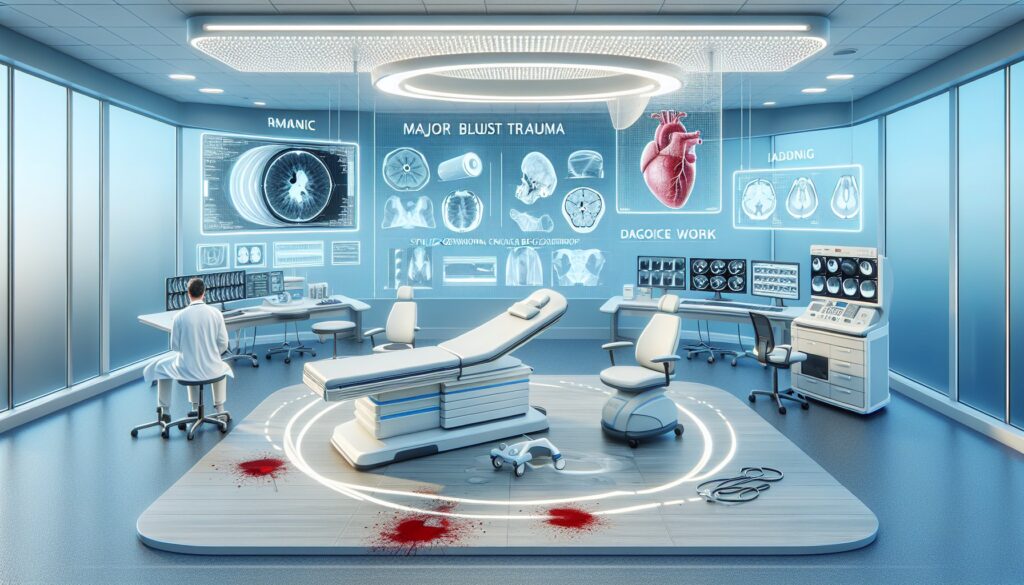
It’s 2 AM in the emergency department. A patient arrives via EMS after a high-speed motor vehicle collision. They are tachycardic, their blood pressure is borderline, and you need to rapidly identify life-threatening injuries. Do you start with a portable trauma series of radiographs, or does the patient go directly to the scanner for a whole-body Computed Tomography (CT) scan? Choosing the right initial imaging in major blunt trauma is a high-stakes decision, balancing the need for rapid, comprehensive diagnosis against the risks of radiation exposure and transport for unstable patients. This guide decodes the American College of Radiology (ACR) Appropriateness Criteria to help you make the right call, every time.
What Does ACR Major Blunt Trauma Cover?
The ACR Appropriateness Criteria for Major Blunt Trauma, developed by the ACR Panel on Polytrauma, provide evidence-based guidelines for the initial imaging of adult patients who have sustained significant, multi-system blunt force injuries. These recommendations apply to patients presenting to an emergency setting after events like motor vehicle collisions, falls from height, or other high-energy impacts. The criteria are stratified based on the patient’s hemodynamic stability and specific suspected injuries, such as to the head, chest, abdomen, or extremities.
These guidelines specifically address the initial diagnostic imaging workup. They do not cover penetrating trauma, which has a distinct set of clinical and imaging considerations. They also do not detail follow-up imaging or the management of injuries once they are diagnosed. The focus is on the critical first step: selecting the most appropriate primary imaging modality to guide immediate management in the acute trauma setting.
What Imaging Should I Order for Major Blunt Trauma? Recommendations by Clinical Scenario
The optimal imaging strategy in major blunt trauma hinges on the patient’s clinical status, particularly their hemodynamic stability. The ACR provides clear, scenario-based recommendations to guide this critical decision.
For an adult with major blunt trauma who is hemodynamically unstable, the priority is immediate stabilization. Transport to a CT scanner can be hazardous. In this context, the ACR rates a Radiography trauma series as Usually appropriate. This typically includes portable chest, pelvis, and cervical spine X-rays to quickly identify life-threatening conditions. A CT whole body with IV contrast is considered May be appropriate, often deferred until the patient is stabilized or if their condition deteriorates despite initial resuscitation.
In a hemodynamically stable adult with major blunt trauma, the imaging approach can be more comprehensive. Both a Radiography trauma series and a CT whole body with IV contrast are rated as Usually appropriate. The whole-body CT, often called a “pan-scan,” provides a rapid and detailed assessment of the head, neck, chest, abdomen, and pelvis, making it the cornerstone of evaluation in stable polytrauma patients.
When specific injuries are suspected in a stable patient, the guidelines become more granular. For suspected facial injury, a non-contrast CT of the maxillofacial bones and/or head is Usually appropriate, along with CTA of the head and neck if vascular injury is a concern. For suspected extremity trauma, initial Radiography of the area of interest is Usually appropriate, supplemented by the whole-body CT for polytrauma evaluation. In cases of suspected bowel, mesenteric, or urinary system trauma, a CT of the abdomen and pelvis with IV contrast is Usually appropriate to evaluate for solid organ injury, active bleeding, or urinary tract disruption. Similarly, for suspected chest trauma, a CT or CTA of the chest with IV contrast is Usually appropriate to assess for aortic injury, pneumothorax, or pulmonary contusion.
For a pregnant patient who is hemodynamically stable, the approach is modified to minimize fetal radiation exposure while ensuring maternal safety. A US of the pregnant uterus is Usually appropriate to assess fetal well-being and the placenta. A Radiography trauma series is also Usually appropriate. When cross-sectional imaging is necessary to evaluate the mother, a CT of the abdomen and pelvis with IV contrast is rated Usually appropriate, as the diagnostic benefit often outweighs the radiation risk, which can be minimized with proper technique.
ACR Imaging Recommendations Table
| Clinical Scenario | Top Procedure | ACR Rating | Adult RRL | Pediatric RRL |
|---|---|---|---|---|
| Adult. Major blunt trauma. Hemodynamically unstable. Initial imaging. | Radiography trauma series | Usually appropriate | ☢ ☢ ☢ 1-10 mSv | |
| Adult. Major blunt trauma. Hemodynamically stable. Not otherwise specified. Initial imaging. | CT whole body with IV contrast | Usually appropriate | ☢ ☢ ☢ ☢ 10-30 mSv | |
| Adult. Major blunt trauma. Hemodynamically stable. Suspected facial injury. Initial imaging. | CT maxillofacial without IV contrast | Usually appropriate | ☢ ☢ 0.1-1mSv | ☢ ☢ ☢ 0.3-3 mSv [ped] |
| Adult. Major blunt trauma. Hemodynamically stable. Suspected extremity trauma. Initial imaging. | Radiography extremity area of interest | Usually appropriate | Varies | Varies |
| Adult. Major blunt trauma. Hemodynamically stable. Suspected bowel or mesenteric trauma. Initial imaging. | CT abdomen and pelvis with IV contrast | Usually appropriate | ☢ ☢ ☢ 1-10 mSv | ☢ ☢ ☢ ☢ 3-10 mSv [ped] |
| Adult. Major blunt trauma. Hemodynamically stable. Suspected urinary system trauma. Initial imaging. | CT abdomen and pelvis with IV contrast | Usually appropriate | ☢ ☢ ☢ 1-10 mSv | ☢ ☢ ☢ ☢ 3-10 mSv [ped] |
| Adult. Major blunt trauma. Hemodynamically stable. Suspected chest trauma. Initial imaging. | CT chest with IV contrast | Usually appropriate | ☢ ☢ ☢ 1-10 mSv | ☢ ☢ ☢ ☢ 3-10 mSv [ped] |
| Major blunt trauma. Hemodynamically stable. Pregnant patient. Initial imaging. | US pregnant uterus | Usually appropriate | O 0 mSv | O 0 mSv [ped] |
Adult vs. Pediatric Major Blunt Trauma Imaging: Radiation Dose Tradeoffs
While this ACR guideline focuses on adults, the principles of radiation safety are paramount when imaging children, who are more radiosensitive and have a longer lifetime to manifest potential radiation-related risks. The ALARA (As Low As Reasonably Achievable) principle is the guiding tenet. For many CT examinations, the pediatric relative radiation level (RRL) is in a higher category or has a different effective dose range than the adult equivalent, reflecting the greater care taken in protocol optimization.
For example, a CT of the abdomen and pelvis carries an RRL of ☢ ☢ ☢ (1-10 mSv) for adults but ☢ ☢ ☢ ☢ (3-10 mSv [ped]) for children. This highlights that while the modality is the same, pediatric protocols must be specifically tailored to reduce dose. This often involves adjusting kVp and mAs based on the child’s size and weight. In all cases of pediatric trauma, the decision to use ionizing radiation must be carefully weighed, and non-ionizing alternatives like ultrasound or MRI should be considered if they can provide the necessary diagnostic information without delaying critical care.
Imaging Protocol Details for Major Blunt Trauma
Once you’ve decided on the right study, the protocol matters. A trauma pan-scan is not a one-size-fits-all examination. Proper timing of IV contrast, appropriate scan phases (e.g., arterial, portal venous, delayed), and specific reconstructions are critical for accurate diagnosis. Our protocol guides cover technique, contrast, and reading principles for the studies recommended above:
Tools to Help You Order the Right Study
Navigating imaging guidelines and protocols in a fast-paced clinical environment can be challenging. GigHz offers a suite of free reference tools designed to support evidence-based decision-making at the point of care.
The Imaging Appropriateness Selector provides a searchable interface for hundreds of clinical scenarios beyond major blunt trauma, helping you find the right study for virtually any presentation. Once a study is chosen, the Imaging Protocol Library offers detailed, institution-level protocols for CT, MRI, and other modalities. To facilitate conversations with patients and families about radiation, the Radiation Dose Calculator helps estimate effective dose for common studies and track cumulative exposure over time.
FAQ about Imaging in Major Blunt Trauma
What is the role of the FAST exam in major blunt trauma?
The FAST (Focused Assessment with Sonography for Trauma) exam is a critical point-of-care ultrasound (POCUS) procedure performed by the clinical team at the bedside, typically in the trauma bay. It is used to rapidly detect free fluid (hemoperitoneum) or pericardial effusion. While it is a cornerstone of ATLS protocols for unstable patients, it is considered a clinical assessment tool rather than a formal diagnostic imaging study covered by these specific ACR guidelines, which focus on examinations performed and interpreted by radiology.
Why is whole-body CT only “May be appropriate” for an unstable patient?
For a hemodynamically unstable patient, the highest priority is resuscitation and stabilization. Transporting the patient away from the trauma bay to the CT scanner suite introduces significant risk, as it can delay life-saving interventions and monitoring becomes more difficult. Initial evaluation with portable radiographs and a FAST exam can often identify immediate threats without this risk. A whole-body CT is typically performed once the patient achieves some measure of hemodynamic stability.
Is there a role for non-contrast CT in major blunt trauma?
Intravenous contrast is essential for evaluating solid organ injury, vascular trauma, and active hemorrhage, making it standard for most trauma CTs. However, non-contrast CT has specific roles. It is the standard for initial evaluation of suspected head injury to detect intracranial hemorrhage. It may also be used in patients with severe contraindications to IV contrast, such as profound renal failure or a history of anaphylaxis, when the risks of contrast are deemed to outweigh the diagnostic benefits.
What radiographs are included in a “trauma series”?
A standard radiographic trauma series consists of three views designed to be acquired quickly with a portable X-ray machine in the resuscitation bay. It typically includes an Anteroposterior (AP) chest radiograph to assess for pneumothorax or hemothorax, an AP pelvis radiograph to look for unstable pelvic ring fractures, and a lateral cervical spine radiograph to screen for fractures or malalignment.
How should imaging be approached in a pregnant trauma patient?
The primary goal is to stabilize the mother, as maternal health is the best predictor of fetal well-being. Medically necessary imaging should never be withheld due to pregnancy. The ACR guidelines reflect a tiered approach, starting with non-ionizing radiation modalities like ultrasound to assess the fetus and placenta. If CT is required to evaluate the mother for life-threatening injuries, it should be performed with protocols optimized to minimize fetal radiation dose (e.g., lead shielding, adjusted scanner parameters). The decision involves a careful risk-benefit analysis, but life-saving maternal diagnosis is the priority.
Frequently Asked Questions
What is the role of the FAST exam in major blunt trauma?
The FAST (Focused Assessment with Sonography for Trauma) exam is a critical point-of-care ultrasound (POCUS) procedure performed by the clinical team at the bedside, typically in the trauma bay. It is used to rapidly detect free fluid (hemoperitoneum) or pericardial effusion. While it is a cornerstone of ATLS protocols for unstable patients, it is considered a clinical assessment tool rather than a formal diagnostic imaging study covered by these specific ACR guidelines, which focus on examinations performed and interpreted by radiology.
Why is whole-body CT only “May be appropriate” for an unstable patient?
For a hemodynamically unstable patient, the highest priority is resuscitation and stabilization. Transporting the patient away from the trauma bay to the CT scanner suite introduces significant risk, as it can delay life-saving interventions and monitoring becomes more difficult. Initial evaluation with portable radiographs and a FAST exam can often identify immediate threats without this risk. A whole-body CT is typically performed once the patient achieves some measure of hemodynamic stability.
Is there a role for non-contrast CT in major blunt trauma?
Intravenous contrast is essential for evaluating solid organ injury, vascular trauma, and active hemorrhage, making it standard for most trauma CTs. However, non-contrast CT has specific roles. It is the standard for initial evaluation of suspected head injury to detect intracranial hemorrhage. It may also be used in patients with severe contraindications to IV contrast, such as profound renal failure or a history of anaphylaxis, when the risks of contrast are deemed to outweigh the diagnostic benefits.
What radiographs are included in a “trauma series”?
A standard radiographic trauma series consists of three views designed to be acquired quickly with a portable X-ray machine in the resuscitation bay. It typically includes an Anteroposterior (AP) chest radiograph to assess for pneumothorax or hemothorax, an AP pelvis radiograph to look for unstable pelvic ring fractures, and a lateral cervical spine radiograph to screen for fractures or malalignment.
How should imaging be approached in a pregnant trauma patient?
The primary goal is to stabilize the mother, as maternal health is the best predictor of fetal well-being. Medically necessary imaging should never be withheld due to pregnancy. The ACR guidelines reflect a tiered approach, starting with non-ionizing radiation modalities like ultrasound to assess the fetus and placenta. If CT is required to evaluate the mother for life-threatening injuries, it should be performed with protocols optimized to minimize fetal radiation dose (e.g., lead shielding, adjusted scanner parameters). The decision involves a careful risk-benefit analysis, but life-saving maternal diagnosis is the priority.
Reviewed by Pouyan Golshani, MD, Interventional Radiologist — June 27, 2026