When to Order Imaging for Movement Disorders and Neurodegenerative Diseases: ACR Appropriateness Decoded

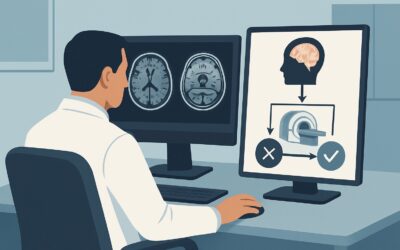
It’s late in the shift, and you are evaluating a patient with a complex neurologic presentation—perhaps a rapidly progressing dementia or a new-onset parkinsonian syndrome. The differential is broad, and the next step in the workup is imaging. Choosing between MRI and CT, with or without contrast, or even considering a nuclear medicine study can be challenging. The American College of Radiology (ACR) Appropriateness Criteria offer evidence-based guidance to help clinicians select the most valuable and safest imaging study for these specific clinical scenarios. This reference breaks down the key recommendations for movement disorders and neurodegenerative diseases to support your clinical decision-making.
What Does ACR Movement Disorders and Neurodegenerative Diseases Cover?
The ACR Appropriateness Criteria for Movement Disorders and Neurodegenerative Diseases provide guidance for the initial imaging workup of adult and pediatric patients presenting with signs and symptoms suggestive of specific neurologic conditions. The scope is focused on insidious, progressive disorders rather than acute neurologic emergencies like stroke or trauma.
This document covers clinical variants including:
- Rapidly progressive dementia, with suspicion for Creutzfeldt-Jakob disease (CJD)
- Chorea, with suspicion for Huntington disease
- Parkinsonian syndromes
- Suspected neurodegeneration with brain iron accumulation (NBIA)
- Suspected motor neuron disease, such as amyotrophic lateral sclerosis (ALS)
These guidelines are designed to help differentiate between various neurodegenerative processes and, crucially, to rule out structural mimics such as tumors, vascular lesions, or inflammatory conditions that can present with similar symptoms. The criteria do not cover the initial workup of unspecified dementia (covered in a separate document), acute ataxia, or seizures.
What Imaging Should I Order for Movement Disorders and Neurodegenerative Diseases? Recommendations by Clinical Scenario
The ACR panel provides detailed recommendations based on the specific clinical presentation. In nearly all scenarios, Magnetic Resonance Imaging (MRI) is the preferred modality due to its superior soft-tissue contrast and lack of ionizing radiation.
For a patient with rapidly progressive dementia and suspected Creutzfeldt-Jakob disease, both MRI head without and with IV contrast and MRI head without IV contrast are rated as Usually appropriate. The non-contrast portion is critical for identifying characteristic restricted diffusion in the cortex (cortical ribboning) or basal ganglia, while contrast helps exclude inflammatory or neoplastic mimics. Functional imaging like FDG-PET/CT or SPECT may be appropriate to assess for patterns of hypometabolism but are not first-line studies.
In the workup of chorea with suspected Huntington disease, an MRI head without IV contrast is Usually appropriate. The primary goal is to assess for the characteristic atrophy of the caudate nucleus and putamen. A CT head without IV contrast may be appropriate if MRI is unavailable or contraindicated, as it can also demonstrate caudate atrophy, though with less sensitivity.
For the initial evaluation of parkinsonian syndromes, an MRI head without IV contrast is Usually appropriate. This study is essential for ruling out structural causes like normal pressure hydrocephalus, vascular parkinsonism, or tumors. While the MRI may be normal in early idiopathic Parkinson’s disease, it can reveal specific findings in atypical parkinsonian syndromes (e.g., the “hummingbird sign” in progressive supranuclear palsy). In cases where the diagnosis is uncertain, a SPECT or SPECT/CT brain striatal scan (such as a DaTscan) may be appropriate to assess dopamine transporter integrity.
When there is suspicion for neurodegeneration with brain iron accumulation (NBIA), an MRI head without IV contrast is Usually appropriate. Specific sequences, such as susceptibility-weighted imaging (SWI), are highly sensitive for detecting iron deposition in the basal ganglia, which is the hallmark of this group of disorders.
Finally, for a patient with suspected motor neuron disease, an MRI head without IV contrast is Usually appropriate to exclude mimics. Depending on the clinical presentation (e.g., upper versus lower motor neuron signs), an MRI of the spine without and with IV contrast may also be appropriate to rule out structural spinal cord pathology. The primary role of imaging in this context is to exclude other conditions, as findings of motor neuron disease itself can be subtle or absent on conventional MRI.
ACR Imaging Recommendations Table
| Clinical Scenario | Top Procedure | ACR Rating | Adult RRL | Pediatric RRL |
|---|---|---|---|---|
| Rapidly progressive dementia; suspected Creutzfeldt-Jakob disease. Initial imaging. | MRI head without and with IV contrast MRI head without IV contrast |
Usually appropriate | O 0 mSv | O 0 mSv [ped] |
| Chorea; suspected Huntington disease. Initial imaging. | MRI head without IV contrast | Usually appropriate | O 0 mSv | O 0 mSv [ped] |
| Parkinsonian syndromes. Initial imaging. | MRI head without IV contrast | Usually appropriate | O 0 mSv | O 0 mSv [ped] |
| Suspected neurodegeneration with brain iron accumulation. Initial imaging. | MRI head without IV contrast | Usually appropriate | O 0 mSv | O 0 mSv [ped] |
| Suspected motor neuron disease. Initial imaging. | MRI head without IV contrast | Usually appropriate | O 0 mSv | O 0 mSv [ped] |
Adult vs. Pediatric Movement Disorders and Neurodegenerative Diseases Imaging: Radiation Dose Tradeoffs
For most neurodegenerative conditions, MRI is the preferred initial imaging modality for both adults and children because it provides excellent anatomical detail without using ionizing radiation. This is particularly important in pediatric patients, where the principle of As Low As Reasonably Achievable (ALARA) is paramount to minimize cumulative lifetime radiation exposure. Many neurodegenerative diseases that present in childhood are genetic and may require longitudinal follow-up, making the avoidance of radiation even more critical.
In situations where CT is considered (e.g., MRI is contraindicated or unavailable), the ACR guidelines provide distinct pediatric Relative Radiation Levels (RRLs). For instance, a CT head without IV contrast carries an adult RRL of 1-10 mSv but a lower pediatric RRL of 0.3-3 mSv, reflecting the use of dose-reduction techniques tailored for children. Similarly, nuclear medicine studies like PET/CT and SPECT have pediatric-specific RRLs. Clinicians must weigh the diagnostic benefit of a radiation-based study against the long-term risks, especially when non-radiation alternatives like MRI can often provide the necessary information.
Imaging Protocol Details for Movement Disorders and Neurodegenerative Diseases
Once you’ve decided on the right study, the specific imaging protocol matters. The sequences performed during an MRI or the parameters of a CT can significantly impact diagnostic yield. Our protocol guides cover technique, contrast considerations, and key interpretation principles for the studies recommended in these guidelines.
Tools to Help You Order the Right Study
Navigating imaging guidelines and protocols can be complex. GigHz offers several tools designed to streamline this process for clinicians and trainees, ensuring you can quickly access the information needed to make evidence-based decisions.
The Imaging Appropriateness Selector provides a searchable interface for the complete ACR guidelines, allowing you to find recommendations for thousands of clinical scenarios beyond movement disorders. It’s a fast way to confirm the right study for any presentation.
Our Imaging Protocol Library offers detailed, step-by-step protocols for a wide range of CT, MRI, and ultrasound examinations. Use it to understand the technical details of the studies you order and what your radiology colleagues are looking for.
For discussions about radiation exposure with patients and for tracking cumulative dose, the Radiation Dose Calculator is a valuable resource. It helps translate complex dosimetry into understandable terms, facilitating shared decision-making.
Why is MRI almost always preferred over CT for evaluating neurodegenerative diseases?
MRI is preferred due to its superior soft tissue contrast, which allows for detailed visualization of brain structures like the cortex, basal ganglia, and white matter. It can detect subtle atrophy, signal abnormalities, and iron deposition that are often invisible on CT. Furthermore, MRI does not use ionizing radiation, which is a significant advantage, especially in younger patients or those who may need multiple scans over time.
When is IV contrast necessary for an MRI in a patient with a suspected neurodegenerative disease?
Intravenous contrast is used to highlight areas of blood-brain barrier breakdown, which can be seen in conditions like tumors, infections, or active inflammation. In the context of neurodegeneration, contrast is primarily used to rule out these “mimics.” For many primary degenerative processes (like Huntington’s or Parkinson’s), contrast is not necessary for the primary diagnosis, but it is often included in the initial workup to ensure no alternative pathology is missed.
What is the role of nuclear medicine (PET, SPECT) in movement disorders?
Nuclear medicine studies provide functional rather than anatomical information. FDG-PET scans assess glucose metabolism and can identify specific patterns of hypometabolism associated with different dementias (e.g., Alzheimer’s vs. frontotemporal dementia). Striatal dopamine transporter SPECT imaging (like a DaTscan) is used to detect the loss of dopamine-producing neurons, which can help differentiate Parkinson’s disease from essential tremor or drug-induced parkinsonism.
Is imaging always required to diagnose conditions like Huntington disease or Parkinson’s disease?
Many neurodegenerative diseases are ultimately clinical diagnoses based on history, neurologic exam, and sometimes genetic testing (as in Huntington disease). However, imaging plays a crucial role in the initial workup. Its primary purpose is to exclude other structural or vascular causes that could mimic the disease. It can also provide supportive evidence, such as the characteristic caudate atrophy in Huntington’s, which increases diagnostic confidence.
What does the rating “May be appropriate (Disagreement)” mean?
This rating indicates that the expert panel had considerable, but not majority, disagreement on the appropriateness of the procedure for that specific clinical scenario. For the “MRI spine without IV contrast” in suspected motor neuron disease, it suggests that while some experts find it valuable, others do not believe it is routinely indicated. This highlights an area where clinical judgment and the specific patient presentation are particularly important in the decision-making process.
Frequently Asked Questions
Why is MRI almost always preferred over CT for evaluating neurodegenerative diseases?
MRI is preferred due to its superior soft tissue contrast, which allows for detailed visualization of brain structures like the cortex, basal ganglia, and white matter. It can detect subtle atrophy, signal abnormalities, and iron deposition that are often invisible on CT. Furthermore, MRI does not use ionizing radiation, which is a significant advantage, especially in younger patients or those who may need multiple scans over time.
When is IV contrast necessary for an MRI in a patient with a suspected neurodegenerative disease?
Intravenous contrast is used to highlight areas of blood-brain barrier breakdown, which can be seen in conditions like tumors, infections, or active inflammation. In the context of neurodegeneration, contrast is primarily used to rule out these “mimics.” For many primary degenerative processes (like Huntington’s or Parkinson’s), contrast is not necessary for the primary diagnosis, but it is often included in the initial workup to ensure no alternative pathology is missed.
What is the role of nuclear medicine (PET, SPECT) in movement disorders?
Nuclear medicine studies provide functional rather than anatomical information. FDG-PET scans assess glucose metabolism and can identify specific patterns of hypometabolism associated with different dementias (e.g., Alzheimer’s vs. frontotemporal dementia). Striatal dopamine transporter SPECT imaging (like a DaTscan) is used to detect the loss of dopamine-producing neurons, which can help differentiate Parkinson’s disease from essential tremor or drug-induced parkinsonism.
Is imaging always required to diagnose conditions like Huntington disease or Parkinson’s disease?
Many neurodegenerative diseases are ultimately clinical diagnoses based on history, neurologic exam, and sometimes genetic testing (as in Huntington disease). However, imaging plays a crucial role in the initial workup. Its primary purpose is to exclude other structural or vascular causes that could mimic the disease. It can also provide supportive evidence, such as the characteristic caudate atrophy in Huntington’s, which increases diagnostic confidence.
What does the rating “May be appropriate (Disagreement)” mean?
This rating indicates that the expert panel had considerable, but not majority, disagreement on the appropriateness of the procedure for that specific clinical scenario. For the “MRI spine without IV contrast” in suspected motor neuron disease, it suggests that while some experts find it valuable, others do not believe it is routinely indicated. This highlights an area where clinical judgment and the specific patient presentation are particularly important in the decision-making process.
Reviewed by Pouyan Golshani, MD, Interventional Radiologist — May 26, 2026