When to Order Imaging for Seizures-Child: ACR Appropriateness Decoded
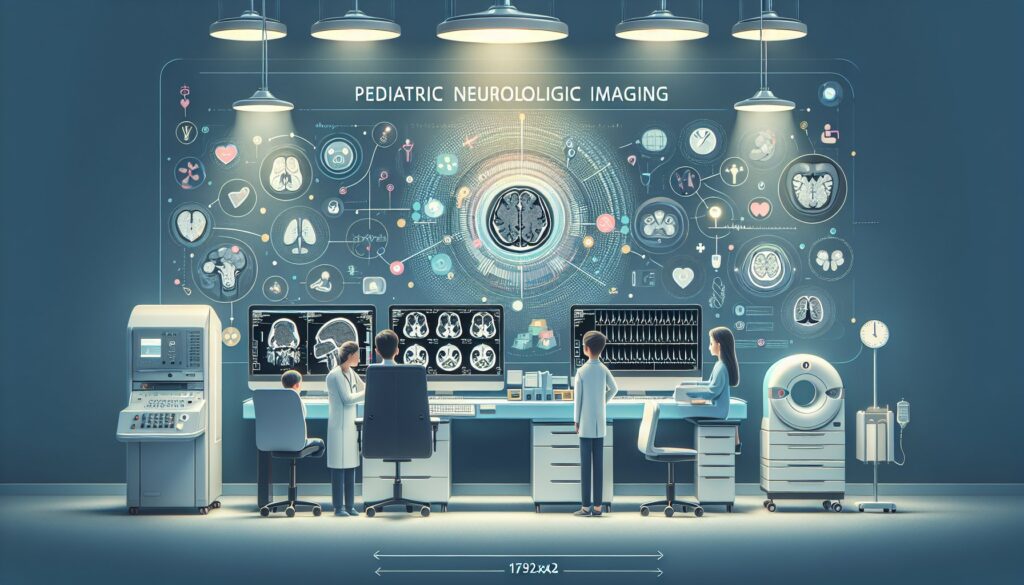
It’s 2 a.m. in the emergency department, and you’re evaluating a 4-year-old who just had a first-time seizure. The child is now postictal but stable. The immediate questions are what caused it and what to do next. Do you order a CT scan for a quick answer, or is an MRI more appropriate? Is any imaging needed at all? In pediatric patients, the stakes are high, balancing the need for a diagnosis against the risks of radiation exposure and sedation. This guide decodes the American College of Radiology (ACR) Appropriateness Criteria for pediatric seizures, providing a clear, evidence-based framework to help you make the right call confidently and efficiently.
What Does ACR Seizures-Child Cover?
The ACR Appropriateness Criteria for Seizures-Child provide imaging recommendations for pediatric patients presenting with seizures across a range of clinical contexts. The guidelines are designed to address the initial imaging workup and are stratified by age and seizure type. Scenarios covered include neonatal seizures (0-29 days), febrile seizures (simple and complex) in young children, post-traumatic seizures, and new-onset focal or generalized seizures in children up to 17 years old. The criteria also provide guidance for children with intractable or refractory epilepsy who may be candidates for surgical intervention.
These guidelines specifically focus on the initial diagnostic imaging pathway. They do not cover every possible etiology or follow-up imaging strategy. For instance, while post-traumatic seizures are included, the detailed workup for suspected abusive head trauma often involves a broader and more specific imaging protocol beyond the scope of this particular topic. Clinicians should use these recommendations as a primary guide, always integrating them with the patient’s specific clinical presentation and history.
What Imaging Should I Order for Seizures-Child? Recommendations by Clinical Scenario
Choosing the right imaging modality for a child with seizures depends heavily on the clinical scenario, including the patient’s age, seizure type, and neurologic exam findings. The ACR provides specific guidance to optimize diagnostic yield while minimizing unnecessary radiation.
For neonatal seizures (age 0 to 29 days), MRI of the head without IV contrast is rated Usually appropriate. Its superior soft-tissue contrast is ideal for detecting congenital malformations, ischemic injury, or hemorrhage without using ionizing radiation. Head ultrasound and contrast-enhanced MRI May be appropriate in certain situations, while a non-contrast CT head May be appropriate if MRI is not readily available or the infant is too unstable. Contrast-enhanced CT is Usually not appropriate.
In young children (6 months to 5 years) with simple febrile seizures, the ACR guidance is clear: all imaging modalities, including MRI and CT, are rated Usually not appropriate. This reflects the typically benign and self-limited nature of simple febrile seizures, for which imaging rarely reveals a clinically significant underlying cause. However, for complex febrile seizures in the same age group, an MRI of the head without IV contrast May be appropriate to evaluate for an underlying structural abnormality that could predispose the child to seizures.
For older children (1 month to 17 years) with post-traumatic seizures, both MRI head without contrast and CT head without contrast are considered Usually appropriate. CT is often the first choice in the acute setting to rapidly identify skull fractures or intracranial hemorrhage. MRI is valuable for assessing for non-hemorrhagic injuries like contusions or diffuse axonal injury.
When evaluating focal seizures, an MRI head without contrast is Usually appropriate to look for a focal structural lesion, such as cortical dysplasia or a low-grade tumor. For a primary generalized seizure in a neurologically normal child, an MRI without contrast May be appropriate, but imaging is not always required. In contrast, for a generalized seizure in a child who is neurologically abnormal, an MRI without contrast becomes Usually appropriate to identify the underlying structural cause.
Finally, in children with intractable seizures or refractory epilepsy, a non-contrast head MRI is Usually appropriate as part of a comprehensive pre-surgical evaluation. In this complex population, functional imaging with FDG-PET/CT or SPECT brain perfusion May be appropriate to help localize the epileptogenic focus when MRI is non-lesional.
ACR Imaging Recommendations Table
| Clinical Scenario | Top Procedure | ACR Rating | Adult RRL | Pediatric RRL |
|---|---|---|---|---|
| Neonatal seizures, age 0 to 29 days. Initial imaging. | MRI head without IV contrast | Usually appropriate | O 0 mSv | O 0 mSv [ped] |
| Children 6 months to 5 years of age. Simple febrile seizures. Initial imaging. | (Imaging is generally not indicated) | Usually not appropriate | – | – |
| Children 6 months to 5 years of age. Complex febrile seizures. Initial imaging. | MRI head without IV contrast | May be appropriate | O 0 mSv | O 0 mSv [ped] |
| Children 1 month to 17 years of age. Post-traumatic seizures, not including abusive head trauma. Initial imaging. | MRI head without IV contrast | Usually appropriate | O 0 mSv | O 0 mSv [ped] |
| Children 1 month to 17 years of age. Post-traumatic seizures, not including abusive head trauma. Initial imaging. | CT head without IV contrast | Usually appropriate | ☢ ☢ ☢ 1-10 mSv | ☢ ☢ ☢ 0.3-3 mSv [ped] |
| Children 1 month to 17 years of age. Focal seizures, not including abusive head trauma. Initial imaging. | MRI head without IV contrast | Usually appropriate | O 0 mSv | O 0 mSv [ped] |
| Children 1 month to 17 years of age. Primary generalized seizure (neurologically normal). Initial imaging. | MRI head without IV contrast | May be appropriate | O 0 mSv | O 0 mSv [ped] |
| Children 1 month to 17 years of age. Generalized seizure (neurologically abnormal). Initial imaging. | MRI head without IV contrast | Usually appropriate | O 0 mSv | O 0 mSv [ped] |
| Children 1 month to 17 years of age. Intractable seizures or refractory epilepsy. | MRI head without IV contrast | Usually appropriate | O 0 mSv | O 0 mSv [ped] |
Adult vs. Pediatric Seizures-Child Imaging: Radiation Dose Tradeoffs
The principle of ALARA (As Low As Reasonably Achievable) is paramount in pediatric imaging. Children are more radiosensitive than adults, and their longer life expectancy provides a greater window for potential long-term effects of radiation exposure to manifest. The ACR guidelines reflect this by consistently favoring non-ionizing modalities like MRI and ultrasound when diagnostically appropriate.
The Relative Radiation Level (RRL) designations highlight these differences. For example, a non-contrast head CT, while sometimes necessary, carries a pediatric RRL of ☢ ☢ ☢ (0.3-3 mSv), which is a fraction of the adult dose but still a significant exposure for a child. This is why MRI, with an RRL of O (0 mSv), is preferred for most non-emergent seizure workups in children. The decision to use CT must always be weighed against its benefits, such as its speed and accessibility in acute settings like trauma. Careful consideration of cumulative radiation dose from all sources is a critical component of pediatric care, and these guidelines provide an essential framework for making prudent imaging choices.
Imaging Protocol Details for Seizures-Child
Once you’ve decided on the right study, the specific imaging protocol matters immensely for diagnostic yield. A standard brain MRI may not be sufficient; an epilepsy-protocol MRI, for example, includes thin-section, high-resolution sequences through the temporal lobes that are crucial for detecting subtle causes of focal seizures like mesial temporal sclerosis or cortical dysplasia. Our protocol guides cover technique, contrast, and reading principles for the studies recommended above:
Tools to Help You Order the Right Study
Navigating imaging guidelines and protocols can be complex, especially under pressure. GigHz offers several resources designed to support evidence-based clinical decision-making at the point of care.
For clinical scenarios beyond pediatric seizures, the Imaging Appropriateness Selector provides a fast, searchable interface to the full library of ACR guidelines. This helps ensure you’re ordering the right test for any clinical presentation.
To access detailed, step-by-step procedural information for the studies themselves, the Imaging Protocol Library is a comprehensive resource for radiologists and technologists, promoting standardized, high-quality imaging across institutions.
To help manage and communicate radiation exposure with patients and their families, the Radiation Dose Calculator is a practical tool for estimating cumulative dose and facilitating informed conversations about the risks and benefits of medical imaging.
Why is MRI preferred over CT for most non-emergent pediatric seizures?
MRI is generally preferred because it does not use ionizing radiation and provides far superior soft-tissue detail. This allows for the detection of subtle structural abnormalities that can cause seizures, such as cortical dysplasia, hippocampal sclerosis, or small tumors, which are often invisible on a CT scan.
When is CT the right choice for a child with a seizure?
CT is the preferred modality in specific emergency situations. For a child with a seizure in the setting of acute head trauma, CT is faster and better for detecting skull fractures and acute hemorrhage. It may also be used when MRI is unavailable, contraindicated (e.g., due to an incompatible implanted device), or when a patient is too unstable for the longer scan time of an MRI.
Is imaging always necessary for a first-time, simple febrile seizure?
No. According to the ACR Appropriateness Criteria, imaging is “Usually not appropriate” for a simple febrile seizure. These seizures are common in children between 6 months and 5 years of age, are typically brief, and occur with a fever. In a child with a normal neurologic exam, the risk of finding a significant intracranial abnormality is extremely low, and the risks associated with imaging (radiation from CT, sedation for MRI) outweigh the potential benefits.
What is the role of PET or SPECT in pediatric seizures?
Functional imaging modalities like FDG-PET and SPECT are typically reserved for complex cases of intractable or refractory epilepsy, usually as part of a pre-surgical evaluation. When a structural MRI is normal but a child continues to have debilitating seizures, these tests can help identify the area of the brain where seizures originate (the epileptogenic focus) by measuring metabolism (PET) or blood flow (SPECT). This information is critical for planning epilepsy surgery.
Does a normal MRI rule out an underlying cause for seizures?
Not necessarily. While a high-quality epilepsy-protocol MRI can identify many structural causes, it cannot detect all of them. Some causes of epilepsy, such as genetic conditions or channelopathies, are functional rather than structural and will not be visible on an MRI. A normal MRI is an important part of the workup, but the diagnosis and management plan must also integrate clinical history, physical exam findings, and EEG results.
Frequently Asked Questions
Why is MRI preferred over CT for most non-emergent pediatric seizures?
MRI is generally preferred because it does not use ionizing radiation and provides far superior soft-tissue detail. This allows for the detection of subtle structural abnormalities that can cause seizures, such as cortical dysplasia, hippocampal sclerosis, or small tumors, which are often invisible on a CT scan.
When is CT the right choice for a child with a seizure?
CT is the preferred modality in specific emergency situations. For a child with a seizure in the setting of acute head trauma, CT is faster and better for detecting skull fractures and acute hemorrhage. It may also be used when MRI is unavailable, contraindicated (e.g., due to an incompatible implanted device), or when a patient is too unstable for the longer scan time of an MRI.
Is imaging always necessary for a first-time, simple febrile seizure?
No. According to the ACR Appropriateness Criteria, imaging is “Usually not appropriate” for a simple febrile seizure. These seizures are common in children between 6 months and 5 years of age, are typically brief, and occur with a fever. In a child with a normal neurologic exam, the risk of finding a significant intracranial abnormality is extremely low, and the risks associated with imaging (radiation from CT, sedation for MRI) outweigh the potential benefits.
What is the role of PET or SPECT in pediatric seizures?
Functional imaging modalities like FDG-PET and SPECT are typically reserved for complex cases of intractable or refractory epilepsy, usually as part of a pre-surgical evaluation. When a structural MRI is normal but a child continues to have debilitating seizures, these tests can help identify the area of the brain where seizures originate (the epileptogenic focus) by measuring metabolism (PET) or blood flow (SPECT). This information is critical for planning epilepsy surgery.
Does a normal MRI rule out an underlying cause for seizures?
Not necessarily. While a high-quality epilepsy-protocol MRI can identify many structural causes, it cannot detect all of them. Some causes of epilepsy, such as genetic conditions or channelopathies, are functional rather than structural and will not be visible on an MRI. A normal MRI is an important part of the workup, but the diagnosis and management plan must also integrate clinical history, physical exam findings, and EEG results.
Reviewed by Pouyan Golshani, MD, Interventional Radiologist — June 27, 2026