How Should You Manage Symptomatic Fibroids and Adenomyosis in Patients Not Seeking Fertility?

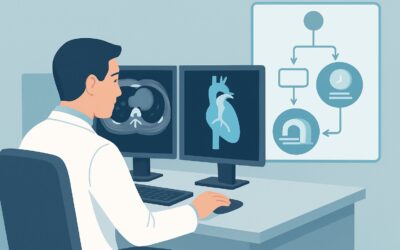
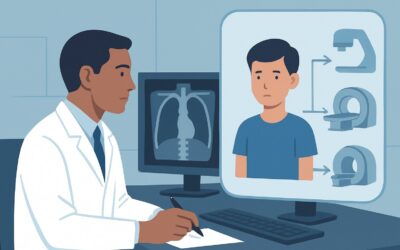
A 42-year-old G3P3 presents to your clinic with progressively worsening menorrhagia and a constant, heavy pressure in her pelvis. An outside transvaginal ultrasound confirmed multiple intramural uterine fibroids and a globular, heterogeneous myometrium suspicious for adenomyosis. She is anemic, misses work due to her symptoms, and has firmly decided she does not want more children. You are now faced with a common but complex decision: what is the best initial therapeutic path for a patient with both fibroids and adenomyosis who is not seeking future fertility? This article provides a detailed workflow for this specific clinical scenario, explaining the rationale behind the American College of Radiology (ACR) recommendations. For this presentation, the ACR Appropriateness Criteria rate both ‘Medical management’ and ‘Uterine artery embolization’ as Usually appropriate initial steps.
Who Fits This Clinical Scenario for Fibroid and Adenomyosis Management?
This guidance is specifically for a reproductive-age patient with symptomatic uterine fibroids and concurrent adenomyosis who has no desire for future fertility and is seeking initial therapy. The key inclusion criteria are:
- Age: Reproductive age (premenopausal).
- Pathology: Confirmed uterine fibroids with co-existing adenomyosis, typically diagnosed via ultrasound or MRI.
- Symptoms: Clinically significant heavy uterine bleeding (menorrhagia) or bulk-related symptoms such as pelvic pain, pressure, urinary frequency, or constipation.
- Fertility Status: The patient has definitively completed childbearing and does not desire future pregnancy.
It is crucial to distinguish this scenario from similar but distinct clinical presentations that follow different management pathways. This guidance does not apply if:
- The patient desires future fertility: This fundamentally changes the treatment goals, prioritizing uterine preservation and myomectomy options.
- Adenomyosis is not present: Patients with fibroids alone have a wider range of appropriate options, including MR-guided focused ultrasound, which is less effective for diffuse adenomyosis.
- The patient is postmenopausal: New-onset bleeding or bulk symptoms in a postmenopausal patient raises a higher suspicion for malignancy and requires a different diagnostic workup.
- A pedunculated submucosal fibroid is the primary issue: This specific fibroid type may be amenable to hysteroscopic myomectomy, an approach not recommended for this scenario’s more complex pathology.
What Conditions Are Causing These Uterine Symptoms?
While the patient’s imaging suggests fibroids and adenomyosis, understanding how each condition contributes to the symptom complex is key to selecting the right therapy. The clinical workup aims to confirm the source of symptoms and rule out other pathology.
Uterine Fibroids (Leiomyomas)
These benign smooth muscle tumors are a primary cause of bulk symptoms. Large or numerous fibroids can compress the bladder, rectum, and pelvic nerves, leading to pressure, urinary frequency, and pain. Depending on their location, particularly if they are submucosal or intramural and distort the endometrial cavity, they can also be a major contributor to heavy menstrual bleeding.
Adenomyosis
This condition, where endometrial glands and stroma grow into the myometrium, is a notorious cause of severe dysmenorrhea (painful periods) and menorrhagia. The diffuse, infiltrative nature of adenomyosis makes the uterus boggy and enlarged, contributing to bulk symptoms and pain. Its presence is a critical factor because treatments that only target discrete fibroids may fail to resolve the patient’s bleeding and pain.
Endometrial Hyperplasia or Malignancy
Though less common, any patient presenting with heavy uterine bleeding must be evaluated for underlying endometrial pathology. The risk increases with age and other factors like obesity and anovulation. An endometrial biopsy is often warranted as part of the initial workup to definitively exclude neoplasia before proceeding with uterine-preserving therapies.
Why Are Medical Management and UAE Considered ‘Usually Appropriate’ Initial Therapies?
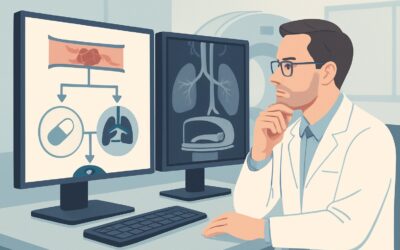
For a patient with both fibroids and adenomyosis who does not desire fertility, the ACR guidelines highlight two distinct but equally appropriate initial pathways: medical management and uterine artery embolization (UAE). The choice often depends on patient preference, symptom severity, and the desire to avoid a procedure.
Medical Management is rated Usually appropriate because it is the least invasive first step. Hormonal therapies, such as levonorgestrel-releasing intrauterine systems (IUDs) or gonadotropin-releasing hormone (GnRH) agonists/antagonists, can effectively reduce heavy bleeding from both adenomyosis and fibroids. Non-hormonal options like tranexamic acid can also provide symptomatic relief. This approach avoids procedural risks entirely and can be a sufficient long-term solution for many patients, particularly those whose primary symptom is bleeding.
Uterine Artery Embolization (UAE) is also rated Usually appropriate. This minimally invasive procedure, performed by an interventional radiologist, involves blocking the arteries that supply blood to the uterus. This devascularization causes both fibroids and adenomyotic tissue to shrink, providing durable relief from both bulk symptoms and heavy bleeding. UAE is highly effective for this combined pathology and offers a uterine-preserving alternative to surgery with a significantly shorter recovery time than hysterectomy.
In contrast, other therapies are rated lower for this specific scenario:
- Hysterectomy, while definitive, is rated May be appropriate. It is considered more invasive than medical therapy or UAE and is typically reserved for cases where less invasive options fail, are contraindicated, or if the patient prefers a definitive surgical solution upfront.
- MR-guided High-Frequency Focused Ultrasound Ablation is rated Usually not appropriate. While effective for discrete fibroids, its energy is difficult to focus on the diffuse, infiltrative tissue of adenomyosis, leading to poor efficacy for that component of the patient’s symptoms.
- Myomectomy (laparoscopic, open, or hysteroscopic) is also Usually not appropriate. A myomectomy only removes the fibroids and does not address the underlying adenomyosis, which is often the primary driver of bleeding and pain. The patient would likely experience persistent symptoms after the procedure.
What’s Next After Initial Therapy? Downstream Workflow
The clinical pathway diverges based on the patient’s response to the chosen initial therapy.
If Medical Management is Chosen:
- Successful Response: If the patient’s bleeding and bulk symptoms are well-controlled, she can continue medical therapy long-term, often until menopause, when symptoms naturally resolve. No further intervention is needed beyond routine follow-up.
- Inadequate Response or Intolerable Side Effects: If symptoms persist or the side effects of hormonal therapy are unacceptable, the next step is to re-evaluate and consider a procedural intervention. At this point, UAE or hysterectomy become the primary considerations. The patient has not burned any bridges and can proceed to the next level of treatment.
If Uterine Artery Embolization (UAE) is Chosen:
- Successful Response: The vast majority of patients experience significant and durable symptom relief. Follow-up typically involves a clinical visit and sometimes a follow-up MRI at 3-6 months to document uterine and fibroid volume reduction.
- Inadequate Response: In the small subset of patients with persistent symptoms after UAE, the next step is typically hysterectomy. This is uncommon but remains the definitive backup option for treatment failure. A repeat embolization is rarely performed.
Pitfalls to Avoid (and When to Get Help)
Navigating the management of co-existing fibroids and adenomyosis requires careful consideration to avoid common missteps.
- Ignoring Adenomyosis: Do not offer a treatment (like myomectomy or focused ultrasound) that only addresses the fibroids. This is a frequent cause of treatment failure, as the unaddressed adenomyosis will lead to persistent bleeding and pain.
- Forgetting Endometrial Sampling: Before committing to any uterine-preserving therapy for heavy bleeding, ensure that endometrial cancer has been reasonably excluded, typically with an office biopsy, especially in patients with risk factors.
- Setting Unrealistic Expectations: Clearly counsel the patient that while UAE is highly effective, it is not 100% successful, and there is a small chance that hysterectomy may be needed later. Similarly, medical therapies may only partially control symptoms.
- Overlooking Patient Preference: The choice between medical management and UAE is preference-sensitive. A thorough discussion of the risks, benefits, and recovery of each option is essential.
If a patient has a rapid increase in uterine size or develops new, severe symptoms, escalate care to include a GYN oncology consultation to rule out a rare uterine sarcoma.
Related ACR Topics and Tools
For a comprehensive overview of all clinical variants related to uterine fibroids, or to explore the technical details of imaging procedures, the following resources are available:
- Parent Topic Hub: For breadth across all scenarios in Management of Uterine Fibroids, see our parent guide: Management of Uterine Fibroids: ACR Appropriateness Decoded.
- ACR Criteria Lookup: To review guidelines for adjacent or different clinical scenarios, use the ACR Appropriateness Criteria Lookup.
- Protocol Library: For technical specifications on imaging studies like pelvic MRI, consult the Imaging Protocol Library.
- Dose Calculator: For procedures involving ionizing radiation, the Radiation Dose Calculator can help in discussions about cumulative exposure.
Frequently Asked Questions
Why isn’t myomectomy recommended if the patient has large fibroids causing bulk symptoms?
Myomectomy is rated ‘Usually not appropriate’ in this scenario because it only removes the fibroids and leaves the adenomyosis untreated. Since adenomyosis is a major contributor to both heavy bleeding and pain, the patient would likely have persistent symptoms after surgery, leading to treatment failure and the potential need for a second, more definitive procedure later.
If a patient tries medical management first and it fails, can she still have a UAE?
Yes, absolutely. Medical management is often used as a first-line, non-invasive option. If it fails to control symptoms or causes unacceptable side effects, it does not prevent the patient from later undergoing a uterine artery embolization (UAE) or a hysterectomy. It is a sequential treatment approach.
Is an MRI necessary before deciding on treatment for fibroids and adenomyosis?
While a good quality transvaginal ultrasound is often sufficient to diagnose both conditions, a pelvic MRI can be extremely valuable. It provides a more precise map of fibroid location and size, can more definitively diagnose and assess the extent of adenomyosis, and can identify other pelvic pathology. Many interventional radiologists and gynecologists require an MRI for procedural planning before UAE or complex surgery.
How does uterine artery embolization (UAE) affect adenomyosis?
UAE works by blocking the blood supply to the uterus, which causes both fibroids and the ectopic endometrial tissue of adenomyosis to become devascularized and shrink. This leads to a reduction in uterine size, which alleviates bulk symptoms, and a significant decrease in menstrual bleeding. UAE is one of the few non-surgical treatments that effectively addresses both pathologies simultaneously.
What if the patient is close to menopause? Does that change the recommendation?
If a patient is perimenopausal and her symptoms are manageable, a stronger case can be made for trying medical management first. The goal might be to bridge her to menopause, after which hormonal changes will cause both fibroids and adenomyosis to regress naturally. However, for severe or debilitating symptoms, a procedural intervention like UAE may still be the most appropriate choice to improve her quality of life in the intervening years.
Reviewed by Pouyan Golshani, MD, Interventional Radiologist — May 30, 2026