Fed Rate Cut, Housing Freeze: What This Means for Your Practice Loans & Portfolio (Oct 26–Nov 2 2025)
Weekly market reports can feel abstract, disconnected from the realities of patient care. The language of basis points and quantitative tightening rarely seems relevant between consults or cases. Yet these are the signals that define the financial environment in which we operate.
The same forces that move markets—interest rates, liquidity, inflation—directly influence the cost of capital for your practice. They set the terms for equipment loans, ASC financing, and the viability of a new clinic location. Understanding these shifts is the first step in making sound financial decisions for your practice and your personal portfolio.
📈 Executive Overview
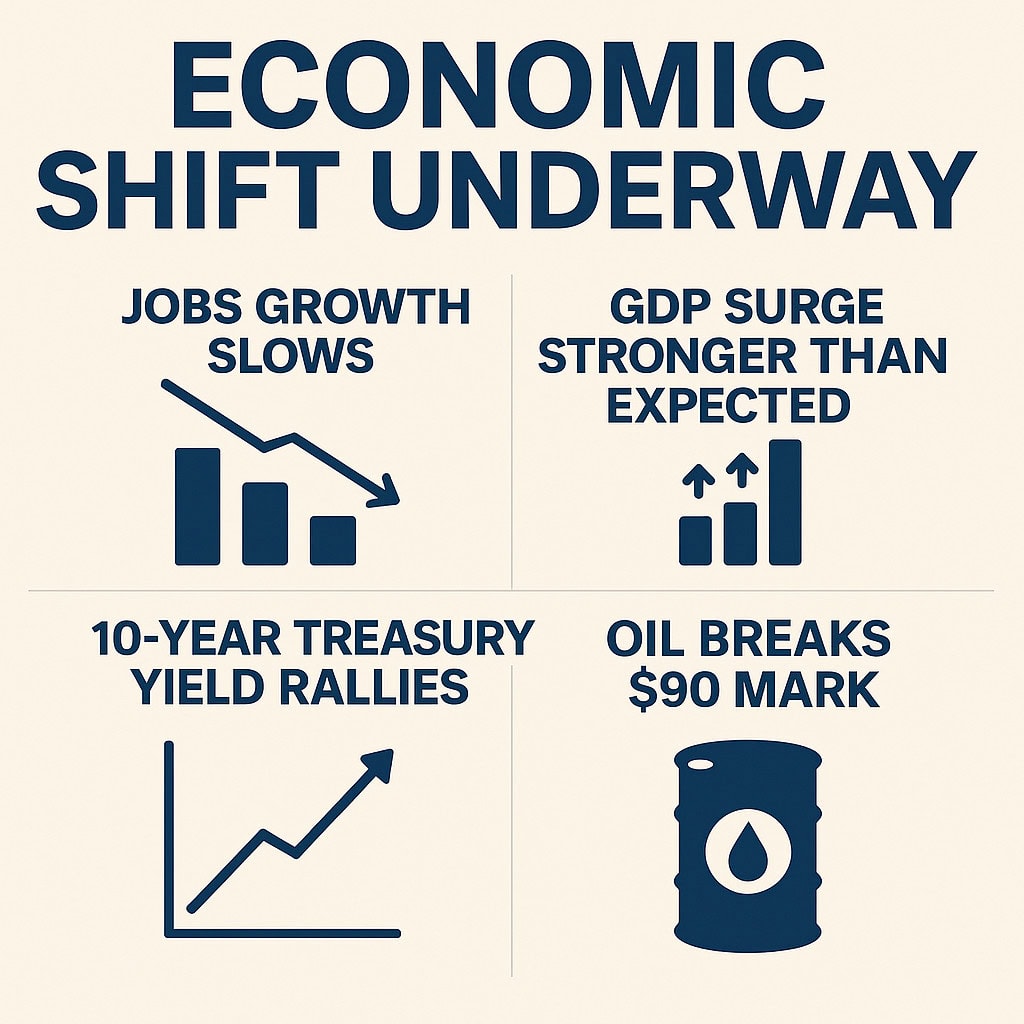
The week spanning late October and early November was a study in contrasts. Mortgage rates dipped to roughly 6.30 %—the lowest in a year—yet pending home sales remained unchanged and 34 % below 2019 levels. The Federal Reserve cut rates by 25 bp, signaling the end of quantitative tightening on December 1, but Chair Powell warned that another cut in December is not a given. Banks borrowed a record $50 billion from the Fed’s Standing Repo Facility to calm month‑end funding stress.
Housing, inflation, labor, liquidity and alternative assets all showed divergent signals. This post breaks down what changed and what it means for investors.
🏠 Housing & Real Estate
-
Demand freeze persists: Pending home sales were flat in September and remain around 34 % below pre‑pandemic levels, despite mortgage rates sliding to a one‑year low. Buyers are still waiting for larger price declines or further rate relief.
-
Condo prices below bubble peaks: Mid‑tier condo prices in several metros—Silver Spring, St. Louis, Cape Coral, Baton Rouge, Lafayette—are now below their peaks from the 2005–2008 housing bubble. Nationally, the Freddie Mac index shows only +1 % YoY growth with 19 states below prior highs.
-
Supply still elevated: Single‑family supply hovers near 4.5 months and condo supply around 6.5 months, the highest since 2016. Builders continue offering incentives and price cuts.
🔗 Use our Real Estate Investing Calculator and Mortgage Affordability Calculator to test different rate and price scenarios.
💼 Labour Market & Policy
-
Fed cuts & QT end: The FOMC lowered the federal funds rate to 3.75–4.0 % and announced the end of QT as of Dec 1. Two members dissented, highlighting policy uncertainty.
-
Dollar firm on caution: Powell said a December cut is “not a forgone conclusion,” boosting the U.S. dollar.
-
Non‑release of payrolls: The government shutdown delayed October payrolls. About 100 k federal workers who took deferred resignations will drop off payrolls when data resume. Markets will rely on private ADP data.
-
Repo turmoil: Banks tapped the Standing Repo Facility for a record $50 bn; ON RRP balances spiked. The Fed continues to debate whether the fed funds rate is the right benchmark.
💡 Inflation & Liquidity
-
OER anomaly: The September CPI was held down by an unusually low 0.13 % MoM increase in Owner’s Equivalent of Rent, which accounts for 26 % of headline CPI. Without this outlier, inflation would have been higher.
-
Reserves shrinking: Fed reserves and ON RRPs declined by $109 billion in October and by $3 trillion since 2021【995813091801045†L56-L97】. Currency in circulation continues to grow, further draining reserves【995813091801045†L100-L117】.
🏦 Metals & Crypto
-
Gold holds firm: Spot gold stayed above $4,000/oz amid safe‑haven demand. Gold is up ~50 % year‑to‑date.
-
Bitcoin volatile: Bitcoin hovered near $115 k after hitting $125 k in mid‑October. Regulatory headwinds (e.g., forthcoming IRS Form 1099‑DA) continue to weigh.
🔍 Notable Headlines & Market Themes
-
AI fever: Nvidia’s market cap briefly topped $5 trillion, showing how concentrated the stock market rally has become.
-
Tariff drama: The U.S. Supreme Court will hear cases on Trump’s tariffs Nov 5.
-
Oil & OPEC+: OPEC+ meets this week; crude remains range‑bound as producers weigh modest output increases.
-
RBA & BoE: The Reserve Bank of Australia is likely to hold rates after a hot inflation print, while the Bank of England faces a tight split on a potential cut.
-
Commercial real estate stress: Office CMBS delinquency rates hit a record 11.8 %, surpassing their global financial crisis peak.
✅ Takeaway
This week underscores how the macro landscape remains precarious: policy is easing but the housing market won’t budge; liquidity conditions are fragile; and inflation may be stickier than it appears due to data quirks. Meanwhile, AI megacaps power the stock market even as commercial real estate falters. Staying diversified—with cash, quality bonds, and real assets—remains prudent.
What this means for your practice and portfolio
- Practice & Facility Financing: The Fed’s rate cut may create a window for more favorable terms on practice acquisition loans, equipment financing, or lines of credit. It is worth modeling your costs now, as this environment can change quickly. You can use tools like CenterIQ to analyze the impact of different rate scenarios on your facility’s economics.
- Physician Real Estate: The persistent freeze in the housing market, coupled with elevated supply, suggests that buyers currently have more negotiating room. For physicians considering a new clinic space or a personal investment through platforms like Repit, this is a moment to re-evaluate the entry math on potential properties.
- Portfolio Strategy: Market rallies concentrated in a few names, alongside stress in commercial real estate, highlight the importance of a diversified portfolio. Review your allocation to ensure it aligns with your risk tolerance, a core principle we explore in our physician investing community, Savng.
This content is for educational purposes only and does not constitute financial or investment advice. You are solely responsible for your own financial decisions.
Last reviewed by Pouyan Golshani, MD — 2026-06-23.
Frequently Asked Questions
What are the current housing market trends in October 2025?
In late October 2025, mortgage rates decreased to approximately 6.30%, the lowest in a year. However, pending home sales remained unchanged and were 34% below 2019 levels, indicating a demand freeze. Despite lower mortgage rates, buyers are waiting for more significant price declines or further rate relief. Additionally, mid-tier condo prices in several metropolitan areas are now below their peaks from the 2005-2008 housing bubble. Single-family supply is around 4.5 months, while condo supply is at 6.5 months, the highest since 2016, suggesting elevated inventory levels in the housing market.
How did mortgage rates change in late October 2025?
In late October 2025, mortgage rates decreased to approximately 6.30%, marking the lowest level in a year. Despite this decline in rates, pending home sales remained stagnant and were 34% below 2019 levels. The Federal Reserve also cut rates by 25 basis points, indicating a shift in monetary policy, with the end of quantitative tightening set for December 1. This environment reflects a complex housing market where buyers are hesitant, waiting for more significant price reductions or additional rate relief.
Why are pending home sales still below pre-pandemic levels?
Pending home sales are currently 34% below pre-pandemic levels, despite mortgage rates dropping to approximately 6.30%, the lowest in a year. This stagnation is primarily due to buyers waiting for more significant price declines or additional rate relief before committing to purchases. Additionally, the supply of single-family homes is around 4.5 months, and condo supply is about 6.5 months, the highest since 2016, indicating a market with elevated inventory levels that further contributes to the demand freeze.
When is the end of quantitative tightening expected to occur?
The end of quantitative tightening (QT) is expected to occur on December 1, as announced by the Federal Open Market Committee (FOMC). During this period, the federal funds rate was lowered to a range of 3.75–4.0%. Despite this decision, Chair Powell indicated that another rate cut in December is not guaranteed, highlighting ongoing policy uncertainty.
Are builders offering incentives due to elevated home supply?
Builders are indeed offering incentives and price cuts due to elevated home supply. Currently, single-family home supply is around 4.5 months, while condo supply is approximately 6.5 months, marking the highest levels since 2016. Despite mortgage rates dropping to about 6.30%, pending home sales remain unchanged and are 34% below 2019 levels. This combination of high supply and stagnant demand has prompted builders to provide incentives to attract buyers.
Reviewed by Pouyan Golshani, MD, Interventional Radiologist — June 27, 2026