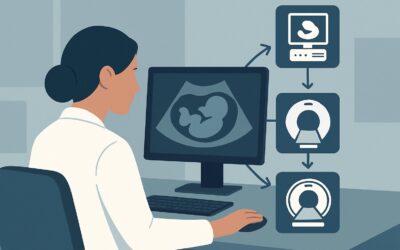
What Imaging Is Best for Female Defecatory Dysfunction? An ACR-Guided Workflow

A 45-year-old multiparous female presents to your clinic with a six-month history of progressively worsening defecatory symptoms, including significant straining and a persistent sensation of incomplete evacuation. She occasionally uses digital maneuvers to complete a bowel movement. Her physical exam is largely unrevealing, and you are now faced with selecting the most appropriate initial imaging study to evaluate the underlying cause of her obstructive defecation. This clinical decision point requires navigating several potential modalities, each with distinct advantages and limitations. For this specific scenario, the American College of Radiology (ACR) Appropriateness Criteria rate US pelvis transrectal as a Usually Appropriate initial imaging study.
Who Fits This Clinical Scenario for Defecatory Dysfunction?
This imaging workflow is designed for a specific patient population: females presenting with symptoms of defecatory dysfunction for whom initial imaging is being considered. The inclusion criteria are broad and encompass a range of symptoms related to abnormal bowel evacuation. A patient is a candidate for this pathway if their primary complaint involves one or more of the following:
- Incontinence of stool, liquid, or gas
- Straining during defecation
- Difficulty initiating defecation
- A sensation of incomplete evacuation
- The need for splinting (e.g., perineal or vaginal pressure) or digital maneuvers to defecate
It is critical to distinguish this scenario from related but distinct clinical presentations that warrant different imaging approaches. This guidance does not apply if the patient’s primary complaint is:
- A palpable vaginal protrusion or bulge: This presentation aligns with the ACR variant for clinically suspected pelvic organ prolapse, which has its own dedicated imaging recommendations. While defecatory dysfunction can coexist, the leading symptom guides the initial workup.
- Predominantly urinary dysfunction: If symptoms like urinary incontinence, frequency, urgency, or straining to void are the main issue, the workup follows the specific ACR variant for female urinary dysfunction.
- Known or suspected malignancy: If red flag symptoms such as rectal bleeding, unexplained weight loss, or a palpable mass are present, the patient may require an oncologic workup (e.g., colonoscopy, dedicated CT or MRI), which supersedes this functional imaging pathway.
What Diagnoses Are You Working Up with Initial Imaging?
Ordering imaging for defecatory dysfunction is not a generic search but a targeted investigation into specific anatomic and functional abnormalities of the pelvic floor. The goal is to identify the structural cause that explains the patient’s symptoms and can guide subsequent management, which may range from pelvic floor physical therapy to surgical intervention. The key differential diagnoses you are evaluating include:
Anal Sphincter Complex Injury: Defects in the internal or external anal sphincter are a primary cause of fecal incontinence, particularly in women with a history of obstetric trauma. An occult tear from a prior vaginal delivery can manifest years later as progressive incontinence. Imaging is crucial for identifying the location and extent of such defects to determine candidacy for surgical repair (sphincteroplasty).
Rectocele: This is a herniation or bulging of the anterior rectal wall into the posterior vaginal wall. While small rectoceles can be asymptomatic, larger ones can trap stool, leading to symptoms of incomplete evacuation, straining, and the need for vaginal splinting to complete defecation. Imaging helps confirm the presence of a rectocele and, more importantly, assesses whether it retains contrast material during evacuation, indicating a functional problem.
Internal Rectal Prolapse (Intussusception): This condition involves the telescoping of the rectal wall upon itself during straining. It can cause a significant sensation of blockage and incomplete evacuation. While high-grade prolapse may be visible externally, internal or intra-anal intussusception requires dynamic imaging to diagnose.
Enterocele: An enterocele is a herniation of the small bowel into the rectovaginal space. During straining, the descending small bowel can compress the rectum, causing obstructive symptoms. This is often seen in post-hysterectomy patients and is best visualized on dynamic imaging studies.
Why Is Transrectal Ultrasound a Recommended Study for Defecatory Dysfunction?
The ACR designates three different imaging modalities as Usually Appropriate for this scenario: US pelvis transrectal, fluoroscopy cystocolpoproctography, and MR defecography. While all are valid, transrectal ultrasound (TRUS) offers a highly focused, accessible, and radiation-free starting point, particularly when fecal incontinence is a prominent symptom.
The primary strength of TRUS is its unparalleled high-resolution visualization of the anal canal, including the internal and external anal sphincters. Using an endoanal probe, the radiologist can meticulously assess the integrity of the sphincter complex, identifying defects, scarring, or thinning that are common sequelae of obstetric injury. This makes it the ideal first test for a patient with fecal incontinence. Furthermore, TRUS is widely available, relatively low-cost, and involves no ionizing radiation (0 mSv).
While TRUS is excellent for sphincter anatomy, other studies are better for evaluating dynamic function and the broader pelvic compartments:
- MR Defecography: Also rated Usually Appropriate, this is a powerful, radiation-free (0 mSv) dynamic study. It provides a comprehensive assessment of all three pelvic compartments (anterior, middle, posterior) during rest, squeezing, and evacuation. It is superior for diagnosing rectoceles, enteroceles, and rectal intussusception. It is often the next step if TRUS is normal but obstructive symptoms persist.
- Fluoroscopy Cystocolpoproctography: This dynamic study is also Usually Appropriate and is excellent for visualizing pelvic organ prolapse and obstructive defecation. However, its main drawback is the use of ionizing radiation (ACR RRL ☢☢☢, 1-10 mSv), making non-radiation alternatives like MRI or ultrasound preferable when they can answer the clinical question.
- US Pelvis Transvaginal: This modality is rated Usually Not Appropriate for this specific indication. While it is a cornerstone of gynecologic imaging, the probe position and field of view are not optimized for detailed evaluation of the anal sphincter complex or the dynamics of defecation.
What’s Next After a Transrectal Ultrasound? Downstream Workflow
The results of the initial transrectal ultrasound will guide the subsequent clinical pathway. The downstream workflow is not linear and depends on correlating the imaging findings with the patient’s specific symptoms.
If the study is positive for a significant anal sphincter defect: This finding provides a clear anatomic explanation for symptoms of fecal incontinence. The patient should be referred to a specialist, typically a colorectal surgeon or urogynecologist, to discuss management options, including biofeedback, physical therapy, or surgical sphincteroplasty.
If the study is negative or equivocal and obstructive symptoms persist: A normal TRUS effectively rules out a major anatomic sphincter defect but does not evaluate the functional aspects of defecation. If the patient’s primary symptoms are straining, incomplete evacuation, or splinting, the next logical step is a dynamic imaging study. MR defecography is an excellent choice as it is also rated Usually Appropriate and can diagnose rectocele, enterocele, rectal intussusception, and anismus without using ionizing radiation.
If the study reveals an incidental finding: An unexpected finding, such as a perianal abscess, fistula, or soft tissue mass, would pivot the workup. This may require a different imaging modality for further characterization, such as an MRI pelvis without and with IV contrast (rated May be appropriate), and prompt referral to the relevant surgical subspecialty.
Common Pitfalls to Avoid in This Imaging Workup
Navigating the workup for defecatory dysfunction requires careful test selection and interpretation. Here are a few common pitfalls to avoid:
- Ordering the wrong type of ultrasound: Requesting a generic “pelvic ultrasound” (which often defaults to transabdominal or transvaginal) is a frequent error. For suspected sphincter injury, the order must specify “transrectal” or “endoanal” to ensure the correct technique is used.
- Stopping the workup prematurely: A normal transrectal ultrasound in a patient with persistent symptoms of obstructive defecation is not the end of the workup. It simply indicates that the next step should be a dynamic study (like MR defecography) to assess function.
- Ignoring the physical exam: Imaging findings must be correlated with the clinical picture. A small, anatomic rectocele on imaging may be an incidental finding if the patient’s symptoms are more consistent with fecal incontinence from a sphincter defect.
If red flag symptoms like acute, severe pain, fever, rectal bleeding, or rapid symptom progression are present, escalate care immediately, as this may suggest a more urgent condition like an abscess, fistula, or malignancy that falls outside this standard functional workup.
Related ACR Topics and Tools
This article focuses on a single variant within the broader topic of Pelvic Floor Dysfunction in Females. For a comprehensive overview of all related scenarios, including urinary dysfunction and pelvic organ prolapse, please consult our parent topic hub article. The following GigHz tools can also support your clinical workflow:
- For breadth across all scenarios in Pelvic Floor Dysfunction in Females, see our parent guide: Pelvic Floor Dysfunction in Females: ACR Appropriateness Decoded.
- ACR Appropriateness Criteria Lookup — for adjacent scenarios
- Imaging Protocol Library — for technique on the recommended study
- Radiation Dose Calculator — for cumulative dose conversations
Frequently Asked Questions
Why is transrectal ultrasound often preferred over MR defecography as the very first test?
Transrectal ultrasound (TRUS) is often preferred as the initial test when fecal incontinence is a primary symptom because of its superior, high-resolution imaging of the anal sphincter anatomy. It is excellent for identifying sphincter defects from prior obstetric trauma. TRUS is also more widely available, less expensive, and quicker to perform than MR defecography. If obstructive symptoms are more prominent than incontinence, or if TRUS is normal, MR defecography becomes the preferred next step to evaluate dynamic function.
My patient’s main symptom is fecal incontinence that started after childbirth. Does this change the imaging choice?
No, in fact, it strengthens the indication for a transrectal ultrasound (TRUS). Postpartum fecal incontinence has a high association with occult anal sphincter injury sustained during vaginal delivery. TRUS is the most sensitive modality for directly visualizing and characterizing the location and extent of defects in the internal and external anal sphincters, which is critical information for guiding potential surgical repair.
What is the difference between a transrectal and a transperineal ultrasound for this indication?
Both are used to evaluate the pelvic floor, but they use different approaches. Transrectal ultrasound (TRUS) uses a small, high-frequency endocavitary probe placed in the anal canal, providing detailed 360-degree images of the sphincter complex. Transperineal ultrasound places the probe on the perineum (between the vagina and anus) and is better for assessing dynamic changes like bladder neck mobility and organ prolapse. For the specific question of anal sphincter integrity, TRUS is superior. The ACR rates TRUS as ‘Usually Appropriate’ and transperineal US as ‘May be appropriate’ for this scenario.
If all three studies—TRUS, MR defecography, and fluoroscopic defecography—are ‘Usually Appropriate,’ how do I choose?
The choice depends on the primary clinical question and local resources. 1) If fecal incontinence is the main issue, start with Transrectal US to assess sphincter anatomy. 2) If obstructive symptoms (straining, incomplete evacuation) are dominant, MR Defecography is an excellent choice to assess dynamic function and multi-compartment prolapse without radiation. 3) Fluoroscopic Defecography is also excellent for dynamic function but involves significant radiation (1-10 mSv), making it a less favored option when a non-radiation alternative like MRI is available and can answer the same question.
Does the patient need to do any special preparation for a transrectal ultrasound or MR defecography?
Yes, preparation is required for both. For a transrectal ultrasound, patients are typically asked to perform a simple enema (e.g., a Fleet enema) a couple of hours before the exam to clear the rectum of stool, which allows for better visualization. For MR defecography, the preparation is more involved and includes drinking oral contrast and having contrast paste instilled into the rectum and vagina to opacify the pelvic organs for clear imaging during dynamic maneuvers.
Reviewed by Pouyan Golshani, MD, Interventional Radiologist — May 29, 2026