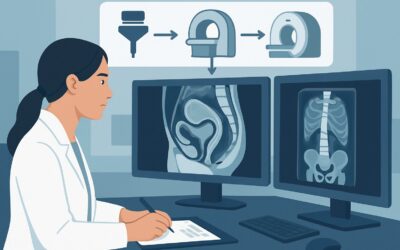
When to Order Imaging for Pelvic Floor Dysfunction in Females: ACR Appropriateness Decoded

A patient presents with symptoms of pelvic organ prolapse or urinary incontinence, common but complex conditions requiring a precise diagnosis. The physical exam provides initial clues, but to understand the full extent of multi-compartment involvement, imaging is often necessary. Choosing between dynamic MRI, fluoroscopic defecography, or specialized ultrasound can be challenging, especially when trying to minimize radiation exposure and select the most diagnostically useful test. This guide breaks down the American College of Radiology (ACR) Appropriateness Criteria for pelvic floor dysfunction in females, providing clear, evidence-based recommendations to help you order the right study for the right clinical scenario.
What Does ACR Pelvic Floor Dysfunction in Females Cover?
The ACR guidelines for Pelvic Floor Dysfunction in Females focus on the initial imaging evaluation for women presenting with symptoms related to the three compartments of the pelvic floor: the anterior (bladder and urethra), middle (uterus and vagina), and posterior (rectum and anus). The criteria are organized by the dominant clinical presentation.
This topic specifically addresses imaging for:
- Clinically suspected pelvic organ prolapse (e.g., vaginal bulge or protrusion).
- Urinary dysfunction (e.g., incontinence, urgency, incomplete voiding).
- Defecatory dysfunction (e.g., fecal incontinence, straining, incomplete evacuation).
- Follow-up of subacute or chronic complications after pelvic floor surgery.
These guidelines do not cover acute pelvic pain, suspected gynecologic malignancy, or pelvic floor dysfunction in males, which are addressed in separate ACR documents. The focus here is on the functional and anatomical assessment of the female pelvic support structures.
What Imaging Should I Order for Pelvic Floor Dysfunction in Females? Recommendations by Clinical Scenario
The optimal imaging modality for female pelvic floor dysfunction depends entirely on the patient’s primary symptoms, as different studies are tailored to evaluate different pelvic compartments and functions. The ACR provides specific guidance for four common clinical variants.
For a patient with a vaginal protrusion or bulge, or clinically suspected pelvic organ prolapse, the ACR rates both Fluoroscopy cystocolpoproctography and MR defecography as Usually appropriate. Both studies provide excellent dynamic, multi-compartment assessment during straining and evacuation, which is critical for evaluating prolapse. MRI offers superior soft-tissue resolution without ionizing radiation, while fluoroscopy is often more widely available. Transperineal ultrasound and dynamic pelvic MRI without defecation are considered May be appropriate alternatives.
When the primary complaint is urinary dysfunction (such as involuntary leakage, urgency, or incomplete voiding), Fluoroscopy voiding cystourethrography (VCUG) is Usually appropriate. This study is specifically designed to evaluate bladder and urethral anatomy and function during voiding. Several other dynamic studies, including MR defecography and transperineal ultrasound, are rated May be appropriate as they can provide valuable correlative information, especially if multi-compartment dysfunction is suspected.
For defecatory dysfunction (including incontinence, straining, or incomplete evacuation), the evaluation needs to focus on the posterior compartment. The ACR finds three studies Usually appropriate: US pelvis transrectal (excellent for anal sphincter evaluation), Fluoroscopy cystocolpoproctography, and MR defecography. The latter two are powerful functional tests that visualize the anorectal angle and pelvic floor motion during defecation, helping to diagnose conditions like rectoceles and rectal intussusception. While CT scans are sometimes ordered, they are rated Usually not appropriate for this indication due to poor functional information and radiation exposure; for more on CT protocols when they are indicated for other reasons, see our guide on CT Chest/Abdomen/Pelvis with IV Contrast.
Finally, in the postoperative setting for follow-up imaging after pelvic floor surgery for complications other than recurrent dysfunction, MRI is the dominant modality. MR defecography, MRI pelvis dynamic maneuvers without defecation, and MRI pelvis without and with IV contrast are all rated Usually appropriate. MRI’s excellent soft tissue contrast is ideal for evaluating surgical mesh, identifying fistulas, or assessing other postsurgical changes without the use of ionizing radiation.
ACR Imaging Recommendations Table
| Clinical Scenario | Top Procedure(s) | ACR Rating | Adult RRL | Pediatric RRL |
|---|---|---|---|---|
| Vaginal protrusion or bulge, or clinically suspected pelvic organ prolapse. Initial imaging. | Fluoroscopy cystocolpoproctography MR defecography |
Usually appropriate | ☢ ☢ ☢ 1-10 mSv O 0 mSv |
O 0 mSv [ped] |
| Female. Urinary dysfunction (involuntary leakage of urine, or frequent urination, or urgency, straining to void, incomplete voiding, splinting, or digital maneuvers to void). Initial imaging. | Fluoroscopy voiding cystourethrography | Usually appropriate | ☢ ☢ 0.1-1mSv | ☢ ☢ 0.03-0.3 mSv [ped] |
| Female. Defecatory dysfunction (incontinence of stool or liquid or gas, straining during defecation, difficulty initiating defecation, incomplete evacuation, or splinting or digital maneuvers to defecate). Initial imaging. | US pelvis transrectal Fluoroscopy cystocolpoproctography MR defecography |
Usually appropriate | O 0 mSv ☢ ☢ ☢ 1-10 mSv O 0 mSv |
O 0 mSv [ped]
O 0 mSv [ped] |
| Female. Follow-up imaging after pelvic floor surgery. Subacute or chronic complications other than recurrent pelvic floor dysfunction. Initial imaging. | MR defecography MRI pelvis dynamic maneuvers without defecation MRI pelvis without and with IV contrast |
Usually appropriate | O 0 mSv O 0 mSv O 0 mSv |
O 0 mSv [ped] O 0 mSv [ped] O 0 mSv [ped] |
Adult vs. Pediatric Pelvic Floor Dysfunction in Females Imaging: Radiation Dose Tradeoffs
While pelvic floor dysfunction is more commonly evaluated in adults, symptoms can occur in pediatric and adolescent populations. The ACR provides pediatric-specific Relative Radiation Level (RRL) estimates for many procedures, reflecting the heightened concern for lifetime cancer risk from cumulative radiation exposure in younger patients. The principle of As Low As Reasonably Achievable (ALARA) is paramount.
For modalities involving ionizing radiation, such as CT and fluoroscopy, the pediatric dose is typically lower than the adult dose for the same study. For example, a voiding cystourethrography carries an RRL of ☢ ☢ (0.1-1 mSv) in adults but a lower range of ☢ ☢ (0.03-0.3 mSv) in children. Similarly, a CT of the pelvis has a lower RRL in children. This underscores the importance of using pediatric-specific protocols. However, the most significant consideration is the preference for non-ionizing modalities like MRI and ultrasound whenever they can provide the necessary diagnostic information. For most pelvic floor dysfunction scenarios, MRI and ultrasound are rated as appropriate and carry an RRL of ‘O’ (0 mSv), making them the safest choices from a radiation perspective in all age groups, especially children.
Imaging Protocol Details for Pelvic Floor Dysfunction in Females
Once you’ve decided on the right study based on the ACR criteria, ensuring it is performed correctly is the next critical step. The diagnostic yield of dynamic pelvic imaging is highly dependent on technique, patient instruction, and radiologist experience. Our protocol guides cover the essential details for many common imaging studies.
While CT is generally not a first-line modality for these specific indications, understanding its protocol is important when it is performed to evaluate for alternative diagnoses. You can review key parameters in our reference article:
Tools to Help You Order the Right Study
Navigating imaging guidelines and protocols can be complex. GigHz offers a suite of reference tools designed to support clinical decision-making at the point of care.
For scenarios beyond pelvic floor dysfunction, the Imaging Appropriateness Selector provides a searchable interface to the full library of ACR guidelines, helping you find evidence-based recommendations for hundreds of clinical conditions.
To ensure the studies you order are technically optimized, the Imaging Protocol Library offers detailed, step-by-step protocols for a wide range of CT, MRI, and ultrasound examinations, covering everything from patient prep to post-processing.
When discussing the risks and benefits of imaging with patients, especially when radiation is involved, the Radiation Dose Calculator is a valuable resource. It helps estimate and track cumulative radiation exposure, facilitating informed conversations and adherence to the ALARA principle.
Why is CT usually not appropriate for evaluating pelvic floor dysfunction?
CT is generally rated as “Usually not appropriate” because it has two major limitations for this clinical problem. First, it uses ionizing radiation, whereas alternatives like MRI and ultrasound do not. Second, CT provides poor soft-tissue contrast compared to MRI, making it difficult to visualize the specific muscles, ligaments, and fascial planes of the pelvic floor. It is also not a dynamic or functional test in the way that MR defecography or fluoroscopy are, so it cannot assess pelvic organ motion during straining or evacuation.
What is the difference between MR defecography and dynamic MRI of the pelvis?
Both are functional MRI studies, but MR defecography is more comprehensive for evaluating defecatory disorders. In MR defecography, contrast gel is instilled into the rectum (and often the vagina and bladder) to visualize the compartments clearly. The patient is then imaged while actively evacuating the gel. This provides detailed information on anorectal angle, rectal descent, and the formation of rectoceles or enteroceles. A dynamic MRI without defecation involves imaging while the patient performs maneuvers like straining or coughing (Valsalva) but does not include rectal contrast or the act of evacuation, making it less specific for posterior compartment dysfunction.
When should I choose fluoroscopy over MRI for suspected prolapse?
The choice often depends on local availability, expertise, and the specific clinical question. Fluoroscopy cystocolpoproctography is a well-established, dynamic study that provides excellent visualization of organ descent relative to bony landmarks. It can be more accessible and less expensive than MRI. However, it involves ionizing radiation. MR defecography is considered Usually appropriate and provides superior soft-tissue detail of all three pelvic compartments, can identify levator ani muscle defects, and does not use radiation. MRI is often preferred for complex, multi-compartment prolapse or when there is a high suspicion of an enterocele.
Is a standard transvaginal ultrasound sufficient for pelvic floor evaluation?
Generally, no. A standard transvaginal or transabdominal ultrasound is excellent for evaluating uterine and adnexal pathology but is not designed to assess pelvic floor support structures. A specialized transperineal ultrasound is the preferred sonographic method. With this technique, the transducer is placed on the perineum, allowing for dynamic visualization of the bladder neck, urethra, and levator ani muscles at rest and during Valsalva maneuvers. It is a non-invasive, radiation-free option rated as May be appropriate for many pelvic floor dysfunction scenarios.
What does the “(Disagreement)” tag mean for an ACR rating?
The “(Disagreement)” tag, as seen with “MRI pelvis dynamic maneuvers without defecation” for defecatory dysfunction, indicates that the expert panel had a notable lack of consensus in reaching the final rating. While the procedure was ultimately rated “May be appropriate,” the disagreement signifies that the evidence, clinical practice, or expert opinion is varied or still evolving for that specific study in that specific clinical context. It suggests that ordering clinicians should carefully consider the individual patient’s circumstances and may want to discuss the case with a radiologist.
Frequently Asked Questions
Why is CT usually not appropriate for evaluating pelvic floor dysfunction?
CT is generally rated as “Usually not appropriate” because it has two major limitations for this clinical problem. First, it uses ionizing radiation, whereas alternatives like MRI and ultrasound do not. Second, CT provides poor soft-tissue contrast compared to MRI, making it difficult to visualize the specific muscles, ligaments, and fascial planes of the pelvic floor. It is also not a dynamic or functional test in the way that MR defecography or fluoroscopy are, so it cannot assess pelvic organ motion during straining or evacuation.
What is the difference between MR defecography and dynamic MRI of the pelvis?
Both are functional MRI studies, but MR defecography is more comprehensive for evaluating defecatory disorders. In MR defecography, contrast gel is instilled into the rectum (and often the vagina and bladder) to visualize the compartments clearly. The patient is then imaged while actively evacuating the gel. This provides detailed information on anorectal angle, rectal descent, and the formation of rectoceles or enteroceles. A dynamic MRI without defecation involves imaging while the patient performs maneuvers like straining or coughing (Valsalva) but does not include rectal contrast or the act of evacuation, making it less specific for posterior compartment dysfunction.
When should I choose fluoroscopy over MRI for suspected prolapse?
The choice often depends on local availability, expertise, and the specific clinical question. Fluoroscopy cystocolpoproctography is a well-established, dynamic study that provides excellent visualization of organ descent relative to bony landmarks. It can be more accessible and less expensive than MRI. However, it involves ionizing radiation. MR defecography is considered Usually appropriate and provides superior soft-tissue detail of all three pelvic compartments, can identify levator ani muscle defects, and does not use radiation. MRI is often preferred for complex, multi-compartment prolapse or when there is a high suspicion of an enterocele.
Is a standard transvaginal ultrasound sufficient for pelvic floor evaluation?
Generally, no. A standard transvaginal or transabdominal ultrasound is excellent for evaluating uterine and adnexal pathology but is not designed to assess pelvic floor support structures. A specialized transperineal ultrasound is the preferred sonographic method. With this technique, the transducer is placed on the perineum, allowing for dynamic visualization of the bladder neck, urethra, and levator ani muscles at rest and during Valsalva maneuvers. It is a non-invasive, radiation-free option rated as May be appropriate for many pelvic floor dysfunction scenarios.
What does the “(Disagreement)” tag mean for an ACR rating?
The “(Disagreement)” tag, as seen with “MRI pelvis dynamic maneuvers without defecation” for defecatory dysfunction, indicates that the expert panel had a notable lack of consensus in reaching the final rating. While the procedure was ultimately rated “May be appropriate,” the disagreement signifies that the evidence, clinical practice, or expert opinion is varied or still evolving for that specific study in that specific clinical context. It suggests that ordering clinicians should carefully consider the individual patient’s circumstances and may want to discuss the case with a radiologist.
Reviewed by Pouyan Golshani, MD, Interventional Radiologist — May 26, 2026