What Imaging Should You Order for Minor Blunt Trauma with Suspected Rib Fractures?

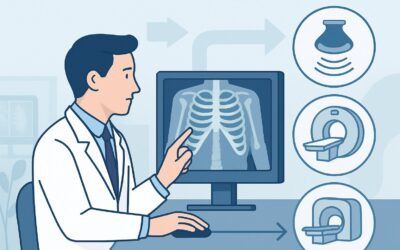
A 68-year-old patient presents to your clinic after tripping and falling against a countertop two days ago. They report sharp, localized pain over the right lateral chest wall, which worsens with deep inspiration and coughing. Their vital signs are stable, oxygen saturation is normal on room air, and there is no shortness of breath or other signs of systemic injury. You suspect one or more rib fractures from this minor blunt trauma, but need to decide on the appropriate initial imaging study. This article provides a detailed clinical workflow for this specific scenario, guiding you through the American College of Radiology (ACR) recommendations. For this presentation—injury confined to the ribs from minor trauma—the ACR finds that a standard Radiography chest is Usually appropriate.
Who Fits This Clinical Scenario?
This guidance applies to a well-defined patient population: adults who have experienced minor, direct, blunt trauma to the chest wall and are clinically stable. The key inclusion criteria are:
- Mechanism of Injury: Low-energy trauma, such as a fall from standing height, bumping into a stationary object, or a minor sports-related impact.
- Clinical Presentation: The patient’s symptoms and physical exam findings are localized to the chest wall. This includes focal tenderness, pain with palpation, and splinting with respiration.
- Hemodynamic Stability: The patient is normotensive, not tachycardic, and has normal oxygen saturation. There are no signs of shock or respiratory distress.
It is equally important to identify patients who do not fit this scenario, as their workup will differ significantly. This guidance should not be applied to patients with:
- Major or High-Energy Trauma: This includes motor vehicle collisions, falls from a significant height, or any injury mechanism with a high suspicion for multi-system trauma or internal organ damage. These cases typically warrant a broader trauma evaluation, often involving CT.
- Suspicion of Pathologic Fracture: If the patient has a known malignancy with a propensity for bony metastases (e.g., breast, lung, prostate cancer) or if the fracture occurred with minimal or no trauma, the workup shifts. This presentation is covered under the ACR variant for suspected pathologic rib fracture.
- Post-Resuscitation Status: Rib fractures are common after cardiopulmonary resuscitation (CPR), but the clinical context and potential for associated injuries require a distinct imaging approach.
What Diagnoses Are You Working Up in This Scenario?
When ordering imaging for minor blunt chest trauma, the goal is to confirm the suspected diagnosis while simultaneously ruling out clinically significant complications. The differential diagnosis guides this focused approach.
Simple Rib Fracture(s)
This is the most common and expected diagnosis. Identifying one or more non-displaced or minimally displaced rib fractures confirms the source of the patient’s pain. While the presence of a simple fracture often does not change conservative management (pain control, incentive spirometry), confirmation can be valuable for patient education, setting expectations for recovery time, and providing documentation for work or activity restrictions.
Pneumothorax or Hemothorax
Though less common in low-energy trauma, a visceral pleural tear from a sharp fracture fragment can lead to a pneumothorax (air in the pleural space) or hemothorax (blood in the pleural space). These are critical, “can’t-miss” diagnoses. Even a small pneumothorax can have implications for patients, especially those who may travel by air or have underlying lung disease. A standard chest radiograph is highly effective at detecting clinically significant occurrences of either condition.
Pulmonary Contusion
A pulmonary contusion, or bruising of the lung parenchyma, can result from blunt trauma. In minor injuries, any contusion is typically small and not clinically significant. However, its presence can indicate a greater force of impact than initially suspected. A chest radiograph can often reveal parenchymal opacities suggestive of contusion, prompting closer observation of the patient’s respiratory status.
Chest Wall Contusion or Muscle Strain
Many patients with focal chest wall pain after minor trauma will not have a fracture. Their symptoms are due to soft tissue injury, such as a contusion of the intercostal muscles. A negative chest radiograph effectively rules out fracture and associated complications, allowing the clinician to confidently diagnose a soft tissue injury and focus on symptomatic management.
Why Is a Chest Radiograph the Recommended Study for Minor Rib Trauma?
For a stable patient with suspected rib fractures from minor trauma, the ACR designates a Radiography chest as Usually appropriate. The rationale is based on an optimal balance of diagnostic yield, safety, and resource utilization for this specific low-risk clinical question.
The primary purpose of imaging in this scenario is not to identify every single hairline fracture, but to rule out immediate, treatable complications. A standard two-view chest radiograph (posteroanterior and lateral) is an excellent first-line tool for this task. It provides a global view of the thorax, allowing for the reliable detection of a pneumothorax, a significant hemothorax (seen as pleural effusion or blunting of the costophrenic angle), or a sizable pulmonary contusion. While it may miss some non-displaced anterior or posterior rib fractures, these occult fractures rarely alter the conservative management plan.
In contrast, several alternative studies are rated lower for this specific presentation:
- Radiography rib views are rated as May be appropriate. These dedicated, often oblique, views are more sensitive for visualizing the ribs themselves. However, they offer a limited view of the lung parenchyma, increasing the risk of missing a small pneumothorax. Furthermore, they impart a significantly higher radiation dose (☢☢☢ 1-10 mSv) than a standard chest radiograph (☢ <0.1 mSv) without typically changing patient management.
- CT chest without IV contrast is rated as Usually not appropriate. While CT is far more sensitive for detecting fractures, its routine use in this low-risk scenario is not justified. It exposes the patient to a substantially higher radiation dose (☢☢☢ 1-10 mSv) and is a more resource-intensive study. The small number of additional, clinically insignificant fractures it might find does not outweigh these significant disadvantages in the initial workup of minor trauma.
The choice of a standard chest radiograph prioritizes patient safety by minimizing radiation exposure while effectively answering the most critical clinical question: is there a dangerous intrathoracic injury? It is a rapid, low-cost, and universally available examination that provides the necessary information to guide management in the vast majority of these cases.
What’s Next After Radiography chest? Downstream Workflow
The results of the initial chest radiograph will guide your next steps. The clinical workflow branches based on whether the findings are positive, negative, or equivocal.
If the study is positive for rib fracture(s) without complications:
The primary diagnosis is confirmed. Management focuses on aggressive pain control (to prevent splinting and subsequent atelectasis or pneumonia), patient education on deep breathing exercises, and incentive spirometry. Activity modification is advised, and the patient should be counseled on an expected recovery timeline of 4-6 weeks. Follow-up is typically managed on an outpatient basis unless the patient is elderly, has multiple fractures, or has significant comorbidities that increase the risk of respiratory compromise.
If the study is positive for a complication (e.g., pneumothorax):
The workflow escalates immediately. A small, stable pneumothorax in an asymptomatic patient may be managed with observation and repeat imaging. However, a larger or symptomatic pneumothorax requires consultation with thoracic surgery or pulmonology and may necessitate chest tube placement. The presence of a complication fundamentally changes the patient’s disposition from outpatient management to admission or urgent intervention.
If the study is negative for fracture or other acute findings:
You can confidently diagnose a chest wall contusion or muscle strain. Reassure the patient that no serious injury has been identified. Management remains symptomatic with analgesics (e.g., NSAIDs if appropriate) and relative rest. If severe pain persists despite a negative radiograph, especially in an elite athlete or a patient with high functional demands, a follow-up study like dedicated rib views or chest ultrasound could be considered, though this is rarely necessary.
If the study is indeterminate or clinical suspicion remains high:
Occasionally, a patient’s severe, focal pain is highly suggestive of a fracture that is not visible on the initial radiograph (an “occult” fracture). If confirming this diagnosis is critical for management (e.g., in a high-performance athlete), a next step could be dedicated rib views (May be appropriate) or, in select cases, a CT scan. However, for most patients, management can proceed based on the clinical presumption of a fracture, as treatment would be the same.
Pitfalls to Avoid (and When to Get Help)
Navigating this common clinical scenario involves being aware of several potential pitfalls:
- Underestimating Pain: The most significant morbidity from simple rib fractures is not the fracture itself, but the secondary complications from poor pain control. Inadequate analgesia leads to splinting, atelectasis, and pneumonia. Be aggressive with multimodal pain management.
- Ignoring the Elderly: An isolated rib fracture in a young, healthy adult is a minor injury. In an elderly patient, the same injury can be a marker for significant morbidity and mortality due to increased risk of pneumonia. Have a lower threshold for admission and observation in this population.
- Missing a Flail Chest: While unlikely with minor trauma, be sure to assess for paradoxical chest wall motion on physical exam. A flail segment (fractures of three or more contiguous ribs in two or more places) is a marker of severe injury and constitutes a medical emergency.
- Over-imaging Low-Risk Patients: Resist the urge to order a CT scan “just to be sure” in a stable patient with minor trauma and a reassuring chest radiograph. This leads to unnecessary radiation exposure and healthcare costs.
If a patient develops respiratory distress, hypoxia, or hemodynamic instability at any point, escalate care immediately. This suggests a more severe injury than initially appreciated and warrants a full trauma evaluation.
Related ACR Topics and Tools
This article focuses on a single, common clinical scenario. For a comprehensive overview of imaging for all types of suspected rib fractures, including pathologic fractures and post-CPR injuries, please consult our parent guide. For further exploration of adjacent topics and to optimize your imaging orders, the following GigHz resources are available:
- For breadth across all scenarios in Rib Fractures, see our parent guide: Rib Fractures: ACR Appropriateness Decoded.
- Imaging Appropriateness Selector — for adjacent scenarios
- Imaging Protocol Library — for technique on the recommended study
- Radiation Dose Calculator — for cumulative dose conversations
Frequently Asked Questions
Is it ever appropriate to order no imaging at all for suspected minor rib fractures?
Yes. In a young, healthy patient with very localized, non-severe pain from minor trauma and a completely normal physical exam (normal breath sounds, no hypoxia), a clinical diagnosis of chest wall contusion or a simple, uncomplicated rib fracture can be made. If the imaging results would not change the conservative management plan (pain control, activity modification), forgoing imaging is a reasonable option that avoids radiation exposure and cost.
Why are dedicated rib views rated lower than a standard chest radiograph?
Dedicated rib views are rated ‘May be appropriate’ rather than ‘Usually appropriate’ because they offer a worse trade-off of benefits and risks for this specific scenario. While slightly more sensitive for the bones themselves, they deliver a higher radiation dose (ACR level ☢☢☢) and provide a poorer evaluation of the lungs for complications like pneumothorax compared to a standard chest radiograph (ACR level ☢).
If my patient has a pacemaker, does that change the initial imaging choice?
No, the presence of a pacemaker or other implantable cardiac device does not change the recommendation. A standard chest radiograph is perfectly safe and remains the ‘Usually appropriate’ initial study. The radiograph will also provide useful information about the position and integrity of the device and its leads.
When should I consider a CT scan as the initial study for suspected rib fractures?
A CT scan should be considered as the initial study in cases of high-energy trauma (e.g., motor vehicle accident, fall from height), when there is suspicion of associated vascular or solid organ injury, or in a patient who is hemodynamically unstable. In the context of minor, isolated trauma discussed in this article, CT is ‘Usually not appropriate’ as the first imaging test.
Does chest ultrasound have a role in diagnosing rib fractures from minor trauma?
According to the ACR, chest ultrasound is ‘Usually not appropriate’ for this indication. While point-of-care ultrasound (POCUS) can be highly sensitive for detecting rib fractures and pneumothorax in the hands of an experienced operator, it is highly operator-dependent and provides a limited field of view. A standard chest radiograph offers a more comprehensive, standardized, and readily interpretable assessment of the entire thorax.
Reviewed by Pouyan Golshani, MD, Interventional Radiologist — May 26, 2026