What Is the Best Initial Imaging for Suspected Lower-Extremity Vascular Trauma?

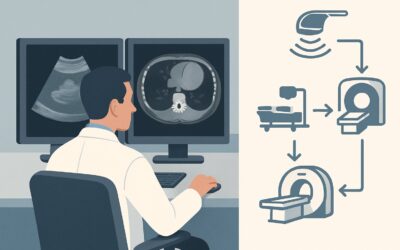
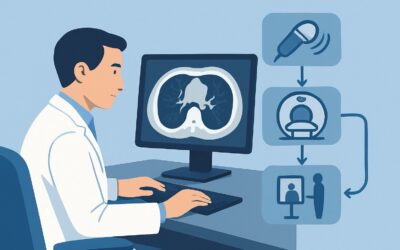
It’s 2 a.m. in the emergency department, and you are evaluating a patient brought in after a motorcycle accident with a deep, contaminated laceration and deformity of the right lower leg. The patient is hemodynamically stable, but you note diminished distal pulses and expanding hematoma—hard signs of a vascular injury. You need to confirm the diagnosis and define the anatomy for the trauma and vascular surgery teams, and you need to do it fast. This is the critical decision point for initial imaging in lower-extremity vascular trauma. This guide provides a clinical workflow for this specific scenario, explaining why the American College of Radiology (ACR) rates Computed Tomography Angiography (CTA) of the lower extremity with intravenous (IV) contrast as Usually appropriate.
Who Fits This Clinical Scenario?
This guidance applies to patients who have sustained blunt or penetrating trauma to a lower extremity and present with clinical signs concerning for arterial injury. The decision to image is often based on the presence of “hard” or “soft” signs of vascular injury. Hard signs, such as pulsatile bleeding, an expanding hematoma, a palpable thrill or audible bruit, and signs of distal ischemia (pallor, pulselessness, paresthesias, paralysis, pain), often warrant immediate surgical exploration but frequently require preoperative imaging to plan the intervention. Soft signs, such as a history of significant hemorrhage at the scene, a diminished but palpable pulse, a peripheral nerve deficit, or proximity of a fracture or penetrating injury to a major artery, are strong indications for diagnostic imaging.
This workflow is specifically for the initial diagnostic imaging in an acute traumatic setting. It does not apply to patients with chronic, non-traumatic symptoms that might suggest other forms of nonatherosclerotic peripheral arterial disease. For instance, a patient with chronic, exertional calf pain should be evaluated for suspected popliteal entrapment syndrome. Similarly, a patient with systemic inflammatory symptoms and limb claudication would follow the workup for suspected lower-extremity inflammatory vasculitides. This distinction is crucial for selecting the appropriate imaging pathway.
What Diagnoses Are You Working Up in This Scenario?
In the setting of lower-extremity trauma, imaging is performed to identify several specific, time-sensitive vascular injuries. The primary goal is to confirm or exclude a diagnosis that requires urgent intervention by vascular surgery or interventional radiology.
The most critical finding to identify is active arterial extravasation, which signifies ongoing bleeding from a vessel. This is a true emergency requiring immediate control. Closely related is arterial transection or occlusion, where the vessel is completely disrupted or thrombosed, leading to acute limb ischemia. Without rapid revascularization, this can result in limb loss.
A pseudoaneurysm is another key diagnosis. This occurs when a tear in the artery wall leads to a contained hematoma that communicates with the arterial lumen. Unlike a true aneurysm, its wall is formed by surrounding tissues, not the vessel layers. Pseudoaneurysms are at high risk of rupture and require treatment.
An arteriovenous (AV) fistula can also result from trauma that injures an adjacent artery and vein, creating an abnormal connection between them. This can lead to high-output cardiac failure or local venous hypertension over time. Lastly, an intimal flap or dissection, where the inner layer of the artery tears and potentially obstructs flow, is an important diagnosis to make, as it can propagate or lead to thrombosis.
Why Is CTA Lower Extremity with IV Contrast the Recommended Study for This Presentation?
The ACR designates Computed Tomography Angiography (CTA) of the lower extremity with IV contrast as Usually appropriate for the initial evaluation of suspected vascular trauma because it optimally balances speed, availability, and diagnostic accuracy for this high-stakes clinical scenario. In a trauma setting, time is critical, and CTA can be performed in minutes on the same scanner used for other trauma surveys. It provides excellent spatial resolution, allowing for precise localization of injuries and detailed visualization of the arterial anatomy, which is essential for surgical or endovascular planning.
CTA is highly sensitive and specific for detecting the key diagnoses in the differential, including active extravasation, pseudoaneurysm, AV fistula, dissection, and vessel occlusion. The ability to generate multiplanar reformats and 3-D reconstructions helps clinicians and surgeons fully understand the extent of the injury and its relationship to surrounding bony and soft tissue structures.
Alternative studies are rated lower for specific reasons. US duplex Doppler lower extremity is rated May be appropriate. While it avoids radiation and contrast, it is highly operator-dependent, can be limited by patient body habitus, and is often difficult to perform adequately in the setting of open wounds, extensive soft tissue swelling, or fracture-related pain. It may serve as a screening tool in stable patients with very soft signs but is generally insufficient for definitive evaluation in patients with high-risk injuries. Arteriography lower extremity, also rated May be appropriate, is the traditional gold standard and has the unique advantage of allowing for immediate endovascular intervention. However, it is invasive, time-consuming, and requires specialized personnel and equipment, making it less suitable as a primary diagnostic tool in the acute setting unless there is a very high pretest probability and a plan for immediate intervention.
The primary trade-offs with CTA are the use of iodinated contrast and ionizing radiation. The adult radiation relative level (RRL) is ☢☢☢ (1-10 mSv), and the pediatric RRL is ☢☢☢☢ (3-10 mSv), necessitating careful consideration of the risk-benefit profile, especially in younger patients.
What’s Next After CTA Lower Extremity with IV Contrast? Downstream Workflow
The results of the CTA will directly guide the subsequent management steps, which are often executed in parallel with ongoing resuscitation. The workflow branches based on the findings:
- Positive for a high-grade injury: If the CTA demonstrates active extravasation, complete vessel transection, or a flow-limiting dissection, this constitutes a surgical emergency. The immediate next step is an urgent consultation with vascular surgery and/or interventional radiology. The patient will likely proceed directly to the operating room or angiography suite for repair, bypass, or endovascular intervention (e.g., stent-graft placement, embolization).
- Positive for a lower-grade injury: Findings such as a small, stable pseudoaneurysm, a non-flow-limiting intimal flap, or an AV fistula may not require immediate operative intervention. Management may involve observation with serial imaging, planned endovascular repair, or delayed open surgery, depending on the specific injury, its location, and the patient’s overall clinical status.
- Negative study: A technically adequate negative CTA effectively rules out a significant arterial injury. In this case, the focus shifts to managing the patient’s other orthopedic or soft tissue injuries. The patient can typically be observed from a vascular standpoint, with a low threshold for repeat clinical examination of distal perfusion.
- Indeterminate or equivocal study: If the CTA is limited by motion artifact, metallic artifact from shrapnel, or poor contrast timing, the findings may be inconclusive. If clinical suspicion for a vascular injury remains high despite an equivocal CTA, the next step is often conventional arteriography, which remains the problem-solving modality and allows for therapeutic intervention if an injury is found.
Pitfalls to Avoid (and When to Get Help)
Several common pitfalls can compromise patient care in this scenario. First, delaying imaging in a patient with hard signs of vascular injury can lead to irreversible ischemia and limb loss; prompt evaluation is paramount. Second, ordering a non-contrast CT of the extremity is a critical error, as it provides no useful information about the vascular structures and only wastes time and adds radiation. Always specify “CTA” or “with IV contrast” and ensure the protocol is timed for arterial phase imaging. Another pitfall is failing to clinically assess for compartment syndrome, a separate but often concurrent emergency that is a clinical diagnosis not ruled out by a normal CTA. Finally, be aware of potential artifacts from metallic foreign bodies or orthopedic hardware that can obscure adjacent vessels. If the CTA is non-diagnostic due to artifact but suspicion remains high, escalate immediately to your vascular surgery or interventional radiology colleagues for consideration of alternative imaging like conventional angiography.
Related ACR Topics and Tools
This article covers a single, focused scenario within the broader topic of nonatherosclerotic peripheral arterial disease. For a comprehensive overview of related conditions and their appropriate imaging workups, clinicians should consult the resources below.
- For breadth across all scenarios in Nonatherosclerotic Peripheral Arterial Disease, see our parent guide: Nonatherosclerotic Peripheral Arterial Disease: ACR Appropriateness Decoded.
- To explore other clinical presentations and their recommended imaging pathways, use the ACR Appropriateness Criteria Lookup.
- For details on imaging techniques for various modalities, refer to the Imaging Protocol Library.
- To discuss cumulative radiation exposure with patients, the Radiation Dose Calculator can be a helpful tool.
Frequently Asked Questions
What are the ‘hard signs’ of vascular injury that necessitate urgent evaluation?
Hard signs are clinical findings highly suggestive of a major arterial injury. They include pulsatile external bleeding, an expanding hematoma, a palpable thrill or audible bruit over the injury site, and signs of distal ischemia (the ‘6 Ps’: pulselessness, pallor, pain, paresthesias, paralysis, and poikilothermia/coldness). The presence of any hard sign warrants immediate, aggressive evaluation, often including preoperative CTA.
Can I use Duplex ultrasound instead of CTA if I want to avoid radiation and contrast?
According to the ACR, Duplex ultrasound is rated ‘May be appropriate.’ While it is a valuable tool without radiation or contrast risks, its utility in acute trauma is often limited. Open wounds, significant soft tissue swelling, patient pain, and the presence of fractures can make it technically difficult or impossible to obtain diagnostic-quality images. It is generally reserved for stable patients with low-risk ‘soft signs’ of injury, not as the primary modality for high-risk presentations.
What should I do if the patient has a severe contrast allergy or significant renal impairment?
This is a challenging situation that requires a risk-benefit discussion. For patients with severe contrast allergies, premedication protocols can be used, but this may delay imaging. In cases of severe renal failure (e.g., GFR < 30 mL/min/1.73 m²), the risk of contrast-induced nephropathy must be weighed against the risk of limb loss. Alternative modalities like non-contrast MRA are 'Usually not appropriate' and have limited utility in trauma. Often, the best course is to proceed with conventional catheter arteriography, which can use smaller, directed contrast volumes and also offers the ability to intervene immediately.
Is MRA a good alternative to CTA for lower-extremity vascular trauma?
No, MRA is rated as ‘Usually not appropriate’ for this specific scenario. While MRA avoids ionizing radiation, it is significantly slower to acquire, more susceptible to motion artifact (a major issue in trauma patients), and less readily available in most emergency departments. Furthermore, many trauma patients have contraindications to MRI, such as metallic foreign bodies or certain implants. CTA remains the superior modality for its speed, accessibility, and high diagnostic accuracy in the acute trauma setting.
Does a normal CTA definitively rule out a need for surgical exploration?
A high-quality, negative CTA has a very high negative predictive value and effectively rules out a hemodynamically significant arterial injury. In most cases, this allows the clinical team to confidently focus on other injuries. However, clinical judgment remains paramount. If there is a strong, persistent clinical concern for compartment syndrome, for example, that would still require surgical fasciotomy regardless of the CTA findings, as it is a diagnosis based on intracompartmental pressures, not vascular imaging.
Reviewed by Pouyan Golshani, MD, Interventional Radiologist — August 4, 2026