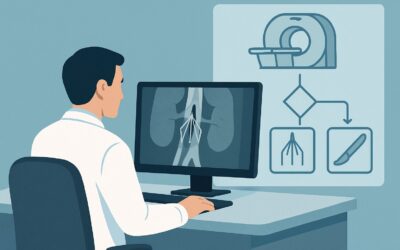
What Is the Best Management for a Periappendiceal Abscess? An ACR-Guided Workflow

A 45-year-old male presents to the emergency department with a seven-day history of escalating right lower quadrant abdominal pain, subjective fevers, and loss of appetite. His white blood cell count is elevated. On examination, he is tender in the right lower quadrant but lacks rebound tenderness or guarding. A CT scan confirms a 4 cm, thin-walled, fluid-filled collection adjacent to the cecum, with an appendicolith nearby; the appendix itself is not clearly visualized. You’ve started broad-spectrum antibiotics and consulted surgery and interventional radiology. The immediate question is how to manage this contained, infected collection. This article details the clinical workflow for this specific scenario, where the American College of Radiology (ACR) finds Percutaneous catheter drainage only to be a Usually appropriate initial step.
Who Fits This Clinical Scenario of a Contained Periappendiceal Abscess?
This guidance applies to a specific subset of patients with complicated appendicitis. The key inclusion criteria are a subacute presentation (typically several days, as in this 7-day history), signs of infection (fever, leukocytosis), and imaging findings of a well-defined, drainable fluid collection greater than 3 cm. Critically, the patient should be hemodynamically stable and have no peritoneal signs on physical examination, indicating the infection is walled-off and not a free perforation with diffuse peritonitis.
This workflow is distinct from other clinical presentations that may appear similar. It is crucial to differentiate this scenario from:
- Acute, Uncomplicated Appendicitis: Patients with a shorter duration of symptoms and imaging showing an inflamed, non-perforated appendix are typically managed with immediate appendectomy.
- Perforated Appendicitis with Diffuse Peritonitis: A patient with peritoneal signs (e.g., rigidity, rebound tenderness) requires emergent surgical exploration, as this suggests widespread intra-abdominal contamination that cannot be managed with a single localized drain.
- Small Periappendiceal Phlegmon or Abscess (< 3 cm): Smaller, contained inflammatory masses or collections are often successfully treated with antibiotics alone, without the need for procedural intervention.
- Suspected Tubo-ovarian Abscess: In a woman of childbearing age with a right-sided pelvic fluid collection, a tubo-ovarian abscess is a primary consideration. The clinical history and a dedicated pelvic examination are essential to distinguish this from an appendiceal source.
What Diagnoses Are You Working Up with a Pericecal Fluid Collection?
While the findings are highly suspicious for an appendiceal source, a thoughtful differential diagnosis is essential, as the management of mimics can differ significantly.
Perforated Appendicitis with Abscess This is the most common and likely diagnosis. The week-long history is classic for a “walled-off” perforation. The body’s inflammatory response contains the infection, forming a mature abscess cavity. The presence of an appendicolith on CT is a strong corroborating feature, as these calcified fecaliths are a common cause of appendiceal obstruction and subsequent perforation.
Crohn’s Disease with Fistula or Abscess Crohn’s disease, an inflammatory bowel disorder, frequently affects the terminal ileum and cecum. An inflammatory flare can lead to a phlegmon or a penetrating fistula that forms an abscess, mimicking a perforated appendix. While often seen in patients with a known history of Crohn’s, this can be the initial presentation. Associated findings like mural thickening of the terminal ileum can be a clue.
Cecal Diverticulitis with Abscess Though much less common than left-sided (sigmoid) diverticulitis, diverticula can occur in the cecum. When inflamed and perforated, they can produce a clinical and radiologic picture nearly identical to a periappendiceal abscess. Differentiating the two pre-procedurally can be difficult, but the initial management with percutaneous drainage remains the same.
Infected Neoplasm In an older patient, a perforated cecal or appendiceal carcinoma is an important, albeit less common, consideration. A tumor can obstruct the appendix, leading to appendicitis, or the tumor itself can perforate and form an abscess. If the CT shows unusual wall thickening or adjacent lymphadenopathy, suspicion for an underlying malignancy should be high. Fluid cytology and follow-up imaging after the infection resolves are critical in these cases.
Why Is Percutaneous Catheter Drainage the Recommended First Step?
For a stable patient with a contained periappendiceal abscess greater than 3 cm, the primary goal is source control. The ACR Appropriateness Criteria rate both Percutaneous catheter drainage only and Percutaneous catheter drainage followed by delayed surgery as Usually appropriate. The key initial action is the drainage itself.
The rationale for this “drainage first” approach is to avoid the high morbidity of an immediate operation in a hostile, inflamed field. Operating on a patient with a mature abscess and surrounding phlegmon (a “woody” mass of inflamed tissue) significantly increases the risk of iatrogenic bowel injury, enterocutaneous fistula formation, and the potential need for a right hemicolectomy instead of a simple appendectomy.
By placing a catheter into the abscess under image guidance (CT or ultrasound), the interventional radiologist can evacuate the pus, decompress the collection, and provide a conduit for ongoing drainage. This, combined with appropriate antibiotic therapy, controls the sepsis and allows the acute inflammation to resolve over several weeks. This process “cools down” the inflammatory process, making any subsequent surgery safer and more straightforward.
In contrast, other management options are rated lower for this specific scenario:
- Conservative management only (antibiotics without drainage) is rated
Usually not appropriate. While effective for smaller collections (<3 cm), abscesses larger than 3 cm have a high failure rate with antibiotics alone and risk ongoing or worsening sepsis. - Surgical drainage as the initial step is rated
May be appropriate. It is generally reserved for cases where percutaneous drainage is technically impossible due to an unsafe access route (e.g., overlying bowel or major blood vessels) or for patients who fail to improve after percutaneous drainage. - Needle aspiration is also rated
May be appropriate. While it can confirm the diagnosis and yield fluid for culture, it is often less effective than catheter drainage for evacuating the entire collection, leading to a higher likelihood of reaccumulation and the need for a repeat procedure.
What’s Next After Percutaneous Drainage? Downstream Workflow
The clinical pathway does not end with successful drain placement. Careful follow-up is essential to ensure resolution and plan definitive management.
- If the patient improves: Clinically, this means resolution of fever, normalization of white blood cell count, and improvement in pain. The drain output should decrease over several days. A follow-up CT scan (a “drain check”) is often performed 5-7 days later to confirm a decrease in the collection size. Once the patient is afebrile, the drain output is minimal (<10-20 mL/day), and repeat imaging shows resolution, the drain can be removed.
- If the patient fails to improve: If fever and leukocytosis persist 48-72 hours after drainage, this constitutes treatment failure. The first step is to evaluate the drain’s position and function with a CT scan. The drain may be clogged, malpositioned, or there may be an undrained loculation. Repositioning the drain or placing an additional drain may be necessary. If the patient remains septic despite optimal percutaneous management, surgical intervention is required.
- The Interval Appendectomy Decision: After the abscess has resolved and the drain has been removed, the patient has completed the initial phase of treatment. The next decision is whether to perform an “interval appendectomy” (a scheduled, elective appendectomy, typically 6-8 weeks later). This is a topic of ongoing surgical debate. The rationale for surgery is to prevent recurrent appendicitis (which can occur in 10-20% of cases) and to definitively rule out an underlying appendiceal or cecal neoplasm. The decision is typically made in consultation with a surgeon, based on patient age, risk factors, and shared decision-making.
Pitfalls to Avoid (and When to Get Help)
Several common pitfalls can complicate the management of this scenario.
- Misinterpreting the patient’s stability: Do not apply this workflow to a patient with signs of sepsis or peritonitis. Hemodynamic instability or diffuse abdominal tenderness are red flags that mandate an urgent surgical consultation for operative exploration.
- Delaying source control: While antibiotics are crucial, they are an adjunct to, not a replacement for, source control in an abscess >3 cm. Unnecessary delays in arranging for percutaneous drainage can lead to clinical deterioration.
- Inadequate follow-up: Placing the drain is only the first step. Close monitoring of clinical status, lab values, and drain output is critical. Failure to recognize and act on a lack of improvement can lead to poor outcomes.
- Forgetting the underlying pathology: After the acute infection is treated, it is essential to consider and rule out an underlying cause, particularly a neoplasm in patients over 40. This is a key reason why follow-up colonoscopy and/or interval appendectomy are often recommended.
If the patient’s condition worsens at any point, or if they fail to respond to initial percutaneous drainage, immediate escalation to a surgical colleague is the appropriate next step.
Related ACR Topics and Tools
This article covers one specific variant within the broader topic of managing infected fluid collections. For a comprehensive overview of all related scenarios, from post-operative collections to empyema, please see our parent guide. For additional tools to aid in clinical decision-making, see the resources below.
- For breadth across all scenarios in Radiologic Management of Infected Fluid Collections, see our parent guide: Radiologic Management of Infected Fluid Collections: ACR Appropriateness Decoded.
- Imaging Appropriateness Selector — for adjacent scenarios
- Imaging Protocol Library — for technique on the recommended study
- Radiation Dose Calculator — for cumulative dose conversations
Frequently Asked Questions
Why not just take the patient for an appendectomy right away?
Immediate surgery in the setting of a mature, walled-off abscess and significant surrounding inflammation (phlegmon) carries a high risk of complications. These include injury to the cecum or small bowel, difficulty identifying normal tissue planes, and a higher likelihood of requiring a right hemicolectomy (removal of part of the colon) rather than a simple appendectomy. The ‘drainage first’ approach allows the inflammation to resolve, making a subsequent, elective surgery much safer.
What is the size cutoff for draining a periappendiceal abscess?
While there is no absolute universal cutoff, most guidelines and the ACR criteria suggest that collections greater than 3 cm benefit from drainage. Abscesses smaller than 3 cm have a higher chance of resolving with intravenous antibiotics alone. The decision also incorporates the patient’s clinical status; a smaller abscess in a patient who appears septic may still warrant drainage for source control.
Is an interval appendectomy always necessary after successful drainage?
This is a debated topic in surgical literature. The primary reasons to perform an interval appendectomy (typically 6-8 weeks later) are to prevent recurrence of appendicitis and to obtain a definitive tissue diagnosis to rule out an underlying malignancy (e.g., appendiceal or cecal cancer). The risk of an underlying tumor increases with age. The decision should be made on a case-by-case basis in consultation with a surgeon.
What if the CT report mentions a phlegmon instead of a well-defined abscess?
A phlegmon is a mass of inflamed tissue without a drainable, liquid-filled cavity. Phlegmons are typically managed non-operatively with intravenous antibiotics, as there is nothing to drain. However, a phlegmon can evolve and liquefy into a drainable abscess over time. If a patient with a phlegmon fails to improve on antibiotics, repeat imaging in 48-72 hours is often warranted to look for the development of a drainable collection.
Can ultrasound be used instead of CT to guide the drainage?
Yes, both CT and ultrasound can be used for image-guided drainage. The choice often depends on the location of the abscess, the patient’s body habitus, and interventional radiologist preference. Ultrasound is advantageous as it avoids ionizing radiation and provides real-time visualization. CT is often preferred for deeper collections or when overlying bowel or bone makes an ultrasound approach difficult.
Reviewed by Pouyan Golshani, MD, Interventional Radiologist — May 26, 2026