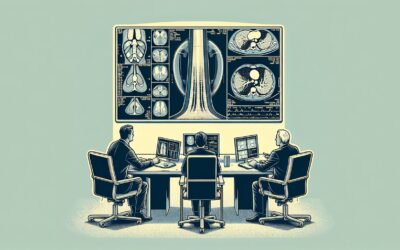
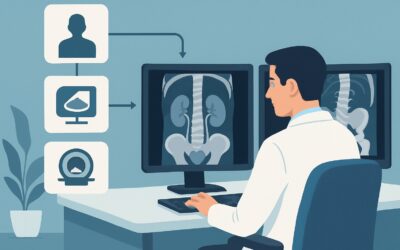
What Is the Next Imaging Study When CT for Flank Pain Is Inconclusive?

It’s 2 a.m. in the emergency department, and you’re evaluating a 45-year-old male with classic left-sided, colicky flank pain radiating to the groin. Your suspicion for a ureteral stone is high, so you order the standard-of-care study: a non-contrast Computed Tomography (CT) of the abdomen and pelvis. The preliminary read comes back from radiology: “Mild left hydroureteronephrosis and perinephric stranding. No definite obstructing calculus is identified. Clinical correlation is recommended.” The patient is still in significant pain, and you are left with diagnostic uncertainty. What is the next, most appropriate imaging step to clarify the diagnosis and guide management? This article provides a detailed workflow for this specific clinical scenario, where the initial CT is inconclusive. According to the American College of Radiology (ACR) Appropriateness Criteria, Magnetic Resonance Urography (MRU) without and with IV contrast is rated May be appropriate as the next step in this workup.
Who Fits This Clinical Scenario for Inconclusive Flank Pain CT?
This guidance is specifically for patients presenting with acute onset flank pain where urolithiasis is the primary suspicion, and a non-contrast CT has already been performed but failed to yield a definitive diagnosis. “Inconclusive” can mean several things: secondary signs of obstruction like hydronephrosis or perinephric fat stranding are present, but no stone is visible; a tiny, equivocal hyperdensity is seen that cannot be confidently distinguished from a phlebolith; or the findings are entirely normal despite a compelling clinical story.
This workflow is NOT intended for:
- Initial imaging: If the patient has not yet had any imaging, the first-line study is typically a non-contrast CT. This scenario is for the next step after that initial study is unrevealing.
- Pregnant patients: The workup for suspected stone disease in pregnancy follows a distinct, radiation-sparing pathway, typically starting with ultrasound.
- Known current stone disease: If a patient has a recently diagnosed stone on imaging and presents with recurrent symptoms, the clinical question is different—often focused on stone passage or worsening obstruction, which may not require advanced imaging.
The patient who fits this scenario is in a diagnostic gray zone, where the cause of their obstructive uropathy remains unclear after the workhorse study has been completed.
What Diagnoses Are You Working Up After an Inconclusive CT?
When a non-contrast CT shows signs of obstruction without a clear cause, the differential diagnosis broadens beyond a simple passed stone. The goal of the next imaging study is to investigate these other, often more serious, possibilities.
Obscured or Atypical Ureteral Stone
This remains a primary consideration. The stone may be “isodense” to surrounding soft tissue, making it invisible on non-contrast CT. This is classically seen with protease inhibitor stones (e.g., indinavir) but can occur with other rare compositions. Alternatively, a very small stone (<2 mm) may be below the resolution of the CT, or a stone may be perfectly superimposed on a vessel or phlebolith, obscuring it from view.
Urothelial Carcinoma
A less common but critical diagnosis to exclude, particularly in patients with risk factors like age, smoking history, or hematuria. A small, soft-tissue mass such as a urothelial carcinoma or a fibroepithelial polyp can cause obstruction and mimic the symptoms of a stone. These are typically invisible on non-contrast CT but will enhance with intravenous contrast.
Ureteral Stricture or External Compression
The obstruction may not be intraluminal. A benign stricture (from prior surgery, infection, or idiopathic causes) or external compression can cause identical symptoms. Potential extrinsic causes include retroperitoneal fibrosis, an adjacent inflammatory process, or compression from a nearby mass or vascular structure (e.g., ovarian vein syndrome).
Complicated Pyelonephritis
While uncomplicated pyelonephritis is a clinical diagnosis, flank pain and perinephric stranding can be signs of a focal bacterial nephritis (lobar nephronia) or an early abscess that is not well-defined on a non-contrast study. Contrast-enhanced imaging is essential to evaluate for parenchymal perfusion defects or rim-enhancing fluid collections that would alter management.
Why Is MRU Without and With IV Contrast a Recommended Next Step?
When the non-contrast CT is inconclusive, the diagnostic question shifts from simply “Is there a stone?” to “What is causing this obstruction?” This requires evaluating both the lumen and the wall of the ureter, as well as the surrounding structures—a task for which contrast-enhanced imaging is necessary. The ACR rates several studies as May be appropriate, with MR Urography (MRU) without and with IV contrast being a primary option.
The strength of MRU in this setting is its superb soft-tissue contrast and lack of ionizing radiation. After the administration of gadolinium-based contrast, an intraluminal filling defect from a tumor or a focal area of ureteral wall thickening and enhancement from a stricture can be identified. Excretory phase imaging provides a detailed “road map” of the urinary system, clearly delineating the level and morphology of the obstruction. This can help differentiate a smooth, benign stricture from an irregular, concerning mass.
Why are other studies rated lower or only similarly?
- CT Urography (CTU) without and with IV contrast: Also rated May be appropriate, CTU is an excellent alternative that provides similar diagnostic information regarding the cause of obstruction. The choice between MRU and CTU often depends on institutional availability, radiologist preference, and patient factors (e.g., contraindication to MRI or iodinated contrast). However, CTU involves a significant radiation dose (☢☢☢☢ 10-30 mSv), which can be a consideration, especially in younger patients.
- Ultrasound kidneys and bladder: Rated Usually not appropriate at this stage. While ultrasound is excellent for detecting hydronephrosis, it was likely the secondary signs of obstruction on the initial CT that prompted this further workup. Ultrasound has poor sensitivity for identifying the specific cause of a mid-ureteral obstruction and will not adequately evaluate for the key differential diagnoses like urothelial carcinoma or external compression.
Ultimately, the choice between MRU and CTU is a clinical judgment. MRU avoids radiation, while CTU is often faster and more widely available. Both are powerful tools for solving the diagnostic puzzle of unexplained obstructive uropathy.
What’s Next After MRU? Downstream Workflow
The results of the contrast-enhanced study will guide the subsequent clinical pathway, which almost always involves a consultation with urology.
- If the MRU is positive for a filling defect (suspected tumor): The patient requires urgent urologic evaluation for ureteroscopy with biopsy. This is the most direct way to obtain a tissue diagnosis and plan for definitive management, which may involve endoscopic ablation or more extensive surgery.
- If the MRU is positive for a stricture: The next step is typically diagnostic and potentially therapeutic ureteroscopy. The urologist can directly visualize the narrowed segment, take biopsies to rule out malignancy, and potentially perform a dilation or incision of the stricture in the same setting.
- If the MRU identifies an extrinsic cause (e.g., retroperitoneal mass): The workup shifts to identifying the nature of the compressing lesion. This may involve a CT-guided biopsy of the mass and consultation with oncology or surgery, depending on the suspected etiology. The immediate urologic goal would be to relieve the obstruction, often with a ureteral stent or percutaneous nephrostomy tube.
- If the MRU is negative (unremarkable): If the advanced imaging study is also normal and the patient’s symptoms have resolved, the most likely diagnosis is a small, passed stone that was never visualized. In this case, outpatient urology follow-up for metabolic stone workup and prevention counseling is appropriate. If symptoms persist despite a negative MRU, other non-urologic causes of flank pain should be reconsidered.
Pitfalls to Avoid (and When to Get Help)
Navigating this scenario requires avoiding several common pitfalls to ensure a timely and accurate diagnosis.
- Pitfall 1: Repeating the non-contrast CT. Ordering another non-contrast CT is rated Usually not appropriate and will likely yield the same inconclusive result while adding unnecessary radiation exposure. The diagnostic question has evolved beyond what a non-contrast study can answer.
- Pitfall 2: Misinterpreting a phlebolith. A ureteral stone can be difficult to distinguish from a phlebolith (a calcification in a vein) on non-contrast CT, especially in the distal ureter. The “soft tissue rim sign” around a ureteral stone can be a helpful clue, but when in doubt, a contrast-enhanced study is needed for clarification.
- Pitfall 3: Delaying consultation for high-risk features. If the patient has significant risk factors for urothelial cancer (e.g., gross hematuria, smoking history, age > 60), a lower threshold for ordering advanced imaging and consulting urology early is warranted, even if symptoms are mild.
If the patient develops signs of infection (fever, leukocytosis) in the setting of a known obstruction, this constitutes a urologic emergency. Escalate immediately to urology for urgent decompression of the urinary tract via a stent or nephrostomy tube to prevent sepsis.
Related ACR Topics and Tools
This article focuses on a single, complex decision point. For a broader view of the entire topic or to explore adjacent clinical questions, the following resources are available.
- For breadth across all scenarios in Acute Onset Flank Pain-Suspicion of Stone Disease (Urolithiasis), see our parent guide: Acute Onset Flank Pain-Suspicion of Stone Disease (Urolithiasis): ACR Appropriateness Decoded.
- To look up appropriateness ratings for other clinical presentations, use the ACR Appropriateness Criteria Lookup tool.
- For detailed technical specifications on how imaging studies are performed, consult the Imaging Protocol Library.
- To help discuss cumulative radiation exposure with your patients, the Radiation Dose Calculator can be a useful aid.
Frequently Asked Questions
Why not just get a CT with contrast in the first place?
For the initial evaluation of suspected kidney stones, a non-contrast CT is the gold standard. It has very high sensitivity for detecting calcified stones and avoids the potential risks of intravenous contrast and higher radiation dose. A contrast-enhanced study is reserved for specific situations, such as when the non-contrast study is inconclusive, as discussed in this article.
Is CT Urography (CTU) an acceptable alternative to MR Urography (MRU)?
Yes. The ACR rates both MRU without and with IV contrast and CTU without and with IV contrast as ‘May be appropriate’ in this scenario. Both are excellent at identifying the cause of obstruction. The choice often comes down to local availability, patient factors (like renal function or MRI contraindications), and the desire to minimize radiation exposure, which favors MRU.
What if my patient has impaired renal function and cannot receive contrast?
This is a challenging situation. If a patient cannot receive iodinated or gadolinium-based contrast, a non-contrast MRU (which uses heavily T2-weighted sequences) can still provide excellent anatomic detail of the collecting system and may identify the level of obstruction. While it cannot assess for enhancement of a mass or stricture, it can still be more informative than the initial CT and avoids radiation. Consultation with radiology and urology is key in these complex cases.
Could the inconclusive CT just mean the stone has already passed?
Yes, that is a strong possibility, especially if the patient’s pain is improving. The secondary signs of obstruction, like mild hydronephrosis and perinephric stranding, can take hours to days to resolve after a stone passes. If the clinical suspicion for a persistent, non-stone cause of obstruction is low, a period of observation with symptomatic management may be a reasonable alternative to immediate advanced imaging.
What is the ‘soft tissue rim sign’ and how does it help?
The ‘soft tissue rim sign’ refers to the edematous, inflamed wall of the ureter seen surrounding an impacted stone on CT. This appears as a ring of soft-tissue attenuation around the calcification. Phleboliths, being inside a vein, typically do not have this surrounding inflammatory rim. While its presence is highly specific for a ureteral stone, its absence does not rule one out, making it a helpful but not definitive sign.
Reviewed by Pouyan Golshani, MD, Interventional Radiologist — May 30, 2026