When to Order Imaging for Female Breast Cancer Screening: ACR Appropriateness Decoded

You’re in a busy primary care clinic, reviewing the chart for a patient’s annual wellness visit. She’s asking about breast cancer screening—when to start, which test is best, and whether she needs more than a standard mammogram. Her family history is complex, and you need to quickly stratify her risk and choose the most appropriate imaging pathway. Navigating the guidelines for average, intermediate, and high-risk patients can be challenging. This guide decodes the American College of Radiology (ACR) Appropriateness Criteria for female breast cancer screening, providing clear, evidence-based recommendations to help you order the right study for the right patient, every time.
What Does ACR Female Breast Cancer Screening Cover?
This ACR topic provides imaging recommendations for asymptomatic adult females undergoing screening for breast cancer. The guidance is stratified by the patient’s estimated lifetime risk of developing breast cancer, which is a critical factor in determining the appropriate imaging modality and frequency. The criteria address scenarios for average-risk, intermediate-risk, and high-risk individuals, with specific considerations for age in the high-risk population.
It is important to note what this topic does not cover. These recommendations are strictly for screening purposes in patients without clinical signs or symptoms of breast cancer. This guidance does not apply to the diagnostic workup of a patient presenting with a palpable lump, focal breast pain, nipple discharge, or abnormal findings on a prior screening examination. Those clinical scenarios are addressed in separate ACR Appropriateness Criteria topics, such as “Palpable Breast Mass” or “Abnormal Mammogram.”
What Imaging Should I Order for Female Breast Cancer Screening? Recommendations by Clinical Scenario
The ACR’s recommendations for female breast cancer screening are tailored to the patient’s risk profile. The goal is to maximize cancer detection while minimizing false positives and unnecessary radiation exposure.
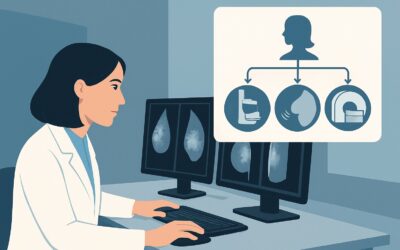
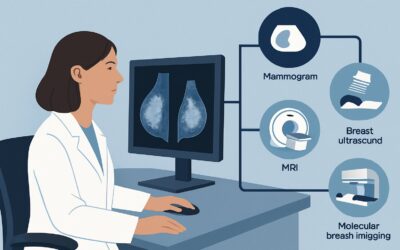
For an adult female at average risk, both Digital breast tomosynthesis (DBT) screening and standard Mammography screening are rated Usually appropriate. DBT is often preferred as it can reduce the effect of overlapping breast tissue, potentially increasing cancer detection and decreasing recall rates. Supplemental screening with breast ultrasound (US) or Magnetic Resonance Imaging (MRI) May be appropriate in certain situations, such as for women with dense breast tissue, but is not routinely recommended for all average-risk women.
For an adult female at intermediate risk (e.g., personal history of lobular carcinoma in situ or atypical hyperplasia, or a lifetime risk of 15%-20% by risk models), the recommendations are similar. Digital breast tomosynthesis screening and standard Mammography screening remain Usually appropriate. However, supplemental screening with modalities like breast US or MRI breast without and with IV contrast also carry a rating of May be appropriate, reflecting the need for individualized decisions based on the specific risk factors and breast density.
For a high-risk adult female 30 years of age or older (e.g., known BRCA gene mutation, prior chest radiation, or a lifetime risk >20%), the guidelines change significantly. Annual mammography (or DBT) and annual MRI breast without and with IV contrast are both rated Usually appropriate. The high sensitivity of MRI is crucial for detecting cancers that may be occult on mammography in this population. Often, these exams are staggered six months apart to provide more frequent surveillance.
For a high-risk adult female younger than 30 years of age, the primary screening tool is MRI breast without and with IV contrast, which is rated Usually appropriate. This recommendation prioritizes avoiding ionizing radiation in this very young population, who will require decades of surveillance. Mammography or DBT May be appropriate, but the decision to initiate mammographic screening before age 30 is typically made on a case-by-case basis, balancing risk and benefit.
ACR Imaging Recommendations Table
| Clinical Scenario | Top Procedure | ACR Rating | Adult RRL | Pediatric RRL |
|---|---|---|---|---|
| Adult female. Breast cancer screening. Average risk. | Digital breast tomosynthesis screening | Usually appropriate | ☢ ☢ 0.1-1mSv | |
| Adult female. Breast cancer screening. Intermediate risk. | Digital breast tomosynthesis screening | Usually appropriate | ☢ ☢ 0.1-1mSv | |
| Adult female 30 years of age or older. Breast cancer screening. High risk. | MRI breast without and with IV contrast | Usually appropriate | O 0 mSv | O 0 mSv [ped] |
| Adult female younger than 30 years of age. Breast cancer screening. High risk. | MRI breast without and with IV contrast | Usually appropriate | O 0 mSv | O 0 mSv [ped] |
Adult vs. Pediatric Female Breast Cancer Screening Imaging: Radiation Dose Tradeoffs
While breast cancer is rare in the pediatric population, screening guidelines are relevant for high-risk young adults, particularly those with genetic predispositions (e.g., BRCA mutations) or a history of mantle radiation for lymphoma. The principle of ALARA (As Low As Reasonably Achievable) is paramount in these patients due to their long life expectancy and the cumulative effects of radiation exposure.
For high-risk women under 30, the ACR strongly favors non-ionizing radiation modalities. MRI breast without and with IV contrast is rated Usually appropriate and uses no ionizing radiation (RRL ‘O 0 mSv’). In contrast, mammography and DBT, which use low-dose X-rays (RRL ‘☢ ☢ 0.1-1mSv’), are only rated as May be appropriate. This reflects a careful balancing act: protecting the young, developing breast tissue from radiation while still providing effective surveillance. The increased breast density in younger women also makes mammography less sensitive, further strengthening the case for MRI as the primary screening tool in this specific demographic.
Imaging Protocol Details for Female Breast Cancer Screening
Once you’ve decided on the right study, the specific imaging protocol is critical for diagnostic quality. Key parameters like patient positioning, acquisition technique, and, for MRI, the contrast administration protocol can significantly impact the exam’s sensitivity and specificity. Our protocol guides provide detailed, scannable checklists for the key studies recommended in this topic.
Tools to Help You Order the Right Study
Navigating imaging guidelines can be complex. GigHz provides a suite of free, straightforward tools designed to support clinical decision-making at the point of care.
For scenarios beyond female breast cancer screening, the Imaging Appropriateness Selector tool allows you to search the full ACR guidelines by clinical topic or presentation, ensuring you can find evidence-based recommendations for hundreds of clinical variants.
Once you’ve chosen a study, our Imaging Protocol Library offers detailed, step-by-step protocols for a wide range of CT, MRI, and ultrasound examinations. These guides are designed for quick reference by ordering clinicians, technologists, and radiology trainees.
To help with patient communication about radiation exposure, especially for patients requiring long-term surveillance, the Radiation Dose Calculator provides estimates for common imaging studies, facilitating informed conversations about the risks and benefits of imaging.
What defines high, intermediate, and average risk for breast cancer screening?
These risk categories are typically determined using statistical models like the Tyrer-Cuzick or Gail model, combined with major risk factors. High risk generally corresponds to a lifetime risk >20%, a known BRCA1/2 gene mutation, or a history of chest radiation between ages 10 and 30. Intermediate risk is often defined as a 15-20% lifetime risk or a personal history of high-risk lesions like LCIS or ADH. Average risk applies to women with a lifetime risk <15% and no other major risk factors.
Why is breast MRI recommended as a primary screening tool for high-risk women?
Breast MRI has a higher sensitivity for detecting invasive breast cancer compared to mammography, especially in women with dense breast tissue. For high-risk women, whose cancers may be more aggressive or develop at a younger age, this increased sensitivity is critical for early detection. The ACR recommends annual MRI in addition to annual mammography for most high-risk women over 30 to maximize the chance of finding cancer at its earliest, most treatable stage.
What is the difference between screening mammography and digital breast tomosynthesis (DBT)?
Standard digital mammography takes two-dimensional (2D) images of the breast. Digital breast tomosynthesis (DBT), also known as 3D mammography, takes multiple low-dose X-ray images from different angles as the machine sweeps in an arc. A computer then reconstructs these images into a series of one-millimeter-thick slices. This allows the radiologist to see through overlapping tissue, which can improve cancer detection rates and reduce the number of women called back for false alarms.
Is screening breast ultrasound a good substitute for mammography?
No, screening breast ultrasound is not a substitute for mammography. It is considered a supplemental or adjunctive screening tool. While it can detect some cancers not visible on a mammogram, particularly in dense breasts, it also has a higher rate of false positives. It is not recommended as a standalone primary screening modality for any risk group but is rated as May be appropriate as a supplement to mammography in certain women, such as those with dense breasts at intermediate or high risk.
Why is mammography used less often in high-risk women under 30?
There are two primary reasons. First, women under 30 tend to have denser breast tissue, which can obscure cancers on a mammogram, reducing its effectiveness. MRI is not limited by breast density. Second, there is a greater concern for the cumulative effects of ionizing radiation in younger patients who will require many years of surveillance. Therefore, a non-radiation modality like MRI is preferred as the initial screening tool, with mammography potentially added later.
Frequently Asked Questions
What defines high, intermediate, and average risk for breast cancer screening?
These risk categories are typically determined using statistical models like the Tyrer-Cuzick or Gail model, combined with major risk factors. High risk generally corresponds to a lifetime risk >20%, a known BRCA1/2 gene mutation, or a history of chest radiation between ages 10 and 30. Intermediate risk is often defined as a 15-20% lifetime risk or a personal history of high-risk lesions like LCIS or ADH. Average risk applies to women with a lifetime risk <15% and no other major risk factors.
Why is breast MRI recommended as a primary screening tool for high-risk women?
Breast MRI has a higher sensitivity for detecting invasive breast cancer compared to mammography, especially in women with dense breast tissue. For high-risk women, whose cancers may be more aggressive or develop at a younger age, this increased sensitivity is critical for early detection. The ACR recommends annual MRI in addition to annual mammography for most high-risk women over 30 to maximize the chance of finding cancer at its earliest, most treatable stage.
What is the difference between screening mammography and digital breast tomosynthesis (DBT)?
Standard digital mammography takes two-dimensional (2D) images of the breast. Digital breast tomosynthesis (DBT), also known as 3D mammography, takes multiple low-dose X-ray images from different angles as the machine sweeps in an arc. A computer then reconstructs these images into a series of one-millimeter-thick slices. This allows the radiologist to see through overlapping tissue, which can improve cancer detection rates and reduce the number of women called back for false alarms.
Is screening breast ultrasound a good substitute for mammography?
No, screening breast ultrasound is not a substitute for mammography. It is considered a supplemental or adjunctive screening tool. While it can detect some cancers not visible on a mammogram, particularly in dense breasts, it also has a higher rate of false positives. It is not recommended as a standalone primary screening modality for any risk group but is rated as May be appropriate as a supplement to mammography in certain women, such as those with dense breasts at intermediate or high risk.
Why is mammography used less often in high-risk women under 30?
There are two primary reasons. First, women under 30 tend to have denser breast tissue, which can obscure cancers on a mammogram, reducing its effectiveness. MRI is not limited by breast density. Second, there is a greater concern for the cumulative effects of ionizing radiation in younger patients who will require many years of surveillance. Therefore, a non-radiation modality like MRI is preferred as the initial screening tool, with mammography potentially added later.
Reviewed by Pouyan Golshani, MD, Interventional Radiologist — August 4, 2026