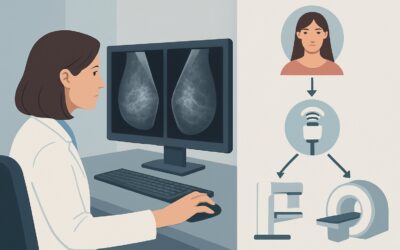
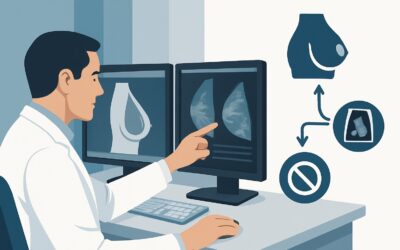
When to Order Imaging for Imaging after Mastectomy and Breast Reconstruction: ACR Appropriateness Decoded

A patient with a history of breast cancer and mastectomy presents with a new palpable concern on the chest wall. You know that routine screening is often discontinued, but this is a new, symptomatic finding. Do you start with an ultrasound, a mammogram, or go straight to an MRI? Choosing the right initial imaging modality is critical for efficient diagnosis and avoiding unnecessary radiation or cost. This guide decodes the American College of Radiology (ACR) Appropriateness Criteria for imaging after mastectomy and breast reconstruction, providing clear, evidence-based recommendations to guide your clinical decisions.
What Does ACR Imaging after Mastectomy and Breast Reconstruction Cover?
This ACR guideline provides recommendations for imaging surveillance and the diagnostic workup of new clinical findings in patients who have undergone mastectomy. The criteria are stratified based on several key factors: the indication for imaging (routine screening vs. new symptoms), the type of procedure performed (therapeutic vs. prophylactic mastectomy), and the method of reconstruction, if any (none, implant-based, or autologous tissue flap). Understanding these distinctions is crucial, as the appropriate imaging pathway differs significantly between these scenarios.
These recommendations apply specifically to imaging of the treated breast(s) or reconstructed site(s). They do not cover surveillance of the contralateral breast, evaluation for distant metastatic disease, or initial staging of breast cancer. The focus is strictly on local evaluation after the definitive surgical removal of breast tissue. For patients with new symptoms like a palpable lump, focal pain, or skin changes at the surgical site, these guidelines offer a clear starting point for diagnostic evaluation.
What Imaging Should I Order for Imaging after Mastectomy and Breast Reconstruction? Recommendations by Clinical Scenario
The appropriate imaging for a patient post-mastectomy depends entirely on the clinical context, particularly whether the goal is routine screening or diagnostic evaluation of a new symptom.
For routine breast cancer screening in a female with a history of cancer, the type of reconstruction is the key determinant. After a mastectomy with no reconstruction, or with nonautologous (implant) reconstruction, routine screening with any modality—including mammography, digital breast tomosynthesis (DBT), ultrasound, or MRI—is rated Usually Not Appropriate. The rationale is that the vast majority of glandular tissue has been removed, making the yield of screening very low. The same applies to high-risk patients who have undergone bilateral prophylactic mastectomy, regardless of whether they have reconstruction. In these cases, physical examination remains the primary method of surveillance.
The one exception in the screening context is for patients with autologous reconstruction (e.g., TRAM or DIEP flap). In this scenario, screening with Mammography or Digital breast tomosynthesis screening is rated May be Appropriate. This is because the transferred tissue may contain fat and other elements that can be effectively evaluated for abnormalities with mammography, and there is a small risk of cancer recurrence within the flap itself.
The recommendations change significantly when a patient presents with a new clinical problem, such as a palpable lump or clinically significant pain on the side of the mastectomy. For the initial imaging of these symptoms, US breast is rated Usually Appropriate, whether or not reconstruction is present. Ultrasound is highly effective at evaluating superficial tissues of the chest wall and reconstructed breast to characterize palpable findings, differentiate solid from cystic lesions, and guide biopsy if needed. In this symptomatic setting, Mammography diagnostic and Digital breast tomosynthesis diagnostic are considered May be Appropriate as adjunctive tools, particularly if the ultrasound is inconclusive or to evaluate for suspicious calcifications.
ACR Imaging Recommendations Table
| Clinical Scenario | Top Procedure | ACR Rating | Adult RRL | Pediatric RRL |
|---|---|---|---|---|
| Female. Breast cancer screening. History of cancer, mastectomy side(s), no reconstruction. | Routine imaging is not recommended | Usually Not Appropriate | O | O |
| Female. Breast cancer screening. History of cancer, autologous reconstruction side(s) with or without implant. | Mammography screening / Digital breast tomosynthesis screening | May be Appropriate | ☢ ☢ | |
| Female. Breast cancer screening. History of cancer, nonautologous (implant) reconstruction sides(s). | Routine imaging is not recommended | Usually Not Appropriate | O | O |
| Female. Breast cancer screening. High-risk, bilateral prophylactic mastectomy, no reconstruction. | Routine imaging is not recommended | Usually Not Appropriate | O | O |
| Female. Breast cancer screening. High-risk, bilateral prophylactic mastectomy with autologous reconstructions. | Routine imaging is not recommended | Usually Not Appropriate | O | O |
| Female. Breast cancer screening. High-risk, bilateral prophylactic mastectomy with nonautologous (implant) reconstructions. | Routine imaging is not recommended | Usually Not Appropriate | O | O |
| Female. Palpable lump or clinically significant pain on the side of the mastectomy without reconstruction. Initial imaging. | US breast | Usually Appropriate | O | O |
| Female. Palpable lump or clinically significant pain on the side of the mastectomy with reconstruction (autologous or nonautologous). Initial imaging. | US breast | Usually Appropriate | O | O |
Adult vs. Pediatric Imaging after Mastectomy and Breast Reconstruction Imaging: Radiation Dose Tradeoffs
The clinical scenarios covered in this guideline—mastectomy for breast cancer or prophylactic mastectomy for high genetic risk—are overwhelmingly encountered in the adult population. Breast cancer in pediatric and adolescent patients is exceedingly rare. Consequently, the recommendations are primarily tailored for adult patients, and modalities involving ionizing radiation, such as mammography and tomosynthesis, are rated without specific pediatric dose considerations.
However, the principle of As Low As Reasonably Achievable (ALARA) is always paramount. For any imaging, especially in younger patients, non-radiation modalities are preferred when clinically appropriate. The provided data indicates that ultrasound (US) and magnetic resonance imaging (MRI) carry a relative radiation level of zero and are applicable to pediatric patients where necessary. In the rare event that a symptomatic adolescent with a history of mastectomy requires imaging, ultrasound would be the clear first-line choice, aligning with both the adult recommendations for symptomatic patients and the general principles of pediatric imaging safety. This approach minimizes lifetime cumulative radiation exposure, a critical consideration for any young patient.
Imaging Protocol Details for Imaging after Mastectomy and Breast Reconstruction
Once you’ve decided on the right study based on the clinical scenario, ensuring it is performed and interpreted correctly is the next step. The technical parameters of an imaging study can significantly impact its diagnostic value. Our protocol guides provide detailed, scannable information on technique, contrast administration, and interpretation principles for key modalities recommended in these ACR criteria.
Tools to Help You Order the Right Study
Navigating imaging guidelines can be complex, especially when managing multiple clinical presentations. GigHz offers a suite of tools designed to support evidence-based clinical decision-making and streamline the imaging workflow for physicians and trainees.
For scenarios beyond imaging after mastectomy, the Imaging Appropriateness Selector provides a fast, searchable interface to the complete ACR guidelines. This tool helps you quickly find the right study for hundreds of clinical variants.
To ensure the selected study is performed to the highest standard, our Imaging Protocol Library offers detailed, institution-agnostic protocols for a wide range of CT, MRI, and ultrasound examinations. These guides are invaluable for residents and ordering providers who need to understand the technical aspects of a study.
Finally, communicating radiation risk is a key part of patient-centered care. The Radiation Dose Calculator helps you estimate and track cumulative radiation exposure for your patients, facilitating informed discussions about the benefits and risks of medical imaging.
Why is routine screening imaging not recommended after most mastectomies?
Routine imaging is generally not recommended because a mastectomy removes the vast majority of breast glandular tissue, where cancer develops. This dramatically reduces the risk of local recurrence to a very low level. The potential harm from radiation exposure and false positives from screening modalities like mammography is thought to outweigh the very small benefit of detecting an asymptomatic recurrence in the chest wall or skin.
What is the difference in imaging for autologous vs. implant-based reconstruction?
Autologous reconstruction uses the patient’s own tissue (like a TRAM or DIEP flap), which contains fat and can develop benign or malignant changes that may be visible on a mammogram. For this reason, screening mammography is sometimes considered (“May be Appropriate”). Implant-based reconstruction, however, uses a silicone or saline device that contains no breast tissue. A mammogram cannot image through the implant effectively and there is no native tissue to screen, making routine mammography “Usually Not Appropriate.”
If a patient has a palpable lump, why is ultrasound the first choice?
Ultrasound is the preferred initial modality for a palpable lump in the post-mastectomy chest wall or reconstructed breast for several reasons. It is excellent for evaluating superficial tissues, can clearly distinguish between simple cysts, complex fluid collections (like seromas), and solid nodules. It involves no ionizing radiation and can be used to provide real-time guidance for a biopsy if a suspicious solid lesion is found. It is effective for both implant and autologous reconstructions.
Does a prophylactic mastectomy remove all breast tissue and eliminate all future risk?
While a prophylactic mastectomy is highly effective, it is impossible to remove 100% of all breast tissue cells. A small amount of tissue may remain along the chest wall, near the armpit, or under the skin flaps. This means there is still a very small residual risk of developing a new breast cancer. However, the risk reduction is substantial (often over 90-95%), which is why routine screening imaging is no longer recommended and surveillance relies on physical exams.
When is an MRI considered in the post-mastectomy patient?
In the ACR guidelines for this topic, contrast-enhanced MRI is rated “Usually Not Appropriate” for both screening and the initial workup of a palpable lump. Its primary role is as a problem-solving tool. An MRI may be considered if a new finding on physical exam, ultrasound, or mammogram is suspicious but inconclusive, or to evaluate for suspected deep chest wall invasion of a recurrence that is not fully visible on other imaging.
How should the contralateral, non-mastectomy breast be imaged?
These ACR guidelines focus specifically on the mastectomy site. The contralateral, intact breast should continue to undergo routine screening according to standard guidelines for that patient’s age and risk profile. For most women, this means annual screening mammography. For high-risk patients, this may include supplemental screening with breast MRI in addition to mammography.
Frequently Asked Questions
Why is routine screening imaging not recommended after most mastectomies?
Routine imaging is generally not recommended because a mastectomy removes the vast majority of breast glandular tissue, where cancer develops. This dramatically reduces the risk of local recurrence to a very low level. The potential harm from radiation exposure and false positives from screening modalities like mammography is thought to outweigh the very small benefit of detecting an asymptomatic recurrence in the chest wall or skin.
What is the difference in imaging for autologous vs. implant-based reconstruction?
Autologous reconstruction uses the patient’s own tissue (like a TRAM or DIEP flap), which contains fat and can develop benign or malignant changes that may be visible on a mammogram. For this reason, screening mammography is sometimes considered (“May be Appropriate”). Implant-based reconstruction, however, uses a silicone or saline device that contains no breast tissue. A mammogram cannot image through the implant effectively and there is no native tissue to screen, making routine mammography “Usually Not Appropriate.”
If a patient has a palpable lump, why is ultrasound the first choice?
Ultrasound is the preferred initial modality for a palpable lump in the post-mastectomy chest wall or reconstructed breast for several reasons. It is excellent for evaluating superficial tissues, can clearly distinguish between simple cysts, complex fluid collections (like seromas), and solid nodules. It involves no ionizing radiation and can be used to provide real-time guidance for a biopsy if a suspicious solid lesion is found. It is effective for both implant and autologous reconstructions.
Does a prophylactic mastectomy remove all breast tissue and eliminate all future risk?
While a prophylactic mastectomy is highly effective, it is impossible to remove 100% of all breast tissue cells. A small amount of tissue may remain along the chest wall, near the armpit, or under the skin flaps. This means there is still a very small residual risk of developing a new breast cancer. However, the risk reduction is substantial (often over 90-95%), which is why routine screening imaging is no longer recommended and surveillance relies on physical exams.
When is an MRI considered in the post-mastectomy patient?
In the ACR guidelines for this topic, contrast-enhanced MRI is rated “Usually Not Appropriate” for both screening and the initial workup of a palpable lump. Its primary role is as a problem-solving tool. An MRI may be considered if a new finding on physical exam, ultrasound, or mammogram is suspicious but inconclusive, or to evaluate for suspected deep chest wall invasion of a recurrence that is not fully visible on other imaging.
How should the contralateral, non-mastectomy breast be imaged?
These ACR guidelines focus specifically on the mastectomy site. The contralateral, intact breast should continue to undergo routine screening according to standard guidelines for that patient’s age and risk profile. For most women, this means annual screening mammography. For high-risk patients, this may include supplemental screening with breast MRI in addition to mammography.
Reviewed by Pouyan Golshani, MD, Interventional Radiologist — August 4, 2026