When to Order Imaging for Breast Imaging During Pregnancy: ACR Appropriateness Decoded

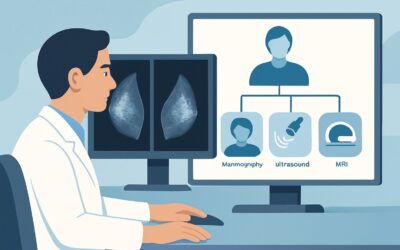
A pregnant patient presents with a new, palpable breast lump. The physiologic changes of pregnancy can make the clinical exam challenging, and the need to protect the fetus adds a layer of complexity to imaging decisions. You need to evaluate the finding promptly and safely, but which study is the right first step? Ultrasound? Mammography? This guide decodes the American College of Radiology (ACR) Appropriateness Criteria for breast imaging during pregnancy, providing clear, evidence-based recommendations to help you choose the right study at the right time.
What Does ACR Breast Imaging During Pregnancy Cover?
This ACR guideline provides recommendations for imaging pregnant patients with common breast-related clinical presentations. The criteria address several distinct scenarios, including routine cancer screening for different age and risk profiles, the initial workup of new symptoms like a palpable mass or focal pain, evaluation of nipple discharge, and staging for a new cancer diagnosis. It also covers suspected infections or abscesses.
The guidance is specifically tailored to the unique context of pregnancy, emphasizing the safety of both the patient and the fetus. A primary consideration is minimizing or avoiding ionizing radiation and the use of intravenous contrast agents. Therefore, the recommendations often prioritize non-radiation modalities like ultrasound. These criteria do not cover breast imaging in the postpartum or lactating period, which has its own set of clinical considerations, nor do they address surveillance imaging for patients with a prior history of breast cancer.
What Imaging Should I Order for Breast Imaging During Pregnancy? Recommendations by Clinical Scenario
Choosing the correct imaging modality for a pregnant patient requires balancing diagnostic yield with fetal safety. The ACR provides specific guidance based on the clinical presentation and patient age.
For a pregnant female with a focal pain or palpable breast mass, ultrasound is the universal first-line study. The ACR rates US breast as Usually appropriate for initial imaging, regardless of whether the patient is under or over 30 years old. This is due to its lack of ionizing radiation and high sensitivity for evaluating focal findings. If the patient is 30 years or older, diagnostic mammography or digital breast tomosynthesis (DBT) is also considered Usually appropriate to supplement the ultrasound findings, especially if the ultrasound is suspicious or inconclusive. For patients under 30, mammography is Usually not appropriate as the initial step.
In the setting of clinically suspicious nipple discharge, the recommendations follow a similar age-based stratification. US breast is Usually appropriate for all pregnant patients. For those 30 and older, diagnostic mammography or DBT is also Usually appropriate. For patients under 30, these radiation-based studies are Usually not appropriate for the initial workup.
For breast cancer screening in a pregnant patient, recommendations vary by age and risk. For a patient age 40 or older at any risk, or a patient age 25 or older at higher-than-average risk, screening mammography or DBT is Usually appropriate. For a high-risk patient under age 25, mammography is Usually not appropriate, and US breast May be appropriate.
If a new breast cancer is diagnosed during pregnancy, locoregional staging is critical. The ACR finds US breast, US axilla, and diagnostic mammography/DBT to be Usually appropriate. For a suspected breast infection or abscess, US breast is Usually appropriate as the initial imaging modality.
Finally, if an initial ultrasound for a palpable mass shows probably benign findings, the next step is typically short-term follow-up with US breast, which is rated Usually appropriate. However, if the ultrasound findings are suspicious or highly suggestive of malignancy, further action is warranted. In this case, image-guided core biopsy of the breast, US axilla, and diagnostic mammography/DBT are all Usually appropriate.
ACR Imaging Recommendations Table
| Clinical Scenario | Top Procedure(s) | ACR Rating | Adult RRL | Pediatric RRL |
|---|---|---|---|---|
| Pregnant female. Age 40 years or older. Breast cancer screening. Any risk. | Digital breast tomosynthesis screening / Mammography screening | Usually appropriate | ☢ ☢ 0.1-1mSv | |
| Pregnant female. Age less than 25 years. Breast cancer screening. Higher-than-average risk. | US breast | May be appropriate | O 0 mSv | O 0 mSv [ped] |
| Pregnant female. Age 25 years or older. Breast cancer screening. Higher-than-average risk. | Digital breast tomosynthesis screening / Mammography screening | Usually appropriate | ☢ ☢ 0.1-1mSv | |
| Pregnant female. Age less than 30 years. Focal pain or palpable breast mass. Initial imaging. | US breast | Usually appropriate | O 0 mSv | O 0 mSv [ped] |
| Pregnant female. Age 30 years or older. Focal pain or palpable breast mass. Initial imaging. | US breast / Digital breast tomosynthesis diagnostic / Mammography diagnostic | Usually appropriate | O 0 mSv / ☢ ☢ 0.1-1mSv | O 0 mSv [ped] |
| Pregnant female. Age less than 30 years. Clinically suspicious nipple discharge. Initial imaging. | US breast | Usually appropriate | O 0 mSv | O 0 mSv [ped] |
| Pregnant female. Age 30 years or older. Clinically suspicious nipple discharge. Initial imaging. | US breast / Digital breast tomosynthesis diagnostic / Mammography diagnostic | Usually appropriate | O 0 mSv / ☢ ☢ 0.1-1mSv | O 0 mSv [ped] |
| Pregnant female. Newly diagnosed breast cancer. Locoregional staging. | US axilla / US breast / Digital breast tomosynthesis diagnostic / Mammography diagnostic | Usually appropriate | O 0 mSv / ☢ ☢ 0.1-1mSv | O 0 mSv [ped] |
| Pregnant female. Breast infection or abscess suspected. Initial imaging. | US breast | Usually appropriate | O 0 mSv | O 0 mSv [ped] |
| Pregnant female. Palpable breast mass. US findings are probably benign. Next imaging study. | US breast | Usually appropriate | O 0 mSv | O 0 mSv [ped] |
| Pregnant female. Palpable breast mass. US findings are suspicious or highly suggestive of malignancy. Next imaging study. | US axilla / US breast / Digital breast tomosynthesis diagnostic / Mammography diagnostic / Image-guided core biopsy breast | Usually appropriate | Varies | Varies |
Adult vs. Pediatric Breast Imaging During Pregnancy Imaging: Radiation Dose Tradeoffs
While this guideline focuses on pregnant adult females, the principles of radiation safety are paramount, mirroring the ALARA (As Low As Reasonably Achievable) principle central to pediatric imaging. The fetus is highly sensitive to ionizing radiation, particularly during the first trimester. The ACR Appropriateness Criteria reflect this by assigning a relative radiation level (RRL) to each procedure.
Modalities like ultrasound (US) and magnetic resonance imaging (MRI) have an RRL of ‘O 0 mSv’, indicating no ionizing radiation. This makes them inherently safer from a radiation standpoint and is why ultrasound is consistently recommended as a first-line or co-primary modality in nearly every scenario involving a pregnant patient. The pediatric RRL is also listed for these modalities, underscoring their safety profile across sensitive populations.
Mammography and digital breast tomosynthesis (DBT) involve a low dose of radiation, categorized as ‘☢ ☢ 0.1-1mSv’. While the dose to the breast is minimal and the scatter dose to the fetus is negligible (especially with proper abdominal shielding), the principle of ALARA dictates their use only when diagnostically necessary. This is why they are reserved for patients over 30 with symptoms, for screening in higher-risk or older pregnant patients, or for workup of a suspicious finding. Nuclear medicine studies like Sestamibi MBI carry a higher radiation burden and are consistently rated Usually not appropriate.
Imaging Protocol Details for Breast Imaging During Pregnancy
Once you’ve decided on the right study based on the ACR criteria, ensuring it is performed correctly is the next critical step. The technical parameters of an imaging study can significantly impact its diagnostic value. Our library of protocol guides provides detailed, scannable instructions for radiologists and technologists on executing high-quality imaging studies.
Tools to Help You Order the Right Study
Navigating imaging guidelines can be complex, especially in special populations like pregnant patients. GigHz offers a suite of reference tools designed to support evidence-based clinical decisions at the point of care.
For clinical questions that fall outside the scope of breast imaging during pregnancy, the Imaging Appropriateness Selector provides a fast, searchable interface to the complete ACR guidelines for hundreds of clinical scenarios.
To ensure the chosen study is performed to the highest standard, the Imaging Protocol Library offers detailed, step-by-step protocols for a comprehensive range of imaging procedures, including those recommended in this guide.
When discussing radiation exposure with patients, the Radiation Dose Calculator can help quantify and explain the low fetal dose from studies like mammography, facilitating informed shared decision-making.
Is mammography safe during pregnancy?
Yes, when clinically indicated, mammography is considered safe during pregnancy. With proper lead shielding placed over the abdomen, the radiation dose to the fetus is negligible, estimated to be less than 0.001 mGy, which is far below the threshold known to cause adverse fetal effects. The ACR rates it as ‘Usually appropriate’ for several scenarios in pregnant patients, particularly those over 30 with suspicious symptoms or those at high risk for breast cancer.
What is the first-line imaging test for a palpable breast mass during pregnancy?
Breast ultrasound is the universal first-line imaging modality for evaluating a palpable breast mass or any focal breast symptom in a pregnant patient, regardless of her age. It is rated ‘Usually appropriate’ by the ACR for this indication because it does not use ionizing radiation and is highly effective at characterizing breast masses, distinguishing simple cysts from solid nodules.
Why is MRI with gadolinium contrast usually not appropriate during pregnancy?
Gadolinium-based contrast agents are classified as FDA pregnancy category C. These agents are known to cross the placenta and enter the fetal circulation, after which they are excreted into the amniotic fluid. While there is no definitive evidence of harm to the human fetus, the long-term effects of fetal exposure are unknown. Therefore, the ACR and other professional bodies recommend against the routine use of gadolinium-based contrast in pregnant patients unless the potential benefits are deemed to substantially outweigh the potential risks.
Can a breast biopsy be performed on a pregnant patient?
Yes. If imaging findings are suspicious or highly suggestive of malignancy (BI-RADS 4 or 5), an image-guided core needle biopsy is the standard of care and is rated ‘Usually appropriate’ by the ACR. The procedure is typically performed under local anesthesia with ultrasound guidance. Both the local anesthetic and the procedure itself are considered safe for the patient and the fetus. Prompt diagnosis is crucial, as pregnancy-associated breast cancer can be more aggressive.
How do physiologic changes of pregnancy affect breast imaging?
Pregnancy and lactation induce significant physiologic changes in the breast, including increased glandular proliferation, vascularity, and water content. This leads to increased mammographic density, which can make mammograms more difficult to interpret and may obscure an underlying mass. On ultrasound, these changes can sometimes mimic suspicious findings. Radiologists must be aware of these normal physiological changes to avoid misinterpretation and unnecessary interventions.
Frequently Asked Questions
Is mammography safe during pregnancy?
Yes, when clinically indicated, mammography is considered safe during pregnancy. With proper lead shielding placed over the abdomen, the radiation dose to the fetus is negligible, estimated to be less than 0.001 mGy, which is far below the threshold known to cause adverse fetal effects. The ACR rates it as ‘Usually appropriate’ for several scenarios in pregnant patients, particularly those over 30 with suspicious symptoms or those at high risk for breast cancer.
What is the first-line imaging test for a palpable breast mass during pregnancy?
Breast ultrasound is the universal first-line imaging modality for evaluating a palpable breast mass or any focal breast symptom in a pregnant patient, regardless of her age. It is rated ‘Usually appropriate’ by the ACR for this indication because it does not use ionizing radiation and is highly effective at characterizing breast masses, distinguishing simple cysts from solid nodules.
Why is MRI with gadolinium contrast usually not appropriate during pregnancy?
Gadolinium-based contrast agents are classified as FDA pregnancy category C. These agents are known to cross the placenta and enter the fetal circulation, after which they are excreted into the amniotic fluid. While there is no definitive evidence of harm to the human fetus, the long-term effects of fetal exposure are unknown. Therefore, the ACR and other professional bodies recommend against the routine use of gadolinium-based contrast in pregnant patients unless the potential benefits are deemed to substantially outweigh the potential risks.
Can a breast biopsy be performed on a pregnant patient?
Yes. If imaging findings are suspicious or highly suggestive of malignancy (BI-RADS 4 or 5), an image-guided core needle biopsy is the standard of care and is rated ‘Usually appropriate’ by the ACR. The procedure is typically performed under local anesthesia with ultrasound guidance. Both the local anesthetic and the procedure itself are considered safe for the patient and the fetus. Prompt diagnosis is crucial, as pregnancy-associated breast cancer can be more aggressive.
How do physiologic changes of pregnancy affect breast imaging?
Pregnancy and lactation induce significant physiologic changes in the breast, including increased glandular proliferation, vascularity, and water content. This leads to increased mammographic density, which can make mammograms more difficult to interpret and may obscure an underlying mass. On ultrasound, these changes can sometimes mimic suspicious findings. Radiologists must be aware of these normal physiological changes to avoid misinterpretation and unnecessary interventions.
Reviewed by Pouyan Golshani, MD, Interventional Radiologist — August 4, 2026