When to Order Imaging for Fibroids: ACR Appropriateness Decoded

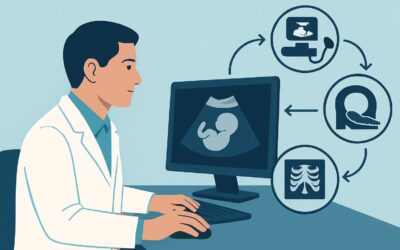
A patient presents with abnormal uterine bleeding and pelvic pressure. Uterine fibroids are high on the differential, but confirming the diagnosis, mapping the fibroids for potential intervention, and ruling out other pathology requires the right imaging study. Choosing between ultrasound, MRI, and CT involves balancing diagnostic yield, cost, and potential radiation exposure. The American College of Radiology (ACR) Appropriateness Criteria provide an evidence-based framework to guide this decision, ensuring the most effective and safest imaging pathway for your patient. This guide distills the ACR’s recommendations for common clinical scenarios involving uterine fibroids.
What Does ACR Fibroids Cover?
The ACR Appropriateness Criteria for fibroids, developed by the Gynecology and Obstetrics panel, focus on the evaluation of uterine leiomyomas in several distinct clinical contexts. These guidelines are designed for non-pregnant patients and address the most common imaging decisions clinicians face.
This topic specifically covers:
- Initial imaging for a patient with clinical signs and symptoms suggestive of uterine fibroids (e.g., abnormal uterine bleeding, pelvic pain or pressure, infertility).
- Pre-procedural imaging for treatment planning in a patient with known fibroids who is considering options like myomectomy, uterine artery embolization (UAE), or focused ultrasound.
- Post-treatment surveillance or follow-up imaging to assess treatment response or monitor for recurrence.
These criteria do not apply to the evaluation of other adnexal masses, acute undifferentiated pelvic pain, or suspected fibroids during pregnancy, which are addressed in separate ACR guidelines.
What Imaging Should I Order for Fibroids? Recommendations by Clinical Scenario
The optimal imaging study for uterine fibroids depends on the clinical question. The ACR provides clear, scenario-based recommendations to guide ordering physicians.
For a patient with clinically suspected fibroids requiring initial imaging, the ACR rates multiple forms of pelvic ultrasound as Usually Appropriate. This includes transabdominal, transvaginal, and duplex Doppler ultrasound. Ultrasound is an excellent first-line modality because it is widely available, cost-effective, and uses no ionizing radiation. It can confirm the presence of fibroids, assess their size and number, and evaluate the endometrium and ovaries. In this initial setting, MRI of the pelvis (with or without IV contrast) is rated as May be appropriate, typically reserved for cases where ultrasound is inconclusive or when a more detailed anatomical map is needed to differentiate fibroids from other pathologies like adenomyosis. CT of the pelvis is Usually Not Appropriate for initial diagnosis due to its use of ionizing radiation and inferior soft-tissue contrast compared to ultrasound and MRI for evaluating the uterus.
When evaluating known fibroids for treatment planning, both pelvic ultrasound and MRI play key roles. Pelvic ultrasound remains Usually Appropriate for initial assessment. However, MRI of the pelvis without and with IV contrast is also rated as Usually Appropriate and is often essential for pre-procedural planning. MRI provides superior detail on the size, number, location (submucosal, intramural, subserosal), and vascularity of fibroids, which is critical information for planning myomectomy, uterine artery embolization, or other interventions. An MRI without contrast May be appropriate, but contrast-enhanced imaging is often preferred for assessing fibroid viability. Again, CT is Usually Not Appropriate for this indication.
For surveillance or post-treatment imaging of known fibroids, both pelvic ultrasound and MRI without and with IV contrast are considered Usually Appropriate. Ultrasound is often sufficient for routine follow-up to monitor size. MRI is valuable for assessing the response to treatment, such as confirming devascularization after uterine artery embolization. In this specific post-treatment context, a CT of the pelvis with IV contrast May be appropriate, particularly if MRI is contraindicated or unavailable, though it is not a first-line choice. Other forms of CT remain Usually Not Appropriate.
ACR Imaging Recommendations Table
| Clinical Scenario | Top Procedure | ACR Rating | Adult RRL | Pediatric RRL |
|---|---|---|---|---|
| Clinically suspected fibroids. Initial imaging. | US pelvis transvaginal | Usually appropriate | O 0 mSv | O 0 mSv [ped] |
| Known fibroids. Treatment planning. Initial imaging. | MRI pelvis without and with IV contrast | Usually appropriate | O 0 mSv | O 0 mSv [ped] |
| Known fibroids. Surveillance or posttreatment imaging. | US pelvis transvaginal | Usually appropriate | O 0 mSv | O 0 mSv [ped] |
Adult vs. Pediatric Fibroids Imaging: Radiation Dose Tradeoffs
While uterine fibroids are rare in the pediatric population, the principles of radiation safety are paramount when imaging younger patients. The ACR guidelines reflect this by providing pediatric-specific relative radiation level (RRL) estimates. The fundamental principle of As Low As Reasonably Achievable (ALARA) dictates minimizing cumulative radiation exposure in children and adolescents, as they have a longer lifetime over which the potential risks of radiation can manifest.
For evaluating suspected fibroids, the recommended modalities—ultrasound and MRI—are ideal for both adult and pediatric patients because they do not use ionizing radiation (RRL of 0 mSv). This avoids any radiation dose to the developing reproductive organs. CT scans, which are rated “Usually Not Appropriate” for most fibroid indications, carry a significant radiation dose. The pediatric RRL for a CT of the pelvis can be up to 10 mSv, underscoring why it should be avoided for this clinical question unless absolutely necessary and no other modality can provide the required diagnostic information.
Imaging Protocol Details for Fibroids
Once you’ve decided on the right study, the specific imaging protocol is critical for diagnostic quality. Our protocol guides cover key technical parameters, contrast administration details, and interpretation principles for many of the studies recommended by the ACR.
Tools to Help You Order the Right Study
Navigating imaging guidelines and protocols can be complex. GigHz offers several tools designed to support clinicians in making evidence-based decisions and communicating effectively with patients.
The Imaging Appropriateness Selector provides a searchable interface for all ACR guidelines, allowing you to quickly find recommendations for hundreds of clinical variants beyond fibroids. It helps ensure you are ordering the right test for any given clinical presentation.
For detailed procedural steps, the Imaging Protocol Library offers a collection of standardized, scannable protocols for common CT, MRI, and ultrasound examinations. This resource helps align ordering practices with the technical standards used by radiology departments.
When discussing studies that involve radiation, the Radiation Dose Calculator is a valuable tool for estimating cumulative exposure and explaining radiation risk to patients in clear, understandable terms, supporting the informed consent process.
What is the first-line imaging test for suspected uterine fibroids?
Pelvic ultrasound (both transabdominal and transvaginal) is the recommended first-line imaging modality for suspected uterine fibroids. It is highly effective for detecting fibroids, is cost-effective, widely available, and does not involve ionizing radiation.
When is an MRI necessary for evaluating fibroids?
An MRI is typically necessary when ultrasound results are inconclusive or for detailed pre-procedural planning. It provides superior soft tissue contrast, allowing for precise mapping of the number, size, and location of all fibroids. This is critical for planning procedures like myomectomy or uterine artery embolization and for differentiating fibroids from adenomyosis.
Why is CT not recommended for diagnosing fibroids?
CT is generally not recommended for the primary evaluation of fibroids for two main reasons. First, it involves significant ionizing radiation exposure to the pelvis. Second, its ability to differentiate between different types of soft tissue in the uterus is inferior to both ultrasound and MRI, making it less accurate for characterizing uterine pathology.
Does a patient need IV contrast for a fibroid MRI?
For treatment planning, an MRI with IV contrast is rated as “Usually Appropriate” and is often preferred. The contrast helps assess the vascularity of the fibroids, which can predict their response to treatments like uterine artery embolization and help distinguish viable fibroid tissue from areas of degeneration or necrosis. An MRI without contrast may be sufficient in some cases and is rated “May be appropriate.”
What is the best imaging for post-treatment follow-up of fibroids?
Both ultrasound and MRI are rated as “Usually Appropriate” for post-treatment follow-up. Ultrasound is often sufficient and more cost-effective for routine monitoring of fibroid size after treatment. MRI provides a more detailed assessment of treatment success, such as confirming the devascularization of fibroids after uterine artery embolization.
Frequently Asked Questions
What is the first-line imaging test for suspected uterine fibroids?
Pelvic ultrasound (both transabdominal and transvaginal) is the recommended first-line imaging modality for suspected uterine fibroids. It is highly effective for detecting fibroids, is cost-effective, widely available, and does not involve ionizing radiation.
When is an MRI necessary for evaluating fibroids?
An MRI is typically necessary when ultrasound results are inconclusive or for detailed pre-procedural planning. It provides superior soft tissue contrast, allowing for precise mapping of the number, size, and location of all fibroids. This is critical for planning procedures like myomectomy or uterine artery embolization and for differentiating fibroids from adenomyosis.
Why is CT not recommended for diagnosing fibroids?
CT is generally not recommended for the primary evaluation of fibroids for two main reasons. First, it involves significant ionizing radiation exposure to the pelvis. Second, its ability to differentiate between different types of soft tissue in the uterus is inferior to both ultrasound and MRI, making it less accurate for characterizing uterine pathology.
Does a patient need IV contrast for a fibroid MRI?
For treatment planning, an MRI with IV contrast is rated as “Usually Appropriate” and is often preferred. The contrast helps assess the vascularity of the fibroids, which can predict their response to treatments like uterine artery embolization and help distinguish viable fibroid tissue from areas of degeneration or necrosis. An MRI without contrast may be sufficient in some cases and is rated “May be appropriate.”
What is the best imaging for post-treatment follow-up of fibroids?
Both ultrasound and MRI are rated as “Usually Appropriate” for post-treatment follow-up. Ultrasound is often sufficient and more cost-effective for routine monitoring of fibroid size after treatment. MRI provides a more detailed assessment of treatment success, such as confirming the devascularization of fibroids after uterine artery embolization.
Reviewed by Pouyan Golshani, MD, Interventional Radiologist — June 27, 2026