When to Order Imaging for Hemoptysis: ACR Appropriateness Decoded

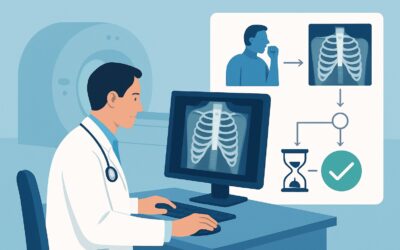
You’re on call, and a patient presents with hemoptysis. The first critical decision point is determining the severity: is this a non-threatening, self-limited event, or is it a life-threatening massive bleed requiring immediate intervention? The choice between a chest radiograph, a computed tomography (CT) scan with or without contrast, or proceeding directly to interventional radiology can feel daunting, especially when airway stability is a concern. This guide decodes the American College of Radiology (ACR) Appropriateness Criteria for hemoptysis, providing a clear, evidence-based framework to help you select the right initial imaging study for your patient.
What Does the American College of Radiology Hemoptysis Guideline Cover?
The ACR Appropriateness Criteria for hemoptysis focus on the initial imaging workup for adult and pediatric patients presenting with the expectoration of blood. The guidelines are stratified based on the clinical severity and pattern of bleeding, providing distinct recommendations for three primary scenarios: massive (life-threatening) hemoptysis, nonmassive hemoptysis, and recurrent hemoptysis. These criteria are designed to guide the first imaging steps to identify the source and etiology of the bleeding.
This document does not cover the workup of hematemesis (vomiting of blood), which can sometimes be confused with hemoptysis. It also does not provide guidance for follow-up imaging after a diagnosis has been established or after a therapeutic intervention like bronchial artery embolization. The recommendations are intended for the acute diagnostic phase to ensure timely and effective patient management.
What Imaging Should I Order for Hemoptysis? Recommendations by Clinical Scenario
The optimal imaging strategy for hemoptysis depends directly on the patient’s clinical stability and the volume of bleeding. The ACR provides clear, scenario-based recommendations to guide this critical decision.
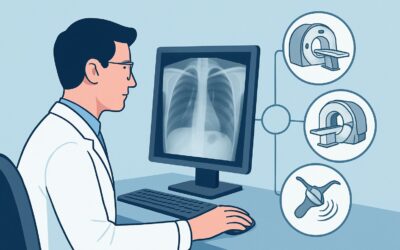
For a patient with massive (life-threatening) hemoptysis, the situation is urgent and requires rapid localization of the bleeding source. The ACR rates several studies as Usually appropriate. A portable chest radiograph is a fast, accessible first step to identify gross abnormalities like a large mass, consolidation, or diffuse alveolar hemorrhage. However, for definitive localization and treatment planning, advanced imaging is crucial. Both CT chest with IV contrast and CTA chest with IV contrast are considered Usually appropriate to delineate the pulmonary and bronchial arterial anatomy. In parallel, arteriography of the bronchial arteries with embolization is also rated Usually appropriate, serving as both a diagnostic and therapeutic procedure to control the hemorrhage. A non-contrast CT chest is only rated as May be appropriate, as it lacks the vascular detail needed in this acute setting.
In the more common scenario of nonmassive (non–life-threatening) hemoptysis, the workup can be more measured. A chest radiograph remains Usually appropriate as the initial imaging test. If the radiograph is unrevealing or inconclusive, a CT chest with IV contrast or CTA chest with IV contrast is also Usually appropriate to evaluate for underlying causes such as bronchiectasis, malignancy, or arteriovenous malformations. Arteriography with embolization is rated as May be appropriate in this context, typically reserved for cases where bleeding persists or a high-risk vascular lesion is identified on CT.
For patients presenting with recurrent hemoptysis, the imaging approach is similar to that for massive hemoptysis, reflecting the high suspicion for an underlying vascular or structural cause. A chest radiograph is a Usually appropriate starting point. However, CTA chest with IV contrast is also Usually appropriate to precisely map the bronchial and non-bronchial systemic arteries that may be the source of bleeding. Arteriography with embolization is also rated Usually appropriate as the primary therapeutic option. In this variant, a standard CT chest with IV contrast is downgraded to May be appropriate, as the specific arterial phase timing of a CTA is often preferred. A non-contrast CT is considered Usually not appropriate for recurrent bleeding.
ACR Imaging Recommendations for Hemoptysis: A Summary Table
| Clinical Scenario | Top Procedure | ACR Rating | Adult RRL | Pediatric RRL |
|---|---|---|---|---|
| Massive (life-threatening) hemoptysis. Initial imaging. | CTA chest with IV contrast | Usually appropriate | ☢ ☢ ☢ 1-10 mSv | ☢ ☢ ☢ ☢ 3-10 mSv [ped] |
| Nonmassive (non–life-threatening) hemoptysis. Initial imaging. | CT chest with IV contrast | Usually appropriate | ☢ ☢ ☢ 1-10 mSv | ☢ ☢ ☢ ☢ 3-10 mSv [ped] |
| Recurrent hemoptysis. Initial imaging. | CTA chest with IV contrast | Usually appropriate | ☢ ☢ ☢ 1-10 mSv | ☢ ☢ ☢ ☢ 3-10 mSv [ped] |
Adult vs. Pediatric Hemoptysis Imaging: Key Radiation Dose Considerations
While the causes of hemoptysis can differ between adults and children, the initial imaging algorithms are broadly similar. However, radiation safety is a paramount concern in pediatric imaging. The principle of As Low As Reasonably Achievable (ALARA) guides all decisions. The ACR provides distinct pediatric relative radiation level (RRL) estimates, which often appear higher than their adult counterparts. This is not because the absolute dose is higher, but because the RRL system accounts for the increased lifetime attributable risk of cancer from radiation exposure in younger patients.
For a chest CT, the pediatric RRL is ☢ ☢ ☢ ☢ (3-10 mSv), while the adult RRL is ☢ ☢ ☢ (1-10 mSv), highlighting the greater relative risk for the same dose range. Similarly, a chest radiograph carries a very low dose for both populations (☢ <0.1 mSv for adults, ☢ <0.03 mSv for pediatrics), making it an excellent first-line test in all age groups. Clinicians ordering CT scans for children with hemoptysis should collaborate with radiologists to ensure protocols are optimized for pediatric patients, using lower tube currents and voltages to minimize radiation dose while maintaining diagnostic quality.
Imaging Protocol Details for Hemoptysis Studies
Once you’ve decided on the right study based on the clinical scenario, ensuring the correct imaging protocol is used is the next critical step. A CTA requires specific contrast timing to visualize the arterial system, which differs from a standard contrast-enhanced CT. Our protocol guides provide detailed, scannable information for technologists and radiologists to ensure studies are performed correctly.
Tools to Help You Order the Right Imaging Study for Hemoptysis
Navigating imaging guidelines can be complex, but several tools are available to support evidence-based decision-making at the point of care. These resources help ensure that every patient receives the most appropriate, safe, and effective imaging for their specific clinical situation.
The Imaging Appropriateness Selector provides direct access to the full, searchable library of ACR guidelines, covering thousands of clinical variants beyond hemoptysis. It’s an essential resource for confirming the right study for any indication.
For detailed procedural information, the Imaging Protocol Library offers standardized, best-practice protocols for a wide range of CT, MRI, and other imaging studies. This helps bridge the gap between ordering a study and ensuring it is executed with technical excellence.
When discussing the risks and benefits of imaging with patients, especially concerning radiation, the Radiation Dose Calculator is an invaluable aid. It helps estimate and track cumulative radiation exposure, facilitating informed conversations and adherence to ALARA principles.
What is the first imaging study I should order for any patient with hemoptysis?
For nearly all patients with hemoptysis, regardless of severity, a chest radiograph (CXR) is rated as “Usually appropriate” by the ACR and is the recommended first imaging study. It is fast, widely available, uses a very low radiation dose, and can quickly identify significant abnormalities like a large mass, pneumonia, or signs of diffuse alveolar hemorrhage that may guide immediate management.
When should I order a CT scan for hemoptysis?
A CT scan is indicated when the initial chest radiograph is normal or non-diagnostic but the patient continues to have hemoptysis. For nonmassive hemoptysis, a CT with IV contrast is “Usually appropriate” to find more subtle causes like bronchiectasis, small nodules, or pulmonary arteriovenous malformations. For massive or recurrent hemoptysis, a CTA is “Usually appropriate” to specifically evaluate the bronchial and systemic arterial anatomy as a map for potential embolization.
What is the difference between a CT with contrast and a CTA?
Both studies use intravenous contrast, but the key difference is the timing of the image acquisition. A standard CT with IV contrast is typically performed in the portal venous phase to evaluate the lung parenchyma, mediastinum, and pleura. A CT Angiography (CTA) uses a rapid contrast bolus and precise scan timing to capture images during the peak arterial phase. This makes CTA superior for visualizing the arteries, which is critical for identifying the source of bleeding in massive or recurrent hemoptysis.
Why is a CT without and with IV contrast “Usually not appropriate”?
Performing a CT scan both before and after IV contrast administration (a biphasic study) significantly increases the radiation dose to the patient without typically adding diagnostic value in the workup of hemoptysis. A single post-contrast phase (either standard or CTA) is sufficient to identify the vast majority of relevant pathologies. The pre-contrast phase is generally unnecessary and should be avoided to minimize radiation exposure.
Is bronchial artery embolization (BAE) a diagnostic or therapeutic procedure?
Bronchial artery embolization is primarily a therapeutic procedure, but it has a crucial diagnostic component. It is performed by an interventional radiologist and involves catheterizing the arteries supplying the lungs (usually the bronchial arteries). An angiogram (arteriography) is first performed to identify the exact site of bleeding, after which embolic material is deployed to block the vessel and stop the hemorrhage. It is rated “Usually appropriate” for massive and recurrent hemoptysis as a definitive treatment.
Frequently Asked Questions
What is the first imaging study I should order for any patient with hemoptysis?
For nearly all patients with hemoptysis, regardless of severity, a chest radiograph (CXR) is rated as “Usually appropriate” by the ACR and is the recommended first imaging study. It is fast, widely available, uses a very low radiation dose, and can quickly identify significant abnormalities like a large mass, pneumonia, or signs of diffuse alveolar hemorrhage that may guide immediate management.
When should I order a CT scan for hemoptysis?
A CT scan is indicated when the initial chest radiograph is normal or non-diagnostic but the patient continues to have hemoptysis. For nonmassive hemoptysis, a CT with IV contrast is “Usually appropriate” to find more subtle causes like bronchiectasis, small nodules, or pulmonary arteriovenous malformations. For massive or recurrent hemoptysis, a CTA is “Usually appropriate” to specifically evaluate the bronchial and systemic arterial anatomy as a map for potential embolization.
What is the difference between a CT with contrast and a CTA?
Both studies use intravenous contrast, but the key difference is the timing of the image acquisition. A standard CT with IV contrast is typically performed in the portal venous phase to evaluate the lung parenchyma, mediastinum, and pleura. A CT Angiography (CTA) uses a rapid contrast bolus and precise scan timing to capture images during the peak arterial phase. This makes CTA superior for visualizing the arteries, which is critical for identifying the source of bleeding in massive or recurrent hemoptysis.
Why is a CT without and with IV contrast “Usually not appropriate”?
Performing a CT scan both before and after IV contrast administration (a biphasic study) significantly increases the radiation dose to the patient without typically adding diagnostic value in the workup of hemoptysis. A single post-contrast phase (either standard or CTA) is sufficient to identify the vast majority of relevant pathologies. The pre-contrast phase is generally unnecessary and should be avoided to minimize radiation exposure.
Is bronchial artery embolization (BAE) a diagnostic or therapeutic procedure?
Bronchial artery embolization is primarily a therapeutic procedure, but it has a crucial diagnostic component. It is performed by an interventional radiologist and involves catheterizing the arteries supplying the lungs (usually the bronchial arteries). An angiogram (arteriography) is first performed to identify the exact site of bleeding, after which embolic material is deployed to block the vessel and stop the hemorrhage. It is rated “Usually appropriate” for massive and recurrent hemoptysis as a definitive treatment.
Reviewed by Pouyan Golshani, MD, Interventional Radiologist — June 27, 2026