When to Order Imaging for Neck Mass/Adenopathy: ACR Appropriateness Decoded

A patient presents with a new neck mass. It could be a reactive lymph node, a congenital cyst, an abscess, or a malignancy. Choosing the right initial imaging study is critical for accurate diagnosis and management, but the options—CT, MRI, ultrasound—can be overwhelming, especially when balancing diagnostic yield against radiation exposure and cost. The American College of Radiology (ACR) Appropriateness Criteria provide evidence-based guidelines to clarify these decisions. This article breaks down the ACR’s recommendations for Neck Mass/Adenopathy, helping you select the most appropriate imaging for your patient’s specific clinical presentation.
What Does ACR Neck Mass/Adenopathy Cover?
The ACR Appropriateness Criteria for Neck Mass/Adenopathy, developed by the Neurologic panel, address the initial imaging workup for a palpable or incidentally discovered mass in the neck. The guidelines are stratified into several distinct clinical variants based on patient age and the characteristics of the mass.
This topic specifically covers:
- Initial imaging for nonpulsatile neck masses in adults.
- Initial imaging for pulsatile neck masses, where a vascular etiology is suspected.
- Workup of masses located specifically in the parotid region.
- Dedicated recommendations for pediatric neck masses, emphasizing radiation safety.
These criteria do not apply to the evaluation of known or suspected thyroid masses, which are covered under a separate ACR guideline. The focus here is on undifferentiated masses outside the thyroid and parotid glands, as well as those within the parotid. The recommendations guide the first imaging step, not subsequent follow-up or post-treatment surveillance.
What Imaging Should I Order for Neck Mass/Adenopathy? Recommendations by Clinical Scenario
The optimal imaging study depends entirely on the clinical context. The ACR provides clear, scenario-based recommendations to guide this choice.
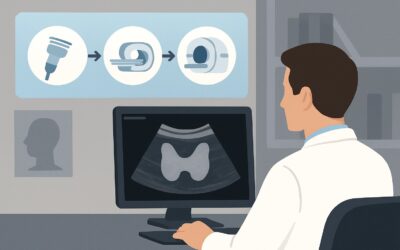
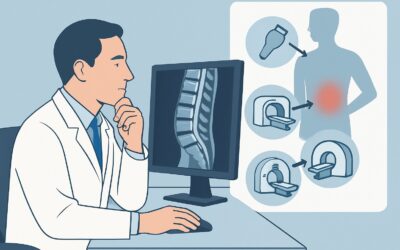
For a nonpulsatile neck mass in an adult (not in the parotid or thyroid), both MRI of the neck without and with IV contrast and CT of the neck with IV contrast are rated Usually appropriate. MRI offers superior soft-tissue contrast, which is excellent for characterizing the mass and its relationship to adjacent structures. CT is often faster and more readily available, providing robust anatomical detail, especially for assessing bone invasion. Ultrasound of the neck is considered May be appropriate and can be a valuable initial test for superficial lesions or to guide fine-needle aspiration (FNA).
When a patient presents with a pulsatile neck mass, the primary concern shifts to vascular pathology like an aneurysm, pseudoaneurysm, or vascular tumor (e.g., carotid body tumor). Consequently, vascular imaging is paramount. MRA of the neck without and with IV contrast and CTA of the neck with IV contrast are both rated Usually appropriate. Standard MRI and CT with contrast are also usually appropriate as they can characterize the mass and its vascular supply. The choice between MRA and CTA often depends on institutional preference, patient factors (e.g., renal function, iodine allergy), and the specific information required. For more details on MRA technique, see our guide to MRA Neck With and Without Contrast.
For a mass in the parotid region, Ultrasound of the neck is an excellent and Usually appropriate first-line modality. It can readily distinguish solid from cystic lesions and guide biopsy. For more detailed characterization, especially for deep lesions or when malignancy is suspected, MRI of the neck without and with IV contrast and CT of the neck with IV contrast are also Usually appropriate.
In a child with a neck mass, the principle of ALARA (As Low As Reasonably Achievable) is critical. Therefore, non-ionizing radiation modalities are strongly preferred. Ultrasound of the neck is Usually appropriate and is the ideal initial imaging test. If cross-sectional imaging is required for further characterization, MRI of the neck without and with IV contrast is also Usually appropriate and avoids radiation. CT of the neck with IV contrast is also rated Usually appropriate but is typically reserved for cases where MRI is contraindicated, unavailable, or when bony detail is essential.
ACR Imaging Recommendations Table
| Clinical Scenario | Top Procedure(s) | ACR Rating | Adult RRL | Pediatric RRL |
|---|---|---|---|---|
| Nonpulsatile neck mass(es). Not parotid region or thyroid. Initial imaging. | MRI neck without and with IV contrast / CT neck with IV contrast | Usually appropriate | O 0 mSv / ☢ ☢ ☢ 1-10 mSv | O 0 mSv [ped] / ☢ ☢ ☢ 0.3-3 mSv [ped] |
| Pulsatile neck mass(es). Not parotid region or thyroid. Initial imaging. | MRA neck without and with IV contrast / CTA neck with IV contrast | Usually appropriate | O 0 mSv / ☢ ☢ ☢ 1-10 mSv | O 0 mSv [ped] / ☢ ☢ ☢ 0.3-3 mSv [ped] |
| Parotid region mass(es). Initial imaging. | US neck / MRI neck without and with IV contrast | Usually appropriate | O 0 mSv | O 0 mSv [ped] |
| Child. Neck mass(es). Not parotid region or thyroid. Initial imaging. | US neck / MRI neck without and with IV contrast | Usually appropriate | O 0 mSv | O 0 mSv [ped] |
Adult vs. Pediatric Neck Mass/Adenopathy Imaging: Radiation Dose Tradeoffs
The evaluation of a neck mass in a child requires special consideration for the risks of ionizing radiation. Children are more radiosensitive than adults, and their longer life expectancy provides more time for potential long-term effects of radiation exposure to manifest. The ACR guidelines reflect this by strongly favoring modalities that do not use ionizing radiation.
For a child with a neck mass, ultrasound is the preferred initial study. It is safe, widely available, and highly effective for evaluating common pediatric neck pathologies like reactive adenopathy, branchial cleft cysts, and thyroglossal duct cysts. If further imaging is needed, MRI is the next best step as it provides excellent soft-tissue detail without any radiation dose. CT is reserved for specific indications, such as evaluating for an abscess with deep extension or in trauma. When CT is necessary, pediatric-specific low-dose protocols must be used to minimize the radiation burden, as reflected in the lower pediatric Relative Radiation Level (RRL) values provided by the ACR.
Imaging Protocol Details for Neck Mass/Adenopathy
Once you’ve decided on the right study, the specific imaging protocol is crucial for obtaining diagnostic-quality images. Protocol parameters, such as slice thickness, field of view, and contrast timing, can significantly impact the characterization of a neck mass. Our protocol guides provide detailed, practical information for the studies recommended in these guidelines.
Tools to Help You Order the Right Study
Navigating imaging guidelines and protocols can be complex. GigHz offers a suite of free reference tools designed to support clinical decision-making at the point of care.
The Imaging Appropriateness Selector provides a searchable interface for all ACR guidelines, allowing you to quickly find evidence-based recommendations for hundreds of clinical scenarios beyond just neck masses.
Our Imaging Protocol Library offers detailed, step-by-step protocols for a wide range of CT and MRI examinations, helping ensure you and your radiology department are aligned on technique.
To help with patient communication and tracking cumulative exposure, the Radiation Dose Calculator allows you to estimate effective dose for various imaging studies and explain the associated risks in clear, understandable terms.
Frequently Asked Questions About Imaging for Neck Mass/Adenopathy
Why is IV contrast usually necessary for CT or MRI of a neck mass?
Intravenous contrast is crucial for evaluating neck masses because it enhances the visibility of abnormal tissue. Contrast helps delineate the mass from surrounding muscles and vessels, assesses its vascularity, and can reveal internal characteristics like necrosis or cystic change. This information is vital for narrowing the differential diagnosis between infection/abscess, benign tumors, and malignancy.
When is ultrasound a good first choice for a neck mass?
Ultrasound is an excellent initial imaging modality for several scenarios. It is the preferred first-line study for all neck masses in children to avoid radiation. In adults, it is ideal for superficial masses, evaluating the parotid gland, and differentiating cystic from solid lesions. It is also the best modality for guiding real-time procedures like fine-needle aspiration (FNA).
What’s the key difference in imaging a pulsatile vs. nonpulsatile neck mass?
The key difference is the need to specifically evaluate the blood vessels. A pulsatile mass suggests a vascular origin, such as a carotid artery aneurysm or a vascular tumor like a paraganglioma. Therefore, the imaging study must include vascular assessment. CTA (CT Angiography) or MRA (MR Angiography) are the primary modalities, as they are optimized to visualize arteries and veins in detail. For a nonpulsatile mass, standard contrast-enhanced CT or MRI is sufficient.
Is PET/CT ever a first-line study for an undifferentiated neck mass?
No, according to the ACR Appropriateness Criteria, FDG-PET/CT is Usually not appropriate for the initial workup of an undifferentiated neck mass. While PET/CT is essential for staging known cancers, its role as a first-line diagnostic tool for an unknown mass is limited. The initial goal is anatomic characterization and tissue diagnosis, for which CT, MRI, or US-guided biopsy are better suited and more cost-effective.
If a CT or MRI is ordered, what area should be covered?
A dedicated “CT Neck” or “MRI Neck” protocol is required. This typically covers the area from the skull base superiorly down to the thoracic inlet or clavicles inferiorly. This comprehensive coverage is essential because many neck pathologies can originate from or extend into the upper mediastinum or the skull base. Simply ordering a “CT Head” would be insufficient.
Reviewed by Pouyan Golshani, MD, Interventional Radiologist — June 27, 2026