When to Order Imaging for Staging and Follow-up of Anal Cancer: ACR Appropriateness Decoded
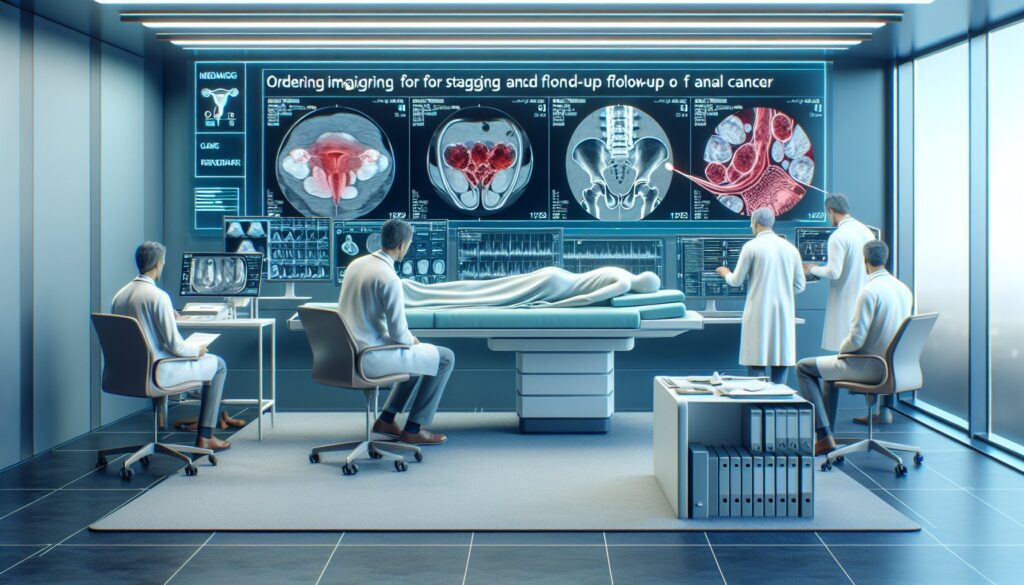
A patient presents with a new biopsy-proven diagnosis of squamous cell anal cancer. The immediate clinical questions involve accurate staging to guide therapy—determining the local extent of the tumor (T-stage), nodal involvement (N-stage), and the presence of distant metastases (M-stage). Choosing between Magnetic Resonance Imaging (MRI) for high-resolution pelvic detail, Computed Tomography (CT) for a rapid survey of the body, and Positron Emission Tomography/Computed Tomography (FDG-PET/CT) for metabolic activity can be complex. This guide synthesizes the American College of Radiology (ACR) Appropriateness Criteria to clarify which imaging studies are most valuable in specific clinical scenarios for anal cancer, from initial diagnosis through post-treatment follow-up.
What Does ACR Staging and Follow-up of Anal Cancer Cover?
These ACR guidelines focus specifically on the imaging evaluation of squamous cell carcinoma of the anal canal, which accounts for the vast majority of anal cancers. The recommendations address three distinct clinical phases: the initial locoregional assessment, the evaluation for distant metastatic disease at diagnosis or during surveillance, and the post-treatment assessment to evaluate for recurrence. The criteria are designed for adult patients and provide guidance on the relative utility and appropriateness of various imaging modalities in these contexts. This topic does not cover other, less common anal canal histologies such as adenocarcinoma, melanoma, or neuroendocrine tumors, nor does it address the workup of incidental anal findings or benign conditions. The primary goal is to provide evidence-based recommendations for standard-of-care imaging in typical clinical presentations of anal cancer.
What Imaging Should I Order for Staging and Follow-up of Anal Cancer? Recommendations by Clinical Scenario
The optimal imaging strategy for anal cancer depends on the specific clinical question being asked—locoregional staging, systemic staging, or post-treatment evaluation.
For an adult with newly diagnosed squamous cell anal cancer requiring locoregional assessment at initial staging, the ACR rates both MRI pelvis without and with IV contrast and FDG-PET/CT from skull base to mid-thigh as Usually appropriate. MRI provides superior soft tissue contrast for delineating the primary tumor’s relationship to adjacent structures like the sphincter complex, vagina, or prostate, which is critical for T-staging and radiation planning. FDG-PET/CT is highly sensitive for identifying hypermetabolic nodal disease (both pelvic and inguinal) and unsuspected distant metastases, which can significantly alter the treatment plan.
When the goal is assessment for metastatic disease at initial staging or during surveillance, several modalities are considered Usually appropriate. These include CT of the abdomen and pelvis with IV contrast, CT of the chest with or without IV contrast, and FDG-PET/CT from skull base to mid-thigh. While contrast-enhanced CT of the chest, abdomen, and pelvis is a standard and widely available method for systemic staging, FDG-PET/CT is often preferred as a single examination that can detect nodal and distant metastatic disease with higher sensitivity than CT alone.
For posttreatment locoregional assessment in an adult patient, the recommendations mirror those for initial staging. Both MRI pelvis without and with IV contrast and FDG-PET/CT from skull base to mid-thigh are rated as Usually appropriate. Post-treatment imaging is typically performed several months after completion of chemoradiation to allow for inflammation to subside. MRI can identify residual or recurrent tumor, while FDG-PET/CT is highly effective at distinguishing post-treatment fibrosis and scarring from metabolically active recurrent disease.
ACR Imaging Recommendations Table
| Clinical Scenario | Top Procedure | ACR Rating | Adult RRL | Pediatric RRL |
|---|---|---|---|---|
| Adult. Newly diagnosed squamous cell anal cancer. Locoregional assessment at initial staging. | MRI pelvis without and with IV contrast | Usually appropriate | O 0 mSv | O 0 mSv [ped] |
| Adult. Squamous cell anal cancer. Assessment for metastatic disease at initial staging or surveillance. | FDG-PET/CT skull base to mid-thigh | Usually appropriate | ☢ ☢ ☢ ☢ 10-30 mSv | ☢ ☢ ☢ ☢ 3-10 mSv [ped] |
| Adult. Squamous cell anal cancer. Posttreatment locoregional assessment. | MRI pelvis without and with IV contrast | Usually appropriate | O 0 mSv | O 0 mSv [ped] |
Adult vs. Pediatric Staging and Follow-up of Anal Cancer Imaging: Radiation Dose Tradeoffs
Anal cancer is exceedingly rare in the pediatric population. However, the ACR provides pediatric-specific Relative Radiation Level (RRL) estimates to guide practice if such a case were to arise, adhering to the As Low As Reasonably Achievable (ALARA) principle. For any imaging study involving ionizing radiation, such as CT or PET/CT, the pediatric RRLs are often in a lower effective dose range than their adult counterparts. This reflects the use of size-adjusted protocols designed to minimize radiation exposure in younger patients, who have a longer lifetime to manifest potential radiation-related risks. For example, an FDG-PET/CT scan has an adult RRL of 10-30 mSv but a pediatric RRL of 3-10 mSv. Modalities without ionizing radiation, such as MRI and ultrasound, have an RRL of zero for all age groups and are inherently preferred when clinically appropriate to avoid radiation exposure altogether.
Imaging Protocol Details for Staging and Follow-up of Anal Cancer
Once you’ve decided on the right study based on the clinical scenario, ensuring the correct imaging protocol is performed is the critical next step for a diagnostic-quality examination. Our protocol guides provide detailed, scannable information on technique, contrast administration, and key interpretation principles for the studies recommended in these guidelines.
Tools to Help You Order the Right Study
Navigating imaging guidelines and radiation safety can be streamlined with the right digital resources. GigHz offers several tools designed to support clinical decision-making at the point of care.
For scenarios beyond anal cancer, the Imaging Appropriateness Selector provides a searchable interface to find evidence-based recommendations for thousands of clinical presentations. This tool helps ensure you are ordering the most suitable test for your patient’s specific situation.
To access detailed technical specifications for hundreds of imaging exams, the Imaging Protocol Library is a comprehensive resource for radiologists, technologists, and ordering clinicians. It helps standardize imaging techniques to improve diagnostic quality and consistency.
To facilitate conversations with patients about radiation exposure and to track cumulative dose over time, the Radiation Dose Calculator offers a simple way to estimate and explain the effective dose from various CT and nuclear medicine studies.
What is the single best imaging test for initial staging of anal cancer?
There isn’t a single “best” test, as optimal staging often involves a combination of imaging. The ACR rates both pelvic MRI with contrast and FDG-PET/CT as “Usually Appropriate.” MRI is superior for local T-staging (tumor size and invasion), while FDG-PET/CT is more sensitive for N-staging (nodal involvement) and M-staging (distant metastases). Many centers use both as part of the initial workup.
Why is CT rated lower than MRI for local staging of anal cancer?
For locoregional assessment, MRI provides significantly better soft-tissue resolution than CT. This allows for more precise evaluation of the primary tumor’s extent and its relationship to critical structures like the anal sphincter complex, pelvic floor muscles, and adjacent organs. This detailed anatomical information is crucial for accurate T-staging and for planning radiation therapy fields.
Is an endorectal ultrasound (US) useful for staging anal cancer?
According to the ACR criteria, transrectal ultrasound is “Usually Not Appropriate” for the initial locoregional assessment of anal cancer. While it can visualize superficial tumors, it has been largely supplanted by pelvic MRI, which offers a larger field of view, superior soft tissue contrast, and better evaluation of pelvic lymph nodes without the operator dependence of ultrasound.
When should follow-up imaging be performed after treatment?
Post-treatment imaging is typically performed to assess treatment response and surveil for recurrence. The optimal timing is generally 3 to 6 months after the completion of chemoradiation. Performing imaging too early can be misleading, as post-treatment inflammation can mimic residual or recurrent disease, particularly on FDG-PET/CT.
Do all patients need a chest CT for staging?
A chest CT (with or without contrast) is rated as “Usually Appropriate” for assessing metastatic disease. While the lungs are a potential site of metastasis from anal cancer, a whole-body FDG-PET/CT, which is also “Usually Appropriate,” includes evaluation of the chest and may be performed as a single comprehensive staging study, potentially obviating the need for a separate dedicated chest CT.
Frequently Asked Questions
What is the single best imaging test for initial staging of anal cancer?
There isn’t a single “best” test, as optimal staging often involves a combination of imaging. The ACR rates both pelvic MRI with contrast and FDG-PET/CT as “Usually Appropriate.” MRI is superior for local T-staging (tumor size and invasion), while FDG-PET/CT is more sensitive for N-staging (nodal involvement) and M-staging (distant metastases). Many centers use both as part of the initial workup.
Why is CT rated lower than MRI for local staging of anal cancer?
For locoregional assessment, MRI provides significantly better soft-tissue resolution than CT. This allows for more precise evaluation of the primary tumor’s extent and its relationship to critical structures like the anal sphincter complex, pelvic floor muscles, and adjacent organs. This detailed anatomical information is crucial for accurate T-staging and for planning radiation therapy fields.
Is an endorectal ultrasound (US) useful for staging anal cancer?
According to the ACR criteria, transrectal ultrasound is “Usually Not Appropriate” for the initial locoregional assessment of anal cancer. While it can visualize superficial tumors, it has been largely supplanted by pelvic MRI, which offers a larger field of view, superior soft tissue contrast, and better evaluation of pelvic lymph nodes without the operator dependence of ultrasound.
When should follow-up imaging be performed after treatment?
Post-treatment imaging is typically performed to assess treatment response and surveil for recurrence. The optimal timing is generally 3 to 6 months after the completion of chemoradiation. Performing imaging too early can be misleading, as post-treatment inflammation can mimic residual or recurrent disease, particularly on FDG-PET/CT.
Do all patients need a chest CT for staging?
A chest CT (with or without contrast) is rated as “Usually Appropriate” for assessing metastatic disease. While the lungs are a potential site of metastasis from anal cancer, a whole-body FDG-PET/CT, which is also “Usually Appropriate,” includes evaluation of the chest and may be performed as a single comprehensive staging study, potentially obviating the need for a separate dedicated chest CT.
Reviewed by Pouyan Golshani, MD, Interventional Radiologist — May 26, 2026