When to Order Imaging for Supplemental Breast Cancer Screening Based on Breast Density: ACR Appropriateness Decoded

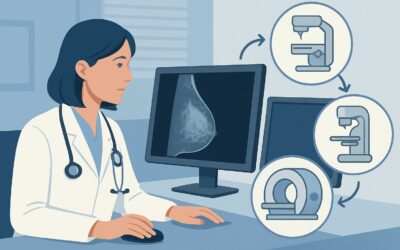
A 45-year-old patient’s screening mammogram report is on your screen. The findings are negative for malignancy, but the report notes “heterogeneously dense breasts,” which can obscure small cancers. The patient is asking if she needs more testing. Do you order a breast ultrasound? An MRI? Or is the mammogram enough? Navigating the options for supplemental screening can be complex, with recommendations varying significantly based on the patient’s specific risk profile and degree of breast density. This guide clarifies the American College of Radiology (ACR) guidelines to help you make the most appropriate imaging decision.
What Does ACR Supplemental Breast Cancer Screening Based on Breast Density Cover?
This ACR Appropriateness Criteria topic addresses imaging for women who have already had a screening mammogram and are being considered for additional, or supplemental, screening based on their breast density. The guidelines apply to adult women and stratify recommendations by two key factors: overall breast cancer risk (average, intermediate, or high) and mammographic breast density (nondense, heterogeneously dense, or extremely dense). Breast density is a known independent risk factor for breast cancer and also decreases the sensitivity of mammography.
These criteria are specifically for supplemental screening in an asymptomatic patient. They do not apply to the initial choice of screening modality (e.g., mammography vs. tomosynthesis), nor do they apply to the diagnostic workup of a patient with clinical signs or symptoms, such as a palpable lump, nipple discharge, or focal pain. The recommendations assume a baseline screening mammogram, often with digital breast tomosynthesis (DBT), has already been performed.
What Imaging Should I Order for Supplemental Breast Cancer Screening Based on Breast Density? Recommendations by Clinical Scenario
The appropriate choice for supplemental screening is highly dependent on the patient’s individual risk factors and mammographic findings. The ACR provides clear guidance for several common clinical variants.
For an adult female at average risk with nondense breasts, standard screening with digital breast tomosynthesis is considered “Usually appropriate.” No further supplemental imaging, such as ultrasound or MRI, is recommended; these are rated “Usually not appropriate” in this low-risk context.
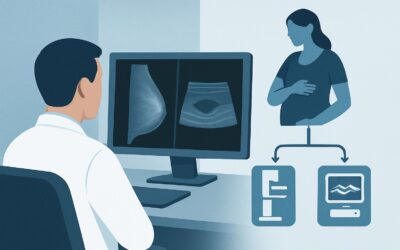
When an average-risk patient has heterogeneously dense breasts, the decision becomes more nuanced. While digital breast tomosynthesis remains “Usually appropriate” as the foundational screening tool, both breast ultrasound and breast MRI (standard or abbreviated) are now considered “May be appropriate.” The choice between these may depend on patient preference, cost, and availability. For patients with extremely dense breasts, even at average risk, the guidance shifts more strongly toward MRI. Both standard and abbreviated breast MRI are rated “Usually appropriate” for supplemental screening, reflecting their superior sensitivity in detecting mammographically occult cancers in dense tissue. Breast ultrasound remains an option, rated “May be appropriate.”
For women at intermediate risk (e.g., personal history of breast cancer, lobular carcinoma in situ, or atypical hyperplasia), breast density plays a critical role. For those with nondense breasts, breast MRI (standard or abbreviated) “May be appropriate,” though the panel noted some disagreement on the standard protocol. For intermediate-risk women with either heterogeneously dense or extremely dense breasts, supplemental screening with standard or abbreviated breast MRI is “Usually appropriate.” Contrast-enhanced mammography and breast ultrasound “May be appropriate” in these scenarios as well.
Finally, for any adult female at high risk (e.g., known genetic mutation like BRCA, lifetime risk ≥20% by risk models), supplemental screening with breast MRI (standard or abbreviated) is “Usually appropriate,” regardless of breast density. The high underlying risk warrants the most sensitive supplemental screening test available. In this high-risk group, breast ultrasound and contrast-enhanced mammography “May be appropriate.”
ACR Imaging Recommendations Table
| Clinical Scenario | Top Procedure | ACR Rating | Adult RRL | Pediatric RRL |
|---|---|---|---|---|
| Adult female. Supplemental breast cancer screening. Average risk. Nondense breasts. | Digital breast tomosynthesis screening | Usually appropriate | ☢ ☢ 0.1-1mSv | |
| Adult female. Supplemental breast cancer screening. Average risk. Heterogeneously dense breasts. | Digital breast tomosynthesis screening | Usually appropriate | ☢ ☢ 0.1-1mSv | |
| Adult female. Supplemental breast cancer screening. Average risk. Extremely dense breasts. | Digital breast tomosynthesis screening; MRI breast without and with IV contrast; MRI breast without and with IV contrast abbreviated | Usually appropriate | ☢ ☢ 0.1-1mSv; O 0 mSv | O 0 mSv [ped] |
| Adult female. Supplemental breast cancer screening. Intermediate risk. Nondense breasts. | Digital breast tomosynthesis screening | Usually appropriate | ☢ ☢ 0.1-1mSv | |
| Adult female. Supplemental breast cancer screening. Intermediate risk. Heterogeneously dense breasts. | Digital breast tomosynthesis screening; MRI breast without and with IV contrast; MRI breast without and with IV contrast abbreviated | Usually appropriate | ☢ ☢ 0.1-1mSv; O 0 mSv | O 0 mSv [ped] |
| Adult female. Supplemental breast cancer screening. Intermediate risk. Extremely dense breasts. | Digital breast tomosynthesis screening; MRI breast without and with IV contrast; MRI breast without and with IV contrast abbreviated | Usually appropriate | ☢ ☢ 0.1-1mSv; O 0 mSv | O 0 mSv [ped] |
| Adult female. Supplemental breast cancer screening. High risk. Nondense or dense breasts. | Digital breast tomosynthesis screening; MRI breast without and with IV contrast; MRI breast without and with IV contrast abbreviated | Usually appropriate | ☢ ☢ 0.1-1mSv; O 0 mSv | O 0 mSv [ped] |
Adult vs. Pediatric Supplemental Breast Cancer Screening Based on Breast Density Imaging: Radiation Dose Tradeoffs
The clinical scenarios outlined in this ACR guideline are specific to adult women, as breast cancer screening is not performed in pediatric populations. The concept of supplemental screening based on mammographically-determined breast density is therefore exclusively an adult consideration. While the ACR data tables include fields for pediatric relative radiation level (RRL), they are not applicable to this particular clinical topic.
In general clinical practice, imaging decisions for pediatric patients are always guided by the principle of As Low As Reasonably Achievable (ALARA) to minimize cumulative lifetime radiation exposure. Modalities with no ionizing radiation, such as ultrasound (US) and magnetic resonance imaging (MRI), are strongly preferred whenever they can provide the necessary diagnostic information. However, for the specific topic of supplemental breast cancer screening, these considerations are moot as the patient population is, by definition, adult.
Imaging Protocol Details for Supplemental Breast Cancer Screening Based on Breast Density
Once you’ve decided on the right study, the specific imaging protocol is critical for diagnostic accuracy. Key parameters for mammography, tomosynthesis, ultrasound, and MRI are standardized to ensure high-quality, reproducible results. Our protocol guides provide detailed, scannable checklists for technologists and reference material for radiologists and ordering clinicians.
Tools to Help You Order the Right Study
Selecting the correct imaging study from a long list of possibilities can be challenging. GigHz offers several tools designed to support evidence-based clinical decision-making and streamline the ordering process.
The Imaging Appropriateness Selector provides a fast, searchable interface for the full library of ACR guidelines, covering thousands of clinical variants beyond supplemental breast cancer screening. It’s designed to help you find the official recommendation for your specific clinical question in moments.
For detailed procedural information, the Imaging Protocol Library offers concise, actionable guides for a wide range of imaging studies. These resources can help ensure the study you order is performed correctly, maximizing its diagnostic value.
When discussing studies that involve ionizing radiation, the Radiation Dose Calculator is a useful tool for estimating cumulative exposure and communicating radiation risk to patients in an understandable way, supporting a more informed shared decision-making process.
Frequently Asked Questions
What defines intermediate vs. high risk for breast cancer screening?
Intermediate risk (defined as a 15%-20% lifetime risk) often includes patients with a personal history of breast cancer, lobular carcinoma in situ (LCIS), atypical ductal hyperplasia (ADH), or atypical lobular hyperplasia (ALH). High risk (defined as a >20% lifetime risk) includes individuals with known pathogenic genetic mutations (e.g., BRCA1, BRCA2), a strong family history suggestive of a mutation, or a history of chest radiation between ages 10 and 30.
Why is breast MRI rated higher than ultrasound for extremely dense breasts?
While both are non-radiation modalities that can find cancers missed by mammography, multiple large studies have shown that MRI has a higher cancer detection rate than ultrasound in dense breasts. MRI is more sensitive for detecting small, invasive cancers. However, MRI also has a higher false-positive rate, is more expensive, and requires intravenous contrast, so the decision involves a risk-benefit discussion with the patient.
What is abbreviated breast MRI?
Abbreviated breast MRI (also known as “fast MRI”) is a shortened version of a standard breast MRI protocol. It takes significantly less time (typically under 10 minutes) and focuses on the most critical imaging sequences for cancer detection. It is emerging as a more accessible and lower-cost alternative to full-protocol MRI for supplemental screening, and the ACR rates it as equivalent to standard MRI in most screening scenarios.
Does a “May be appropriate” rating mean insurance is less likely to cover the test?
A “May be appropriate” rating indicates that the procedure may be a reasonable choice in certain clinical situations, but there is less evidence or consensus to support its routine use compared to a “Usually appropriate” procedure. Insurance coverage can vary widely and may be more challenging to secure for tests in this category. It often requires more detailed documentation of the clinical rationale and a pre-authorization process.
If a patient has dense breasts, should they skip mammography and go straight to MRI?
No. Mammography, particularly digital breast tomosynthesis (DBT), remains the foundational screening tool for all women, regardless of breast density. It is the only modality proven to reduce breast cancer mortality in large randomized controlled trials. Mammography is particularly effective at detecting calcifications, which can be an early sign of ductal carcinoma in situ (DCIS) and may not be visible on MRI. Supplemental screening with MRI or ultrasound is considered an addition to, not a replacement for, annual mammography.
Reviewed by Pouyan Golshani, MD, Interventional Radiologist — August 4, 2026