When to Order Imaging for Suspected and Known Heart Failure: ACR Appropriateness Decoded
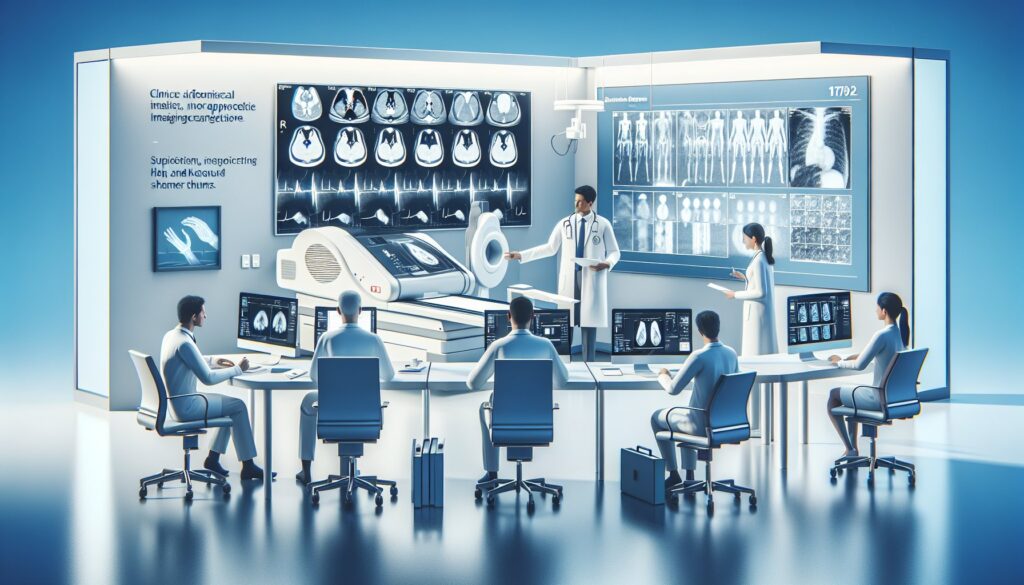
It’s late in a busy shift, and you’re evaluating a patient with dyspnea on exertion and new lower extremity edema. The differential is broad, but heart failure is high on the list. Your next step is to order imaging, but which study is the most appropriate first choice? A chest radiograph can show pulmonary edema and cardiomegaly, while a transthoracic echocardiogram directly assesses cardiac function. Choosing the right initial test is critical for accurate diagnosis, avoiding unnecessary radiation, and guiding therapy effectively. This article decodes the American College of Radiology (ACR) Appropriateness Criteria for suspected and known heart failure, providing clear, evidence-based guidance for these common clinical scenarios.
What Does ACR Suspected and Known Heart Failure Cover?
The ACR Appropriateness Criteria for Suspected and Known Heart Failure focus on the noninvasive diagnostic imaging of adult patients. The guidelines are structured around three distinct clinical variants that cover the typical patient journey: initial presentation, workup after diagnosis, and long-term follow-up.
This topic specifically addresses:
- Initial imaging for an adult with suspected heart failure but no prior diagnosis.
- Initial imaging for an adult with a known diagnosis of heart failure but an undetermined cause (etiology).
- Follow-up imaging for an adult with known heart failure to assess for clinical change or guide therapy.
These guidelines do not cover acute decompensated heart failure in the emergency setting where protocols may differ, nor do they address pediatric congenital heart disease or specific workups for pulmonary hypertension, which are covered in separate ACR documents. The focus is on the standard diagnostic pathway for the adult heart failure patient.
What Imaging Should I Order for Suspected and Known Heart Failure? Recommendations by Clinical Scenario
The ACR provides specific imaging recommendations tailored to the patient’s clinical context. The optimal study depends on whether you are establishing a new diagnosis, determining the underlying cause, or monitoring a known condition.
For an adult with suspected heart failure and no prior history, the initial workup is focused on confirming the diagnosis and assessing ventricular function. A resting transthoracic echocardiogram (TTE) is rated Usually Appropriate as the cornerstone investigation, providing direct visualization of ejection fraction, diastolic function, and valvular integrity. A chest radiograph is also Usually Appropriate to assess for cardiomegaly, pleural effusions, and pulmonary edema. While cardiac Magnetic Resonance Imaging (MRI) and stress echocardiography are rated May be Appropriate, they are typically reserved for cases where echocardiography is technically limited or inconclusive.
When evaluating an adult with known heart failure of unknown etiology, the imaging strategy broadens to identify the underlying cause. In addition to a resting TTE, several other studies are rated Usually Appropriate. Cardiac MRI (with or without contrast) is highly valuable for tissue characterization, helping to diagnose non-ischemic causes like myocarditis, amyloidosis, or sarcoidosis. To evaluate for ischemic cardiomyopathy, a common cause of heart failure, both coronary Computed Tomography Angiography (CTA) and stress imaging (stress echo, stress MRI, or nuclear SPECT) are also considered Usually Appropriate.
For routine follow-up imaging in an adult with known heart failure, the goal is to monitor for changes in cardiac function, structure, and response to therapy, especially after a significant change in clinical status. A resting TTE remains the primary modality and is rated Usually Appropriate. Stress echocardiography and cardiac MRI (both resting and stress) are also Usually Appropriate to re-evaluate for ischemia or assess changes in myocardial viability and scar burden. A chest radiograph May be Appropriate if there is concern for worsening pulmonary congestion, but it is not recommended for routine functional monitoring.
ACR Imaging Recommendations Table
| Clinical Scenario | Top Procedure | ACR Rating | Adult RRL | Pediatric RRL |
|---|---|---|---|---|
| Adult. Suspected heart failure. No history of heart failure. Initial imaging. | US echocardiography transthoracic resting | Usually appropriate | O 0 mSv | O 0 mSv [ped] |
| Adult. Known heart failure. Unknown etiology. Initial imaging. | US echocardiography transthoracic resting | Usually appropriate | O 0 mSv | O 0 mSv [ped] |
| Adult. Known heart failure. Follow-up imaging. | US echocardiography transthoracic resting | Usually appropriate | O 0 mSv | O 0 mSv [ped] |
Adult vs. Pediatric Suspected and Known Heart Failure Imaging: Radiation Dose Tradeoffs
While heart failure is less common in children, the principles of imaging are similar but carry a greater emphasis on radiation safety. The ACR provides pediatric-specific relative radiation level (RRL) estimates to guide clinical decision-making, reflecting the principle of As Low As Reasonably Achievable (ALARA). Children have a longer life expectancy, giving more time for the potential stochastic effects of ionizing radiation to manifest. Their developing tissues are also more radiosensitive than adult tissues.
For this reason, non-ionizing modalities like echocardiography and MRI are strongly preferred in pediatric patients whenever clinically appropriate. For studies involving radiation, such as chest radiography or CT, pediatric protocols are optimized to use the lowest possible dose. For example, a pediatric chest radiograph has an RRL of <0.03 mSv, significantly lower than the adult dose. Similarly, for advanced imaging like cardiac CT or nuclear studies, the pediatric RRLs (often in the 3-10 mSv range) are typically lower than the corresponding adult ranges (10-30 mSv), reflecting dose-reduction techniques tailored to smaller body habitus.
Imaging Protocol Details for Suspected and Known Heart Failure
Once you’ve decided on the right study based on the ACR criteria, ensuring it is performed correctly is the next critical step. The diagnostic yield of a cardiac MRI or stress echocardiogram depends heavily on the specific imaging protocol, including patient preparation, contrast administration, and acquisition sequences. A well-designed protocol ensures that the clinical question is answered thoroughly and efficiently. Our library of imaging guides provides detailed, step-by-step instructions for many of the key modalities used in the evaluation of heart failure.
Tools to Help You Order the Right Study
Navigating imaging guidelines and radiation safety can be complex. GigHz provides a suite of reference tools designed to support clinicians in making evidence-based decisions at the point of care.
For clinical scenarios beyond heart failure, the Imaging Appropriateness Selector provides a searchable interface to the full library of ACR guidelines, covering hundreds of clinical variants across all organ systems. When you need detailed technical information on how a study is performed, the Imaging Protocol Library offers concise, practical guides for a wide range of imaging procedures. To help communicate radiation risk with patients and track cumulative exposure, the Radiation Dose Calculator provides a simple way to estimate and explain effective dose from common radiological exams.
Why is a chest radiograph usually appropriate for initial suspicion of heart failure but not for follow-up?
A chest radiograph is an excellent initial screening tool. It can quickly reveal signs of heart failure such as cardiomegaly (enlarged heart), pulmonary edema (fluid in the lungs), and pleural effusions. However, for follow-up, it is less sensitive for detecting subtle changes in cardiac function. A transthoracic echocardiogram provides direct, quantitative assessment of ejection fraction and valvular function, which are more precise markers for monitoring disease progression and response to treatment.
When should I choose cardiac MRI over a transthoracic echocardiogram (TTE)?
Cardiac MRI is generally considered when TTE is technically difficult or when more detailed information about the heart muscle (myocardium) is needed. MRI provides superior tissue characterization, making it the gold standard for identifying the etiology of non-ischemic cardiomyopathies such as amyloidosis, sarcoidosis, myocarditis, or iron overload (hemochromatosis). It is also more accurate for quantifying ventricular volumes and ejection fraction, especially in patients with complex cardiac anatomy.
Is a coronary CTA always necessary for new heart failure of unknown etiology?
While coronary CTA is rated “Usually Appropriate” in this scenario, it is not always required. Its primary role is to non-invasively rule out significant coronary artery disease (CAD) as the cause of heart failure (ischemic cardiomyopathy). The decision to order a coronary CTA depends on the patient’s pre-test probability of CAD, including risk factors like age, smoking history, diabetes, and hypertension. In a young patient with no risk factors, the yield may be low, and other causes might be investigated first. Invasive coronary angiography may be an alternative in high-risk patients or those with inconclusive non-invasive tests.
What is the role of stress imaging in the evaluation of heart failure?
Stress imaging—whether with echocardiography, MRI, or nuclear medicine (SPECT/PET)—is used to assess for myocardial ischemia. Identifying reversible ischemia is crucial because it may indicate underlying coronary artery disease that can be treated with revascularization (stents or bypass surgery), potentially improving heart function and patient outcomes. Stress tests help differentiate ischemic from non-ischemic cardiomyopathy and can also provide important prognostic information about a patient’s functional capacity.
Why is transesophageal echocardiography (TEE) not a first-line test for suspected heart failure?
Transesophageal echocardiography (TEE) is a semi-invasive procedure that involves passing an ultrasound probe into the esophagus. While it provides higher-resolution images of posterior heart structures than a standard TTE, it is not necessary for the initial diagnosis of heart failure. TEE is typically reserved for specific clinical questions where TTE is inadequate, such as evaluating for a patent foramen ovale, suspected endocarditis (infection of the heart valves), assessing complex valvular disease, or looking for a source of embolism like a left atrial appendage thrombus.
Frequently Asked Questions
Why is a chest radiograph usually appropriate for initial suspicion of heart failure but not for follow-up?
A chest radiograph is an excellent initial screening tool. It can quickly reveal signs of heart failure such as cardiomegaly (enlarged heart), pulmonary edema (fluid in the lungs), and pleural effusions. However, for follow-up, it is less sensitive for detecting subtle changes in cardiac function. A transthoracic echocardiogram provides direct, quantitative assessment of ejection fraction and valvular function, which are more precise markers for monitoring disease progression and response to treatment.
When should I choose cardiac MRI over a transthoracic echocardiogram (TTE)?
Cardiac MRI is generally considered when TTE is technically difficult or when more detailed information about the heart muscle (myocardium) is needed. MRI provides superior tissue characterization, making it the gold standard for identifying the etiology of non-ischemic cardiomyopathies such as amyloidosis, sarcoidosis, myocarditis, or iron overload (hemochromatosis). It is also more accurate for quantifying ventricular volumes and ejection fraction, especially in patients with complex cardiac anatomy.
Is a coronary CTA always necessary for new heart failure of unknown etiology?
While coronary CTA is rated “Usually Appropriate” in this scenario, it is not always required. Its primary role is to non-invasively rule out significant coronary artery disease (CAD) as the cause of heart failure (ischemic cardiomyopathy). The decision to order a coronary CTA depends on the patient’s pre-test probability of CAD, including risk factors like age, smoking history, diabetes, and hypertension. In a young patient with no risk factors, the yield may be low, and other causes might be investigated first. Invasive coronary angiography may be an alternative in high-risk patients or those with inconclusive non-invasive tests.
What is the role of stress imaging in the evaluation of heart failure?
Stress imaging—whether with echocardiography, MRI, or nuclear medicine (SPECT/PET)—is used to assess for myocardial ischemia. Identifying reversible ischemia is crucial because it may indicate underlying coronary artery disease that can be treated with revascularization (stents or bypass surgery), potentially improving heart function and patient outcomes. Stress tests help differentiate ischemic from non-ischemic cardiomyopathy and can also provide important prognostic information about a patient’s functional capacity.
Why is transesophageal echocardiography (TEE) not a first-line test for suspected heart failure?
Transesophageal echocardiography (TEE) is a semi-invasive procedure that involves passing an ultrasound probe into the esophagus. While it provides higher-resolution images of posterior heart structures than a standard TTE, it is not necessary for the initial diagnosis of heart failure. TEE is typically reserved for specific clinical questions where TTE is inadequate, such as evaluating for a patent foramen ovale, suspected endocarditis (infection of the heart valves), assessing complex valvular disease, or looking for a source of embolism like a left atrial appendage thrombus.
Reviewed by Pouyan Golshani, MD, Interventional Radiologist — May 26, 2026