Should You Order a Chest X-Ray for an Uncomplicated Acute Asthma Exacerbation?
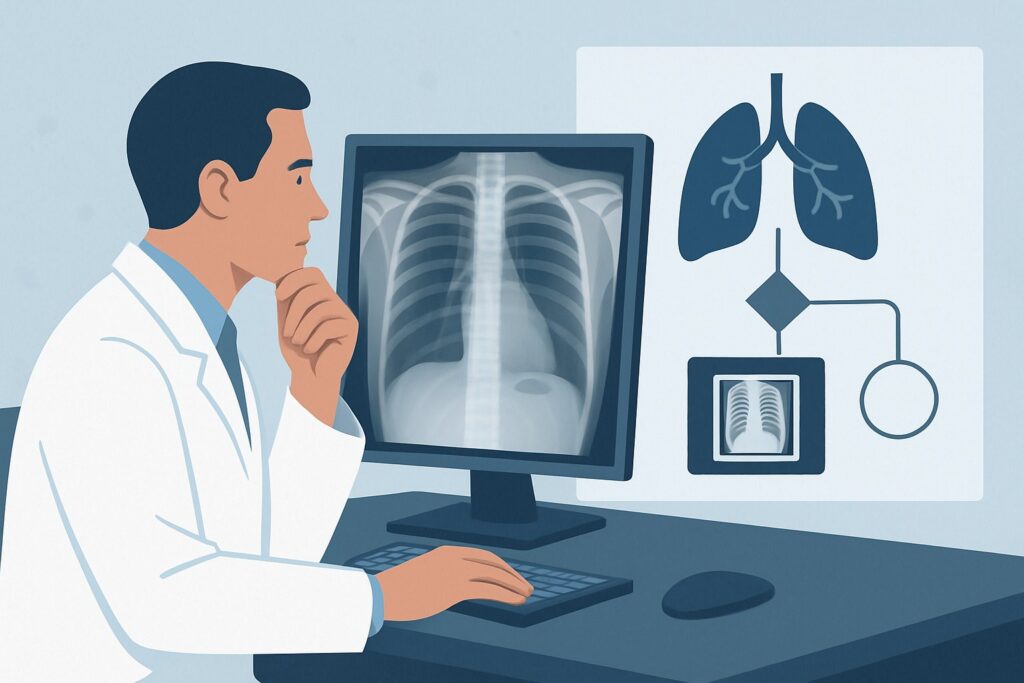
It’s 2 AM in the emergency department, and you’re evaluating a 34-year-old with a known history of moderate persistent asthma. They present with acute-onset wheezing and shortness of breath after a recent upper respiratory infection. They are afebrile, have no focal findings on lung auscultation besides diffuse wheezing, and are beginning to respond to initial nebulizer treatments. The core clinical question arises: is an imaging study necessary to evaluate this seemingly straightforward asthma flare? This article provides a deep dive into the clinical workflow for this exact scenario, explaining why the American College of Radiology (ACR) rates a chest radiograph as May be appropriate for an uncomplicated acute asthma exacerbation in an immunocompetent adult.
Who Fits the Scenario of an Uncomplicated Acute Asthma Exacerbation?
This guidance applies to a specific patient population: immunocompetent adults presenting with an acute exacerbation of known asthma. The term “uncomplicated” is the critical qualifier. An uncomplicated presentation is characterized by symptoms and signs typical of an asthma flare—such as wheezing, dyspnea, and cough—without features suggesting a more complex or alternative diagnosis. These patients are typically afebrile, have normal white blood cell counts, and do not exhibit focal findings on their physical exam, like crackles or egophony that would point toward a lobar pneumonia. Crucially, they should also show an expected positive response to initial standard-of-care therapies like bronchodilators and systemic corticosteroids.
This workflow is not intended for patients who deviate from this pattern. Key exclusion criteria include:
- Suspected Complications: If the patient has a sudden worsening, subcutaneous emphysema, or unilateral decreased breath sounds, they may have a complication like a pneumothorax or pneumomediastinum. This falls under the complicated acute asthma exacerbation scenario, which requires a different approach.
- Signs of Pneumonia: Patients with fever, productive cough with purulent sputum, leukocytosis, or focal consolidation on auscultation do not fit the “uncomplicated” definition. Their presentation is more aligned with the general acute respiratory illness with positive physical findings variant.
- Failure to Respond: A patient who fails to improve or worsens despite appropriate initial therapy is, by definition, no longer uncomplicated. Their situation requires reassessment and a lower threshold for imaging.
What Diagnoses Are You Working Up in an Uncomplicated Asthma Flare?
In a classic, uncomplicated asthma exacerbation, imaging is not performed to diagnose asthma itself, but rather to exclude other conditions that can trigger or mimic a flare, especially when the clinical picture has subtle atypical features. The decision to obtain a chest radiograph is a decision to investigate a differential diagnosis beyond bronchospasm alone.
The most common concern is a superimposed pneumonia. A viral or bacterial infection is a frequent trigger for asthma exacerbations. While a patient with an uncomplicated flare should not have overt signs of pneumonia, a subtle, developing infiltrate can sometimes be the underlying cause for a more severe or persistent exacerbation. The radiograph serves to rule out a clinically significant consolidation that would necessitate adding antibiotic therapy.
Another important, though less common, consideration is atelectasis. Significant mucus plugging, a hallmark of asthma exacerbations, can lead to segmental or even lobar collapse. This can contribute to hypoxemia and increased work of breathing. A chest radiograph can readily identify significant atelectasis, which may influence respiratory therapy strategies.
In older adults or those with cardiovascular risk factors, acute decompensated heart failure can present with wheezing, often termed “cardiac asthma.” This occurs due to fluid in the bronchial walls. A chest radiograph is invaluable in this context, as it can reveal signs of pulmonary edema, cardiomegaly, or pleural effusions, fundamentally shifting the diagnosis and management away from asthma.
Finally, while more characteristic of a complicated presentation, a small pneumothorax can occasionally occur from severe coughing. A chest radiograph is the standard initial test to exclude this possibility if there is any clinical suspicion.
Why Is a Chest Radiograph ‘May Be Appropriate’ for an Uncomplicated Asthma Flare?
The ACR rating of May be appropriate for a chest radiograph underscores a critical point: routine imaging is not necessary for every patient with an uncomplicated asthma exacerbation. The decision to image should be driven by clinical judgment and specific patient factors. Evidence has shown that in patients who meet the strict criteria for an uncomplicated flare (afebrile, no focal findings, responding to therapy), the yield of chest radiography for finding a clinically significant alternative diagnosis is very low. Over-imaging in this population leads to unnecessary radiation exposure and healthcare costs.
However, a chest radiograph becomes appropriate when the clinical picture is not perfectly clear or when the patient has risk factors for comorbidities. For example, an older patient with a smoking history, a patient with a new oxygen requirement, or a patient whose symptoms are not resolving as quickly as expected may benefit from imaging to rule out the differential diagnoses discussed above.
When imaging is indicated, the chest radiograph is the ideal first-line study. It is widely available, rapid, inexpensive, and delivers a very low radiation dose (adult relative radiation level ☢ <0.1 mSv). It provides excellent diagnostic utility for the most relevant alternative diagnoses:
- It can reliably detect lobar consolidation suggesting pneumonia.
- It can identify signs of heart failure, such as pulmonary edema and cardiomegaly.
- It can reveal significant atelectasis or a pneumothorax.
Alternative imaging modalities are rated lower for this specific initial workup because they offer no significant advantage and come with major downsides.
- CT chest without or with IV contrast is rated Usually not appropriate. It provides far more detail than necessary to answer the primary clinical questions in an uncomplicated flare. This comes at the cost of a substantially higher radiation dose (☢☢☢ 1-10 mSv) and, if contrast is used, the risk of contrast-induced nephropathy or allergic reaction. CT is reserved for cases where a complication like a pulmonary embolism is suspected or the radiograph is inconclusive in a deteriorating patient.
- US chest is also rated Usually not appropriate. While useful for specific applications like evaluating for pleural effusions or pneumothorax in trauma settings, it is not considered a comprehensive initial screening tool for the broad differential of an asthma exacerbation in this context.
What’s Next After a Chest Radiograph? Downstream Workflow
The results of the chest radiograph directly guide the subsequent clinical pathway. The workflow branches based on whether the findings are positive, negative, or indeterminate.
If the study is positive: Management is tailored to the specific finding.
- Focal Consolidation: A finding of a new infiltrate indicates pneumonia. The patient’s treatment should be expanded to include appropriate antibiotic coverage, and the diagnosis is now “pneumonia with reactive airways disease” rather than a simple asthma flare.
- Pulmonary Edema/Cardiomegaly: If the radiograph suggests heart failure, the focus of treatment shifts to diuresis and afterload reduction. Inhaled bronchodilators may still be used cautiously, but they are no longer the primary therapy.
- Pneumothorax: This finding immediately changes the scenario to a complicated asthma exacerbation. Depending on the size of the pneumothorax and the patient’s clinical stability, management may range from observation to emergent chest tube placement.
If the study is negative: A normal chest radiograph provides reassurance that there is no other major cardiopulmonary process at play. This reinforces the diagnosis of an uncomplicated asthma exacerbation. Management should continue to focus on optimizing asthma therapy with bronchodilators, corticosteroids, and patient education. If the patient is still not responding as expected despite a negative radiograph, other non-pulmonary causes or an insufficient asthma treatment regimen should be considered.
If the study is indeterminate: Occasionally, a finding may be ambiguous, such as patchy opacities that could represent atelectasis versus an early pneumonia. In these cases, the next step is guided by the patient’s clinical trajectory. If the patient is improving, a conservative approach with observation is reasonable. If they are worsening or failing to improve, a follow-up radiograph or a more advanced imaging study like a CT chest may be warranted to clarify the diagnosis.
Pitfalls to Avoid (and When to Get Help)
Navigating this clinical scenario requires careful attention to avoid common missteps. A primary pitfall is the routine, reflexive ordering of a chest radiograph for every asthma patient who enters the emergency department, which contributes to imaging overuse. Conversely, failing to image a patient with atypical features, such as a new oxygen requirement or persistent symptoms despite aggressive therapy, can lead to a missed diagnosis of pneumonia or heart failure. Another error is misclassifying a patient as “uncomplicated” when subtle signs of a complication, like focal crackles or chest pain, are present. Always perform a thorough physical exam and reassess the patient after initial treatments. If the patient’s condition deteriorates or the diagnosis remains unclear despite a negative chest radiograph, it is time to escalate care, which may involve specialist consultation (pulmonology or cardiology) or proceeding to advanced imaging like CT.
Related ACR Topics and Tools
This article focuses on a single, specific clinical scenario. For a comprehensive overview of imaging for all related presentations, please consult the parent topic guide. The following resources can also help you apply appropriateness criteria in your daily practice.
- For breadth across all scenarios in Acute Respiratory Illness in Immunocompetent Patients, see our parent guide: Acute Respiratory Illness in Immunocompetent Patients: ACR Appropriateness Decoded.
- To explore other clinical situations, use the Imaging Appropriateness Selector tool.
- For details on imaging techniques, visit the Imaging Protocol Library.
- To discuss radiation exposure with patients, consult the Radiation Dose Calculator.
Frequently Asked Questions
Is a chest X-ray mandatory for every patient admitted for an asthma exacerbation?
No. According to the ACR Appropriateness Criteria, a chest radiograph is rated ‘May be appropriate,’ not ‘Usually appropriate.’ This means it is not mandatory or routine. The decision should be based on clinical judgment, specifically for patients with atypical features, failure to respond to initial therapy, or suspicion of a comorbid condition like pneumonia or heart failure.
What specific clinical findings should prompt me to order a chest radiograph in an asthma flare?
Key indications include fever, leukocytosis, new-onset hypoxemia, focal findings on lung exam (e.g., crackles, decreased breath sounds), chest pain, or a poor or unexpected response to standard bronchodilator and corticosteroid therapy. In the absence of these findings, imaging is often unnecessary.
If I suspect a pulmonary embolism (PE) is triggering the wheezing, is a chest radiograph enough?
No. While a chest radiograph might show secondary signs of a PE (like a wedge-shaped infarct or atelectasis), it cannot rule one out. If your clinical suspicion for a PE is moderate to high, the appropriate next study is a CT pulmonary angiography (CTA chest), which is a different imaging protocol and falls under a different clinical scenario.
Does this guidance apply to children with asthma exacerbations?
This article and the specific ACR variant cited are for adults. While the principles are similar, pediatric imaging guidelines often have a higher threshold for using radiation. Always consult pediatric-specific guidelines when evaluating children.
Why is CT chest considered ‘Usually not appropriate’ for this initial workup?
A CT scan is ‘Usually not appropriate’ for an initial, uncomplicated presentation because it provides a much higher radiation dose than a chest radiograph without adding necessary diagnostic information for the most likely differential diagnoses (pneumonia, heart failure, simple atelectasis). The radiograph is sufficient to answer the primary clinical questions in this scenario. CT is reserved for suspected complications or when the diagnosis remains unclear after initial imaging.
Reviewed by Pouyan Golshani, MD, Interventional Radiologist — August 4, 2026