What Is the Best Initial Imaging for Suspected Crohn Disease? An ACR-Guided Workflow

A 24-year-old patient presents to your clinic with a six-month history of intermittent, crampy right lower quadrant (RLQ) abdominal pain, non-bloody diarrhea, and an unintentional 15-pound weight loss. Inflammatory markers are elevated, and you suspect inflammatory bowel disease (IBD), with Crohn disease high on the differential. You need to choose the initial imaging study to evaluate the extent of potential inflammation, identify complications, and guide the next steps in diagnosis and management. This article provides a narrative workflow for this specific clinical scenario: the initial imaging workup for a patient with suspected, but not yet diagnosed, Crohn disease. According to the American College of Radiology (ACR) Appropriateness Criteria, MR enterography is a top recommended study, rated Usually Appropriate.
Who Fits This Clinical Scenario?
This guidance is for clinicians evaluating a patient for whom Crohn disease is a primary diagnostic consideration for the first time. The typical presentation includes a subacute or chronic history (weeks to months) of symptoms like abdominal pain, diarrhea, weight loss, or fatigue. Laboratory findings such as anemia, elevated C-reactive protein (CRP), or fecal calprotectin may support the clinical suspicion of IBD.
This workflow does not apply to patients who already have an established diagnosis of Crohn disease. Those situations are covered in separate ACR variants. Specifically, this guidance is distinct from the workup for:
- Known Crohn disease with a suspected acute exacerbation: This scenario focuses on assessing the severity of a flare, often in a patient with a known disease pattern. The choice of imaging may be different, prioritizing speed or comparison to prior studies.
- Known Crohn disease undergoing disease surveillance: This involves routine monitoring for disease activity, treatment response, or complications like malignancy, and follows a different imaging algorithm.
- An acute, emergent abdominal presentation: A patient presenting with signs of bowel perforation, toxic megacolon, or a high-grade bowel obstruction requires a different, more urgent diagnostic pathway, where the speed of a standard CT scan may be prioritized over the detail of an enterography study.
What Diagnoses Are You Working Up in This Scenario?
When ordering initial imaging for suspected Crohn disease, you are evaluating a differential that extends beyond a simple “yes or no” for IBD. The imaging findings will help differentiate among several possibilities and guide subsequent diagnostic tests like endoscopy.
Crohn Disease: This is the primary diagnosis of concern. Imaging aims to identify characteristic features such as segmental, asymmetric bowel wall thickening (often >3 mm), mural hyperenhancement, mucosal ulcerations, and wall stratification. Critically, imaging can detect the transmural and extra-enteric nature of Crohn’s, including penetrating complications like sinus tracts, fistulae, and abscesses, as well as fibrostenotic strictures. The location (e.g., terminal ileum, right colon, skip lesions) is a key diagnostic clue.
Ulcerative Colitis (UC): The main alternative IBD diagnosis. While colonoscopy is the gold standard for diagnosing UC, cross-sectional imaging can provide clues. In contrast to Crohn’s, UC typically involves a continuous, circumferential, and symmetric inflammation that begins in the rectum and extends proximally through the colon. The small bowel is usually spared, except in cases of “backwash ileitis.”
Infectious Enterocolitis: Certain infections can closely mimic the clinical and imaging appearance of Crohn disease, particularly infections from Yersinia enterocolitica, which has a predilection for the terminal ileum. Tuberculous enteritis is another important mimic, especially in endemic regions, as it can also cause ileocecal inflammation and stricturing. Imaging findings may be nonspecific, but the clinical context (acute onset, travel history, exposures) is vital.
Malignancy: While less common in the typical young adult demographic for new-onset IBD, primary small bowel adenocarcinoma or lymphoma can present with a focal segment of bowel wall thickening or an obstructing mass. These must be considered, as a misdiagnosis has profound consequences.
Why Is MR Enterography the Recommended Initial Study for This Presentation?
For the initial workup of suspected Crohn disease, the ACR rates MR enterography as Usually Appropriate. This recommendation is based on its high diagnostic accuracy combined with a superior safety profile, which is a critical consideration in a patient population that is often young and will likely require cumulative imaging over a lifetime.
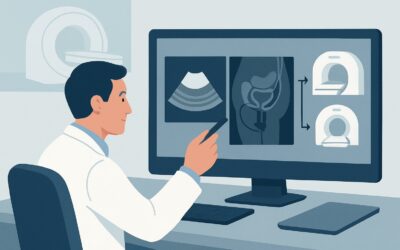
MR enterography (MRE) provides excellent soft-tissue contrast, allowing for detailed visualization of the bowel wall and surrounding tissues without the use of ionizing radiation (Relative Radiation Level: O 0 mSv). It is highly sensitive for detecting active inflammation, evidenced by mural thickening, edema (high T2 signal), restricted diffusion, and avid post-contrast enhancement. Furthermore, MRE is the premier modality for identifying and characterizing penetrating complications like fistulae and abscesses, which are hallmarks of Crohn disease and fundamentally alter management.
While other modalities are also rated for this scenario, they have specific trade-offs:
- CT Enterography (CTE): Also rated Usually Appropriate, CTE offers similar diagnostic performance to MRE for luminal disease and is often faster and more widely available. However, its primary drawback is the significant radiation dose (RRL: ☢☢☢☢ 10-30 mSv). Given that the median age of Crohn’s diagnosis is around 30, minimizing lifetime radiation exposure is a key principle of responsible imaging.
- Fluoroscopy Small Bowel Follow-Through: Rated May be appropriate, this study is less sensitive than MRE or CTE for detecting mucosal inflammation and cannot visualize the bowel wall or extra-enteric complications. It involves a moderate radiation dose (RRL: ☢☢☢ 1-10 mSv) and has largely been supplanted by cross-sectional enterography.
- Abdominal Ultrasound: Rated May be appropriate, ultrasound is non-invasive and radiation-free. In experienced hands, it can detect bowel wall thickening and increased vascularity. However, it is highly operator-dependent, can be limited by body habitus and bowel gas, and provides a less comprehensive evaluation of the entire small bowel and mesentery compared to MRE.
When ordering MRE, it is crucial to specify “enterography protocol.” This ensures the patient receives the correct oral contrast agent to distend the small bowel loops, which is essential for accurate assessment of the bowel wall. An anti-peristaltic agent (like glucagon) is also typically administered to reduce motion artifact.
What’s Next After MR Enterography? Downstream Workflow
The results of the initial MR enterography will guide your next diagnostic and therapeutic steps, forming a critical branch point in the patient’s care pathway.
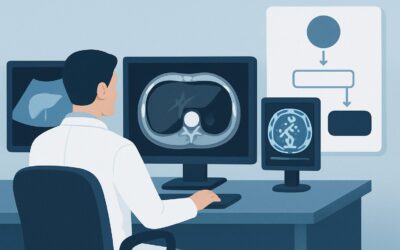
If the study is positive for suspected Crohn disease: The findings provide a roadmap for the gastroenterologist. The location and extent of disease on MRE will determine the best endoscopic approach. For example, if inflammation is confined to the terminal ileum and colon, an ileocolonoscopy with biopsies is the definitive next step to confirm the diagnosis histologically. If the MRE shows disease in the more proximal small bowel, a deep enteroscopy or video capsule endoscopy may be required. The presence of complications like strictures or fistulae will immediately influence therapeutic decisions, potentially favoring biologic agents or early surgical consultation.
If the study is negative: A normal MRE significantly lowers the probability of active small bowel Crohn disease. If clinical suspicion remains high (e.g., based on severe symptoms or very high inflammatory markers), the focus may shift to diagnoses not well-visualized on MRE, such as microscopic colitis, or non-inflammatory conditions like irritable bowel syndrome (IBS). Colonoscopy is still often warranted to rule out colonic pathology. The workup may also broaden to include testing for celiac disease, malabsorption, or other etiologies.
If the study is indeterminate or suggests an alternative diagnosis: MRE may reveal findings suggestive of an alternative diagnosis. For instance, if continuous, rectum-up inflammation is seen, the workup will proceed down a path for ulcerative colitis, centered on colonoscopy. If a focal, apple-core lesion is identified, the immediate next step is biopsy to rule out malignancy. Findings suggestive of infection would prompt stool studies and microbiological testing.
Pitfalls to Avoid (and When to Get Help)
In the initial imaging workup for Crohn disease, several common pitfalls can lead to diagnostic delays or errors. First, ordering a standard “MRI of the abdomen” instead of a dedicated “MR enterography” protocol will result in a non-diagnostic study, as the small bowel will be collapsed and uninterpretable. Second, failing to recognize that prominent lymphoid follicles in the terminal ileum can be a normal finding in young adults can lead to over-diagnosis of mild IBD. Third, motion artifacts from bowel peristalsis can degrade image quality; ensure the imaging center uses an anti-spasmodic agent. If the patient’s clinical status deteriorates acutely with signs of peritonitis or a rigid abdomen, do not wait for a scheduled MRE; escalate immediately to an emergent surgical evaluation and a rapid abdominal CT scan to assess for perforation.
Related ACR Topics and Tools
The ACR Appropriateness Criteria are a powerful resource for ensuring evidence-based imaging decisions. For a comprehensive overview of imaging across all clinical situations in Crohn disease, from initial diagnosis to surveillance and flare management, please consult our parent guide. For other tools to refine your imaging orders, see the resources below.
- For breadth across all scenarios in Crohn Disease, see our parent guide: Crohn Disease: ACR Appropriateness Decoded.
- To look up appropriateness ratings for thousands of other clinical scenarios, use the ACR Appropriateness Criteria Lookup.
- To understand the technical parameters of the recommended study, explore the Imaging Protocol Library.
- To discuss radiation exposure with your patients, especially for alternative studies like CT, use the Radiation Dose Calculator.
Frequently Asked Questions
Why not just start with a colonoscopy instead of imaging?
While colonoscopy is essential for diagnosis, Crohn disease involves the small bowel in up to 80% of patients, with about 30% having disease confined to the small bowel. A standard colonoscopy can only visualize the colon and the very end of the small intestine (the terminal ileum). MR enterography provides a comprehensive, non-invasive evaluation of the entire small bowel, which is inaccessible to colonoscopy, making it a critical first step to understand the full extent of the disease.
Is CT enterography ever a better first choice than MR enterography?
CT enterography (CTE) may be preferred in specific situations. These include patients with contraindications to MRI (e.g., certain pacemakers, metallic implants), severe claustrophobia, or in emergent settings where the speed of CT is a priority. It is also sometimes used if MRE is unavailable. However, for the routine initial workup in a young patient, MRE is generally favored to avoid ionizing radiation exposure.
Does the patient need to drink a large volume of contrast for MR enterography?
Yes. Proper distention of the small bowel is critical for a diagnostic MRE. Patients are required to drink a large volume (typically 1 to 1.5 liters) of a special, non-absorbable oral contrast solution over about 45-60 minutes before the scan. While this can be challenging for some patients, it is essential for separating the bowel loops and allowing for accurate assessment of the bowel wall.
What if my patient is pregnant and has symptoms of new-onset Crohn disease?
In a pregnant patient, avoiding ionizing radiation is paramount. MR enterography without gadolinium contrast is the preferred initial imaging modality. While gadolinium is typically avoided during pregnancy unless absolutely necessary, a non-contrast MRE can still provide valuable information about bowel wall thickening, edema, and luminal narrowing. Abdominal ultrasound is another safe, radiation-free option, though it is less comprehensive.
Can MR enterography distinguish between inflammatory and fibrotic strictures?
Yes, this is a key strength of MRE. Active inflammatory strictures typically show high signal on T2-weighted images (indicating edema) and avidly enhance after contrast administration. In contrast, chronic fibrotic strictures tend to have low T2 signal and show less, or delayed, enhancement. This distinction is crucial for treatment planning, as inflammatory strictures may respond to medical therapy, while fibrotic strictures often require endoscopic dilation or surgical intervention.
Reviewed by Pouyan Golshani, MD, Interventional Radiologist — May 29, 2026