What Is the Best Initial Imaging for Unexplained Oropharyngeal Dysphagia?
A 72-year-old patient presents to your clinic with a three-month history of intermittent coughing and a sensation of food “getting stuck” high in his throat, particularly with solids. His neurologic exam is non-focal, and a review of systems is negative for odynophagia, weight loss, or constitutional symptoms. You suspect oropharyngeal dysphagia, but the etiology is unclear. This situation presents a common diagnostic question: what is the most effective initial imaging study to evaluate the structure and function of his swallow?
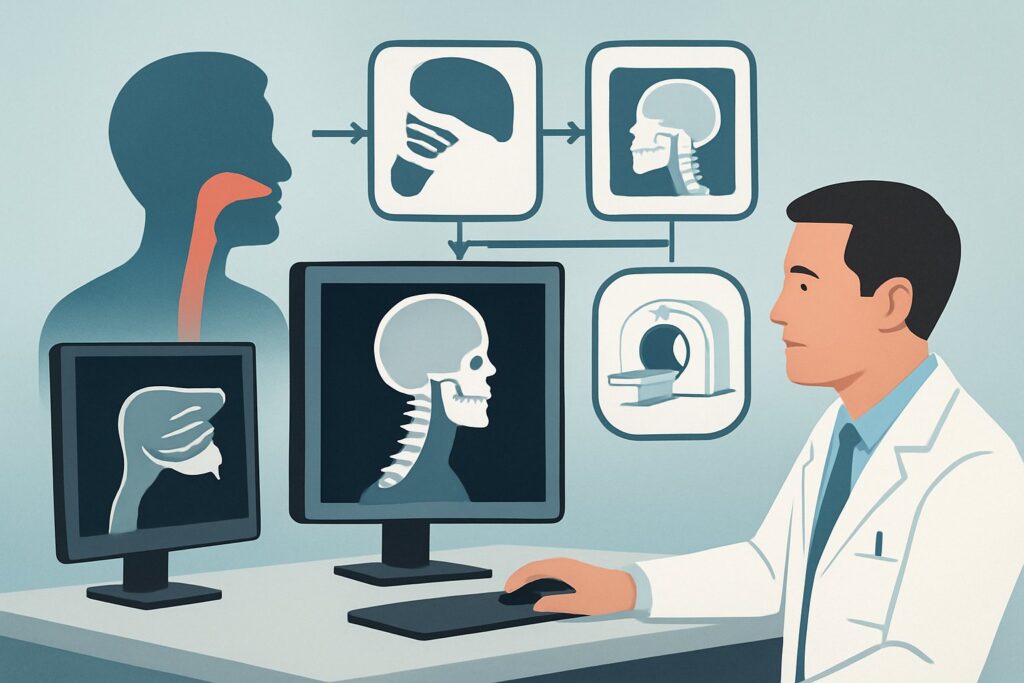
This article provides a detailed workflow for this specific clinical scenario, grounded in the American College of Radiology (ACR) Appropriateness Criteria. For unexplained oropharyngeal dysphagia, the ACR panel finds that a Fluoroscopy biphasic esophagram is Usually Appropriate as the initial imaging investigation. We will explore the rationale for this recommendation, the differential diagnosis it addresses, and the downstream clinical pathway based on its findings.
Who Fits This Clinical Scenario?
This guidance applies specifically to patients presenting with symptoms of oropharyngeal dysphagia without a clear, attributable cause. Oropharyngeal dysphagia, or transfer dysphagia, involves difficulty initiating a swallow. Patients often localize the problem to the cervical region and may report symptoms such as:
- Coughing, choking, or sputtering during or immediately after swallowing
- Nasal regurgitation
- A sensation of food or pills sticking in the throat
- Difficulty propelling a food bolus from the mouth into the pharynx
- Multiple swallows needed to clear a single bolus
The key qualifier is “unexplained.” This workflow is intended for the initial workup where a cause is not apparent from the patient’s history or physical examination. It is crucial to distinguish this from similar, but distinct, clinical situations that follow different diagnostic pathways.
This article does not apply if:
- A cause is already known: If the patient has a recent stroke, a diagnosed neuromuscular condition like myasthenia gravis or Parkinson’s disease, or a history of head and neck cancer treatment, the scenario becomes Oropharyngeal dysphagia with an attributable cause, which has its own imaging considerations.
- The sensation is retrosternal: If the patient points to their chest as the site of food impaction, the workup shifts to Retrosternal dysphagia.
- The dysphagia is postoperative: Difficulty swallowing that develops immediately or weeks after neck, thoracic, or foregut surgery follows a separate postoperative dysphagia algorithm.
What Diagnoses Are You Working Up in This Scenario?
When ordering initial imaging for unexplained oropharyngeal dysphagia, the goal is to assess both anatomy and physiology. The differential diagnosis spans structural abnormalities, motility disorders, and functional impairments of the complex swallowing mechanism.
Zenker’s Diverticulum: A classic consideration, this is a posterior outpouching of the pharyngeal mucosa through a muscular dehiscence (Killian’s triangle). Patients may present with regurgitation of undigested food, halitosis, and dysphagia. A fluoroscopic study is highly effective at visualizing the diverticulum as it fills with contrast.
Cricopharyngeal Achalasia or Bar: This refers to the incomplete relaxation or prominence of the cricopharyngeus muscle, which forms the upper esophageal sphincter (UES). This functional obstruction can cause significant difficulty in transferring a bolus from the pharynx to the esophagus. Fluoroscopy can directly visualize the persistent indentation on the posterior aspect of the esophagus at the C5-C6 level during swallowing.
Webs and Rings: Thin, membranous structures can cause focal narrowing in the pharynx or proximal esophagus. While often associated with Plummer-Vinson syndrome, they can be idiopathic. These subtle structural lesions are a primary target for evaluation with a biphasic esophagram, which uses different contrast consistencies to distend the lumen and reveal them.
Subtle Structural Lesions: Although less common, an early-stage malignancy or extrinsic compression from adjacent structures (e.g., cervical osteophytes, thyroid mass) can present with oropharyngeal dysphagia. While CT or MRI are more definitive for characterizing masses, a fluoroscopic study can reveal mucosal irregularity, asymmetry, or luminal narrowing that prompts further investigation.
Neuromuscular Discoordination: Even without an overt neurological diagnosis, subtle discoordination can be the cause. A dynamic fluoroscopic study is invaluable for assessing the functional aspects of the swallow, such as laryngeal elevation, epiglottic tilt, pharyngeal clearance, and, critically, the presence and timing of aspiration (contrast entering the airway).
Why Is a Fluoroscopy Biphasic Esophagram Usually Appropriate for This Presentation?
The ACR designates a Fluoroscopy biphasic esophagram as Usually Appropriate because it uniquely provides a comprehensive, dynamic assessment of both the structure and function of the pharynx and esophagus. This single study is well-suited to evaluate the broad differential diagnosis in unexplained oropharyngeal dysphagia.
The “biphasic” nature is key to its diagnostic power. The study typically involves:
- A high-density contrast agent (e.g., barium paste or a barium tablet) to maximally distend the lumen. This phase is excellent for identifying subtle structural abnormalities like rings, webs, or minimal strictures that might be missed with liquid contrast alone.
- A low-density liquid contrast agent (e.g., thin liquid barium) to evaluate motility and function. This phase assesses pharyngeal contraction, UES relaxation, esophageal peristalsis, and can reveal functional deficits like aspiration or pharyngeal residue.
This dual-phase approach provides a more complete picture than single-contrast studies. The radiation dose is moderate (ACR RRL ☢☢☢, 1-10 mSv), a level considered acceptable given the high diagnostic yield for this indication.
How Do Alternative Studies Compare?
Understanding why other studies are rated lower highlights the specific advantages of the biphasic esophagram for this scenario:
- Fluoroscopy modified barium swallow (MBS): Rated May be appropriate. An MBS, often performed with a speech-language pathologist, focuses intensely on the oral and pharyngeal phases of swallowing, using various bolus consistencies to assess aspiration risk and guide therapeutic strategies. While excellent for its purpose, it typically provides a less comprehensive evaluation of the esophagus compared to a full esophagram. It is often the right test, but the biphasic esophagram is a more complete initial anatomic and functional survey.
- CT of the Neck and Chest: Rated Usually not appropriate as an initial study. While CT provides superb cross-sectional anatomical detail and is essential for staging known malignancies or evaluating extrinsic masses, it is a static test. It cannot assess the dynamic process of swallowing, which is the central issue in oropharyngeal dysphagia. It also involves a significantly higher radiation dose (ACR RRL ☢☢☢☢, 10-30 mSv) without answering the primary functional questions.
What’s Next After Fluoroscopy Biphasic Esophagram? Downstream Workflow
The results of the biphasic esophagram guide the subsequent clinical pathway. The next steps are determined by whether the findings are positive, negative, or indeterminate.
If the study is positive for a clear structural cause:
- Zenker’s Diverticulum or Cricopharyngeal Bar: Referral to an otolaryngologist (ENT) or a gastroenterologist with expertise in therapeutic endoscopy is the appropriate next step. Treatment options may include endoscopic or open surgical repair.
- Web, Ring, or Stricture: Referral to a gastroenterologist for upper endoscopy (esophagogastroduodenoscopy, or EGD) is indicated for direct visualization, biopsy if needed, and potential therapeutic dilation.
- Suspicious Mass or Mucosal Irregularity: This finding requires urgent escalation. The next step is typically EGD with biopsy for tissue diagnosis and a contrast-enhanced CT of the neck and chest for staging.
If the study is negative for a structural cause but shows a functional deficit:
- Aspiration or severe pharyngeal residue: A referral to a speech-language pathologist (SLP) for a formal swallow evaluation (often a modified barium swallow study) and swallow therapy is crucial. The SLP can recommend dietary modifications and compensatory strategies to reduce aspiration risk.
If the study is entirely negative:
- When a high-quality biphasic esophagram is normal, significant structural and most functional causes have been reasonably excluded. The workup may proceed to EGD to evaluate for subtle mucosal abnormalities like eosinophilic esophagitis (though less common in pure oropharyngeal presentations) or esophageal manometry if a primary motility disorder is still suspected. A neurologic consultation may also be considered to search for an occult neuromuscular cause.
Pitfalls to Avoid (and When to Get Help)
Navigating the workup for unexplained oropharyngeal dysphagia requires avoiding several common pitfalls:
- Ordering a CT scan first: Resist the urge to order a CT of the neck as the initial test. It exposes the patient to unnecessary radiation and fails to evaluate the functional component of swallowing, which is often the core problem.
- Confusing an esophagram with an MBS: While related, these are different studies with different focuses. Be clear in your order whether you need a comprehensive esophageal survey (esophagram) or a focused pharyngeal/aspiration assessment (MBS). Discussing the clinical question with the radiologist can ensure the correct protocol is performed.
- Stopping the workup after a negative study: Persistent, unexplained dysphagia warrants further investigation even if the esophagram is normal. A negative imaging study does not mean the patient’s symptoms are not real; it simply rules out a set of specific causes.
If red flag symptoms such as odynophagia, rapid weight loss, or a new palpable neck mass are present, or if a high-grade obstruction is suspected on fluoroscopy, escalate care urgently with a referral to gastroenterology or ENT for endoscopic evaluation.
Related ACR Topics and Tools
For a comprehensive overview of imaging for all types of dysphagia, as well as tools to help with study selection and patient communication, the following resources are available:
- Parent Topic Hub: For breadth across all scenarios in Dysphagia, see our parent guide: Dysphagia: ACR Appropriateness Decoded.
- ACR Criteria Lookup: To explore adjacent scenarios or different clinical presentations, use the Imaging Appropriateness Selector.
- Imaging Protocols: For detailed technical specifications of various imaging studies, consult the Imaging Protocol Library.
- Dose Communication: To discuss radiation exposure with patients, the Radiation Dose Calculator can be a helpful aid.
Frequently Asked Questions
What is the difference between a biphasic esophagram and a modified barium swallow (MBS)?
A biphasic esophagram is a comprehensive radiologic study of the pharynx and the entire esophagus, designed to evaluate both structure and motility. It uses both thick and thin contrast agents. A modified barium swallow (MBS), or videofluoroscopic swallow study (VFSS), is a more focused functional assessment of the oral and pharyngeal phases of swallowing, typically performed with a speech-language pathologist to evaluate aspiration risk and guide therapy.
Should I order an upper endoscopy (EGD) before imaging for oropharyngeal dysphagia?
Not typically. For oropharyngeal symptoms (difficulty initiating a swallow), a dynamic fluoroscopic study like a biphasic esophagram is the preferred initial test because it directly visualizes the mechanics of the pharyngeal phase. EGD is excellent for evaluating the esophagus but provides limited information about the swallowing function in the pharynx. EGD is often the next step if the esophagram shows a structural lesion or if the esophagram is negative and suspicion remains high.
Is a fluoroscopy biphasic esophagram safe for patients who are aspirating?
This is a valid concern. Radiologists are trained to perform the study safely. They begin with small amounts of contrast and monitor closely for aspiration. If significant aspiration is seen with thin liquids, the study can be modified or stopped to minimize risk. The diagnostic benefit of identifying the cause and severity of aspiration often outweighs the small, controlled risk during the procedure.
What if my patient cannot tolerate barium?
If a patient has a severe allergy to barium sulfate or its additives (which is rare), or if there is a high suspicion of a perforation, a water-soluble iodinated contrast agent (like Gastrografin) can be used instead. However, these agents are lower in density and provide less mucosal detail, so barium is preferred when safe to use.
My patient’s esophagram was normal, but they still have symptoms. What now?
A normal esophagram is reassuring but doesn’t end the workup for persistent symptoms. The next steps could include a referral to a speech-language pathologist for a formal swallow evaluation, referral to a gastroenterologist for an EGD (to look for subtle mucosal disease like eosinophilic esophagitis) and possibly esophageal manometry, or a consultation with a neurologist to investigate for an underlying neuromuscular condition.
Reviewed by Pouyan Golshani, MD, Interventional Radiologist — May 26, 2026