What Is the Right Initial Imaging for Rapidly Progressive Dementia in Adults?

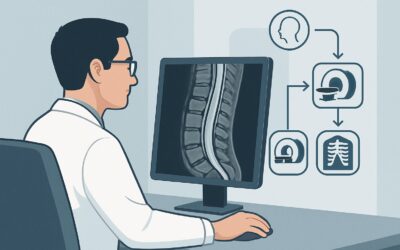
A 62-year-old architect, known for his sharp intellect, is brought to your clinic by his family. Over the past three months, he has experienced a startling decline in memory, executive function, and spatial awareness, forcing him to stop working. This is not the slow, insidious memory loss of typical dementia; this is a rapid, devastating progression. You are now faced with a broad and urgent differential diagnosis, and the first critical decision is which imaging study to order. This article provides a focused workflow for this exact situation, explaining why the American College of Radiology (ACR) rates MRI head without and with IV contrast as Usually Appropriate for the initial imaging of an adult with rapidly progressive dementia.
Who Fits This Clinical Scenario for Rapidly Progressive Dementia?
This guidance is specifically for the initial imaging workup of an adult patient experiencing rapidly progressive dementia (RPD). RPD is defined by a cognitive decline that unfolds over weeks to months, or at most one to two years, rather than the much slower multi-year course typical of conditions like Alzheimer disease. The patient’s decline is significant enough to impair daily functioning, meeting the criteria for dementia. This article addresses the very first imaging study ordered in this context, before a definitive diagnosis has been established.
This workflow is distinct from several related but different clinical presentations:
- Mild Cognitive Impairment (MCI): This guidance does not apply to patients with cognitive complaints that do not yet cause significant functional impairment. That scenario has its own distinct imaging recommendations.
- Typical Alzheimer Disease Presentation: Patients with a slow, gradual memory decline over many years fit the classic Alzheimer pattern. The imaging workup for that presentation is different and focuses on identifying patterns of atrophy.
- Suspected Frontotemporal Dementia (FTD): If the primary symptoms are prominent behavioral changes, personality shifts, or progressive aphasia, the pre-test probability shifts toward FTD, which has a separate, dedicated imaging pathway.
This article is for the undifferentiated patient whose defining feature is the rapidity of their cognitive collapse.
What Diagnoses Are You Working Up in This Scenario?
In rapidly progressive dementia, the differential diagnosis is broad and includes several treatable conditions, making a swift and accurate workup essential. The goal of initial imaging is to identify structural, inflammatory, infectious, or ischemic causes that require immediate intervention.
Prion Disease (e.g., Creutzfeldt-Jakob Disease): While rare, CJD is the classic cause of RPD. It is a fatal neurodegenerative disease caused by misfolded proteins. Imaging, particularly specific MRI sequences, can reveal characteristic patterns like cortical ribboning or deep gray matter signal abnormalities that are highly suggestive of the diagnosis, often before other tests like electroencephalogram (EEG) or cerebrospinal fluid (CSF) analysis become positive.
Autoimmune or Paraneoplastic Encephalitis: This is a critical category of treatable disorders. The body’s immune system mistakenly attacks the brain, either as a primary autoimmune process or as a reaction to an undiscovered cancer elsewhere in the body (paraneoplastic syndrome). Imaging can show inflammation, particularly in the limbic system (hippocampi, amygdala), which would prompt an immediate search for autoantibodies and an underlying malignancy.
Central Nervous System (CNS) Vasculitis: Inflammation of the blood vessels in the brain can cause multiple small strokes, leading to a stepwise or rapid cognitive decline. Contrast-enhanced MRI is crucial for identifying vessel wall enhancement or the downstream effects of ischemia, which are often missed on non-contrast studies.
Infection or Neoplasm: Less commonly, an aggressive primary brain tumor (like CNS lymphoma) or an indolent infection (like viral encephalitis or a fungal process in an immunocompromised patient) can present as RPD. Contrast enhancement is vital for detecting these entities, which have specific imaging appearances and require urgent treatment.
Why Is MRI with and without Contrast the Recommended Study for Rapidly Progressive Dementia?
For the initial evaluation of an adult with rapidly progressive dementia, the ACR designates MRI head without and with IV contrast as Usually Appropriate. This recommendation is based on the modality’s superior soft-tissue contrast and its ability to characterize the wide range of potential causes.
The comprehensive nature of this exam is its key strength. The non-contrast and contrast-enhanced portions provide complementary information essential for this specific differential:
- Non-Contrast Sequences (DWI, FLAIR, T2): Diffusion-weighted imaging (DWI) is exquisitely sensitive for the restricted diffusion seen in the cerebral cortex and basal ganglia in CJD. Fluid-attenuated inversion recovery (FLAIR) and T2-weighted sequences are excellent for detecting the non-enhancing inflammatory edema characteristic of many forms of autoimmune encephalitis.
- Contrast-Enhanced Sequences (T1 Post-Gadolinium): The administration of IV contrast is not optional in this workup. It is necessary to identify patterns of enhancement that signal a breach in the blood-brain barrier. This is the only way to reliably detect active inflammation from vasculitis, certain infections, or the enhancement patterns of tumors like primary CNS lymphoma.
Why are other studies rated lower for this initial workup?
- CT head without IV contrast: While also rated Usually Appropriate and often more accessible, non-contrast CT is significantly less sensitive. It can rule out a large hemorrhage or a massive tumor but will miss the subtle DWI changes of CJD, the FLAIR abnormalities of limbic encephalitis, and any signs of active inflammation. It uses ionizing radiation (☢☢☢ 1-10 mSv), whereas MRI does not (O 0 mSv).
- FDG-PET/CT brain: This study is rated Usually Not Appropriate as an initial test. While it can detect patterns of brain metabolism, the findings in RPD are often nonspecific in the early stages. It is more useful later in a diagnostic dilemma if the MRI is unrevealing, but it should not be the first-line study due to its radiation dose (☢☢☢ 1-10 mSv) and lower initial diagnostic yield compared to a comprehensive MRI.
The combined power of non-contrast and contrast-enhanced MRI provides the highest probability of identifying a specific, and potentially treatable, cause for the patient’s rapid decline.
What’s Next After the MRI? Downstream Workflow for Rapidly Progressive Dementia
The results of the initial MRI will guide the subsequent diagnostic pathway. The workflow branches significantly based on whether the imaging is positive, negative, or nonspecific.
- If the MRI shows findings classic for CJD: (e.g., cortical ribboning or basal ganglia hyperintensity on DWI). The next step is to confirm the diagnosis. This involves a lumbar puncture for cerebrospinal fluid (CSF) analysis, specifically sending for 14-3-3 protein, tau, and the highly specific Real-Time Quaking-Induced Conversion (RT-QuIC) assay. An EEG should also be performed to look for periodic sharp wave complexes.
- If the MRI suggests autoimmune or paraneoplastic encephalitis: (e.g., T2/FLAIR hyperintensity in the medial temporal lobes). The workup must proceed urgently. This includes a lumbar puncture for CSF cell counts, protein, and oligoclonal bands, as well as sending both serum and CSF for a comprehensive autoantibody panel. A systemic cancer screening (e.g., CT of the chest, abdomen, and pelvis) is mandatory to search for an underlying paraneoplastic cause.
- If the MRI is negative or shows only nonspecific findings: A negative MRI does not rule out a serious underlying cause of RPD. The absence of imaging findings is itself a diagnostic clue, pointing away from large structural lesions and toward metabolic, toxic, or serological disorders. The next step is a comprehensive evaluation including a lumbar puncture for the full panel of CSF tests mentioned above, extensive bloodwork for vitamin deficiencies, thyroid function, and rheumatologic markers, and an EEG.
Pitfalls to Avoid (and When to Get Help)
Navigating the RPD workup requires avoiding several common pitfalls that can delay diagnosis and treatment.
- Pitfall 1: Ordering a non-contrast study alone. While a non-contrast MRI or CT is rated Usually Appropriate, relying on it exclusively in the RPD setting is a significant error. You risk missing treatable, contrast-enhancing pathologies like CNS vasculitis, lymphoma, or certain forms of encephalitis. Always specify “without and with IV contrast.”
- Pitfall 2: Stopping the workup after a “negative” MRI. A normal initial brain MRI is common in early RPD. It does not mean the workup is over. It simply redirects the investigation toward non-structural causes that require CSF analysis and serologic testing.
- Pitfall 3: Anchoring on a single diagnosis too early. The clinical and imaging overlap between different causes of RPD can be substantial. Maintain a broad differential even after the initial MRI, and pursue parallel lines of investigation (e.g., CSF studies, systemic workup) until a unifying diagnosis is confirmed.
If the initial MRI and CSF studies are unrevealing but the patient continues to decline, escalation to a specialized center with expertise in neuro-immunology and cognitive neurology is the appropriate next step.
Related ACR Topics and Tools
For a comprehensive overview of imaging for all dementia-related scenarios, from mild cognitive impairment to Alzheimer disease, please see our parent guide. For additional tools to help with ordering and interpreting these studies, the following resources are available.
- For breadth across all scenarios in Dementia, see our parent guide: Dementia: ACR Appropriateness Decoded.
- ACR Appropriateness Criteria Lookup — for adjacent scenarios
- Imaging Protocol Library — for technique on the recommended study
- Radiation Dose Calculator — for cumulative dose conversations
Frequently Asked Questions
Why is MRI with contrast preferred over a non-contrast MRI, even though both are rated ‘Usually Appropriate’?
While a non-contrast MRI is excellent for detecting the specific findings of CJD (on DWI sequences) and some inflammatory changes (on FLAIR), it will completely miss pathologies that are only visible with gadolinium. These include active inflammation from CNS vasculitis, infections, and tumors like CNS lymphoma—all of which are critical, treatable causes on the differential for RPD. The combined study provides the most comprehensive initial evaluation.
Is a CT scan an acceptable first step if MRI is not immediately available?
A non-contrast head CT is rated ‘Usually Appropriate’ and can be a reasonable first step in an emergency setting or if MRI is delayed, primarily to rule out large-scale events like hemorrhage or a large mass. However, it should be considered a screening test in this context. A normal CT is not reassuring, and the patient must proceed to the definitive study—MRI with and without contrast—as soon as possible, as CT lacks the sensitivity for the most common RPD-specific pathologies.
What if the patient has a contraindication to MRI, such as an incompatible pacemaker?
If a patient has an absolute contraindication to MRI, the imaging workup becomes more challenging. A CT head without and with IV contrast would be the next best structural imaging test. However, its sensitivity is much lower. In this situation, other diagnostic modalities, such as a lumbar puncture for extensive CSF analysis and potentially an FDG-PET/CT of the brain, become much more important and may need to be performed earlier in the workup.
Should I order an Amyloid PET scan for a patient with rapidly progressive dementia?
No, an Amyloid PET scan is rated ‘Usually Not Appropriate’ for the initial workup of rapidly progressive dementia. Amyloid PET is designed to detect the amyloid plaques associated with Alzheimer disease, which is typically a slowly progressive condition. In the RPD setting, the primary goal is to identify acute, often treatable conditions like encephalitis, CJD, or vasculitis, for which Amyloid PET provides no useful information.
Does a normal MRI mean my patient does not have a serious condition?
Absolutely not. A normal initial MRI is a very common finding in patients with RPD. It effectively rules out large structural problems but does not exclude many of the most important diagnoses, including autoimmune encephalitis (which can be seropositive with a normal MRI), toxic-metabolic encephalopathies, and even early CJD. A normal MRI result should immediately trigger the next phase of the workup, focusing on CSF analysis, comprehensive serology, and EEG.
Reviewed by Pouyan Golshani, MD, Interventional Radiologist — May 30, 2026