When to Order Imaging for Breast Imaging of Pregnant and Lactating Women: ACR Appropriateness Decoded

A 32-year-old patient, 4 months postpartum and breastfeeding, presents for a routine check-up and asks about breast cancer screening. She has no new palpable lumps but is concerned about delaying her mammogram. The physiologic changes of lactation dramatically alter breast density and imaging appearance, complicating the decision. Ordering the right initial imaging test is critical for accurate diagnosis while minimizing unnecessary radiation and patient anxiety. This guide provides a clear, scannable summary of the American College of Radiology (ACR) Appropriateness Criteria for this specific clinical challenge.
What Does ACR Breast Imaging of Pregnant and Lactating Women Cover?
The ACR guidelines for Breast Imaging of Pregnant and Lactating Women address the unique diagnostic challenges in this patient population. These recommendations apply to the evaluation of breast symptoms (such as a new palpable lump, focal pain, or nipple discharge) that arise during pregnancy or lactation. They also provide guidance on the appropriateness of breast cancer screening specifically for lactating women. The dense, physiologically active breast tissue in these states can mimic or obscure pathology, making modality selection particularly important.
These criteria are distinct from guidelines for asymptomatic, average-risk pregnant women, for whom screening mammography is typically deferred until after delivery and cessation of lactation. The focus here is on situations where there is a clinical indication for imaging, either due to symptoms or the patient’s specific screening needs during the lactation period. The guidance helps clinicians navigate the safety and efficacy of modalities like mammography, ultrasound, and MRI, considering factors such as radiation exposure to the mother and potential effects of contrast agents on the fetus or infant.
What Imaging Should I Order for Breast Imaging of Pregnant and Lactating Women? Recommendations by Clinical Scenario
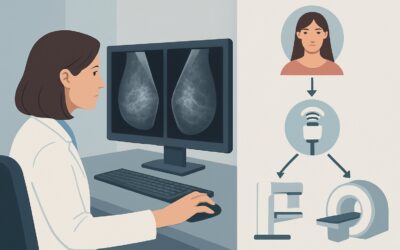
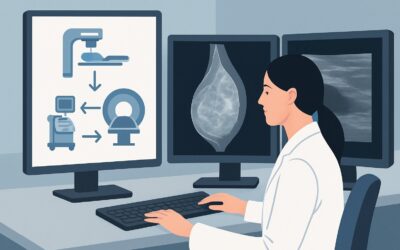
For the scenario of breast cancer screening during lactation for initial imaging, the ACR provides clear guidance balancing diagnostic efficacy with the unique physiological state of the patient. Both digital breast tomosynthesis (DBT) and standard 2D mammography are considered the primary and most appropriate tools.
For this screening context, the ACR rates both Digital breast tomosynthesis screening and Mammography screening as Usually appropriate. These modalities remain the standard of care for breast cancer screening, even with the increased breast density associated with lactation. DBT, in particular, can be advantageous in dense breasts by reducing the effect of overlapping tissue. Both involve a low dose of ionizing radiation (☢ ☢ 0.1-1mSv), which is considered safe during lactation with no need to interrupt breastfeeding.
US breast is rated as May be appropriate. While ultrasound is the primary modality for evaluating a palpable lump in a pregnant or lactating patient due to its lack of ionizing radiation, it is not the recommended primary tool for comprehensive screening of the entire breast in this context. It serves as a crucial adjunct to mammography or for targeted problem-solving.
Contrast-enhanced studies are generally avoided. MRI breast without and with IV contrast, MRI breast without IV contrast, and Sestamibi MBI are all rated as Usually not appropriate for screening in this population. This is due to concerns about gadolinium contrast excretion into breast milk and the higher radiation dose of nuclear medicine studies, which are not warranted for a screening indication.
ACR Imaging Recommendations Table
| Clinical Scenario | Top Procedure | ACR Rating | Adult RRL | Pediatric RRL |
|---|---|---|---|---|
| Breast cancer screening during lactation. Initial imaging. | Digital breast tomosynthesis screening | Usually appropriate | ☢ ☢ 0.1-1mSv |
Adult vs. Pediatric Breast Imaging of Pregnant and Lactating Women Imaging: Radiation Dose Tradeoffs
The clinical scenarios in this guideline exclusively involve adult patients. However, the “pediatric” consideration is paramount due to the presence of a fetus during pregnancy or a breastfeeding infant during lactation. The principle of As Low As Reasonably Achievable (ALARA) is applied with heightened sensitivity. For pregnant patients, the primary concern is minimizing fetal radiation exposure. Diagnostic imaging of the breast with appropriate abdominal shielding results in negligible fetal dose, well below the threshold for concern. Therefore, medically necessary mammography should not be withheld due to pregnancy.
For lactating patients, the main considerations involve radionuclides and contrast agents. Standard mammography and ultrasound pose no risk to the breastfeeding infant. For studies requiring intravenous contrast, such as MRI, the American College of Radiology advises that it is safe for the mother and infant to continue breastfeeding after receiving a gadolinium-based contrast agent. The amount of contrast agent excreted into breast milk is extremely small, and an even smaller fraction is absorbed by the infant’s gut. Similarly, after iodinated contrast for a CT scan, breastfeeding can be continued without interruption. The decision to temporarily suspend breastfeeding is left to the informed discretion of the patient and her physician.
Imaging Protocol Details for Breast Imaging of Pregnant and Lactating Women
Once you’ve decided on the right study, the protocol matters. Executing the imaging with the correct technique is essential for diagnostic accuracy, especially given the challenges of dense, lactating breast tissue. Our protocol guides cover technique, patient positioning, and reading principles for the studies recommended above:
Tools to Help You Order the Right Study
Navigating imaging guidelines can be complex. GigHz offers a suite of reference tools designed to help clinicians make evidence-based decisions quickly and confidently at the point of care.
For scenarios beyond Breast Imaging of Pregnant and Lactating Women, the Imaging Appropriateness Selector provides instant access to the full library of ACR guidelines, covering thousands of clinical variants. To ensure studies are performed correctly, the Imaging Protocol Library offers detailed, step-by-step protocols for a wide range of CT, MRI, and ultrasound examinations. Finally, for clear communication with patients about radiation, the Radiation Dose Calculator helps estimate and explain cumulative radiation exposure from medical imaging.
Is mammography safe during pregnancy?
Yes. When a mammogram is clinically indicated to evaluate a breast problem, it is considered safe to perform during pregnancy. The radiation dose to the breast is low, and with proper lead shielding placed over the abdomen, the radiation dose to the fetus is negligible. The risk of delaying a potential cancer diagnosis far outweighs the minimal radiation risk.
Should a patient stop breastfeeding to have a mammogram?
No, a patient does not need to stop breastfeeding to have a mammogram. However, to improve the quality and accuracy of the images, it is highly recommended that the patient breastfeed or pump immediately before the examination. This helps to decrease the density of the breast tissue, making the mammogram easier to interpret.
Is it safe to breastfeed after receiving IV contrast for an MRI or CT?
Yes. According to the ACR, it is safe to continue breastfeeding after receiving either a gadolinium-based contrast agent (for MRI) or an iodinated contrast agent (for CT). The amount of contrast that enters the breast milk is less than 1% of the administered dose, and the amount absorbed by the infant from the milk is extremely small. While the final decision is up to the mother, the ACR does not recommend interrupting breastfeeding.
Why is ultrasound often used first for a palpable lump in a pregnant or lactating patient?
Ultrasound is the initial imaging modality of choice for a focal symptom like a palpable lump in this population because it uses no ionizing radiation and is excellent at differentiating solid masses from cysts (like a galactocele, which is common). It can effectively characterize a finding and guide a biopsy if needed. If the ultrasound findings are suspicious or inconclusive, a mammogram is then typically performed for further evaluation.
What is a galactocele and how does it appear on imaging?
A galactocele is a milk-filled cyst that is the most common benign breast lesion in lactating women. It typically results from a blocked milk duct. On ultrasound, it can have a variable appearance but often presents as a simple or complex cyst. On mammography, it may appear as a well-defined, round mass that can be of fat density, mixed density, or water density, sometimes with a characteristic fat-fluid level on a mediolateral view.
Frequently Asked Questions
Is mammography safe during pregnancy?
Yes. When a mammogram is clinically indicated to evaluate a breast problem, it is considered safe to perform during pregnancy. The radiation dose to the breast is low, and with proper lead shielding placed over the abdomen, the radiation dose to the fetus is negligible. The risk of delaying a potential cancer diagnosis far outweighs the minimal radiation risk.
Should a patient stop breastfeeding to have a mammogram?
No, a patient does not need to stop breastfeeding to have a mammogram. However, to improve the quality and accuracy of the images, it is highly recommended that the patient breastfeed or pump immediately before the examination. This helps to decrease the density of the breast tissue, making the mammogram easier to interpret.
Is it safe to breastfeed after receiving IV contrast for an MRI or CT?
Yes. According to the ACR, it is safe to continue breastfeeding after receiving either a gadolinium-based contrast agent (for MRI) or an iodinated contrast agent (for CT). The amount of contrast that enters the breast milk is less than 1% of the administered dose, and the amount absorbed by the infant from the milk is extremely small. While the final decision is up to the mother, the ACR does not recommend interrupting breastfeeding.
Why is ultrasound often used first for a palpable lump in a pregnant or lactating patient?
Ultrasound is the initial imaging modality of choice for a focal symptom like a palpable lump in this population because it uses no ionizing radiation and is excellent at differentiating solid masses from cysts (like a galactocele, which is common). It can effectively characterize a finding and guide a biopsy if needed. If the ultrasound findings are suspicious or inconclusive, a mammogram is then typically performed for further evaluation.
What is a galactocele and how does it appear on imaging?
A galactocele is a milk-filled cyst that is the most common benign breast lesion in lactating women. It typically results from a blocked milk duct. On ultrasound, it can have a variable appearance but often presents as a simple or complex cyst. On mammography, it may appear as a well-defined, round mass that can be of fat density, mixed density, or water density, sometimes with a characteristic fat-fluid level on a mediolateral view.
Reviewed by Pouyan Golshani, MD, Interventional Radiologist — August 4, 2026