When to Order Imaging for Suspected Osteomyelitis, Septic Arthritis, or Soft Tissue Infection (Excluding Spine and Diabetic Foot): ACR Appropriateness Decoded

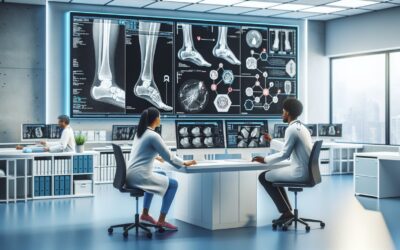
It’s late in your shift, and you’re evaluating a patient with a focal area of erythema, swelling, and pain in the thigh, accompanied by a low-grade fever. The clinical picture points toward a musculoskeletal infection, but the differential is broad—cellulitis, abscess, osteomyelitis, or even septic arthritis if near a joint. Laboratory markers like C-reactive protein (CRP) and erythrocyte sedimentation rate (ESR) are elevated but non-specific. You know that prompt, accurate diagnosis is critical to prevent significant morbidity, but which imaging study should you order first? An x-ray? Ultrasound? Or should you go straight to CT or MRI? This decision point is where the American College of Radiology (ACR) Appropriateness Criteria provide essential, evidence-based guidance. This article decodes the ACR recommendations for this specific clinical problem to help you choose the right test at the right time.
What Does ACR Suspected Osteomyelitis, Septic Arthritis, or Soft Tissue Infection (Excluding Spine and Diabetic Foot) Cover?
This ACR Appropriateness Criteria topic provides imaging recommendations for adult and pediatric patients with suspected musculoskeletal infections. The scope is specifically focused on infections of the appendicular skeleton and associated soft tissues. This includes clinical scenarios such as a warm, swollen joint concerning for septic arthritis; focal bone pain and tenderness suggesting osteomyelitis; or spreading cellulitis with concern for a deeper abscess or necrotizing fasciitis.
Crucially, this guideline explicitly excludes two major, complex clinical areas that have their own dedicated ACR criteria: infections of the spine (e.g., discitis-osteomyelitis, epidural abscess) and infections of the diabetic foot. These conditions involve unique pathophysiology, microbiology, and imaging challenges that require separate diagnostic algorithms. Therefore, if your clinical suspicion is for spinal infection or a diabetic foot ulcer complication, you should refer to those specific ACR guidelines for appropriate imaging pathways. This document is tailored for non-spinal, non-diabetic-foot presentations.
What Imaging Should I Order for Suspected Osteomyelitis, Septic Arthritis, or Soft Tissue Infection (Excluding Spine and Diabetic Foot)? Recommendations by Clinical Scenario
The optimal imaging pathway depends entirely on the initial clinical presentation and the findings of preliminary studies. The ACR outlines several distinct clinical variants to guide decision-making.
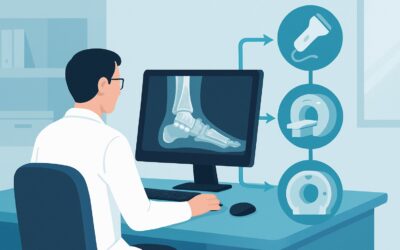
For initial imaging in any patient with suspected osteomyelitis, septic arthritis, or soft tissue infection, the ACR is unequivocal. Radiography of the area of interest is rated Usually appropriate. Radiographs are inexpensive, widely available, and can quickly identify fractures, soft tissue gas, radiopaque foreign bodies, or chronic bony changes. While early osteomyelitis may not be visible, radiographs establish a crucial baseline. All other advanced imaging modalities, including MRI, CT, ultrasound, and nuclear medicine scans, are rated Usually not appropriate for the very first step.
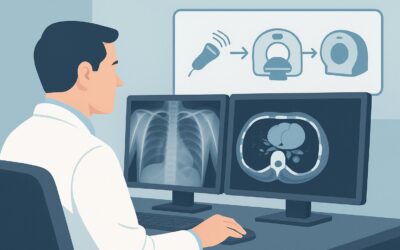
If septic arthritis or a soft tissue infection is suspected and initial radiographs are normal or show only a joint effusion or soft tissue swelling, the next step has several appropriate options. Ultrasound (US) of the area of interest is Usually appropriate and is excellent for identifying and guiding aspiration of joint effusions or drainable fluid collections. Image-guided aspiration itself is also Usually appropriate to obtain fluid for definitive microbial analysis. For more detailed anatomical assessment, MRI without and with IV contrast is Usually appropriate, offering superior soft tissue contrast to delineate abscesses, phlegmon, and synovial inflammation. CT with IV contrast is also Usually appropriate, particularly if MRI is contraindicated or unavailable.
When the primary concern is osteomyelitis and initial radiographs are normal or equivocal, the imaging pathway shifts. MRI without and with IV contrast is the modality of choice and is rated Usually appropriate. MRI is highly sensitive for detecting early bone marrow edema, the hallmark of acute osteomyelitis, long before bony changes appear on radiographs. Several other modalities are rated May be appropriate as second-line or problem-solving tools. These include nuclear medicine studies like a 3-phase bone scan or WBC scan, which are sensitive but less specific than MRI. CT with or without IV contrast may also be appropriate, especially for assessing cortical bone destruction or sequestrum formation. For more details on specific CT protocols, see our guide on CT Brain Without Contrast.
The presence of surgical hardware complicates imaging. For suspected infection around implanted extra-articular hardware (e.g., a plate and screws for a long bone fracture), MRI without and with IV contrast remains Usually appropriate, though it requires specialized metal artifact reduction sequences (MARS). Nuclear medicine studies (e.g., WBC scan) and CT with IV contrast are rated May be appropriate. For more details on specific CT protocols, see our guide on CT Brain Without Contrast. In cases of suspected septic arthritis with intra-articular hardware or arthroplasty, image-guided aspiration is the most critical diagnostic step and is rated Usually appropriate. MRI and CT can also be useful adjuncts.
For soft tissue infections, specific scenarios guide imaging. After a puncture wound with a possible retained foreign body and normal radiographs, Ultrasound is Usually appropriate and is excellent for identifying superficial non-radiopaque objects like wood or plastic. MRI and CT are also Usually appropriate for deeper or more complex cases. In the emergent setting of suspected necrotizing fasciitis (e.g., soft tissue gas on x-ray or high clinical suspicion), immediate cross-sectional imaging is warranted. Both CT with IV contrast and MRI without and with IV contrast are Usually appropriate to assess the extent of fascial necrosis and guide urgent surgical debridement. For more details on specific CT protocols, see our guide on CT Brain Without Contrast.
ACR Imaging Recommendations Table
| Clinical Scenario | Top Procedure | ACR Rating | Adult RRL | Pediatric RRL |
|---|---|---|---|---|
| Suspected osteomyelitis or septic arthritis or soft tissue infection (excluding spine and diabetic foot). Initial imaging. | Radiography area of interest | Usually appropriate | Varies | Varies |
| Suspected septic arthritis or soft tissue infection. Initial radiographs normal or with findings suggestive of joint effusion or soft tissue swelling. Next imaging study. | US area of interest | Usually appropriate | O 0 mSv | O 0 mSv [ped] |
| Suspected osteomyelitis. Initial radiographs normal or with findings suggestive of osteomyelitis. Next imaging study. | MRI area of interest without and with IV contrast | Usually appropriate | O 0 mSv | O 0 mSv [ped] |
| Suspected osteomyelitis or soft tissue infection with implanted extra-articular surgical hardware. Initial radiographs normal or with findings suggestive of osteomyelitis or soft tissue infection with implanted extra-articular surgical hardware. Next imaging study. | MRI area of interest without and with IV contrast | Usually appropriate | O 0 mSv | O 0 mSv [ped] |
| Suspected septic arthritis with arthroplasty or other implanted intra-articular surgical hardware. Initial radiographs normal or with findings suggestive of septic arthritis with arthroplasty or other implanted intra-articular surgical hardware. Next imaging study. | Image-guided aspiration area of interest | Usually appropriate | Varies | Varies |
| Suspected soft tissue infection. History of puncture wound with possible retained foreign body. Radiographs normal. Next imaging study. | US area of interest | Usually appropriate | O 0 mSv | O 0 mSv [ped] |
| Suspected soft tissue infection. Initial radiographs show soft tissue gas (without puncture wound) or are normal with high clinical suspicion of necrotizing fasciitis. Next imaging study. | MRI area of interest without and with IV contrast | Usually appropriate | O 0 mSv | O 0 mSv [ped] |
Adult vs. Pediatric Suspected Osteomyelitis, Septic Arthritis, or Soft Tissue Infection (Excluding Spine and Diabetic Foot) Imaging: Radiation Dose Tradeoffs
When evaluating musculoskeletal infections in children, minimizing exposure to ionizing radiation is a primary concern. The ALARA (As Low As Reasonably Achievable) principle guides imaging choices, prioritizing non-radiation modalities whenever clinically feasible. For this reason, ultrasound and MRI are particularly valuable in the pediatric population. Both have a relative radiation level (RRL) of zero and are highly effective for evaluating soft tissues, joint effusions, and bone marrow edema.
While CT and nuclear medicine studies are sometimes necessary, their use requires careful consideration of the radiation dose. The ACR guidelines highlight that pediatric doses for nuclear medicine studies, such as a 3-phase bone scan or a WBC scan, can fall into a higher RRL category compared to adults (e.g., ☢ ☢ ☢ ☢ 3-10 mSv [ped] vs. ☢ ☢ ☢ 1-10 mSv for a bone scan). This reflects the increased radiosensitivity of developing tissues and the longer potential lifespan over which stochastic effects of radiation could manifest. Therefore, while these tests are rated as “May be appropriate” in certain scenarios, the decision to use them in children should be weighed against the diagnostic capabilities of MRI, which is often the preferred advanced imaging modality for suspected osteomyelitis after initial radiographs.
Imaging Protocol Details for Suspected Osteomyelitis, Septic Arthritis, or Soft Tissue Infection (Excluding Spine and Diabetic Foot)
Once you’ve decided on the right study based on the ACR criteria, the specific imaging protocol is the next critical step to ensure diagnostic quality. A poorly protocoled study can obscure findings and lead to a missed or delayed diagnosis. Our protocol guides cover technique, contrast parameters, and key interpretation principles for the studies recommended in these guidelines.
Tools to Help You Order the Right Study
Navigating imaging guidelines during a busy clinical shift can be challenging. GigHz provides a suite of tools designed to streamline this process, ensuring you can quickly access evidence-based recommendations and communicate effectively with patients and colleagues.
For clinical scenarios beyond this topic, the Imaging Appropriateness Selector tool provides a searchable interface to the full library of ACR guidelines, covering hundreds of clinical variants across all organ systems.
To ensure the study you order is performed correctly, the Imaging Protocol Library offers detailed, step-by-step protocols for a wide range of CT, MRI, and other imaging procedures, helping to standardize care and optimize diagnostic yield.
When discussing studies that involve ionizing radiation, the Radiation Dose Calculator is an invaluable resource. It helps estimate cumulative radiation exposure and provides clear, patient-friendly language to explain the risks and benefits of necessary imaging.
Why is radiography always the recommended first step for suspected musculoskeletal infection?
Radiography is the ideal initial imaging test because it is fast, widely available, inexpensive, and provides a crucial baseline assessment. While it is insensitive for early osteomyelitis or cellulitis, it can readily identify other important findings such as fractures, soft tissue gas (seen in necrotizing fasciitis), radiopaque foreign bodies, or chronic bone changes like sequestra or involucra. A normal radiograph does not rule out infection but effectively triages the patient for the appropriate next step in advanced imaging.
When is MRI a better choice than CT for infection?
MRI is generally superior to CT for evaluating musculoskeletal infections due to its exceptional soft tissue contrast and high sensitivity for detecting bone marrow edema. It is the modality of choice for suspected osteomyelitis after inconclusive radiographs, as it can detect infection days to weeks earlier than other methods. It is also excellent for defining the extent of soft tissue abscesses, phlegmon, and necrotizing fasciitis. CT is a better choice when MRI is contraindicated (e.g., incompatible hardware, claustrophobia), when assessing for cortical bone destruction or sequestrum, or in some emergent situations where CT is faster to acquire.
Is IV contrast necessary for MRI or CT in this setting?
For most suspected infections, intravenous contrast is highly recommended for both MRI and CT. In MRI, post-contrast sequences help delineate abscess cavities by showing peripheral rim enhancement, differentiate phlegmon from a drainable collection, and assess synovitis. In CT, contrast enhances inflamed tissues and abscess walls, making them more conspicuous. While non-contrast studies can sometimes be sufficient (e.g., looking for a foreign body or soft tissue gas on CT), contrast-enhanced imaging provides a more comprehensive and definitive evaluation in the majority of cases.
What is the role of nuclear medicine scans like bone scans or WBC scans?
Nuclear medicine studies are typically second-line or problem-solving tools for musculoskeletal infections. A 3-phase technetium-99m bone scan is very sensitive for osteomyelitis but lacks specificity, as it can be positive in trauma, tumors, or arthritis. Indium-111 or technetium-99m-labeled white blood cell (WBC) scans are more specific for infection, as they localize to areas of inflammation and leukocytic infiltration. They are particularly useful in complex cases, such as evaluating for infection around surgical hardware where MRI may be limited by artifact, or when the site of infection is unclear. However, they involve significant radiation and are more time-consuming than MRI or CT.
How should I approach imaging for a suspected infected joint replacement (arthroplasty)?
The single most important diagnostic procedure for a suspected periprosthetic joint infection is image-guided aspiration of the joint fluid for culture and cell count. This is rated as “Usually appropriate” by the ACR. Cross-sectional imaging is adjunctive. Radiographs are essential for assessing hardware loosening or malposition. Advanced imaging with MRI (using metal artifact reduction sequences) or CT can help evaluate for associated fluid collections or abscesses. Nuclear medicine studies, particularly combined WBC/sulfur colloid scans, can also be used to differentiate aseptic loosening from infection but are often reserved for equivocal cases.
Frequently Asked Questions
Why is radiography always the recommended first step for suspected musculoskeletal infection?
Radiography is the ideal initial imaging test because it is fast, widely available, inexpensive, and provides a crucial baseline assessment. While it is insensitive for early osteomyelitis or cellulitis, it can readily identify other important findings such as fractures, soft tissue gas (seen in necrotizing fasciitis), radiopaque foreign bodies, or chronic bone changes like sequestra or involucra. A normal radiograph does not rule out infection but effectively triages the patient for the appropriate next step in advanced imaging.
When is MRI a better choice than CT for infection?
MRI is generally superior to CT for evaluating musculoskeletal infections due to its exceptional soft tissue contrast and high sensitivity for detecting bone marrow edema. It is the modality of choice for suspected osteomyelitis after inconclusive radiographs, as it can detect infection days to weeks earlier than other methods. It is also excellent for defining the extent of soft tissue abscesses, phlegmon, and necrotizing fasciitis. CT is a better choice when MRI is contraindicated (e.g., incompatible hardware, claustrophobia), when assessing for cortical bone destruction or sequestrum, or in some emergent situations where CT is faster to acquire.
Is IV contrast necessary for MRI or CT in this setting?
For most suspected infections, intravenous contrast is highly recommended for both MRI and CT. In MRI, post-contrast sequences help delineate abscess cavities by showing peripheral rim enhancement, differentiate phlegmon from a drainable collection, and assess synovitis. In CT, contrast enhances inflamed tissues and abscess walls, making them more conspicuous. While non-contrast studies can sometimes be sufficient (e.g., looking for a foreign body or soft tissue gas on CT), contrast-enhanced imaging provides a more comprehensive and definitive evaluation in the majority of cases.
What is the role of nuclear medicine scans like bone scans or WBC scans?
Nuclear medicine studies are typically second-line or problem-solving tools for musculoskeletal infections. A 3-phase technetium-99m bone scan is very sensitive for osteomyelitis but lacks specificity, as it can be positive in trauma, tumors, or arthritis. Indium-111 or technetium-99m-labeled white blood cell (WBC) scans are more specific for infection, as they localize to areas of inflammation and leukocytic infiltration. They are particularly useful in complex cases, such as evaluating for infection around surgical hardware where MRI may be limited by artifact, or when the site of infection is unclear. However, they involve significant radiation and are more time-consuming than MRI or CT.
How should I approach imaging for a suspected infected joint replacement (arthroplasty)?
The single most important diagnostic procedure for a suspected periprosthetic joint infection is image-guided aspiration of the joint fluid for culture and cell count. This is rated as “Usually appropriate” by the ACR. Cross-sectional imaging is adjunctive. Radiographs are essential for assessing hardware loosening or malposition. Advanced imaging with MRI (using metal artifact reduction sequences) or CT can help evaluate for associated fluid collections or abscesses. Nuclear medicine studies, particularly combined WBC/sulfur colloid scans, can also be used to differentiate aseptic loosening from infection but are often reserved for equivocal cases.
Reviewed by Pouyan Golshani, MD, Interventional Radiologist — June 27, 2026