Which Imaging Study Best Evaluates Multiple Lower Cranial Nerve Palsies (CN IX-XII)?

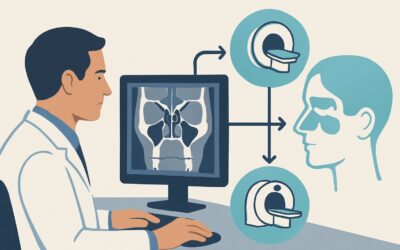
A 68-year-old male presents to your neurology clinic with a two-month history of progressive hoarseness, difficulty swallowing solids, and a new weakness in shrugging his left shoulder. On examination, you confirm deficits corresponding to the glossopharyngeal (CN IX), vagus (CN X), and accessory (CN XI) nerves. This constellation of findings points toward a lesion affecting multiple lower cranial nerves as they exit the skull base. The immediate clinical question is how to visualize this complex anatomical region to identify a potential cause. According to the American College of Radiology (ACR) Appropriateness Criteria, for a patient with multiple different lower cranial nerve palsies, MRI head without and with IV contrast is rated Usually appropriate as the initial imaging study.
Who Fits This Clinical Scenario?
This guidance applies to patients presenting with new-onset, combined deficits of the lower cranial nerves: the glossopharyngeal (CN IX), vagus (CN X), spinal accessory (CN XI), and hypoglossal (CN XII) nerves. The key feature is the involvement of more than one of these nerves, which often present as named clinical syndromes (e.g., Vernet syndrome, Collet-Sicard syndrome). Symptoms can include dysphagia (difficulty swallowing), dysphonia (hoarseness), dysarthria, palate deviation, loss of gag reflex, sternocleidomastoid or trapezius weakness, and tongue deviation or atrophy.
This workflow is distinct from the workup for isolated cranial nerve deficits. This article does not apply if the patient presents with:
- Isolated oropharyngeal dysphagia or pain: This presentation, pointing to a solitary glossopharyngeal nerve (CN IX) issue, follows a different diagnostic pathway.
- Isolated vocal cord or palatal paralysis: A deficit limited to the vagus nerve (CN X) constitutes a separate clinical scenario with its own imaging considerations.
- Multiple middle cranial nerve palsies: If the deficits involve the trigeminal (CN V), abducens (CN VI), or facial (CN VII) nerves, the anatomical localization and differential diagnosis are different, requiring a separate workup.
The core principle for this scenario is that a single, localized lesion is likely responsible for multiple, anatomically clustered nerve deficits.
What Diagnoses Are You Working Up in This Scenario?
The anatomy of the skull base, particularly the jugular foramen and hypoglossal canal, is crowded. Multiple lower cranial nerves traverse these small bony openings in close proximity. A lesion in this area can easily compress several nerves simultaneously. The imaging workup is designed to identify pathology in this specific region.
Skull Base Tumors are a primary concern. Benign tumors like schwannomas (arising from the nerve sheath), meningiomas, and paragangliomas (glomus jugulare tumors) are common culprits in this location. Malignant primary bone tumors such as chordomas or chondrosarcomas can also arise at the skull base and cause compressive symptoms.
Metastatic Disease to the skull base or leptomeninges is another critical consideration, especially in patients with a known history of malignancy. Cancers of the breast, lung, and prostate, as well as melanoma and lymphoma, can spread to the clivus and other skull base structures, leading to cranial nerve palsies.
Vascular Pathologies, while less common, can cause these syndromes. A dissection of the internal carotid or vertebral artery can extend to the skull base, and associated pseudoaneurysms can cause mass effect. Dural arteriovenous fistulas or large aneurysms in this region can also present with compressive cranial neuropathies.
Inflammatory or Infectious Processes can also be responsible. Skull base osteomyelitis, particularly in diabetic or immunocompromised patients, can lead to extensive inflammation. Systemic inflammatory conditions like sarcoidosis, granulomatosis with polyangiitis, or infections such as tuberculosis can infiltrate the meninges and skull base, affecting the cranial nerves.
Why Is MRI Head Without and With IV Contrast the Recommended Study?
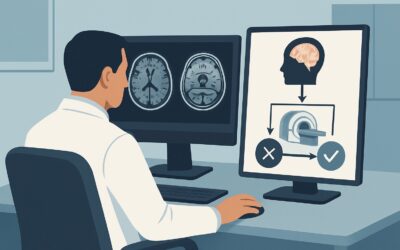
The ACR rates MRI head without and with IV contrast as Usually appropriate because of its unparalleled ability to visualize the soft tissues of the posterior fossa, brainstem, and skull base, where the lower cranial nerves originate and exit.
The rationale for this recommendation is multi-faceted:
- Superior Soft-Tissue Resolution: MRI can directly visualize the cranial nerves themselves, as well as the surrounding muscles, vessels, and meninges. This is essential for distinguishing between a tumor compressing a nerve, intrinsic nerve inflammation, or another process.
- Contrast Enhancement Patterns: The administration of intravenous gadolinium-based contrast is critical. Tumors, metastatic deposits, and areas of active inflammation or infection will typically enhance, allowing for their detection and characterization. A non-contrast study alone is often insufficient and is rated only May be appropriate.
- Safety Profile: MRI does not use ionizing radiation (adult RRL=O 0 mSv), which is a significant advantage over CT, especially in younger patients or those who may require serial imaging.
How do alternative studies compare for this specific scenario?
- CT neck with IV contrast is also rated Usually appropriate. It provides excellent visualization of the bony anatomy of the skull base and is superior to MRI for detecting bone destruction from a malignant process like a chordoma or metastasis. It is often faster and more accessible than MRI. However, its soft-tissue resolution is lower, making it harder to directly visualize the nerves or subtle meningeal enhancement. It also involves radiation (adult RRL=☢☢☢ 1-10 mSv).
- CTA head and neck with IV contrast is rated May be appropriate. This study is optimized for visualizing the arterial and venous systems and is the test of choice if a vascular cause like an arterial dissection is the leading clinical suspicion. However, it is not designed to provide the detailed soft-tissue and nerve assessment that a full diagnostic MRI offers.
When ordering the recommended study, it is crucial to provide the radiologist with a clear clinical history. Specifying “workup for multiple lower cranial nerve palsies” helps ensure the imaging protocol is tailored to include thin-slice, high-resolution sequences through the skull base and posterior fossa, which are essential for detecting the subtle pathology that can cause these syndromes.
What’s Next After MRI? Downstream Workflow
The results of the initial MRI will guide the subsequent clinical pathway. The goal is to move from radiologic findings to a definitive diagnosis and treatment plan.
If the MRI is positive for a mass lesion: The next step is typically a multidisciplinary consultation. A finding suggestive of a schwannoma, meningioma, or paraganglioma warrants referral to neurosurgery and/or otolaryngology (ENT) for consideration of surgical resection, stereotactic radiosurgery, or observation. If the lesion is suspicious for metastasis, an oncology consultation is necessary to guide biopsy and systemic treatment planning. Further staging with FDG-PET/CT may be required.
If the MRI is negative: A normal, high-quality MRI of the head and skull base makes a structural cause like a tumor or large inflammatory mass much less likely. The workup should then pivot to non-structural causes. This often involves a lumbar puncture to analyze cerebrospinal fluid (CSF) for evidence of infection, leptomeningeal carcinomatosis, or inflammatory conditions like sarcoidosis. Blood work for systemic inflammatory markers and specific antibodies may also be indicated.
If the MRI is indeterminate: Findings such as non-specific dural or nerve root enhancement can be challenging. This may prompt a follow-up MRI in several weeks to assess for change, or it may accelerate the decision to proceed with a lumbar puncture. In select cases where a vascular abnormality like a dural arteriovenous fistula is still suspected despite a non-diagnostic MRI, a conventional catheter-based angiogram may be considered.
Pitfalls to Avoid (and When to Get Help)
Navigating the workup for combined lower cranial nerve palsies requires careful attention to detail to avoid common diagnostic errors.
- Ordering the Wrong Protocol: A standard “MRI brain” may not include the necessary thin, dedicated sequences of the skull base. Always provide a specific clinical indication to the radiologist.
- Forgetting the Neck: Pathology causing lower cranial nerve palsies can sometimes be located in the high neck, outside the typical field of view of a brain MRI. If the initial study is negative, consider whether imaging of the neck is warranted. The ACR lists MRI orbits face neck without and with IV contrast as another Usually appropriate option for this reason.
- Dismissing Vascular Causes: In a patient with acute onset of symptoms, especially if accompanied by head or neck pain, a vascular etiology like a vertebral artery dissection should be strongly considered. In this case, CTA or MRA may be more appropriate as the initial test.
If a patient presents with sudden, severe “thunderclap” headache alongside cranial nerve palsies, escalate immediately to rule out a subarachnoid hemorrhage, typically with a non-contrast head CT followed by CTA.
Related ACR Topics and Tools
For a comprehensive overview of imaging for all cranial neuropathies, from CN I to CN XII, please see our parent guide. For tools to assist in ordering the correct study and communicating with patients about radiation, the following resources are available.
- For breadth across all scenarios in Cranial Neuropathy, see our parent guide: Cranial Neuropathy: ACR Appropriateness Decoded.
- ACR Appropriateness Criteria Lookup — for adjacent scenarios
- Imaging Protocol Library — for technique on the recommended study
- Radiation Dose Calculator — for cumulative dose conversations
Frequently Asked Questions
Why is intravenous contrast so important for an MRI in this scenario?
Intravenous contrast (gadolinium) is crucial because many of the potential causes, such as tumors, infections, and inflammatory lesions, show abnormal enhancement. Contrast helps to highlight these pathologies, making them more conspicuous and easier to characterize against the background of normal tissue. A non-contrast MRI has a much lower sensitivity for detecting these conditions and is rated only ‘May be appropriate’ by the ACR.
My patient has a contraindication to MRI, like a pacemaker. Is CT a good alternative?
Yes. CT neck with IV contrast is also rated ‘Usually appropriate’ by the ACR for this clinical scenario. It is an excellent alternative when MRI is contraindicated. CT provides superior detail of the bony skull base, which is very helpful for evaluating bone tumors or destruction from metastatic disease. Its main limitations are lower soft-tissue contrast compared to MRI and the use of ionizing radiation.
What are some of the named ‘combined lower cranial nerve syndromes’?
These syndromes, or eponyms, describe specific combinations of lower cranial nerve palsies based on the presumed location of the lesion. For example, Vernet syndrome (Jugular Foramen Syndrome) involves CN IX, X, and XI. Collet-Sicard syndrome involves CN IX, X, XI, and XII. These names can be useful clinical shorthand but the underlying principle is to identify the anatomical space where these nerves are affected together.
The high-quality contrast-enhanced MRI was completely negative. What is the next step?
A negative MRI makes a structural lesion like a tumor highly unlikely. The diagnostic focus should shift to non-structural causes. The most common next step is a lumbar puncture to analyze the cerebrospinal fluid (CSF) for signs of infection, inflammation (e.g., sarcoidosis), or leptomeningeal carcinomatosis, which can cause nerve palsies without forming a discrete mass visible on MRI.
Should I order an MRI of the neck in addition to the head?
The ACR lists ‘MRI orbits face neck without and with IV contrast’ as an equivalent ‘Usually appropriate’ option. The decision depends on the clinical suspicion. If the pathology is thought to be at the skull base (e.g., a jugular foramen tumor), a dedicated head/skull base MRI is sufficient. If a lesion in the carotid space or high neck is suspected, extending the field of view to include the neck is critical. Discussing the case with the radiologist can help tailor the best imaging protocol.
Reviewed by Pouyan Golshani, MD, Interventional Radiologist — May 29, 2026