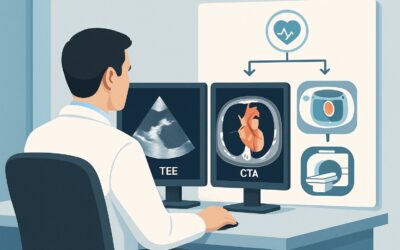
Which Imaging Study Should You Order First for Known Heart Failure with Unknown Etiology?
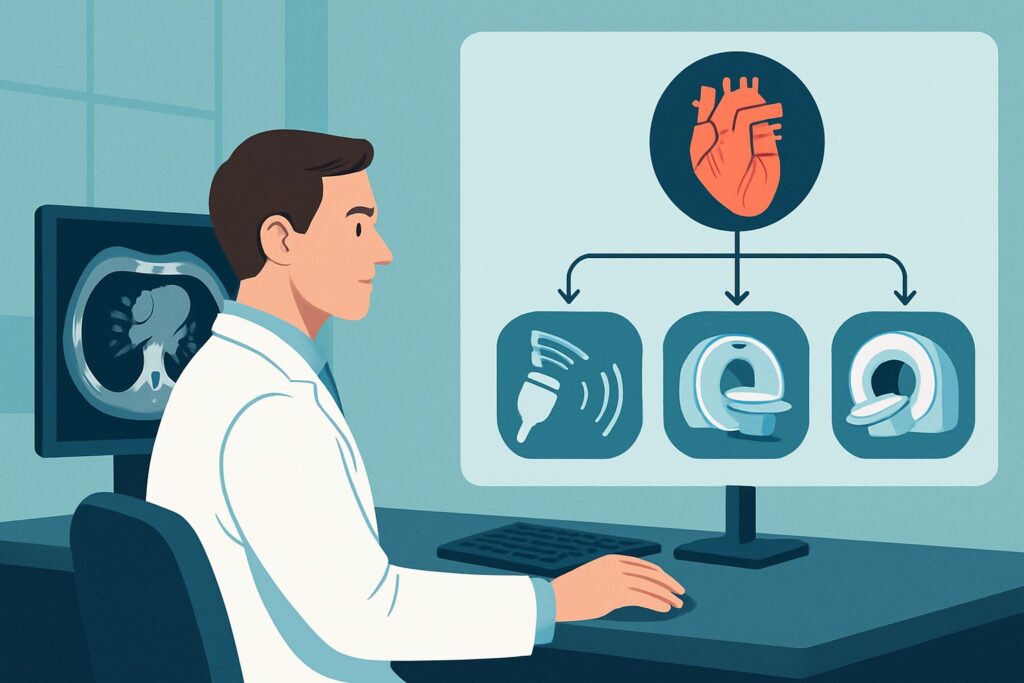
A 68-year-old man presents to your clinic for follow-up after a recent emergency department visit for shortness of breath. His exam reveals trace pedal edema, his B-type Natriuretic Peptide (BNP) was significantly elevated, and a clinical diagnosis of heart failure was made. He has a history of hypertension but no known coronary artery disease. The immediate question is not if he has heart failure, but why. Is it ischemic, valvular, hypertensive, or something else? Deciding on the initial imaging study is critical to establishing the etiology and guiding therapy. According to the American College of Radiology (ACR) Appropriateness Criteria, a `US echocardiography transthoracic resting` is Usually Appropriate as the foundational first step in this workup.
Who Fits This Clinical Scenario for Heart Failure Imaging?
This guidance is specifically for an adult patient with an established clinical diagnosis of heart failure where the underlying cause has not yet been determined. The key elements are:
- Known Heart Failure: The diagnosis is already made based on clinical signs (e.g., dyspnea, orthopnea, edema), physical exam findings (e.g., JVD, rales), and/or elevated natriuretic peptide levels.
- Unknown Etiology: The patient does not have a previously diagnosed cause for their heart failure, such as known severe coronary artery disease, significant valvular disease, or a prior diagnosis of a specific cardiomyopathy.
- Initial Imaging: This is the first dedicated imaging study being ordered to investigate the cause of the established heart failure diagnosis.
It is crucial to distinguish this situation from similar but distinct clinical presentations. This workflow does not apply to:
- Suspected Heart Failure: A patient presenting with symptoms suggestive of heart failure, but for whom the diagnosis has not yet been confirmed. That scenario follows the “Adult. Suspected heart failure. No history of heart failure. Initial imaging” pathway.
- Known Heart Failure with a Change in Status: A patient with a known cause of heart failure (e.g., ischemic cardiomyopathy) who presents with acute decompensation or requires routine surveillance. This falls under the “Adult. Known heart failure. Follow-up imaging” criteria.
- Acute, Unstable Presentations: A patient with suspected acute coronary syndrome, pulmonary embolism, or other life-threatening emergencies. These require immediate, protocol-driven evaluation that may differ from this outpatient workup.
What Diagnoses Are You Working Up When Heart Failure Etiology Is Unknown?
The initial imaging choice is designed to efficiently differentiate among the most common and consequential causes of heart failure. The primary goal is to categorize the patient’s condition to guide further testing and treatment.
Ischemic Cardiomyopathy
This is the most prevalent cause of heart failure in many Western countries, resulting from myocardial damage due to coronary artery disease (CAD). The key imaging finding is often regional wall motion abnormalities that correspond to specific coronary artery territories. Identifying an ischemic etiology is critical as it opens the door to revascularization therapies (e.g., PCI, CABG) that can improve outcomes.
Valvular Heart Disease
Significant, uncorrected valvular dysfunction is a direct cause of heart failure. Conditions like severe aortic stenosis create a pressure overload on the left ventricle, while severe mitral or aortic regurgitation creates a volume overload. The initial imaging study must be able to accurately assess valve structure, leaflet mobility, and the severity of any stenosis or regurgitation.
Hypertensive Heart Disease
Chronic, poorly controlled hypertension leads to adaptive changes in the heart, primarily concentric left ventricular hypertrophy (LVH). Over time, this can cause diastolic dysfunction (impaired relaxation) and eventually progress to systolic dysfunction (impaired contraction), a common pathway to heart failure with preserved ejection fraction (HFpEF) and, later, heart failure with reduced ejection fraction (HFrEF).
Non-Ischemic Cardiomyopathies
This is a broad and heterogeneous group of myocardial diseases. The initial imaging can provide crucial clues pointing toward a specific diagnosis. This category includes dilated cardiomyopathy (which can be idiopathic, viral, or toxic), hypertrophic cardiomyopathy (a genetic disorder of the sarcomere), and less common but critical infiltrative diseases like cardiac amyloidosis or sarcoidosis, which have unique imaging features and specific treatments.
Why Is a Transthoracic Echocardiogram the Recommended First Step?
For an adult with newly diagnosed heart failure of unknown cause, a resting transthoracic echocardiogram (TTE) is rated Usually Appropriate and serves as the cornerstone of the initial workup. Its diagnostic power lies in its ability to provide a comprehensive, real-time assessment of cardiac structure and function safely and efficiently.
A TTE directly addresses the primary differential diagnoses:
- Cardiac Function: It provides an accurate measurement of the left ventricular ejection fraction (LVEF), which is the fundamental step in classifying heart failure as HFrEF (LVEF ≤40%), HFmrEF (LVEF 41-49%), or HFpEF (LVEF ≥50%). It also assesses for regional wall motion abnormalities, a key indicator of underlying ischemic disease.
- Valvular Assessment: TTE offers a detailed evaluation of all four cardiac valves, identifying stenosis, regurgitation, prolapse, or vegetations that could be the primary driver of the patient’s symptoms.
- Structural Evaluation: The study measures chamber sizes, wall thickness, and overall cardiac geometry. Findings like left ventricular hypertrophy can point toward hypertensive heart disease, while significant dilation may suggest a dilated cardiomyopathy.
- Safety and Accessibility: TTE is non-invasive, widely available, and does not use ionizing radiation (adult RRL=O 0 mSv). It can be performed quickly at the bedside if necessary and does not require IV contrast in most initial cases.
Why are other studies not the first choice?
While many other advanced imaging modalities are also rated Usually Appropriate for this scenario, they are typically reserved for downstream evaluation after the TTE provides its initial broad assessment.
- Chest Radiography: This is rated Usually Not Appropriate for determining etiology. While often obtained during an acute presentation to assess for pulmonary edema or cardiomegaly, it lacks the granular detail to differentiate between ischemic, valvular, or myopathic causes.
- Coronary CTA: While rated Usually Appropriate, this study is more focused. It is excellent for evaluating coronary anatomy but involves radiation (☢☢☢ 1-10 mSv) and IV contrast. It is often the logical next step if the TTE suggests an ischemic cause, but it is not the ideal first-line test because it does not assess valvular function or provide the same detailed information on myocardial function as an echocardiogram.
What’s Next After the Echocardiogram? Downstream Workflow
The results of the initial TTE will guide the subsequent diagnostic pathway. The goal is to move from a general diagnosis of heart failure to a specific etiological diagnosis.
- If the TTE suggests an ischemic etiology (e.g., regional wall motion abnormalities in a coronary distribution), the next step is to evaluate for significant coronary artery disease. This may involve a non-invasive stress test (such as a stress echocardiogram or nuclear SPECT MPI, both rated Usually Appropriate) or an anatomic test like a Coronary CTA (Usually Appropriate). For high-risk patients, invasive coronary angiography (May be appropriate) may be warranted.
- If the TTE shows significant valvular disease, the patient should be referred to a cardiologist and potentially a cardiothoracic surgeon. Further imaging, such as a transesophageal echocardiogram (TEE, rated May be appropriate), may be needed for a more detailed assessment before considering intervention.
- If the TTE is non-diagnostic or suggests a complex non-ischemic cardiomyopathy (e.g., suspicion for infiltrative disease like amyloidosis or arrhythmogenic cardiomyopathy), a Cardiac MRI is the preferred next step. Cardiac MRI (with and without contrast, rated Usually Appropriate) is the gold standard for tissue characterization, allowing for the identification of fibrosis, inflammation, or infiltration that is not visible on echocardiography.
- If the TTE is largely normal or shows only diastolic dysfunction in a patient with hypertension, the likely diagnosis is hypertensive heart disease leading to HFpEF. The focus then shifts to aggressive medical management of blood pressure and other comorbidities.
Pitfalls to Avoid (and When to Get Help)
Navigating the initial workup requires avoiding common missteps that can delay diagnosis or lead to unnecessary testing.
- Pitfall 1: Relying solely on a chest X-ray. A chest radiograph cannot determine the etiology of heart failure. A TTE is essential.
- Pitfall 2: Ordering a coronary calcium score. A CT for coronary calcium is rated Usually Not Appropriate in this setting. While it indicates the presence of atherosclerosis, it does not assess luminal stenosis or cardiac function and is not the right test for this clinical question.
- Pitfall 3: Forgetting the clinical context. Imaging findings must be interpreted in the context of the patient’s history (e.g., history of alcohol use, chemotherapy, or family history of cardiomyopathy).
- Pitfall 4: Delaying advanced imaging when indicated. If the TTE is inconclusive or raises suspicion for a specific infiltrative or genetic cardiomyopathy, do not hesitate to proceed to Cardiac MRI.
If the initial workup is complex or the diagnosis remains unclear after TTE, consultation with a cardiologist or a heart failure specialist is the appropriate next step.
Related ACR Topics and Tools
For a comprehensive overview of imaging across all heart failure scenarios and access to decision-support tools, the following resources are available:
- For breadth across all scenarios in Suspected and Known Heart Failure, see our parent guide: Suspected and Known Heart Failure: ACR Appropriateness Decoded.
- To explore adjacent clinical presentations, use the ACR Appropriateness Criteria Lookup.
- For details on imaging techniques, browse the Imaging Protocol Library.
- To discuss radiation exposure with patients, consult the Radiation Dose Calculator.
Frequently Asked Questions
Why not start with a Cardiac MRI for every patient with new heart failure?
While Cardiac MRI is an excellent problem-solving tool and is rated ‘Usually Appropriate’, a transthoracic echocardiogram (TTE) is the preferred initial test. TTE is more widely available, less expensive, and faster to perform. It provides the essential information needed in most cases—ejection fraction, valvular function, and basic structural assessment—to guide the initial stages of management and determine if more advanced imaging like MRI is necessary.
Is a stress echocardiogram a good first test instead of a resting one?
A stress echocardiogram is also rated ‘Usually Appropriate’ but serves a different primary purpose. It is specifically designed to provoke and detect ischemia. For the initial etiological workup, a resting TTE is superior because it provides a more comprehensive baseline assessment of structure and function. A stress test is typically a downstream study ordered after the resting TTE if an ischemic cause is suspected.
My patient has a poor acoustic window. What is the next best step?
If the transthoracic echocardiogram is technically limited and non-diagnostic due to poor acoustic windows (e.g., in patients with obesity or severe lung disease), the next logical step is often a Cardiac MRI. It provides excellent images of cardiac structure and function without being limited by patient body habitus. A transesophageal echocardiogram (TEE) is another option, particularly if the primary question is valvular or related to an atrial source of embolus.
When is a Coronary CTA appropriate in this initial workup?
According to the ACR, a Coronary CTA is ‘Usually Appropriate’ in this scenario. It is a powerful tool to non-invasively rule out significant coronary artery disease as the cause of heart failure, especially in patients with a low-to-intermediate pre-test probability of CAD. However, it is often considered a second-line test after TTE because the TTE provides a broader functional and structural assessment. If the TTE shows regional wall motion abnormalities, a Coronary CTA becomes a very strong candidate for the next step.
Does this guidance apply to patients with acute, decompensated heart failure in the emergency department?
This guidance is for the initial workup of the underlying etiology, which often occurs in an inpatient or outpatient setting once the patient is stable. In an acute, unstable presentation, the imaging priorities may shift to ruling out life-threatening conditions like acute coronary syndrome or pulmonary embolism, and a bedside point-of-care ultrasound (POCUS) is often used for rapid assessment rather than a comprehensive diagnostic TTE.
Reviewed by Pouyan Golshani, MD, Interventional Radiologist — May 30, 2026