What Imaging Is Next for Diffuse Lung Opacities in an Immunocompromised Patient?

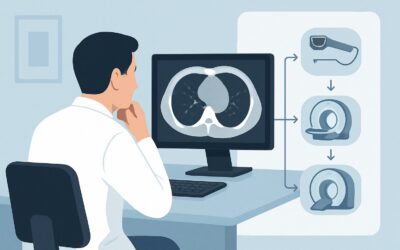
It’s 2 a.m. on the medical ward, and you’re evaluating a 54-year-old hematopoietic stem cell transplant recipient who is now febrile with worsening dyspnea. The portable chest radiograph you ordered is back, and the preliminary read confirms your concern: “multiple, diffuse, confluent opacities.” The patient is clinically deteriorating, and the differential diagnosis is broad and life-threatening. You know the radiograph is insufficient for definitive management and that the next imaging step is critical for narrowing the possibilities and guiding invasive testing. This article provides a focused clinical workflow for this exact scenario, explaining why the American College of Radiology (ACR) Appropriateness Criteria rates CT chest without IV contrast as Usually Appropriate as the immediate next step.
Who Fits This Clinical Scenario?
This guidance is specifically for immunocompromised patients presenting with an acute respiratory illness where the initial chest radiograph (CXR) is definitively abnormal, showing multiple, diffuse, or confluent opacities. The term “immunocompromised” is broad and includes individuals with:
- Neutropenia (often secondary to chemotherapy)
- Hematologic malignancies
- Solid organ or hematopoietic stem cell transplantation
- Acquired immunodeficiency syndrome (AIDS)
- Use of high-dose corticosteroids or other immunosuppressive agents (e.g., biologics, chemotherapy)
This workflow is distinct from other similar presentations. This article does not apply if:
- The chest radiograph is normal or equivocal. A normal CXR in a symptomatic, high-risk patient warrants a different diagnostic pathway, as significant pathology can be radiographically occult.
- A specific noninfectious cause is highly suspected. If the primary clinical concern is pulmonary embolism or diffuse alveolar hemorrhage based on other findings (e.g., hemoptysis, acute drop in hemoglobin), the imaging strategy may change to prioritize vascular assessment.
- The patient is not immunocompromised. The differential diagnosis and pre-test probabilities are substantially different in an immunocompetent host.
What Diagnoses Are You Working Up in This Scenario?
With diffuse opacities on a chest radiograph in an immunocompromised patient, the differential is a race between infection and inflammation. The primary role of subsequent imaging is to characterize the pattern of lung injury to narrow this list and guide the next diagnostic step, which is often invasive sampling.
Opportunistic Infections: This is the most urgent category. Pneumocystis jirovecii pneumonia (PJP) is a classic cause of diffuse, bilateral ground-glass opacities, particularly in patients with HIV/AIDS or those on chronic steroids. Fungal pneumonias, such as invasive aspergillosis or cryptococcosis, can also present diffusely, though they may also form nodules. Viral pneumonias, especially Cytomegalovirus (CMV) pneumonitis in transplant recipients, are also a key consideration.
Non-infectious Inflammatory Processes: The lungs can react to a variety of insults. Drug-induced pneumonitis is a critical diagnosis of exclusion, as many chemotherapeutic and immunomodulatory agents are implicated. Acute Respiratory Distress Syndrome (ARDS) from any cause (e.g., sepsis, transfusion-related acute lung injury) will manifest as diffuse opacities. Less commonly, processes like organizing pneumonia or diffuse alveolar hemorrhage (DAH) can present this way and are often associated with specific underlying conditions or treatments.
Pulmonary Edema: While often cardiogenic, non-cardiogenic pulmonary edema related to fluid shifts, renal failure, or capillary leak syndromes is common in this critically ill population. Imaging features can help distinguish hydrostatic edema from inflammatory lung injury.
Why Is CT Chest Without IV Contrast the Recommended Study for This Presentation?
When a chest radiograph shows diffuse lung disease, its two-dimensional nature limits characterization. A Computed Tomography (CT) scan provides detailed cross-sectional anatomy of the lung parenchyma, which is essential for diagnosis. The ACR designates CT chest without IV contrast as Usually Appropriate because it directly addresses the primary clinical question with maximum efficiency and safety.
The high resolution of a non-contrast CT excels at differentiating patterns of diffuse lung disease. It can distinguish ground-glass opacities (common in PJP, ARDS, DAH) from consolidation (bacterial pneumonia), identify subtle nodules or tree-in-bud opacities (fungal or mycobacterial infection), and characterize septal thickening (pulmonary edema). This pattern recognition is crucial for narrowing the differential and increasing the diagnostic yield of subsequent procedures like bronchoscopy.
Why are other studies rated lower for this specific initial workup?
- CT chest with IV contrast is rated as May be appropriate. While it can help identify mediastinal lymphadenopathy, pleural effusions, or a central obstructing mass, it does not significantly improve the characterization of diffuse parenchymal disease itself. Given that many immunocompromised patients have underlying renal dysfunction, avoiding unnecessary intravenous contrast minimizes the risk of contrast-induced nephropathy. Contrast should be reserved for when there is a specific concern for a vascular issue like pulmonary embolism or aortic dissection.
- FDG-PET/CT skull base to mid-thigh is rated as Usually not appropriate. PET/CT is a functional imaging study that detects metabolic activity. While useful for staging malignancy or evaluating chronic inflammatory conditions, it is not suited for evaluating an acute respiratory illness. It is nonspecific, as both infection and inflammation are FDG-avid, and it imparts a significantly higher radiation dose (☢☢☢☢ 10-30 mSv) compared to a diagnostic chest CT (☢☢☢ 1-10 mSv).
The non-contrast CT provides the necessary anatomical detail with a moderate radiation dose and no contrast-related risks, making it the optimal next test. Once you’ve decided on this study, our protocol guide covers the technique, acquisition parameters, and reading principles in more detail: CT Chest Without Contrast.
What’s Next After CT Chest Without IV Contrast? Downstream Workflow
The results of the non-contrast chest CT will guide the subsequent management cascade. The goal is to move from imaging patterns to a definitive (often microbiological) diagnosis.
- If the CT suggests a typical opportunistic infection (e.g., diffuse ground-glass opacities concerning for PJP): The next step is typically bronchoscopy with bronchoalveolar lavage (BAL). This procedure allows for direct sampling of the alveolar space to test for PJP, fungi, viruses, and bacteria via stains, cultures, and molecular assays. Empiric treatment is often started while awaiting BAL results.
- If the CT is negative or shows only minor, nonspecific changes: This finding is significant. In a symptomatic, high-risk patient, a negative high-resolution CT makes significant interstitial pneumonia unlikely. The clinical focus may shift to alternative diagnoses like an occult extrapulmonary source of infection, cardiac dysfunction, or a pulmonary vascular cause that may require a different imaging study (e.g., CT angiography for pulmonary embolism).
- If the CT is indeterminate or shows an atypical pattern (e.g., nodules, consolidation): The findings may still point toward bronchoscopy, but they might also raise the possibility of a diagnosis not easily made by BAL. If nodules are accessible, an image-guided transthoracic needle biopsy (rated May be appropriate by the ACR) could be considered to obtain a tissue diagnosis, particularly if malignancy or invasive fungal disease is a concern.
In all cases, the CT findings must be correlated with the patient’s specific immune defect, exposure history, and clinical trajectory.
Pitfalls to Avoid (and When to Get Help)
Navigating this scenario requires careful attention to clinical context to avoid common errors.
- Delaying the CT scan: In a rapidly decompensating patient, waiting for clinical improvement is not an option. The CT provides critical diagnostic information that directly impacts management, including the decision to perform bronchoscopy.
- Anchoring on the radiograph findings: A chest radiograph can be misleading. What appears as “diffuse” opacities may be resolved into a more specific pattern on CT (e.g., centrilobular nodules, peripheral consolidation), completely changing the differential diagnosis.
- Forgetting non-infectious causes: It is easy to focus solely on opportunistic infections. Always consider drug toxicity, pulmonary edema, and organizing pneumonia in the differential, as the treatment for these conditions is drastically different.
If the CT findings are complex or do not fit a clear pattern, a multidisciplinary discussion involving pulmonology, infectious disease, and radiology is essential to determine the safest and highest-yield next step.
Related ACR Topics and Tools
This article covers one specific clinical variant. For a comprehensive overview of imaging in this patient population, including scenarios with normal radiographs or focal disease, please consult our parent guide. Additional tools can help you apply these criteria in your daily practice.
- For breadth across all scenarios in Acute Respiratory Illness in Immunocompromised Patients, see our parent guide: Acute Respiratory Illness in Immunocompromised Patients: ACR Appropriateness Decoded.
- Imaging Appropriateness Selector — for adjacent scenarios
- Imaging Protocol Library — for technique on the recommended study
- Radiation Dose Calculator — for cumulative dose conversations
Frequently Asked Questions
Why not order a CT with contrast initially to look for everything at once?
A CT with intravenous contrast is rated ‘May be appropriate’ but not ‘Usually appropriate’ because the primary question in this scenario is about the lung parenchyma, which is excellently visualized without contrast. Adding contrast does not improve characterization of diffuse ground-glass opacities or fine nodules. It also introduces the risk of contrast-induced nephropathy in potentially unstable patients with borderline renal function, without adding significant diagnostic value for the most likely differential diagnoses.
If the CT shows diffuse ground-glass opacities, is that diagnostic of PJP?
No, it is highly suggestive but not diagnostic. Diffuse ground-glass opacity is a nonspecific finding that can also be seen in acute respiratory distress syndrome (ARDS), viral pneumonia (like CMV or COVID-19), pulmonary edema, and diffuse alveolar hemorrhage. Therefore, while the CT finding strongly supports the need for further testing like bronchoalveolar lavage (BAL) to confirm PJP, it is not specific enough to be considered a definitive diagnosis on its own.
What if the patient is too unstable to transport for a CT scan?
In a critically ill, unstable patient, the risks of transport must be weighed against the diagnostic benefit of the CT scan. Management often proceeds with empiric broad-spectrum antimicrobial therapy covering typical and opportunistic pathogens. Bedside procedures like bronchoscopy with BAL may be attempted if feasible. The decision is highly individualized and requires coordination between the primary team, critical care specialists, and respiratory therapists to ensure patient safety.
Does this guidance apply to pediatric immunocompromised patients?
Yes, the general principles apply, but radiation dose considerations are paramount in children. The ACR notes a higher relative radiation level for pediatric chest CT (☢☢☢☢ 3-10 mSv [ped]). Protocols must be optimized to be ‘As Low As Reasonably Achievable’ (ALARA). The differential diagnosis may also have a different emphasis, and consultation with a pediatric radiologist and infectious disease specialist is strongly recommended.
When would an MRI of the chest be considered in this scenario?
MRI chest, with or without contrast, is rated ‘May be appropriate’ but is rarely used in this acute setting. Its strengths are in evaluating chest wall masses, certain mediastinal pathology, and cardiac function, not in high-resolution assessment of the lung parenchyma for diffuse disease. Technical challenges, including motion artifact from breathing and long scan times, make it less practical than CT for acutely ill, dyspneic patients.
Reviewed by Pouyan Golshani, MD, Interventional Radiologist — May 26, 2026