What Imaging Is Needed After Chest Tube Removal in an ICU Patient?

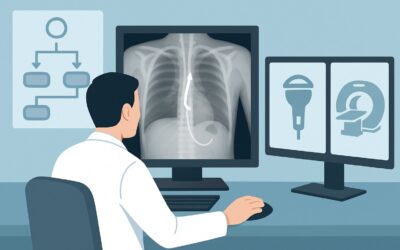
A patient in the surgical intensive care unit (ICU) is recovering well after thoracic surgery. This morning, you removed their last mediastinal drainage tube. The patient is stable and asymptomatic, but institutional protocol requires a post-procedure check. You need to decide on the most appropriate initial imaging to confirm lung re-expansion and rule out acute complications before progressing their care. This article details the American College of Radiology (ACR) guidance for this specific clinical decision. For this scenario, the ACR rates a portable chest radiograph as `May be appropriate (Disagreement)`, reflecting a nuanced clinical debate on the necessity of routine imaging.
Who Fits This Clinical Scenario?
This guidance applies specifically to an intensive care unit patient who has just undergone the removal of a chest tube (pleural tube) or a mediastinal tube and requires initial imaging to assess their post-procedure status. The key elements are the patient’s location (ICU), the specific event (tube removal), and the timing (initial imaging immediately following the procedure).
This workflow is distinct from several similar-sounding but clinically different situations:
- Post-Device Placement: This guidance does not apply to imaging performed to confirm the position of a newly placed support device, such as a central venous catheter, endotracheal tube, or a new chest tube. That is a separate clinical question with its own imaging recommendations.
- Clinically Worsening Patient: If the ICU patient develops new or worsening signs of respiratory distress, hypoxia, or hemodynamic instability after tube removal, they no longer fit this “initial imaging” scenario. Instead, they fall under the variant for an ICU patient with a clinically worsening condition, which may warrant a more urgent or advanced imaging workup.
- Routine Daily Imaging: This scenario is not for stable ICU patients undergoing routine daily chest radiographs without a specific clinical event. The trigger here is the tube removal itself.
What Diagnoses Are You Working Up in This Scenario?
The primary purpose of imaging after chest or mediastinal tube removal is to detect iatrogenic complications and confirm the resolution of the initial problem. The differential diagnosis is focused and driven by the procedure itself.
The most critical and common concern is a pneumothorax. After a pleural tube is removed, a failure of the tract to seal or an underlying persistent air leak can lead to the reaccumulation of air in the pleural space. A small, asymptomatic pneumothorax may be monitored, but a large or tension pneumothorax is a medical emergency requiring immediate intervention.
Another key consideration is the reaccumulation of fluid, such as a pleural effusion or hemothorax. The tube was initially placed to drain fluid or blood; its removal may be followed by reaccumulation if the underlying cause is not fully resolved. Imaging helps quantify the volume and determine if further drainage is needed.
For mediastinal tubes, the primary concerns are mediastinal fluid collections or pneumomediastinum. While less common than pleural space issues, these can indicate ongoing bleeding or an air leak from a visceral structure that requires further management.
Finally, the imaging study serves to confirm the desired outcome: adequate lung re-expansion. It provides a new baseline to assess the patient’s pulmonary status after the intervention is complete.
Why Is a Portable Chest Radiograph the Recommended Study for This Presentation?
The ACR Appropriateness Criteria rate `Radiography chest portable` as `May be appropriate (Disagreement)` for initial imaging after chest or mediastinal tube removal in an ICU patient. This rating highlights an important point of clinical debate: while portable chest X-ray is the correct modality if imaging is performed, there is no universal consensus that routine imaging is necessary for every asymptomatic patient. Some institutions may opt for clinical observation alone, reserving imaging for patients who develop symptoms.
When imaging is chosen, the portable chest radiograph is the workhorse study for several reasons. It is readily available at the bedside, avoiding the risks of transporting a critically ill patient. It provides a comprehensive view of the thorax, allowing for effective evaluation of the primary differential diagnoses, including pneumothorax, pleural effusion, lung expansion, and the position of other support devices. The radiation dose is very low, with a relative radiation level (RRL) of ☢ <0.1 mSv. An alternative modality, `US chest` (chest ultrasound), is rated `Usually not appropriate`. While point-of-care ultrasound (POCUS) is highly sensitive for detecting pneumothorax (via the absence of lung sliding), its utility in this specific post-removal context is limited. It is less effective for quantifying the size of a pneumothorax, evaluating for pneumomediastinum, assessing deep or loculated pleural effusions, or providing a global assessment of lung re-expansion. Given that the portable radiograph can assess all these possibilities with minimal risk and radiation, it remains the more comprehensive initial study. Once you've decided on a portable chest radiograph, our protocol guide covers the technique, interpretation principles, and reporting standards. For a detailed walkthrough, see our guide: Chest X-Ray Portable.
What’s Next After a Portable Chest Radiograph? Downstream Workflow
The results of the portable chest X-ray will guide your immediate next steps in patient management. The decision tree is typically straightforward.
- If the study is positive for a large or symptomatic pneumothorax: This requires urgent clinical intervention. Depending on the size and the patient’s stability, this could range from supplemental oxygen and observation for a small pneumothorax to needle decompression or re-insertion of a chest tube for a larger or tension pneumothorax.
- If the study is positive for a significant reaccumulation of pleural fluid/hemothorax: The clinical team must decide if the collection is large enough to cause respiratory compromise or represents active bleeding. This may necessitate further drainage via thoracentesis or placement of a new chest tube.
- If the study is negative or shows only expected post-procedural changes: No further acute intervention is needed. The patient can be monitored clinically. This imaging now serves as a new baseline. If their condition remains stable, they transition to the “Stable intensive care unit patient” workflow, which typically does not require further routine imaging.
- If the study is indeterminate or shows a complex finding: For example, if a loculated fluid collection or concern for a mediastinal process is raised but not clearly defined, a chest CT may be considered for better characterization. However, this represents an escalation beyond the scope of initial screening.
Pitfalls to Avoid (and When to Get Help)
While a common procedure, imaging after tube removal has several potential pitfalls that can impact patient care.
First, avoid clinical inertia. Do not delay ordering the radiograph in a patient who develops any new symptoms after tube removal, such as tachypnea, hypoxia, or chest pain. The clinical picture should always take precedence.
Second, be aware of technical limitations. Portable radiographs can be limited by patient positioning, rotation, and degree of inspiration. A small apical pneumothorax can be easily missed on a suboptimal supine film. If suspicion is high despite a negative radiograph, consider an expiratory view or an upright film if the patient can tolerate it.
Third, do not misinterpret benign findings. Subcutaneous emphysema is common around the tube site and can be dramatic on a radiograph but is often self-limited. Differentiate it carefully from a pneumothorax or pneumomediastinum.
If the patient becomes hemodynamically unstable or develops signs of tension pneumothorax (e.g., tracheal deviation, hypotension, severe respiratory distress), do not wait for imaging. Escalate immediately to bedside decompression and resuscitation.
Related ACR Topics and Tools
This article covers one specific variant within the broader topic of imaging for ICU patients. For a complete overview of all related scenarios, from initial admission to managing acute deterioration, please consult our parent guide. You can also use the tools below to explore other ACR criteria, imaging protocols, and radiation dose information.
- For breadth across all scenarios in Intensive Care Unit Patients, see our parent guide: Intensive Care Unit Patients: ACR Appropriateness Decoded.
- ACR Appropriateness Criteria Lookup — for adjacent scenarios
- Imaging Protocol Library — for technique on the recommended study
- Radiation Dose Calculator — for cumulative dose conversations
Frequently Asked Questions
Is a chest X-ray always required after chest tube removal in the ICU?
Not necessarily, and this is a point of clinical debate. The ACR rating of ‘May be appropriate (Disagreement)’ reflects that while a portable chest radiograph is the right test if imaging is performed, some evidence suggests that in completely asymptomatic and stable patients, clinical observation alone may be sufficient. The decision often depends on institutional protocols and the specific clinical context.
What is the difference between imaging after tube removal versus tube placement?
The clinical questions are different. After placement, imaging (typically a chest X-ray) is performed to confirm the correct position of the tube and assess for procedural complications like pneumothorax. After removal, imaging is performed to ensure the lung remains expanded and to rule out complications from the removal itself, such as a recurrent pneumothorax or fluid collection.
Why is chest ultrasound rated ‘Usually not appropriate’ if it is so good for finding a pneumothorax?
While point-of-care ultrasound is excellent for the binary question of whether a pneumothorax is present (by looking for the absence of lung sliding), it is less effective for other key questions in the post-removal scenario. It cannot easily quantify the size of a pneumothorax, assess for reaccumulated pleural fluid, evaluate the mediastinum, or provide a comprehensive view of overall lung re-expansion. A portable chest radiograph assesses all of these concerns in a single image.
If the portable chest X-ray is negative but my patient becomes symptomatic, what should I do?
Always trust your clinical assessment over a single imaging study. If the patient develops new hypoxia, tachypnea, or chest pain, re-evaluate them at the bedside immediately. A small pneumothorax may not be visible on an initial supine film, or the patient could have another cause for their symptoms. Repeat the clinical exam, consider a repeat radiograph (perhaps with an expiratory or upright view if possible), and manage the patient’s symptoms urgently.
Does the type of tube—pleural versus mediastinal—change the imaging choice?
No, the initial imaging choice remains a portable chest radiograph for both. However, the specific findings you are looking for will differ. After a pleural tube removal, the focus is on the pleural space (pneumothorax, effusion). After a mediastinal tube removal, you are more focused on the mediastinum (pneumomediastinum, fluid collection), though a concurrent iatrogenic pneumothorax is still possible and must be ruled out.
Reviewed by Pouyan Golshani, MD, Interventional Radiologist — May 29, 2026