What Is the Best Imaging for Baseline Cardiac Risk Before Cancer Therapy?

An oncologist refers a 62-year-old man with newly diagnosed diffuse large B-cell lymphoma for baseline cardiac assessment. He is asymptomatic from a cardiac standpoint, with no history of heart disease, but is scheduled to begin an anthracycline-based chemotherapy regimen (R-CHOP). The clinical question is direct: what is his baseline left ventricular ejection fraction (LVEF) to stratify his risk of chemotherapy-induced cardiotoxicity? This article details the imaging workflow for this specific scenario—an asymptomatic adult requiring initial cardiac risk stratification before starting oncologic therapy. For this presentation, the American College of Radiology (ACR) rates a resting transthoracic echocardiogram as Usually Appropriate.
Who Fits This Clinical Scenario?
This guidance applies to a specific and common situation in oncology: an adult patient with a new cancer diagnosis who is about to start a potentially cardiotoxic treatment regimen. The key inclusion criteria are:
- Adult patient with a planned oncologic therapy.
- Potentially cardiotoxic therapy is anticipated (e.g., anthracyclines like doxorubicin, HER2-targeted agents like trastuzumab, or certain tyrosine kinase inhibitors).
- No active cardiac symptoms such as chest pain, dyspnea on exertion, orthopnea, or significant edema.
- This is the initial, baseline imaging assessment performed before the first dose of therapy.
This workflow is distinct from other related scenarios. It does not apply to patients who are already experiencing cardiac symptoms. An adult patient developing chest pain or shortness of breath during oncologic therapy, for instance, falls under a different clinical variant where an ischemia workup may be necessary. Similarly, this guidance is not for routine follow-up imaging to monitor for cardiotoxicity in a patient already undergoing treatment; that represents a surveillance scenario with its own considerations.
What Diagnoses Are You Working Up in This Scenario?
In this pre-therapy setting, the goal is not to diagnose an acute illness but to establish a functional baseline and uncover pre-existing, subclinical conditions that could dramatically increase the patient’s risk during treatment. The imaging study is ordered to assess for several key findings.
The primary objective is to identify any degree of subclinical left ventricular (LV) systolic dysfunction. The LVEF is the most critical metric for this assessment. A significantly reduced baseline LVEF (e.g., less than 40-50%) may be a relative or absolute contraindication to certain chemotherapies, prompting the oncology team to consider alternative, less cardiotoxic regimens. Even a borderline-low LVEF can influence the intensity of subsequent cardiac monitoring.
A baseline study also screens for clinically silent but hemodynamically significant valvular heart disease. The presence of undiagnosed moderate-to-severe aortic stenosis or mitral regurgitation, for example, can lower the threshold for developing symptomatic heart failure when the LV is stressed by chemotherapy.
Less commonly, the imaging may reveal other structural abnormalities like pericardial disease (such as an effusion) or previously unknown regional wall motion abnormalities suggestive of silent coronary artery disease. Establishing a baseline is crucial, as these findings can be confounded by treatment effects later on.
Why Is a Transthoracic Echocardiogram the Recommended Study for Baseline Cardiac Risk?
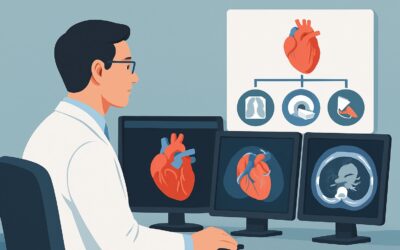
The ACR Appropriateness Criteria rate US echocardiography transthoracic resting as Usually Appropriate for this scenario, making it the frontline imaging modality. The rationale is based on its excellent balance of diagnostic utility, safety, and accessibility.
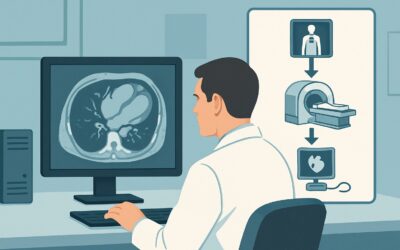
A transthoracic echocardiogram (TTE) provides a comprehensive, real-time assessment of cardiac structure and function. It accurately measures LVEF, assesses diastolic function, evaluates all four cardiac valves for stenosis or regurgitation, and can identify pericardial effusions or wall motion abnormalities. It directly addresses the primary clinical questions without exposing the patient to ionizing radiation (Relative Radiation Level: O 0 mSv). This is a particularly important consideration for oncology patients who may undergo numerous other imaging studies as part of their cancer care.
Several other modalities are also rated Usually Appropriate but are typically reserved for specific situations:
MRI heart function and morphologyis considered the gold standard for quantifying ventricular volumes and LVEF due to its high reproducibility. However, it is more costly, less widely available, and takes longer to perform than a TTE. It serves as an excellent problem-solving tool when the TTE images are technically limited (i.e., poor acoustic windows) or when a more precise LVEF measurement is needed to guide a borderline treatment decision.Nuclear medicine ventriculography(also known as a MUGA scan) was historically a common method for assessing LVEF. While also rated Usually Appropriate, it has been largely supplanted by echocardiography. Its primary drawback is the necessary exposure to ionizing radiation (Relative Radiation Level: ☢☢☢ 1-10 mSv) while providing less comprehensive structural information than an echo or cardiac MRI.
Modalities like CTA coronary arteries are rated May be appropriate because they are not designed to answer the primary question about baseline function. A CCTA would be considered only if there is a specific concern for coronary artery disease that needs to be evaluated before starting therapy, which is outside the scope of a routine baseline functional assessment.
What’s Next After the Echocardiogram? Downstream Workflow
The results of the baseline TTE directly guide the next steps in the patient’s cardio-oncology care plan. The workflow typically branches based on the measured LVEF and other structural findings.
- Normal LVEF (e.g., ≥53%) and no other significant abnormalities: The patient is generally cleared to proceed with the planned oncologic therapy. A schedule for follow-up surveillance echocardiography will be determined based on the specific drug regimen and cumulative dose.
- Borderline or mildly reduced LVEF (e.g., 40-52%): This finding triggers a more cautious approach. A formal consultation with a cardiologist or a specialized cardio-oncology service is strongly recommended. Management may involve initiating cardioprotective medications (such as beta-blockers or ACE inhibitors) and planning for more frequent cardiac monitoring during chemotherapy. In some cases, the oncology team may adjust the treatment plan to a less cardiotoxic alternative.
- Moderately to severely reduced LVEF (e.g., <40%): This is a major finding that often requires a significant change in the cancer treatment strategy. The risk of precipitating acute heart failure with cardiotoxic agents is high. The patient requires formal cardiology management, and the planned chemotherapy regimen is often modified or changed entirely.
- Indeterminate study due to poor image quality: If the TTE is technically limited and cannot provide a confident LVEF assessment, the next step is to pursue a more definitive study. The most common choice is a
MRI heart function and morphology, which is not limited by body habitus and provides highly accurate and reproducible measurements.
Pitfalls to Avoid in Baseline Cardiac Assessment
Several common pitfalls can compromise the value of baseline cardiac risk stratification in oncology patients. First is the failure to obtain a true baseline study before the first cycle of therapy begins; any assessment after treatment has started is a surveillance study, not a baseline. Second is focusing exclusively on the LVEF number while overlooking other important data in the echocardiogram report, such as the presence of significant valvular disease, diastolic dysfunction, or elevated pulmonary pressures. Third, a “low-normal” LVEF should not be dismissed; a patient with a baseline LVEF of 54% has less cardiac reserve than one starting at 70%, a nuance that may be important when using highly cardiotoxic agents. If the baseline LVEF is borderline, or if any other significant pathology is discovered, the safest step is to escalate care with a cardio-oncology consultation before proceeding with treatment.
Related ACR Topics and Tools
This article covers one specific scenario within the broader topic of cardiac assessment in oncology. For a comprehensive overview of all related clinical variants, from baseline assessment to post-therapy follow-up, please see our parent guide. The following GigHz tools can also support your clinical workflow:
- For breadth across all scenarios in Assessment of Cardiac Function and Baseline Cardiac Risk Stratification in Oncology Patients, see our parent guide: Assessment of Cardiac Function and Baseline Cardiac Risk Stratification in Oncology Patients: ACR Appropriateness Decoded.
- ACR Appropriateness Criteria Lookup — for adjacent scenarios
- Imaging Protocol Library — for technique on the recommended study
- Radiation Dose Calculator — for cumulative dose conversations
Frequently Asked Questions
Does every patient starting chemotherapy need a baseline echocardiogram?
No, not every patient. Baseline cardiac function assessment is primarily recommended for patients scheduled to receive therapies with a known risk of cardiotoxicity, such as anthracyclines (e.g., doxorubicin), HER2-targeted agents (e.g., trastuzumab), or high-dose chest radiation. The decision is guided by the specific oncologic regimen planned.
Why is a cardiac MRI also ‘Usually Appropriate’ but not the first choice?
Cardiac MRI is considered the gold standard for LVEF quantification and is excellent for assessing cardiac morphology. However, a transthoracic echocardiogram is faster, less expensive, more widely available, and involves no contraindications related to implanted devices or claustrophobia. For these practical reasons, echo is the first-line choice, with MRI reserved for cases where echo is technically inadequate or a higher degree of precision is required.
What if the patient has a pacemaker or ICD?
A transthoracic echocardiogram can still be performed effectively in patients with a pacemaker or implantable cardioverter-defibrillator (ICD). These devices are a contraindication for cardiac MRI unless they are specifically designated as MRI-conditional and appropriate protocols are followed. This makes echocardiography an even more favorable first-line option in this patient population.
Should a stress test be ordered for this baseline assessment?
For an asymptomatic patient, a stress test is not part of the routine baseline functional assessment before chemotherapy. According to the ACR, a stress echocardiogram or stress MRI is rated as ‘May be appropriate’ and would only be considered if there were specific clinical concerns for underlying coronary artery disease, which is a separate clinical question from establishing baseline LV function.
Is a chest X-ray sufficient for baseline cardiac assessment?
No. A chest radiograph is rated ‘Usually not appropriate’ for this indication. While it can show cardiomegaly or signs of overt heart failure like pulmonary edema, it provides no information about LVEF, valvular function, or diastolic function. It is not a substitute for a functional imaging study like an echocardiogram.
Reviewed by Pouyan Golshani, MD, Interventional Radiologist — May 30, 2026