What Is the Next Imaging Study for a Noninfectious Illness in an Immunocompromised Patient?

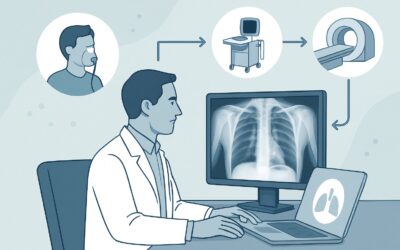
A 62-year-old man undergoing chemotherapy for lymphoma presents to the emergency department with a week of progressive dyspnea and a nonproductive cough. His initial infectious workup, including viral panels and blood cultures, is negative. A chest radiograph reveals new, bilateral interstitial opacities that weren’t present a month ago. Your clinical suspicion is shifting away from a typical pneumonia towards a noninfectious etiology, such as drug-induced pneumonitis. You need to characterize these radiographic findings with greater precision to guide management, but which imaging study is the right next step?
This exact clinical decision is addressed by the American College of Radiology (ACR) Appropriateness Criteria. For an immunocompromised patient with an abnormal chest radiograph where a noninfectious process is suspected, the ACR rates CT chest without IV contrast as Usually Appropriate. This article provides a detailed workflow for this specific scenario, exploring the differential diagnosis, the rationale for the recommended imaging, and the downstream clinical pathway.
Who Fits This Clinical Scenario?
This guidance is tailored for a specific, and often complex, patient presentation. The inclusion criteria are precise and must all be met for this workflow to apply:
- Immunocompromised Status: The patient has a compromised immune system. This includes individuals on chemotherapy, receiving immunosuppressants for solid organ or hematopoietic stem cell transplantation, on chronic high-dose corticosteroids, or with an underlying immunodeficiency.
- Acute Respiratory Illness: The patient is presenting with new or worsening respiratory symptoms such as cough, shortness of breath, or chest pain.
- Abnormal Chest Radiograph: An initial chest X-ray has already been performed and shows a definitive abnormality, such as new opacities, consolidation, or interstitial changes.
- Suspicion of Noninfectious Disease: Based on the clinical context, medication history, and initial negative infectious workup, your leading differential diagnoses are noninfectious.
It is critical to distinguish this situation from similar but distinct scenarios. This guidance does not apply if the patient has a normal or equivocal chest radiograph, as that presentation has its own recommended imaging pathway. Similarly, if the clinical and radiographic findings strongly suggest a multifocal, diffuse, or confluent pneumonia, the primary concern is infectious, which represents a different variant within the ACR guidelines. This workflow is specifically for when the diagnostic arrow points away from infection toward other causes.
What Diagnoses Are You Working Up in This Scenario?
When an immunocompromised patient develops respiratory symptoms and radiographic changes without clear evidence of infection, the differential diagnosis is broad. The primary goal of advanced imaging is to identify patterns that can narrow this list and guide subsequent management, which may include medication changes, further diagnostics, or specific therapies.
Drug-Induced Pneumonitis: This is a leading consideration in this population. Many chemotherapeutic agents, immunotherapies (e.g., checkpoint inhibitors), and other medications can cause lung injury. Imaging patterns are highly variable and can include ground-glass opacities, organizing pneumonia, or nonspecific interstitial changes. Identifying a pattern consistent with drug toxicity is a critical step toward diagnosis, which often involves withdrawing the offending agent.
Disease Progression or Malignancy: In patients with known cancer, new pulmonary opacities may represent progression of their underlying disease, such as lymphangitic carcinomatosis or new metastatic nodules. In transplant recipients, post-transplant lymphoproliferative disorder (PTLD) can manifest in the lungs. High-resolution imaging is crucial to detect and characterize these findings.
Pulmonary Edema: While often cardiogenic, non-cardiogenic pulmonary edema or Acute Respiratory Distress Syndrome (ARDS) can result from various insults common in immunocompromised patients, including drug reactions or sepsis. CT can help differentiate edema patterns (e.g., smooth septal thickening, pleural effusions) from other interstitial processes.
Diffuse Alveolar Hemorrhage (DAH): This is a less common but life-threatening condition that can be associated with chemotherapy, stem cell transplant, or autoimmune conditions. On imaging, it typically presents as diffuse ground-glass opacities or consolidation. While not specific, CT findings in the right clinical context can raise suspicion and prompt urgent bronchoscopy.
Organizing Pneumonia (OP): Formerly known as bronchiolitis obliterans organizing pneumonia (BOOP), OP is a pattern of lung injury that can be idiopathic or secondary to drugs, radiation, or infection. Classic CT findings include peripheral or peribronchovascular consolidation and ground-glass opacities.
Why Is CT Chest without IV Contrast the Recommended Study for This Presentation?
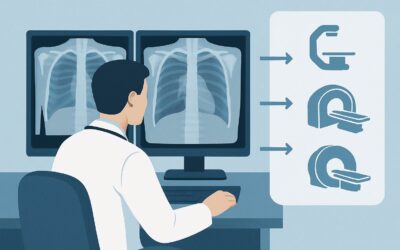
The ACR designates a non-contrast chest CT as Usually Appropriate because it provides the optimal balance of diagnostic utility and safety for evaluating the lung parenchyma in this specific scenario. The primary goal is to achieve high-resolution characterization of the lung interstitium, airways, and airspaces, for which intravenous contrast offers little to no additional information.
A non-contrast high-resolution CT (HRCT) protocol excels at delineating the fine architectural details needed to distinguish among the key differential diagnoses. It can clearly define the distribution and morphology of ground-glass opacities, reticulation, nodules, and consolidation. This level of detail allows the radiologist to suggest specific patterns—such as those typical for organizing pneumonia, nonspecific interstitial pneumonitis (a common pattern in drug toxicity), or lymphangitic spread of tumor—that directly influence the next steps in management.
Let’s consider the alternatives and why they are rated lower for this indication:
- CT chest with IV contrast is rated as May be appropriate. While contrast is essential for evaluating vascular structures (like in a suspected pulmonary embolism or aortic dissection), it is generally unnecessary for assessing the noninfectious parenchymal processes considered here. Given that many of these patients have underlying renal dysfunction or are receiving nephrotoxic agents, avoiding unnecessary IV contrast minimizes the risk of contrast-induced nephropathy.
- MRI chest without and with IV contrast is also rated as May be appropriate. However, MRI has significant limitations in evaluating the lung parenchyma due to lower spatial resolution and susceptibility to motion artifacts from breathing and cardiac motion. It is not the primary modality for characterizing interstitial lung disease and is typically reserved for specific indications like chest wall masses or certain mediastinal pathology.
- CT chest without and with IV contrast is rated Usually not appropriate. Performing both phases subjects the patient to the risks of IV contrast and a higher radiation dose without adding clinically relevant information for the primary question at hand.
The recommended study, a non-contrast chest CT, involves a moderate radiation dose (ACR Relative Radiation Level ☢☢☢, corresponding to 1-10 mSv for adults). This is a critical diagnostic trade-off that is justified by the high potential to establish a diagnosis and guide therapy in a seriously ill patient. Once you’ve decided on this study, our protocol guide covers the technique and reading principles in more detail: CT Chest Without Contrast.
What’s Next After CT Chest without IV Contrast? Downstream Workflow
The results of the non-contrast chest CT will guide your subsequent management, creating distinct clinical pathways. The report should not be the end of the diagnostic process but rather a crucial branch point.
If the CT findings are highly suggestive of a specific process:
- Drug-Induced Pneumonitis: If the pattern is classic for a known drug toxicity (e.g., organizing pneumonia in a patient on a checkpoint inhibitor), the next step is often a clinical diagnosis. This involves discontinuing the suspected medication in consultation with the patient’s oncologist or primary specialist and often initiating corticosteroid therapy.
- Malignancy/Disease Progression: If the CT reveals new nodules, masses, or lymphangitic spread consistent with the patient’s known cancer, this may confirm disease progression. The next step would be discussion with oncology about changes to the treatment plan. If the findings are new and indeterminate, an Image-guided transthoracic needle biopsy (rated May be appropriate) may be pursued for a tissue diagnosis.
If the CT findings are nonspecific or indeterminate:
When the CT shows diffuse ground-glass opacities or consolidation that could represent DAH, edema, or an atypical infection that was missed on initial workup, the next step is often more invasive diagnostics. Bronchoscopy with bronchoalveolar lavage (BAL) is frequently performed to obtain samples for cytology and microbiology, which can definitively rule out occult infection or confirm alveolar hemorrhage.
If the CT is negative or normal:
In the rare case that a high-resolution CT is normal despite an abnormal chest radiograph and persistent symptoms, the focus may shift. Re-evaluation for cardiac causes of dyspnea (e.g., with an echocardiogram), pulmonary vascular disease (though less likely without CT signs), or neuromuscular weakness may be warranted. The abnormal radiograph may be reconsidered as a possible artifact or a subtle finding not yet apparent on CT.
Pitfalls to Avoid (and When to Get Help)
Navigating this clinical scenario requires careful integration of clinical and imaging data. Several common pitfalls can lead to diagnostic delays or errors.
- Prematurely Excluding Infection: An initial negative infectious workup is not foolproof. Atypical organisms can be difficult to detect, and some noninfectious processes can coexist with infection. Maintain a low threshold to reconsider infection if the patient’s condition worsens or fails to improve with initial therapy.
- Underutilizing Clinical History: The radiologist’s interpretation is heavily dependent on the clinical context. Always provide a detailed history, including the patient’s underlying condition, current medications (especially new ones), and the primary clinical question.
- Misinterpreting Organizing Pneumonia: While OP can be a primary noninfectious process, it is also a common reaction to infection. A finding of OP on CT does not automatically exclude an infectious cause.
If the patient demonstrates rapid clinical deterioration, severe hypoxemia, or hemodynamic instability, this constitutes a medical emergency. The immediate priority is resuscitation and escalation to an intensive care unit (ICU) setting. Imaging should be expedited but must not delay life-saving interventions.
Related ACR Topics and Tools
This article focuses on one specific clinical variant. For a comprehensive overview of imaging decisions across all related presentations, please consult our parent guide. Additionally, GigHz provides several tools to help clinicians apply these standards in practice.
- Parent Topic Hub: For breadth across all scenarios in Acute Respiratory Illness in Immunocompromised Patients, see our parent guide: Acute Respiratory Illness in Immunocompromised Patients: ACR Appropriateness Decoded.
- ACR Criteria Lookup: To explore other clinical scenarios and their corresponding imaging recommendations, use the Imaging Appropriateness Selector.
- Imaging Protocol Library: For detailed technical specifications on imaging studies, visit the Imaging Protocol Library.
- Radiation Dose Calculator: To discuss cumulative radiation exposure with patients, our Radiation Dose Calculator can be a helpful resource.
Frequently Asked Questions
Why not order a CT with IV contrast just in case, to get more information?
For the primary goal of evaluating noninfectious lung parenchymal disease, IV contrast adds little to no diagnostic information. A non-contrast CT provides excellent high-resolution detail of the lung interstitium. Adding contrast unnecessarily exposes the patient to risks like allergic reaction and contrast-induced nephropathy, a significant concern in this often-fragile patient population who may be on other nephrotoxic drugs.
What if I am also concerned about a pulmonary embolism (PE) in this patient?
If PE is a leading clinical concern, the appropriate study is a CT pulmonary angiogram (CTPA), not a standard non-contrast or contrast-enhanced chest CT. This workflow is specifically for when the primary differential is noninfectious parenchymal disease. If your suspicion for PE is high, you should order a dedicated CTPA protocol.
The patient is young. Should I consider a chest MRI to avoid radiation?
While MRI avoids ionizing radiation, the ACR rates it as ‘May be appropriate’ because it is significantly inferior to CT for evaluating lung parenchyma. Motion from breathing and lower spatial resolution make it difficult to characterize the fine details of interstitial lung disease. The diagnostic value of a high-resolution CT is considered to outweigh the radiation risk in this acute, high-stakes clinical setting.
My patient’s chest X-ray was read as ‘diffuse opacities.’ Does this workflow still apply?
Yes, as long as your clinical suspicion is for a noninfectious cause. The term ‘diffuse opacities’ is a radiographic finding, not a diagnosis. This workflow is designed for exactly this situation: you have an abnormal radiograph, and you need a more advanced study like a non-contrast CT to characterize those opacities and determine if they fit a pattern of drug toxicity, malignancy, edema, or another noninfectious process.
If the CT suggests drug-induced pneumonitis, is a lung biopsy still necessary?
Often, no. If the CT pattern is highly characteristic of a known toxicity from a medication the patient is taking, and there is no evidence of infection, a clinical diagnosis is frequently made. The next step is typically to stop the offending drug and observe for clinical improvement, sometimes with the addition of steroids. Biopsy is usually reserved for cases where the diagnosis remains uncertain after non-invasive workup or if the patient fails to improve with initial management.
Reviewed by Pouyan Golshani, MD, Interventional Radiologist — May 26, 2026