What’s the Best Initial Imaging for Suspected Inflammatory or Infectious Aortic Disease?

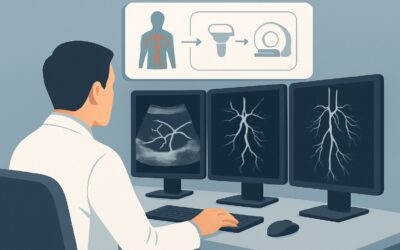
A 55-year-old woman presents with a two-month history of low-grade fevers, unintentional weight loss, and fatigue. Her inflammatory markers are markedly elevated. On examination, you note asymmetric blood pressures in her arms and a new, faint bruit over her abdomen. You suspect a large-vessel vasculitis affecting the aorta. The clinical picture is concerning, but the diagnosis hinges on visualizing the vessel wall itself. Which imaging study will provide the most diagnostic clarity while balancing risks? This article details the clinical workflow for selecting the initial imaging study in a patient with suspected inflammatory, infectious, neoplastic, or metabolic nontraumatic aortic disease. According to the American College of Radiology (ACR) Appropriateness Criteria, MRA chest and abdomen without and with IV contrast is rated Usually Appropriate for this presentation.
Who Fits This Clinical Scenario for Suspected Aortitis?
This guidance applies to patients presenting with signs and symptoms suggestive of a systemic process involving the aorta, distinct from acute aortic syndromes or chronic atherosclerosis. The key feature is the suspicion of inflammation, infection, or another infiltrative process affecting the aortic wall.
Inclusion criteria for this scenario typically involve:
- Unexplained constitutional symptoms (fever, malaise, weight loss) paired with elevated inflammatory markers (e.g., Erythrocyte Sedimentation Rate [ESR], C-Reactive Protein [CRP]).
- Clinical findings suggestive of large-vessel vasculitis, such as asymmetric pulses or blood pressures, limb claudication in a young patient, or unexplained bruits.
- Suspicion of infectious aortitis in a patient with a known or suspected source of bacteremia.
- Evaluation for aortic involvement in a patient with a known systemic inflammatory or fibroinflammatory condition, such as IgG4-related disease or sarcoidosis.
This workflow is NOT for patients with:
- Acute, severe chest or back pain concerning for aortic dissection. This is a medical emergency requiring a different, more rapid imaging protocol, typically starting with CTA.
- Known severe atherosclerotic disease without inflammatory features. This presentation falls under the Degenerative or atherosclerotic aortic disease scenario.
- Screening or surveillance for a known congenital condition like Marfan syndrome or Loeys-Dietz syndrome. This follows the Congenital aortic disease pathway.
What Diagnoses Are You Working Up in This Scenario?
The choice of imaging is driven by a differential diagnosis centered on processes that alter the aortic wall’s structure and biology. The goal is to visualize mural thickening, edema, enhancement, or associated complications like aneurysms or periaortic changes.
Large-Vessel Vasculitis (LVV)
This is often the primary consideration. LVV encompasses conditions like Takayasu arteritis, which typically affects women under 50, and Giant Cell Arteritis (GCA), which affects adults over 50. Both can cause inflammation within the aortic wall, leading to thickening, stenosis, or aneurysmal degeneration. Imaging is crucial for assessing the extent and activity of the disease.
Infectious (Mycotic) Aortitis
A less common but life-threatening condition, infectious aortitis results from microbial invasion of the aortic wall, often in the setting of bacteremia (e.g., from Staphylococcus aureus or Salmonella species). It can lead to rapid aneurysm formation and rupture. Imaging aims to identify saccular aneurysms, periaortic inflammation, fluid collections, or gas.
IgG4-Related Disease
This is a systemic fibroinflammatory condition that can manifest as periaortitis or an “inflammatory aortic aneurysm.” The hallmark is a cuff of soft tissue surrounding the aorta, which can be clearly delineated on cross-sectional imaging. Distinguishing this from other causes of aortitis is key, as it responds well to steroid therapy.
Primary Aortic Neoplasms
Though exceedingly rare, primary tumors of the aorta (such as sarcomas) can arise from the vessel wall. They may present with nonspecific symptoms or embolic phenomena. Imaging may reveal an intraluminal or mural mass, though findings can be nonspecific and mimic thrombus or inflammation.
Why Is MRA of the Chest and Abdomen the Recommended Study for Suspected Aortitis?
The ACR designates MRA chest and abdomen without and with IV contrast as Usually Appropriate because it directly visualizes the pathology of aortic wall inflammation without using ionizing radiation. This is a critical advantage, especially in younger patients with conditions like Takayasu arteritis who will likely need multiple follow-up scans over their lifetime.
MRA provides superior soft-tissue contrast compared to CT, allowing for detailed assessment of the aortic wall. Specific sequences can identify:
- Mural Edema: High signal on T2-weighted, fat-suppressed images suggests active inflammation.
- Mural Thickening: MRA can precisely measure the thickness of the aortic wall.
- Mural Enhancement: Avid enhancement after gadolinium administration is another key sign of active inflammation.
- Anatomic Detail: MRA also provides excellent delineation of the aortic lumen to assess for stenosis, occlusion, or aneurysmal changes.
While MRA is highly valued, other modalities are also rated for this scenario. CTA chest and abdomen with IV contrast and FDG-PET/CT skull base to mid-thigh are also rated Usually Appropriate. CTA offers excellent spatial resolution and speed but delivers a high radiation dose (☢☢☢☢ 10-30 mSv). It is a strong alternative when MRA is contraindicated (e.g., incompatible implants, severe claustrophobia) or unavailable. FDG-PET/CT excels at detecting metabolic activity and can be very sensitive for active inflammation, but it also involves high radiation and is often reserved for problem-solving or assessing treatment response.
Conversely, modalities like US echocardiography (transesophageal or transthoracic) are rated Usually not appropriate. While excellent for the aortic root and valve, they provide a very limited field of view and cannot evaluate the entire thoracic and abdominal aorta, which is essential for assessing a systemic disease.
When ordering the MRA, be specific. Requesting an “MRA for vasculitis” or “aortitis protocol” can ensure the radiology department performs the necessary pre- and post-contrast sequences, including fat-suppressed T1 and T2-weighted imaging, to maximize diagnostic yield.
What’s Next After MRA? Downstream Workflow
The MRA results will guide your next steps, branching into distinct clinical pathways. The goal is to move from radiologic findings to a definitive diagnosis and treatment plan.
If the MRA is positive for aortitis:
Findings of mural thickening, edema, and enhancement confirm large-vessel inflammation. The next step is typically a consultation with a rheumatologist to establish a specific diagnosis (e.g., GCA, Takayasu arteritis) and initiate immunosuppressive therapy, often with glucocorticoids and other steroid-sparing agents. For suspected infectious aortitis (e.g., findings of a saccular aneurysm with periaortic stranding), an urgent vascular surgery consultation and infectious disease consult are critical for planning antibiotic therapy and potential surgical or endovascular repair.
If the MRA is negative:
A technically adequate, negative MRA makes active, significant aortitis much less likely. The workup should pivot to other causes of the patient’s constitutional symptoms and elevated inflammatory markers. This may involve investigating for occult malignancy, chronic infection, or other rheumatologic conditions. The diagnostic focus shifts away from the aorta itself.
If the MRA is indeterminate:
Occasionally, findings may be equivocal, showing mild, nonspecific wall thickening without definitive edema or enhancement. In this situation, a different imaging modality may add value. An FDG-PET/CT, rated Usually Appropriate, can be an excellent problem-solving tool. Increased FDG uptake in the aortic wall would confirm active inflammation, whereas a lack of uptake would argue against it. This can be particularly useful in distinguishing active disease from chronic, “burned-out” changes.
Pitfalls to Avoid (and When to Get Help)
Navigating the workup for suspected aortitis requires careful attention to clinical and imaging details. Here are a few common pitfalls to avoid:
- Incomplete Imaging: Ordering an MRA or CTA of only the chest or abdomen can miss disease. Aortitis is a systemic process, and imaging of the entire aorta and its main branches is essential for initial staging.
- Ignoring Contraindications: Failing to screen for MRA contraindications (e.g., pacemakers, certain implants, severe renal dysfunction precluding gadolinium) can lead to delays and patient safety issues. Always have a backup plan, like CTA.
- Misinterpreting Chronic Changes: Fibrotic, “burned-out” vasculitis can cause wall thickening without active inflammation. Relying on enhancement and edema as markers of activity is key to avoiding unnecessary immunosuppression.
- Delaying Urgent Consultation: If imaging suggests an infectious etiology or a rapidly expanding aneurysm, do not delay. Immediate consultation with vascular surgery and infectious disease specialists is paramount.
Related ACR Topics and Tools
For a comprehensive overview of imaging for all nontraumatic aortic conditions, from atherosclerosis to congenital anomalies, please see our parent guide. It provides a high-level summary of all related scenarios and serves as a hub for these depth pieces.
- For breadth across all scenarios in Nontraumatic Aortic Disease, see our parent guide: Nontraumatic Aortic Disease: ACR Appropriateness Decoded.
- To explore other clinical presentations and their recommended imaging, use the ACR Appropriateness Criteria Lookup.
- For detailed technical parameters of imaging studies, consult the Imaging Protocol Library.
- To discuss radiation exposure with your patients, the Radiation Dose Calculator can help quantify and contextualize the dose from CT scans.
Frequently Asked Questions
Why is MRA preferred over CTA if both are ‘Usually Appropriate’ for suspected aortitis?
MRA is often preferred because it does not use ionizing radiation, which is a significant benefit for younger patients or those who may require serial imaging to monitor disease activity. It also offers superior soft-tissue contrast for detecting subtle aortic wall edema and inflammation, which are key features of active vasculitis. CTA is an excellent alternative if MRA is contraindicated or unavailable.
What if my patient has renal insufficiency and cannot receive gadolinium contrast for an MRA?
In cases of severe renal dysfunction where gadolinium is contraindicated, a non-contrast MRA can still be valuable for assessing mural thickening and edema on T2-weighted sequences. However, a CTA with IV contrast may become the preferred study, provided the patient’s renal function can tolerate iodinated contrast (often with pre-hydration). Alternatively, an FDG-PET/CT, which does not require gadolinium, is another excellent option rated ‘Usually Appropriate’ for assessing inflammatory activity.
Can a chest radiograph help in the initial workup for suspected aortitis?
A chest radiograph is rated ‘May be appropriate’ but has very low sensitivity for aortitis. It cannot visualize the aortic wall directly. However, it might show secondary signs like a widened mediastinum or an abnormal aortic contour, which could prompt further cross-sectional imaging. It is not a definitive study for ruling in or ruling out this diagnosis.
How does the imaging workup differ for Giant Cell Arteritis (GCA) versus Takayasu arteritis?
The initial imaging principle is the same: visualize the entire aorta and its main branches. Both MRA and CTA are effective. The primary difference is often the patient’s age and the typical distribution of disease. In GCA, there is often involvement of the cranial arteries, so imaging of the neck and head may also be warranted. In Takayasu arteritis, which affects younger patients, there is a stronger preference for non-radiation modalities like MRA for both initial diagnosis and long-term follow-up.
Is a temporal artery biopsy still necessary if imaging shows clear evidence of aortitis?
This is a clinical decision made in consultation with a rheumatologist. If a patient has classic signs of cranial GCA (headache, jaw claudication) and imaging confirms large-vessel aortitis, a temporal artery biopsy may still be performed for definitive histopathologic confirmation, as it remains a gold standard. However, in a patient with isolated aortitis and no cranial symptoms, imaging findings may be sufficient to make the diagnosis and initiate treatment, a practice that is becoming more common.
Reviewed by Pouyan Golshani, MD, Interventional Radiologist — May 29, 2026