What’s the Next Imaging Step After a Tibial Plateau Fracture on X-ray?

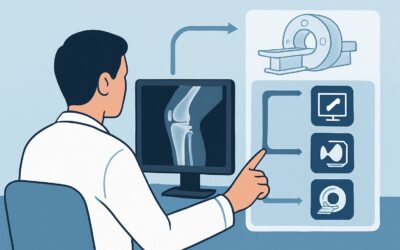
It’s a busy shift in the emergency department when you see a 45-year-old who took a bad fall while skiing. The initial radiographs are definitive: a tibial plateau fracture. While the bone injury is clear, the patient’s knee is significantly swollen and unstable on exam, raising your suspicion for associated ligamentous or meniscal damage. The orthopedic surgeon needs a complete picture for surgical planning. This scenario—a confirmed tibial plateau fracture with suspected additional injury—requires a specific next step in the imaging workflow. This article details the American College of Radiology (ACR) Appropriateness Criteria for this exact presentation, explaining why one modality is typically the best choice to guide definitive management. For this clinical question, the ACR rates MRI knee without IV contrast as Usually Appropriate.
Who Fits This Clinical Scenario?
This guidance applies to a well-defined patient population: an adult or a child aged five years or older who has sustained an acute fall or twisting injury to the knee. The crucial starting point is that initial radiographs have already been performed and have positively identified a tibial plateau fracture. The final inclusion criterion is a clinical suspicion that there is more to the injury than just the fracture—specifically, damage to the knee’s soft-tissue structures like ligaments, menisci, or articular cartilage.
It is critical to distinguish this situation from similar but distinct clinical presentations that follow different diagnostic pathways:
- No Fracture on Radiographs: If the initial X-rays are negative but you still suspect an occult fracture due to high clinical suspicion (e.g., focal tenderness, inability to bear weight), the workup is different. This patient falls under the occult fracture scenarios within the broader Acute Trauma to the Knee topic.
- High-Energy Trauma or Dislocation: If the injury resulted from a major mechanism like a motor vehicle accident or involves a knee dislocation, the primary concern may shift to neurovascular injury. In these cases, a CT angiogram (CTA) might be the first-line advanced imaging study, a separate clinical consideration.
- Isolated Patellar Tenderness: If the trauma and clinical findings are localized to the patella without a tibial plateau fracture, the differential and imaging strategy will focus on the extensor mechanism.
This article is exclusively for the patient with a known tibial plateau fracture on X-ray where the key question is the extent of associated internal derangement.
What Diagnoses Are You Working Up in This Scenario?
When a tibial plateau fracture is identified, the imaging workup expands beyond simply confirming the break. The goal is to fully characterize the injury to inform treatment, which often hinges on the stability of the joint and the integrity of its supporting structures. The differential diagnosis for associated injuries is broad.
Meniscal Tears are extremely common in conjunction with tibial plateau fractures, particularly lateral meniscal tears with lateral plateau fractures. Identifying the presence, location, and type of tear (e.g., a displaced bucket-handle tear) is critical, as it may necessitate a meniscal repair at the time of fracture fixation to preserve joint function and prevent long-term degenerative changes.
Ligamentous Injury is another major concern. The anterior cruciate ligament (ACL), posterior cruciate ligament (PCL), and the collateral ligaments (MCL and LCL) provide crucial knee stability. A complete ligamentous rupture can render the knee unstable even after the fracture has healed, often requiring surgical reconstruction. Certain fracture patterns, like a Segond fracture (an avulsion of the lateral tibial plateau), are highly associated with ACL tears.
Articular Cartilage Damage is an expected consequence of any intra-articular fracture. Advanced imaging can assess the degree of chondral injury, such as impaction, delamination, or the presence of osteochondral fragments. This information helps predict the patient’s risk for post-traumatic osteoarthritis and can influence surgical technique.
Comprehensive Fracture Characterization is also a goal. While radiographs identify the fracture, they can underestimate its complexity. Advanced imaging is needed to precisely delineate fracture lines, quantify the amount of articular surface depression, and assess the degree of comminution, all of which are vital for preoperative planning.
Why Is MRI Knee without IV Contrast the Recommended Study for This Presentation?
For a patient with a known tibial plateau fracture and suspected soft-tissue injury, the ACR designates MRI knee without IV contrast as a Usually Appropriate study. The rationale is grounded in MRI’s unparalleled ability to visualize the full spectrum of potential injuries in a single, non-invasive examination.
MRI provides superior soft-tissue contrast, making it the gold standard for evaluating the menisci, cruciate and collateral ligaments, and articular cartilage. It can directly visualize tears, sprains, and chondral defects that are invisible on other modalities. This comprehensive assessment is essential for determining whether a patient requires surgery and for guiding the specific surgical plan—for example, whether to perform an isolated open reduction and internal fixation (ORIF) of the fracture or to combine it with an arthroscopic meniscal repair or ligament reconstruction.
While MRI is a top choice, it’s important to understand the role of alternatives:
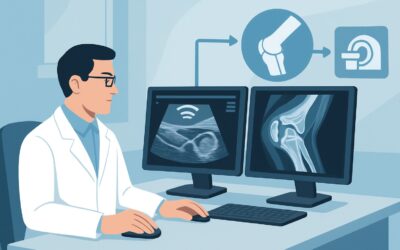
- CT knee without IV contrast is also rated Usually Appropriate. CT offers exceptional detail of the bony anatomy, surpassing MRI in its ability to delineate complex fracture patterns, comminution, and the precise degree of articular depression. It is also significantly faster than MRI. However, its major limitation is its inability to directly visualize menisci, ligaments, or cartilage. The choice between MRI and CT often depends on the most pressing clinical question. If the primary need is to map the bone for surgical fixation, CT is an excellent choice. If assessing joint stability and soft-tissue integrity is the priority, MRI is superior. Often, MRI provides sufficient bony detail while also answering the critical soft-tissue questions.
- US knee (Ultrasound) is rated Usually Not Appropriate. While ultrasound can be useful for evaluating specific superficial structures like the collateral ligaments or for identifying an effusion, it cannot adequately assess intra-articular structures like the cruciate ligaments and menisci, nor can it fully characterize the bone fracture. Its utility in this complex traumatic setting is very limited.
From a safety perspective, MRI has a distinct advantage as it involves no ionizing radiation (0 mSv). In contrast, CT involves a low radiation dose (adult RRL ☢ <0.1 mSv; pediatric RRL ☢☢ 0.03-0.3 mSv). This is an important consideration, particularly in pediatric or young adult patients. Furthermore, intravenous contrast is not necessary for evaluating acute traumatic injuries, which is why both MRI knee without and with IV contrast and CT knee with IV contrast are rated Usually Not Appropriate.
Once you’ve decided on the top procedure, our protocol guide covers the technique, contrast, and reading principles: MRI Knee Without Contrast.
What’s Next After MRI Knee without IV Contrast? Downstream Workflow
The results of the knee MRI will directly shape the patient’s treatment plan, creating a clear decision tree for the orthopedic team. The findings dictate whether management will be operative or non-operative and guide the specifics of any planned surgical intervention.
- If the MRI confirms significant soft-tissue injury: Findings such as a complete ACL rupture, a displaced bucket-handle meniscal tear, or multi-ligamentous injury, in addition to the tibial plateau fracture, almost always necessitate surgical management. The MRI report provides the surgeon with a detailed roadmap, allowing for a single, comprehensive surgical procedure to address both the fracture fixation and the soft-tissue repair or reconstruction. This avoids missed injuries and improves long-term functional outcomes.
- If the MRI shows no significant soft-tissue injury: If the MRI confirms an isolated, non-displaced, or minimally displaced tibial plateau fracture without any unstable meniscal tears or complete ligament ruptures, the patient may be a candidate for non-operative management. This typically involves a period of non-weight-bearing in a hinged knee brace or cast, followed by physical therapy. The MRI provides the confidence to pursue this conservative path.
- If the MRI shows a complex fracture pattern: In cases where the fracture comminution or articular depression is more severe than appreciated on radiographs, the MRI (or a complementary CT scan) becomes essential for preoperative planning. The surgeon can use the 3D data to plan screw placement, decide on the need for bone grafting, and anticipate the complexity of the reduction.
In essence, the MRI result is the lynchpin for definitive treatment planning. It stratifies patients into surgical and non-surgical pathways and provides the anatomical detail required for a successful outcome.
Pitfalls to Avoid (and When to Get Help)
Navigating the workup for a tibial plateau fracture requires careful consideration to avoid common diagnostic and management errors.
First, avoid the pitfall of defaulting to CT when the primary clinical question is about stability. While CT is excellent for bone, it can provide false reassurance by missing a critical ligamentous injury that will lead to long-term instability if not addressed.
Second, always maintain a high index of suspicion for vascular injury, especially with high-energy mechanisms, bicondylar fractures, or any clinical signs of vascular compromise (e.g., diminished pulses, pallor, paresthesias). A standard MRI is not a vascular study. If vascular injury is suspected, a CTA is the appropriate test and should be obtained urgently.
Third, do not overlook the risk of compartment syndrome. Severe swelling and pain out of proportion to the injury are red flags. This is a clinical diagnosis that requires immediate orthopedic consultation and should not be delayed for advanced imaging.
If there are any “hard signs” of vascular compromise or clinical evidence of compartment syndrome, escalate immediately for an urgent orthopedic and/or vascular surgery consultation.
Related ACR Topics and Tools
This article focuses on a single, specific clinical scenario. For a comprehensive overview of all knee trauma presentations and their corresponding imaging recommendations, please consult our parent guide. You can also use the tools below to explore adjacent scenarios, review imaging techniques, or discuss radiation dose with your patients.
- For breadth across all scenarios in Acute Trauma to the Knee, see our parent guide: Acute Trauma to the Knee: ACR Appropriateness Decoded.
- Imaging Appropriateness Selector — for adjacent scenarios
- Imaging Protocol Library — for technique on the recommended study
- Radiation Dose Calculator — for cumulative dose conversations
Frequently Asked Questions
Why is CT knee without contrast also rated ‘Usually Appropriate’ if MRI is better for soft tissues?
CT is rated ‘Usually Appropriate’ because it provides superior visualization of complex bone anatomy, such as the degree of fracture comminution and articular surface depression. This information is critical for surgical planning. The choice between MRI and CT depends on the primary clinical question: if mapping the bone is the priority, CT is excellent. If assessing stability and associated soft-tissue injuries is the main goal, MRI is the preferred study as it can evaluate both bone and soft tissues comprehensively.
Is an MRI needed for every tibial plateau fracture seen on X-ray?
Not universally. An MRI is strongly indicated when there is clinical suspicion of an associated soft-tissue injury that would change management. If the physical exam suggests ligamentous instability (e.g., positive Lachman or varus/valgus stress test) or a meniscal tear (e.g., joint line tenderness, locking), an MRI is crucial. For minimally displaced, stable fractures with a benign exam, non-operative management may be initiated without an MRI.
Do I need to order the MRI with IV contrast?
No. For acute traumatic injuries of the knee, intravenous contrast is not necessary to evaluate the ligaments, menisci, cartilage, or bone. The ACR rates ‘MRI knee without and with IV contrast’ as ‘Usually Not Appropriate’ for this scenario. A non-contrast study provides all the necessary diagnostic information.
How quickly does this MRI need to be done?
In a hemodynamically stable patient with no signs of neurovascular compromise or compartment syndrome, the MRI is not a true emergency and can typically be performed on an urgent outpatient basis within a few days. The timing should be coordinated with the orthopedic service to ensure the results are available to guide definitive treatment planning without undue delay.
What if the patient has a contraindication to MRI, like an incompatible pacemaker?
If a patient has an absolute contraindication to MRI, CT knee without contrast becomes the best alternative. While it will not directly visualize the ligaments or menisci, it will provide detailed information about the fracture pattern for surgical planning. The assessment of soft-tissue stability would then rely more heavily on the physical examination and intraoperative evaluation.
Reviewed by Pouyan Golshani, MD, Interventional Radiologist — May 26, 2026