When to Order Imaging for Dizziness and Ataxia: ACR Appropriateness Decoded

It’s 11 p.m. in the emergency department, and you are evaluating a 68-year-old patient with acute, persistent vertigo. The neurologic exam is concerning for a central cause. You know imaging is needed, but the best initial study—a non-contrast computed tomography (CT) to rule out hemorrhage or a magnetic resonance imaging (MRI) for its superior sensitivity in the posterior fossa—is the immediate question. Differentiating between a benign peripheral process and a life-threatening central one, like a cerebellar stroke, often hinges on selecting the right imaging modality. This guide decodes the American College of Radiology (ACR) Appropriateness Criteria for dizziness and ataxia, providing clear, evidence-based recommendations to help you make the right call efficiently and confidently, ensuring optimal patient care while minimizing unnecessary radiation and cost.
What Does ACR Dizziness and Ataxia Cover?
The ACR Appropriateness Criteria for Dizziness and Ataxia provide guidance for imaging adult patients presenting with these common and often complex neurologic symptoms. The criteria are structured around specific clinical variants that help stratify patients based on the nature, timing, and associated features of their symptoms. This topic covers a range of scenarios, from brief, position-triggered vertigo to acute, persistent vertigo and chronic disequilibrium with ataxia.
Specifically, these guidelines address initial imaging for:
- Episodic vertigo suggestive of benign paroxysmal positional vertigo (BPPV).
- Acute persistent vertigo, differentiated by whether the clinical exam (including the HINTS exam) points to a peripheral or central cause.
- Chronic or recurrent vertigo, particularly when associated with unilateral hearing loss, tinnitus, or other brainstem deficits.
- Chronic disequilibrium, distinguished by signs of cerebellar ataxia versus sensory or proprioceptive ataxia.
- Nonspecific dizziness in patients without clear vertigo, ataxia, or other focal neurologic signs.
These criteria do not cover dizziness in the context of known or suspected trauma, syncope without vertigo or ataxia, or pediatric-specific conditions, which may require different diagnostic pathways.
What Imaging Should I Order for Dizziness and Ataxia? Recommendations by Clinical Scenario
Choosing the right imaging study for dizziness and ataxia depends entirely on the clinical context. The ACR guidelines stratify recommendations based on key features from the patient’s history and physical examination.
For an adult with brief episodic vertigo triggered by specific head movements, consistent with BPPV, the ACR states that nearly all forms of imaging are Usually Not Appropriate. The diagnosis is clinical, often confirmed with a Dix-Hallpike maneuver, and imaging is unlikely to be contributory.
In cases of adult acute persistent vertigo, the neurologic exam is paramount. If the exam is normal and the HINTS (Head-Impulse, Nystagmus, Test-of-Skew) examination is consistent with a peripheral cause (e.g., vestibular neuritis), most imaging is not immediately necessary. However, an MRI of the head without IV contrast is rated as May Be Appropriate to exclude an unexpected central pathology, though observation may also be reasonable.
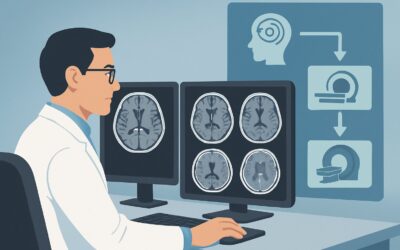
Conversely, for an adult with acute persistent vertigo and an abnormal neurologic exam or a HINTS exam consistent with central vertigo, imaging is critical. An MRI of the head without IV contrast is Usually Appropriate and is the preferred study due to its high sensitivity for acute ischemia in the posterior fossa. A CT of the head without IV contrast is rated as May Be Appropriate and is often used as the first-line test in the emergency setting to rapidly exclude hemorrhage, though it has poor sensitivity for early ischemic stroke in the cerebellum or brainstem.
For patients with chronic recurrent vertigo associated with unilateral hearing loss or tinnitus, the concern is for a structural lesion like a vestibular schwannoma. An MRI of the head and internal auditory canal without and with IV contrast is Usually Appropriate. A CT of the temporal bone without IV contrast is also Usually Appropriate and can be a valuable alternative, especially for evaluating osseous anatomy.
When chronic recurrent vertigo is associated with other brainstem neurologic deficits, a vascular cause is often suspected. In this scenario, vascular imaging is key. An MRA of the head and neck (with, without, or with/without contrast) and an MRI of the head without IV contrast are all rated as Usually Appropriate. A CTA of the head and neck with IV contrast is also Usually Appropriate.
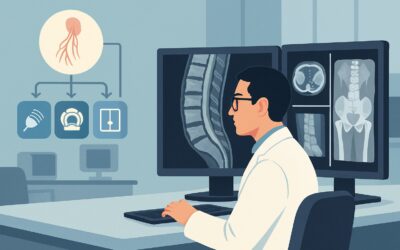
For an adult with chronic disequilibrium with signs of cerebellar ataxia, an MRI of the head without IV contrast and an MRI of the head without and with IV contrast are both considered Usually Appropriate to assess for cerebellar atrophy, tumors, or demyelination. If the presentation is one of chronic disequilibrium with signs of sensory or proprioceptive ataxia, the focus shifts to the spinal cord. An MRI of the cervical and thoracic spine without IV contrast and an MRI of the cervical and thoracic spine without and with IV contrast are both Usually Appropriate to evaluate for compressive myelopathy or intrinsic cord lesions.
Finally, for an adult with nonspecific dizziness without true vertigo, ataxia, or other neurologic deficits, the diagnostic yield of imaging is lower. An MRI of the head without IV contrast is rated as May Be Appropriate, but a thorough clinical evaluation to rule out non-neurologic causes is essential before proceeding with imaging.
ACR Imaging Recommendations Table
| Clinical Scenario | Top Procedure | ACR Rating | Adult RRL | Pediatric RRL |
|---|---|---|---|---|
| Adult. Brief episodic vertigo. Triggered by specific head movements (eg, Dix-Hallpike maneuver). Initial imaging. | No imaging usually appropriate | Usually Not Appropriate | N/A | N/A |
| Adult. Acute persistent vertigo. Normal neurologic examination and HINTS examination examination consistent with peripheral vertigo. Initial imaging. | MRI head without IV contrast | May be appropriate | O 0 mSv | O 0 mSv [ped] |
| Adult. Acute persistent vertigo. Abnormal neurologic examination or HINTS examination is consistent with central vertigo. Initial imaging. | MRI head without IV contrast | Usually appropriate | O 0 mSv | O 0 mSv [ped] |
| Adult. Chronic recurrent vertigo. Associated with unilateral hearing loss or tinnitus. Initial imaging. | MRI head and internal auditory canal without and with IV contrast | Usually appropriate | O 0 mSv | O 0 mSv [ped] |
| Adult. Chronic recurrent vertigo. Associated with other brainstem neurologic deficits. Initial imaging. | MRA head and neck / MRI head without IV contrast | Usually appropriate | O 0 mSv | O 0 mSv [ped] |
| Adult. Chronic disequilibrium with signs of cerebellar ataxia. Initial imaging. | MRI head without IV contrast | Usually appropriate | O 0 mSv | O 0 mSv [ped] |
| Adult. Chronic disequilibrium with signs of sensory or proprioceptive ataxia. Initial imaging. | MRI cervical and thoracic spine without IV contrast | Usually appropriate | O 0 mSv | O 0 mSv [ped] |
| Adult. Nonspecific dizziness without vertigo, ataxia, or other neurologic deficits. Initial imaging. | MRI head without IV contrast | May be appropriate | O 0 mSv | O 0 mSv [ped] |
Adult vs. Pediatric Dizziness and Ataxia Imaging: Radiation Dose Tradeoffs
While the ACR criteria for dizziness and ataxia are primarily focused on adult presentations, the principles of radiation safety are crucial when imaging is considered in younger patients. The concept of As Low As Reasonably Achievable (ALARA) is paramount. For any CT-based study, the pediatric relative radiation level (RRL) is often lower than the adult equivalent, reflecting the use of dose-reduction techniques tailored to smaller body habitus. For example, a CT of the head in an adult carries an RRL of ☢ ☢ ☢ (1-10 mSv), while the pediatric equivalent is often ☢ ☢ ☢ (0.3-3 mSv).
This dose difference underscores why non-ionizing modalities like MRI are strongly preferred in both adult and pediatric populations when clinically appropriate, as they carry an RRL of O (0 mSv). The cumulative effect of medical radiation is a significant concern in children and young adults, as they have a longer lifetime in which potential stochastic effects of radiation could manifest. Therefore, when evaluating a pediatric patient with these symptoms, there should be an even higher threshold for ordering CT scans, and MRI should be the modality of choice whenever it can provide the necessary diagnostic information, even if it requires sedation or is less readily available.
Imaging Protocol Details for Dizziness and Ataxia
Once you’ve decided on the right study based on the clinical scenario, ensuring the correct imaging protocol is used is the next critical step. A standard brain MRI protocol may not be sufficient to evaluate the internal auditory canals, and a non-contrast CT may miss a vascular dissection. Our protocol guides provide detailed, scannable information on technique, contrast administration, and key interpretation principles for the studies recommended in these guidelines.
Tools to Help You Order the Right Study
Navigating imaging guidelines during a busy clinical shift can be challenging. GigHz provides a suite of tools designed to streamline this process, helping you apply evidence-based medicine at the point of care.
The Imaging Appropriateness Selector allows you to quickly search the full ACR guidelines for thousands of clinical scenarios beyond dizziness and ataxia, ensuring you are always ordering the most appropriate test for your patient’s specific presentation.
Our Imaging Protocol Library offers detailed, institution-agnostic protocols for hundreds of common and advanced imaging studies. It’s a practical resource for understanding the technical details of the studies you order, from MRI sequences to CT contrast timing.
For discussions with patients about the risks and benefits of imaging, the Radiation Dose Calculator is an invaluable tool. It helps you estimate and track cumulative radiation exposure from medical imaging, facilitating informed shared decision-making.
Why is MRI usually preferred over CT for suspected central vertigo?
MRI is significantly more sensitive than CT for detecting acute ischemic stroke, particularly in the posterior fossa (cerebellum and brainstem), which is a common location for strokes causing central vertigo. CT scans can be falsely negative in the first 24-48 hours of an ischemic event in this region. MRI, especially with diffusion-weighted imaging (DWI) sequences, can detect ischemia within minutes of onset. While a non-contrast CT is faster and excellent for ruling out hemorrhage, MRI is the definitive study for ruling out an ischemic cause of central vertigo.
Is imaging ever needed for classic BPPV?
For a patient with a classic history and a positive Dix-Hallpike maneuver for benign paroxysmal positional vertigo (BPPV), imaging is rated as “Usually Not Appropriate” by the ACR. The diagnosis is clinical, and the condition is treated with canalith repositioning maneuvers (e.g., the Epley maneuver). Imaging should only be considered if the presentation is atypical, the patient does not respond to appropriate treatment, or new neurologic signs or symptoms develop.
What is the role of CTA or MRA in evaluating dizziness?
Computed Tomography Angiography (CTA) or Magnetic Resonance Angiography (MRA) are vascular imaging studies used to evaluate the arteries of the head and neck. They are “Usually Appropriate” in specific scenarios of dizziness or vertigo, particularly when there is a concern for vertebrobasilar insufficiency, arterial dissection, or other vascular pathology. This is most relevant in patients with acute central vertigo or chronic vertigo associated with other brainstem deficits, where a vascular etiology is high on the differential diagnosis.
What is the HINTS exam and why is it important for imaging decisions?
The HINTS exam is a three-part bedside oculomotor test that is highly sensitive and specific for differentiating a central cause of acute vertigo (like a stroke) from a peripheral cause (like vestibular neuritis). It consists of the Head-Impulse test, evaluation of Nystagmus, and a Test of Skew. A “reassuring” or “peripheral” HINTS result in a patient with acute vertigo makes a stroke much less likely, and imaging may be deferred. A “concerning” or “central” HINTS result is a strong indication for urgent neuroimaging, preferably with an MRI.
Why do cerebellar ataxia and sensory ataxia require imaging of different body parts?
Cerebellar ataxia results from dysfunction of the cerebellum, the part of the brain responsible for coordinating movement. Therefore, imaging is focused on the brain, with an MRI of the head being the appropriate study to look for causes like cerebellar atrophy, stroke, or tumors. Sensory ataxia, on the other hand, is caused by a loss of proprioception—the sense of joint and body position—which is transmitted through the dorsal columns of the spinal cord. Therefore, imaging is focused on the spinal cord, with an MRI of the cervical and thoracic spine being the appropriate study to look for causes like spinal cord compression, myelitis, or demyelination.
Frequently Asked Questions
Why is MRI usually preferred over CT for suspected central vertigo?
MRI is significantly more sensitive than CT for detecting acute ischemic stroke, particularly in the posterior fossa (cerebellum and brainstem), which is a common location for strokes causing central vertigo. CT scans can be falsely negative in the first 24-48 hours of an ischemic event in this region. MRI, especially with diffusion-weighted imaging (DWI) sequences, can detect ischemia within minutes of onset. While a non-contrast CT is faster and excellent for ruling out hemorrhage, MRI is the definitive study for ruling out an ischemic cause of central vertigo.
Is imaging ever needed for classic BPPV?
For a patient with a classic history and a positive Dix-Hallpike maneuver for benign paroxysmal positional vertigo (BPPV), imaging is rated as “Usually Not Appropriate” by the ACR. The diagnosis is clinical, and the condition is treated with canalith repositioning maneuvers (e.g., the Epley maneuver). Imaging should only be considered if the presentation is atypical, the patient does not respond to appropriate treatment, or new neurologic signs or symptoms develop.
What is the role of CTA or MRA in evaluating dizziness?
Computed Tomography Angiography (CTA) or Magnetic Resonance Angiography (MRA) are vascular imaging studies used to evaluate the arteries of the head and neck. They are “Usually Appropriate” in specific scenarios of dizziness or vertigo, particularly when there is a concern for vertebrobasilar insufficiency, arterial dissection, or other vascular pathology. This is most relevant in patients with acute central vertigo or chronic vertigo associated with other brainstem deficits, where a vascular etiology is high on the differential diagnosis.
What is the HINTS exam and why is it important for imaging decisions?
The HINTS exam is a three-part bedside oculomotor test that is highly sensitive and specific for differentiating a central cause of acute vertigo (like a stroke) from a peripheral cause (like vestibular neuritis). It consists of the Head-Impulse test, evaluation of Nystagmus, and a Test of Skew. A “reassuring” or “peripheral” HINTS result in a patient with acute vertigo makes a stroke much less likely, and imaging may be deferred. A “concerning” or “central” HINTS result is a strong indication for urgent neuroimaging, preferably with an MRI.
Why do cerebellar ataxia and sensory ataxia require imaging of different body parts?
Cerebellar ataxia results from dysfunction of the cerebellum, the part of the brain responsible for coordinating movement. Therefore, imaging is focused on the brain, with an MRI of the head being the appropriate study to look for causes like cerebellar atrophy, stroke, or tumors. Sensory ataxia, on the other hand, is caused by a loss of proprioception—the sense of joint and body position—which is transmitted through the dorsal columns of the spinal cord. Therefore, imaging is focused on the spinal cord, with an MRI of the cervical and thoracic spine being the appropriate study to look for causes like spinal cord compression, myelitis, or demyelination.
Reviewed by Pouyan Golshani, MD, Interventional Radiologist — June 27, 2026