Knee X-ray Shows OCD or Loose Bodies: What Is the Right Next Imaging Study?

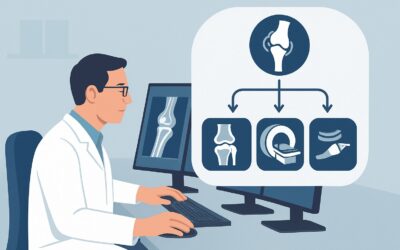
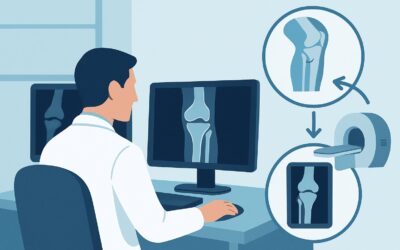
A 16-year-old soccer player presents with six months of persistent, activity-related anterior knee pain. An initial radiograph was ordered, and the report is now on your screen: it notes a possible osteochondritis dissecans (OCD) lesion of the medial femoral condyle. The immediate clinical question is no longer if there is a problem, but what is the nature of that problem—is the lesion stable or unstable? Is there an associated loose body? This specific clinical scenario, where an initial radiograph is abnormal, requires a precise next step for characterization and surgical planning. According to the American College of Radiology (ACR) Appropriateness Criteria, the next imaging procedure is clear: MRI knee without IV contrast is rated Usually appropriate.
Who Fits This Clinical Scenario for Chronic Knee Pain?
This guidance is for a well-defined patient group: adults or children aged 5 years or older with chronic knee pain, where the diagnostic process has already begun with an initial radiograph that returned a specific positive finding.
Inclusion criteria for this workflow:
- Presentation: Chronic knee pain (present for weeks to months).
- Age: 5 years or older.
- Prior Imaging: An initial knee radiograph has already been performed.
- Radiograph Findings: The radiograph demonstrates osteochondritis dissecans (OCD), intra-articular loose bodies, or is being used to evaluate the knee after a prior cartilage or meniscal repair surgery.
This workflow is not appropriate for patients whose clinical picture differs, even slightly. For instance, this guidance does not apply if:
- The initial radiograph is negative: If the X-ray shows only an effusion or is entirely normal, the diagnostic considerations change. This patient would fall under a different ACR variant for chronic knee pain with negative initial radiographs.
- The radiograph shows degenerative or inflammatory arthritis: Findings like joint space narrowing, osteophytes, or erosions point toward osteoarthritis or an inflammatory process, which have their own distinct imaging pathways.
- The presentation is acute trauma: A sudden injury with suspicion of fracture or acute ligamentous tear follows a different diagnostic algorithm, often starting with radiographs but with different indications for advanced imaging.
Correctly identifying your patient’s scenario is crucial for ordering the most effective and appropriate next study.
What Diagnoses Are You Working Up in This Scenario?
With an abnormal initial radiograph, the imaging goal shifts from detection to characterization. The advanced study must answer specific questions that will directly guide management, which is often surgical. The key differential diagnoses in this context are focused on the stability and viability of cartilage and bone.
Osteochondritis Dissecans (OCD) Stability
This is the paramount question when an OCD lesion is identified. An OCD is a focal area of subchondral bone and the overlying articular cartilage that has been injured or has lost its blood supply. The critical distinction for treatment is whether the fragment is stable (in situ) or unstable (partially or fully detached). An unstable fragment is at high risk of detaching and becoming a loose body, often requiring surgical intervention to prevent further joint damage. Imaging must clearly delineate the interface between the lesion and the parent bone.
Intra-articular Loose Bodies
Radiographs can often detect osseous (bony) loose bodies but may miss purely cartilaginous fragments. The next imaging study must confirm the presence, number, size, and location of any loose bodies. This information is essential for arthroscopic planning, as a “hidden” cartilaginous loose body can cause persistent mechanical symptoms and further articular damage if not removed.
Meniscal or Cartilage Repair Integrity
For patients with a history of meniscal or cartilage repair surgery (e.g., microfracture, OATS, or ACI), chronic pain raises suspicion for a failed or re-injured repair. The imaging goal is to assess the integrity of the repaired meniscus, evaluate the quality and integration of the repaired cartilage, and identify any new pathology that could explain the patient’s ongoing symptoms.
Why Is MRI Knee without IV Contrast the Recommended Study for This Presentation?
The ACR designates MRI knee without IV contrast as Usually appropriate because it directly and non-invasively answers the key clinical questions raised by an abnormal radiograph in this scenario. Its superior soft-tissue contrast is unmatched for evaluating cartilage, subchondral bone, and menisci.
For an OCD lesion, MRI can visualize the signs of instability with high accuracy. Key findings include a high signal T2 line or fluid-filled cysts at the interface between the fragment and the underlying bone, indicating fluid undercutting the lesion. It also assesses the integrity of the overlying cartilage, which is a critical factor for prognosis.
For suspected loose bodies, MRI can detect both osteochondral fragments and purely cartilaginous bodies that are invisible on CT scans and radiographs. It precisely localizes them within the joint, which is vital for surgical planning. In the post-operative knee, MRI excels at evaluating the morphology of a meniscal repair and the fill and surface integrity of a cartilage repair graft.
Why are other studies rated lower?
- CT knee without IV contrast is rated May be appropriate. While excellent for delineating bone and calcified loose bodies, it provides very limited information about cartilage status, OCD stability (it cannot visualize bone marrow edema or fluid at the fragment interface), or meniscal integrity. It also involves ionizing radiation (adult RRL=☢ <0.1 mSv; pediatric RRL=☢☢ 0.03-0.3 mSv), which is a key consideration, especially in younger patients.
- MR arthrography knee is rated May be appropriate (Disagreement). This involves injecting contrast directly into the joint. It can be superior for outlining the surface of a cartilage repair or detecting a subtle tear. However, the procedure is invasive, and for the primary question of OCD stability, non-contrast MRI is often sufficient. The “Disagreement” among the panel reflects that while it has a role, it is not universally considered the necessary next step over a standard non-contrast MRI.
Ultimately, a non-contrast MRI of the knee provides the most comprehensive assessment of the relevant anatomy—cartilage, bone marrow, and menisci—without radiation (RRL=O 0 mSv) or an invasive injection, making it the most logical and effective next step.
Once you’ve decided on this study, our protocol guide covers the technique, contrast, and reading principles: MRI Knee Without Contrast.
What’s Next After MRI Knee without IV Contrast? Downstream Workflow
The results of the knee MRI will create a clear branch point in the patient’s management plan, typically distinguishing between non-operative and operative pathways.
- If the MRI confirms an unstable OCD lesion or a displaced loose body: This finding usually necessitates a referral to an orthopedic surgeon. The likely next step is arthroscopic surgery to either fix the unstable fragment back in place (if viable) or to remove the loose body and debride the underlying crater. The goal is to restore a smooth articular surface and prevent further mechanical damage to the joint.
- If the MRI shows a stable OCD lesion with intact overlying cartilage: This is a more favorable finding, particularly in skeletally immature patients with open physes. The typical next step is a course of conservative management, including activity modification (rest from impact sports), physical therapy, and sometimes a period of unloader bracing. Follow-up imaging may be considered after several months to monitor for healing.
- If the MRI demonstrates a meniscal re-tear or failure of a cartilage repair: This also warrants a referral to orthopedics. The surgeon will use the MRI findings to counsel the patient on the options for revision surgery, which can be complex.
- If the MRI is negative or findings are indeterminate: If the MRI does not explain the patient’s chronic symptoms, the next step is clinical re-evaluation. The focus may shift to other causes of knee pain, such as patellofemoral syndrome or tendinopathy. In rare cases where a subtle cartilage surface abnormality is suspected despite a negative non-contrast MRI, a discussion with radiology about the utility of an MR arthrogram may be warranted.
Pitfalls to Avoid (and When to Get Help)
Navigating this scenario requires careful attention to detail to avoid common missteps that can delay diagnosis or lead to suboptimal management.
- Failing to provide clinical context: When ordering the MRI, be specific. Instead of “chronic knee pain,” state “Evaluate stability of known OCD lesion on radiograph” or “Assess for loose bodies and cartilage status.” This helps the radiologist tailor the protocol and focus the report on your clinical question.
- Misinterpreting pediatric anatomy: In skeletally immature patients, normal accessory ossification centers can sometimes be mistaken for OCD lesions on radiographs. If there is any doubt, advanced imaging is crucial for differentiation.
- Defaulting to CT: While CT is fast, its inability to assess cartilage and OCD stability makes it the wrong choice for the primary workup in this scenario. Using it as the next step after an abnormal radiograph will almost always lead to the need for a subsequent MRI.
- Ignoring mechanical symptoms: If a patient reports locking, catching, or giving way, this is a red flag for an unstable fragment or loose body. This history should increase the urgency of obtaining an MRI and an orthopedic consultation.
If the MRI reveals a large, displaced osteochondral fragment or if the patient’s mechanical symptoms are severe and disabling, escalate care with an urgent referral to orthopedics.
Related ACR Topics and Tools
This article covers one specific variant within the broader topic of Chronic Knee Pain. For a comprehensive overview of all clinical scenarios, from negative radiographs to advanced arthritis, please see our parent guide.
- For breadth across all scenarios in Chronic Knee Pain, see our parent guide: Chronic Knee Pain: ACR Appropriateness Decoded.
- To look up other clinical presentations, use the ACR Appropriateness Criteria Lookup.
- To review standard imaging techniques, visit the Imaging Protocol Library.
- To discuss radiation exposure with patients, consult the Radiation Dose Calculator.
Frequently Asked Questions
Why not just order a CT scan? It’s often faster to schedule.
While a CT scan is fast and excellent for evaluating bone, it is rated ‘May be appropriate’ because it cannot adequately assess the key questions in this scenario. It cannot visualize non-calcified cartilage, determine the stability of an OCD lesion by showing fluid or edema, or evaluate for a meniscal tear. An MRI is required to see these structures, making it the more definitive and efficient single next step.
Is an MR arthrogram better than a standard non-contrast MRI for this situation?
Not necessarily. An MR arthrogram, which involves injecting contrast into the joint, is rated ‘May be appropriate (Disagreement)’. It can be slightly better for outlining the surface of a cartilage repair or finding a very subtle meniscal tear. However, for the most common questions—evaluating OCD stability and finding most loose bodies—a standard non-contrast MRI is highly effective and avoids the discomfort and small risks of a joint injection. Therefore, non-contrast MRI is the recommended starting point.
Does this guidance apply to an acute knee injury after a fall?
No. This guidance is specifically for chronic knee pain. Acute traumatic injuries follow a different diagnostic pathway. While an MRI might eventually be needed, the initial considerations and the urgency are different, focusing on acute fractures, ligament tears (like the ACL), and meniscal tears from the specific injury.
What if the initial radiograph was read as normal, but I still have a high suspicion for an OCD lesion in an adolescent?
If you have a high clinical suspicion for an OCD lesion or other cartilage injury despite a negative radiograph, you would follow the ACR guidance for the sibling scenario: ‘Chronic knee pain. Initial knee radiograph negative or demonstrates soft-tissue swelling or joint effusion.’ In that case, MRI without contrast is also rated ‘Usually appropriate’ to look for the radiographically occult pathology.
Is intravenous (IV) gadolinium contrast ever needed for this workup?
Rarely. For the primary questions of OCD stability, loose bodies, and meniscal/cartilage repair integrity, IV contrast adds little information and is rated ‘Usually not appropriate’ by the ACR. Its main role in musculoskeletal imaging is for evaluating tumors, infection (abscess), or synovitis in inflammatory arthritis, none of which are the primary considerations in this specific scenario.
Reviewed by Pouyan Golshani, MD, Interventional Radiologist — May 29, 2026