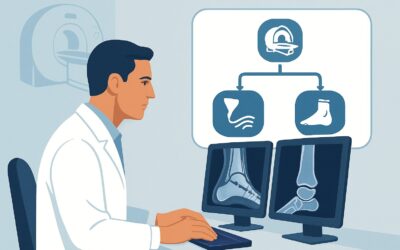
What Imaging Is Best for Suspected Rotator Cuff Tear After Shoulder Arthroplasty?

A 68-year-old patient returns to your clinic two years after a successful primary total shoulder arthroplasty. For the past month, he has experienced new-onset pain and notable weakness with abduction and external rotation. His initial radiographs show the implant is well-positioned with no signs of subsidence, fracture, or significant radiolucent lines. You have a low pre-test probability for infection based on his afebrile status and normal inflammatory markers. Your primary concern is a post-operative soft tissue complication, such as a rotator cuff tear. This article details the American College of Radiology (ACR) Appropriateness Criteria for this specific clinical scenario: a symptomatic patient with a primary shoulder arthroplasty, infection excluded, where you suspect a rotator cuff tear or other soft tissue abnormality after initial radiographs are unrevealing. For this presentation, the ACR rates US shoulder as a Usually Appropriate investigation.
Who Fits This Clinical Scenario for Post-Arthroplasty Shoulder Imaging?
This imaging workflow is designed for a well-defined patient population. Applying this guidance to the wrong clinical context can lead to diagnostic delays or inappropriate testing. This article is for patients who meet all the following criteria:
- They have a primary shoulder arthroplasty (either anatomic or reverse).
- They are now symptomatic, presenting with new or worsening pain, weakness, instability, or decreased range of motion.
- Infection has been reasonably excluded based on clinical evaluation and laboratory findings (e.g., normal C-reactive protein and erythrocyte sedimentation rate).
- Initial imaging with radiographs has already been performed and does not show an obvious cause for symptoms, such as component loosening, dislocation, or periprosthetic fracture.
Conversely, this guidance does not apply to several similar-appearing clinical situations that require a different diagnostic approach:
- Asymptomatic Patients: For routine surveillance of a well-functioning, asymptomatic arthroplasty, imaging is generally not indicated.
- Infection Not Excluded: If there is any clinical suspicion of periprosthetic joint infection (e.g., fever, erythema, draining sinus, elevated inflammatory markers), the imaging workup is different and may involve nuclear medicine studies or joint aspiration.
- Suspected Loosening on Radiographs: If initial radiographs show progressive radiolucent lines, component migration, or other signs of implant loosening, the primary imaging question changes, and cross-sectional imaging like Computed Tomography (CT) is often prioritized.
What Diagnoses Are You Working Up in This Post-Arthroplasty Scenario?
When a patient with a shoulder replacement develops new symptoms without evidence of infection or loosening, the differential diagnosis centers on periprosthetic soft tissue pathology. The imaging study you order should be capable of accurately assessing these structures, which are often the true source of the patient’s dysfunction.
Rotator Cuff Tear: This is the most common and clinically significant soft tissue complication. The integrity of the remaining rotator cuff is critical for the function and stability of both anatomic and reverse shoulder arthroplasties. A new tear, or propagation of a pre-existing one, can lead to profound weakness and pain. The supraspinatus and infraspinatus are frequently implicated.
Subscapularis Tendon Insufficiency: The subscapularis tendon is often incised or peeled (a “take-down”) during the anterior surgical approach for arthroplasty. Failure of this tendon to heal properly is a well-recognized cause of anterior shoulder pain, weakness in internal rotation, and even anterior instability of the prosthesis.
Biceps Tendinopathy or Tear: The long head of the biceps tendon can become a pain generator after shoulder replacement. It can develop tendinosis, subluxation, or rupture, leading to anterior shoulder pain. While a tenotomy or tenodesis is often performed during the index surgery, issues can still arise with the stump or the tenodesis site.
Periprosthetic Synovitis or Impingement: Chronic inflammation of the synovial lining (synovitis) or mechanical impingement of soft tissues against the implant components can cause persistent pain and effusion. This is a diagnosis of exclusion but can be suggested by imaging findings in the right clinical context.
Why Is Ultrasound the Recommended Study for Suspected Soft Tissue Injury After Shoulder Arthroplasty?
For a symptomatic patient with a primary shoulder arthroplasty where infection is excluded and a soft tissue abnormality is suspected, the ACR identifies three imaging modalities as Usually Appropriate: Ultrasound (US) shoulder, Magnetic Resonance Imaging (MRI) shoulder without IV contrast, and CT arthrography shoulder. However, ultrasound is often the most practical and effective first choice.
The primary advantage of US shoulder is its immunity to the metal artifact that severely degrades MRI scans. The metallic components of the arthroplasty create significant signal void and distortion on MRI, which can obscure the very structures you need to evaluate—the periprosthetic tendons and tissues. Ultrasound, using sound waves, is unaffected by this and can provide high-resolution, real-time images of the rotator cuff, subscapularis, and biceps tendons. Its dynamic capability allows the sonographer to assess for tendon impingement and integrity during active and passive motion, a unique benefit not offered by static imaging like MRI or CT. Furthermore, it involves no ionizing radiation (0 mSv) and is readily accessible and cost-effective.
MRI shoulder without IV contrast is also rated Usually Appropriate and can provide excellent soft tissue contrast. However, its utility is entirely dependent on the use of specialized metal artifact reduction sequences (MARS). Without MARS protocols, the study is often non-diagnostic. When performed correctly, MARS MRI can be highly effective, but access to optimized protocols can be variable. Like ultrasound, it uses no ionizing radiation (0 mSv).
CT arthrography shoulder is the third Usually Appropriate option. This involves injecting contrast directly into the joint, which can exquisitely outline full-thickness rotator cuff tears. However, it is an invasive procedure with associated risks (infection, bleeding) and exposes the patient to a significant dose of ionizing radiation (☢☢☢☢ 10-30 mSv). For these reasons, it is typically reserved for cases where US and MRI are non-diagnostic or contraindicated.
Modalities like a standard CT shoulder without IV contrast are rated Usually Not Appropriate for this indication. While CT is excellent for evaluating bone and implant position, it provides poor intrinsic soft tissue contrast, making it unsuitable for diagnosing a rotator cuff tear or tendinopathy.
What’s the Next Step After a Post-Arthroplasty Shoulder Ultrasound?
The results of the shoulder ultrasound will guide your subsequent management. The downstream workflow is a decision tree based on whether the study answers the clinical question.
If the ultrasound is positive for a significant tear: A definitive finding, such as a full-thickness tear of the supraspinatus or subscapularis tendon, confirms the diagnosis. The next step is a clinical decision, often in consultation with an orthopedic surgeon. Management may range from physical therapy and activity modification to consideration of a revision or repair surgery, depending on the tear’s size, the patient’s age, functional demands, and the type of arthroplasty.
If the ultrasound is negative: A high-quality negative ultrasound in a patient with persistent, disabling symptoms presents a clinical challenge. The first step is to reconsider the differential diagnosis. If high clinical suspicion for a soft tissue tear remains despite the negative US, proceeding to an MRI shoulder without IV contrast (with MARS protocol) is the most logical next step. It is an equivalently rated Usually Appropriate study and may reveal pathology that was technically difficult to visualize on ultrasound.
If the ultrasound is indeterminate or technically limited: Sometimes, patient body habitus or extensive post-surgical scarring can limit the acoustic windows for ultrasound. If the report indicates the key structures could not be adequately visualized, you should proceed directly to a MARS MRI or, if MRI is contraindicated, a CT arthrogram to get a definitive answer.
Pitfalls to Avoid (and When to Get Help)
Navigating the post-arthroplasty shoulder workup requires avoiding several common pitfalls that can lead to a missed diagnosis or unnecessary imaging.
- Ordering a standard MRI: The most frequent error is ordering a routine shoulder MRI without explicitly requesting metal artifact reduction sequences (MARS). This will likely result in a non-diagnostic study and a delay in care.
- Underestimating operator dependency of US: The accuracy of musculoskeletal ultrasound is highly dependent on the skill and experience of the sonographer and interpreting radiologist. If your institution’s US quality is inconsistent, MRI with MARS may be a more reliable first choice.
- Overlooking occult infection: While infection may be excluded initially, if imaging reveals aggressive synovitis, large effusions, or unexpected bone erosion, the possibility of a low-grade infection must be reconsidered.
If imaging is negative or equivocal but the patient’s symptoms are worsening, or if there is any suggestion of component instability, an early consultation with the patient’s orthopedic surgeon is crucial.
Related ACR Topics and Tools
This article focuses on one specific scenario. For a comprehensive overview of all clinical variants, and for tools to help you apply these criteria in your practice, please refer to the following resources.
- For breadth across all scenarios in Imaging After Shoulder Arthroplasty, see our parent guide: Imaging After Shoulder Arthroplasty: ACR Appropriateness Decoded.
- To look up other clinical scenarios, use the ACR Appropriateness Criteria Lookup tool.
- For technical details on performing the recommended studies, consult the Imaging Protocol Library.
- To discuss radiation exposure with patients, the Radiation Dose Calculator can help quantify and contextualize the dose from studies like CT.
Frequently Asked Questions
Why is ultrasound often preferred over MRI for suspected rotator cuff tears after arthroplasty?
The primary reason is metal artifact. The metallic components of the shoulder replacement create large signal voids and distortions on MRI scans, which can completely obscure the adjacent rotator cuff tendons. Ultrasound is not affected by metal and can provide clear, high-resolution images of these soft tissues. It also allows for dynamic assessment during movement.
What if my institution’s musculoskeletal ultrasound quality is unreliable?
This is a valid concern, as ultrasound is highly operator-dependent. If you cannot be confident in the quality of a shoulder US, then ordering an MRI of the shoulder without contrast using a dedicated metal artifact reduction sequence (MARS) protocol is an excellent and equally appropriate alternative, as per the ACR guidelines.
Does this guidance apply to a reverse total shoulder arthroplasty (rTSA)?
Yes, the principles are very similar. While the biomechanics and specific failure modes of an rTSA differ from an anatomic arthroplasty, the workup for suspected soft tissue pathology follows the same logic. Ultrasound is still an excellent first-line modality to assess the integrity of the remaining rotator cuff and, crucially, the deltoid muscle, which is the primary driver of an rTSA.
If the ultrasound is negative but the patient is still very symptomatic, what is the next step?
If there is a strong clinical suspicion for a soft tissue tear despite a negative or equivocal ultrasound, the next logical imaging step is an MRI of the shoulder without contrast, specifying a MARS protocol. This is another ‘Usually Appropriate’ study that may identify pathology not seen on the US. If symptoms persist after a negative workup, a clinical re-evaluation with the orthopedic surgeon is warranted.
Why is CT arthrography also rated ‘Usually Appropriate’ but not typically the first choice?
CT arthrography is an excellent problem-solving tool and can be definitive for full-thickness cuff tears. However, it is generally reserved as a second or third-line option because it is an invasive procedure (requiring a needle injection into the joint) and it involves a significant dose of ionizing radiation (10-30 mSv). The non-invasive, radiation-free options of ultrasound and MRI are preferred first.
Reviewed by Pouyan Golshani, MD, Interventional Radiologist — May 29, 2026