What Imaging Should You Order for Chronic Cough Without Lung Cancer Risk Factors?

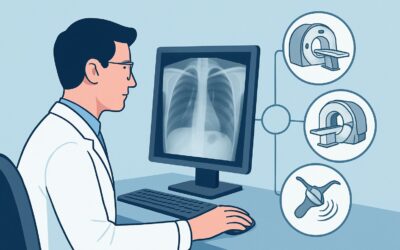
A 52-year-old woman with no significant past medical history presents to your primary care clinic with a persistent, non-productive cough that has lasted for nearly four months. She is a lifelong non-smoker, has no history of environmental exposures, and denies fever, weight loss, or hemoptysis. Empiric trials of an antihistamine and a proton-pump inhibitor have not provided relief. You suspect the cause is likely non-pulmonary, but you need to rule out an underlying structural lung process before referring her to a subspecialist. The immediate clinical question is what initial imaging study, if any, is the most appropriate first step. For this specific scenario, the American College of Radiology (ACR) rates a chest radiograph as Usually Appropriate, providing a low-dose, high-value starting point for the diagnostic workup.
Who Fits This Clinical Scenario for Chronic Cough Imaging?
This guidance applies to a specific and common patient population: adults with a cough lasting more than eight weeks who do not have known risk factors for lung cancer. The key inclusion criteria are:
- Duration: The cough must be chronic, defined as lasting 8 weeks or longer.
- Low-Risk Profile: The patient should have no significant smoking history (e.g., never-smoker or remote quitting history without other risk factors), no occupational exposures like asbestos, no personal or strong family history of lung cancer, and no constitutional “B” symptoms like unexplained weight loss, fevers, or night sweats.
- Initial Workup Stage: This is the first imaging study being considered for the cough. The patient has not had prior chest imaging for this indication.
It is crucial to distinguish this presentation from similar but distinct clinical scenarios that follow different diagnostic pathways. This article does not apply if the patient has:
- Increased risk for lung cancer: A patient with a significant smoking history, hemoptysis, or unexplained weight loss falls into a different ACR variant where the imaging threshold and choice of study may change.
- Persistent symptoms after initial evaluation: If a patient has already had a normal chest radiograph and continues to have a debilitating cough despite empiric treatment for common causes (like asthma, GERD, or upper airway cough syndrome), the next imaging step is addressed in a separate ACR scenario, which often involves considering cross-sectional imaging like CT.
What Diagnoses Are You Working Up in This Scenario?
In a low-risk patient, the initial chest radiograph is primarily a tool to exclude significant structural thoracic disease. While the most common causes of chronic cough—upper airway cough syndrome (postnasal drip), asthma, and gastroesophageal reflux disease (GERD)—are not diagnosed by chest imaging, a radiograph is essential for ruling out other, less common but more serious, etiologies before committing to a lengthy and potentially costly workup for these top-three conditions.
The differential diagnosis that a chest radiograph helps evaluate includes:
Parenchymal Lung Disease: This is a broad category that includes interstitial lung disease (ILD), which can present insidiously with a dry cough. A chest radiograph can reveal reticular or nodular patterns suggestive of fibrosis or inflammation, prompting further investigation with high-resolution CT.
Airway Disease: Conditions like bronchiectasis, characterized by permanent dilation of the airways, can cause chronic cough and are often visible on a chest radiograph as “tram tracking” or cystic changes. While CT is more sensitive, a radiograph can provide the initial clue.
Infection: An occult or indolent infection, such as tuberculosis or a non-tubercular mycobacterial infection, can present with chronic cough. Radiographs may show focal consolidation, cavitation, or nodules, particularly in the upper lobes.
Neoplasm: Although the patient is considered low-risk for lung cancer, a chest radiograph serves as a crucial screen for an unexpected primary lung tumor or metastatic disease, which can occasionally present solely with cough.
Cardiogenic Causes: Less commonly, chronic cough can be a manifestation of chronic heart failure. A radiograph can reveal cardiomegaly, pleural effusions, or other signs of pulmonary venous hypertension, redirecting the workup toward a cardiac etiology.
Why Is a Chest Radiograph the Recommended First Study for Chronic Cough?
The ACR designates a standard posteroanterior (PA) and lateral chest radiograph as Usually Appropriate for the initial imaging of a low-risk patient with chronic cough. This recommendation is based on an optimal balance of diagnostic yield, safety, and resource utilization.
A chest radiograph is an excellent first-line screening tool. It is highly effective at detecting or excluding many of the significant structural abnormalities listed in the differential diagnosis. A normal chest radiograph provides strong evidence against a serious pulmonary cause, allowing the clinician to confidently pursue non-imaging-based workups for more common etiologies like asthma or GERD. Its wide availability, low cost, and minimal radiation dose make it the ideal starting point.
In contrast, other more advanced imaging modalities are rated lower for this initial presentation:
- CT chest without or with IV contrast is rated as May be appropriate. While CT is more sensitive than radiography for subtle diseases like mild bronchiectasis or early ILD, it is not the recommended first step in a low-risk patient. Its use is reserved for cases where the chest radiograph is abnormal or when there is a high clinical suspicion for a specific condition despite a normal radiograph. Starting with CT exposes the patient to a significantly higher radiation dose (☢☢☢ 1-10 mSv vs. ☢ <0.1 mSv for a radiograph) and greater cost, with a low likelihood of finding a clinically significant abnormality not suggested by the initial radiograph.
- MRI chest and FDG-PET/CT are rated as Usually not appropriate. MRI has poor resolution for evaluating the lung parenchyma and is not suited for a general cough workup. FDG-PET/CT is a high-radiation functional imaging study used for cancer staging or evaluating indeterminate nodules, making it entirely unsuitable for the initial, undifferentiated evaluation of chronic cough in a low-risk individual.
The key principle is stepwise evaluation. The chest radiograph efficiently triages patients, identifying the small subset who require the higher sensitivity (and higher radiation dose) of a CT scan, while reassuring the majority that their workup can safely focus on non-structural causes.
What’s Next After a Chest Radiograph? Downstream Workflow
The results of the chest radiograph create a clear branch point in the patient’s diagnostic journey. The downstream workflow depends directly on whether the findings are positive, negative, or indeterminate.
If the study is positive: A specific finding on the radiograph dictates the next step. For example, if the image suggests interstitial lung disease, the appropriate follow-up is a non-contrast, high-resolution CT (HRCT) of the chest. If a suspicious nodule or mass is found, a contrast-enhanced chest CT is typically ordered for better characterization and to assess for mediastinal adenopathy. An abnormal cardiac silhouette would prompt an echocardiogram and cardiology consultation.
If the study is negative: A normal chest radiograph is a very common and clinically useful result. It effectively rules out most significant structural lung diseases. At this point, the clinical focus should pivot decisively to the three most common causes of chronic cough: upper airway cough syndrome, asthma, and GERD. The next steps are non-radiologic and may include empiric therapy, spirometry, laryngoscopy, or referral to pulmonology, allergy, or gastroenterology. This patient may then fall into the subsequent ACR scenario: “Chronic cough lasting more than 8 weeks. Persistent symptoms despite initial clinical evaluation and empiric treatment.”
If the study is indeterminate: Occasionally, a radiograph may reveal a subtle or nonspecific abnormality, such as minor atelectasis or a faint opacity. Depending on the finding and the clinical context, the next step could be a short-term follow-up radiograph in 4-6 weeks to ensure resolution or a non-contrast chest CT for definitive characterization.
Pitfalls to Avoid (and When to Get Help)
When managing the initial imaging for chronic cough in a low-risk patient, several common pitfalls can lead to diagnostic delays or unnecessary testing.
- Prematurely ordering CT: The most common pitfall is skipping the chest radiograph and ordering a chest CT as the first-line study. This unnecessarily exposes the patient to higher radiation and cost and increases the chance of discovering incidental findings that may lead to further, often invasive, workups.
- Over-interpreting a negative radiograph: A normal chest X-ray is reassuring, but it does not mean the workup is complete. It primarily rules out major structural lung disease. Failing to aggressively pursue the non-pulmonary “big three” causes of cough after a negative radiograph is a frequent cause of diagnostic delay.
- Ignoring evolving symptoms: A patient may be low-risk at their initial visit, but their clinical status can change. If they develop new red-flag symptoms like hemoptysis, fevers, or significant weight loss while awaiting or after imaging, their risk category changes. In such cases, the workup must be escalated immediately, potentially requiring a CT scan even if the initial radiograph was normal.
If the diagnosis remains elusive after a negative chest radiograph and trials of empiric therapy, referral to a pulmonologist is the appropriate next step.
Related ACR Topics and Tools
For a comprehensive overview of imaging recommendations across all clinical presentations of chronic cough, please consult our parent topic guide. For additional resources to help refine your imaging orders and discuss them with patients, the following tools are available.
- For breadth across all scenarios in Chronic Cough, see our parent guide: Chronic Cough: ACR Appropriateness Decoded.
- To look up other clinical scenarios, visit the ACR Appropriateness Criteria Lookup.
- For detailed procedural techniques, explore the Imaging Protocol Library.
- To help with patient conversations about medical radiation, use the Radiation Dose Calculator.
Frequently Asked Questions
Why not just start with a chest CT since it’s more sensitive than a radiograph?
While a CT scan is more sensitive for subtle lung disease, the ACR recommends a chest radiograph first for low-risk patients due to the principles of evidence-based, stepwise diagnostics. The radiograph has a high yield for detecting most significant structural causes of cough with minimal radiation (less than 0.1 mSv) and cost. A CT scan delivers a much higher radiation dose (1-10 mSv) and has a greater likelihood of revealing incidental findings that may lead to unnecessary anxiety and further testing. The radiograph effectively screens out the vast majority of patients who do not need a CT.
What if the patient has a history of smoking but quit 20 years ago? Do they still fit this low-risk scenario?
This requires clinical judgment. A remote smoking history (e.g., quit >15-20 years ago with a low pack-year history) generally places a patient in a lower risk category than a current or recent smoker. However, they are not as low-risk as a never-smoker. If the patient otherwise meets low-risk criteria and has no other warning signs, starting with a chest radiograph is still a reasonable approach. This is distinct from lung cancer screening guidelines (e.g., USPSTF), which have specific age and pack-year criteria for recommending annual low-dose CT scans.
If the chest X-ray is normal, is there any role for imaging the sinuses or esophagus?
Yes, but this is part of a different diagnostic pathway, typically pursued after a normal chest radiograph and failure of empiric therapy. If upper airway cough syndrome (postnasal drip) is suspected and doesn’t respond to treatment, a CT of the sinuses may be considered. Similarly, if GERD is the leading diagnosis and symptoms are refractory, an upper GI series or endoscopy might be performed. These studies are not part of the initial thoracic imaging workup for an undifferentiated chronic cough.
Is a 2-view (PA and lateral) chest radiograph necessary, or is a single AP view enough?
A 2-view study, including both a posteroanterior (PA) and a lateral view, is the standard and recommended examination. The lateral view is critical for evaluating regions of the lung that are obscured by the heart, diaphragm, and spine on the PA view, such as the retrosternal and retrocardiac spaces and the posterior costophrenic sulci. A single portable anteroposterior (AP) view is significantly less sensitive and should be reserved for patients who are too ill to stand for a standard 2-view study.
Does this guidance apply to children with chronic cough?
While the principles are similar, pediatric chronic cough has a different differential diagnosis and imaging considerations, particularly regarding radiation dose. The ACR Appropriateness Criteria have separate guidelines for pediatric populations that should be consulted. This article is focused on the adult patient as described in the scenario.
Reviewed by Pouyan Golshani, MD, Interventional Radiologist — May 29, 2026